Who Wins?
¿Quién gana?
Emma reaches the finish first. Leo asks who wins, and Mia says Emma does.
Emma llega primero a la meta. Leo pregunta quién gana y Mia dice que Emma.
Diálogo6
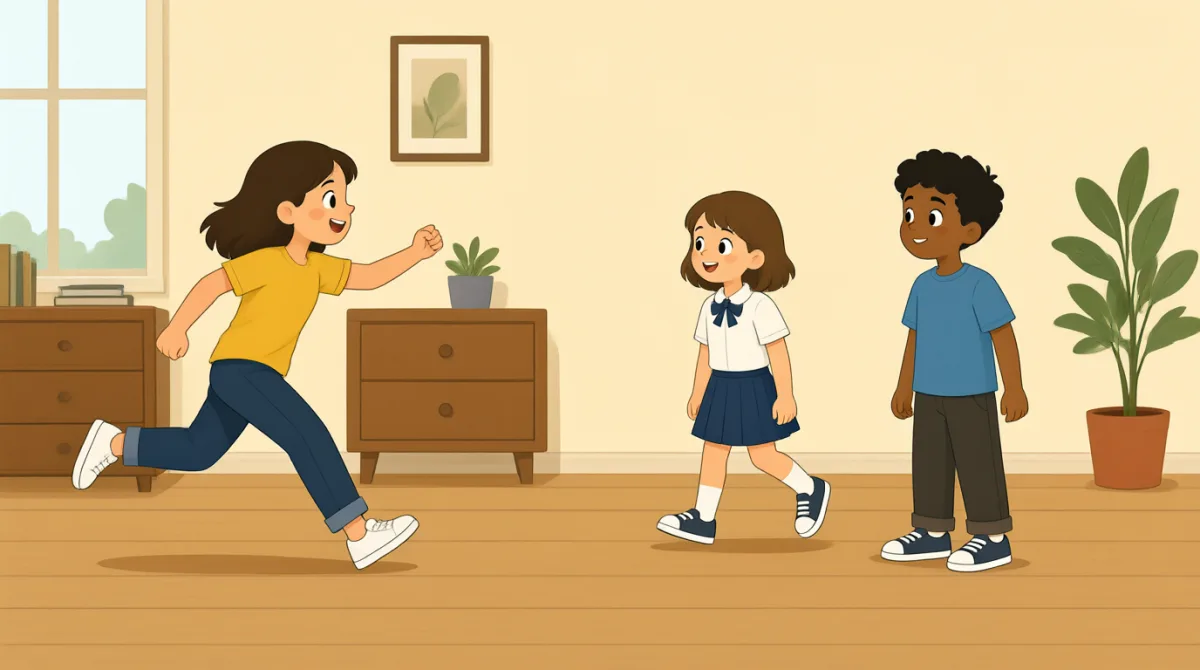

I’m at the finish! I win!
¡Llegué a la meta! ¡Gané!

Wait, who wins?
Espera, ¿quién gana?

Emma wins. She is first.
Gana Emma. Ella llegó primero.
Good game, Emma! You win.
¡Buen juego, Emma! Ganaste.
Thanks! Let’s play again.
¡Gracias! Juguemos otra vez.
Sure. Leo, you go first this time.
Claro. Leo, tú empiezas esta vez.
Vocabulario7
- the finishla meta
This is the end of a game or race. You can say “I’m at the finish” when you reach the end.
Es el final de un juego o una carrera. Puedes decir “I’m at the finish” (ya llegué a la meta) cuando llegas al final.
- I win!¡Gané!
Say this when you are the winner. You can use it after a game or contest.
Di esto cuando eres el ganador. Puedes usarlo después de un juego o una competencia.
- who wins?¿quién gana?
Ask this to find out who is the winner. You can use it when the result is not clear.
Haz esta pregunta para saber quién es el ganador. Puedes usarla cuando el resultado no está claro.
- firstprimero
This means before everyone else. In a game, the first player may reach the finish before the others.
Significa antes que todos los demás. En un juego, el primer jugador puede llegar a la meta antes que los otros.
- Good game!¡Buen juego!
Say this after a game to be friendly. You can say it to someone who played with you.
Di esto después de un juego para ser amable. Puedes decírselo a alguien que jugó contigo.
- play againjugar otra vez
This means to play one more time. You can say “Let’s play again” to suggest another game.
Significa jugar una vez más. Puedes decir “Let’s play again” (juguemos otra vez) para proponer otra partida.
- go firstempezar primero
This means to take the first turn. You can ask someone to go first in a game.
Significa tomar el primer turno. Puedes pedirle a alguien que empiece primero en un juego.
Frases clave8
- 1
I’m at the finish!
¡Ya llegué a la meta!
Use this to say that you have reached the end of a game or race. You can change “the finish” to name another place.
Usa esta frase para decir que llegaste al final de un juego o una carrera. Puedes cambiar “the finish” por el nombre de otro lugar.
- 2
I win!
¡Gané!
This is a short, clear way to say you are the winner. Use it when you win a game or contest.
Es una forma breve y clara de decir que eres el ganador. Úsala cuando ganes un juego o una competencia.
- 3
Wait, who wins?
Espera, ¿quién gana?
Use this question when you want to know who won. You can also ask “Who wins?” when you are unsure about the result.
Usa esta pregunta cuando quieras saber quién ganó. También puedes preguntar “Who wins?” cuando no estés seguro del resultado.
- 4
Emma wins.
Gana Emma.
Use a person’s name plus “wins” to say who is the winner. You can replace “Emma” with another name.
Usa el nombre de una persona seguido de “wins” para decir quién es el ganador. Puedes sustituir “Emma” por otro nombre.
- 5
She is first.
Ella llegó primero.
Use this to say that a girl or woman is ahead of the others. Replace “She” with “He” or a name as needed.
Usa esta frase para decir que una chica o mujer va delante de los demás. Sustituye “She” por “He” o por un nombre, según corresponda.
- 6
Good game, Emma!
¡Buen juego, Emma!
This is a friendly thing to say after playing a game. Replace “Emma” with the other player’s name.
Es algo amable que puedes decir después de jugar. Sustituye “Emma” por el nombre del otro jugador.
- 7
Let’s play again.
Juguemos otra vez.
Use this to suggest playing one more time. “Let’s” is a simple way to invite someone to do something with you.
Usa esta frase para proponer jugar una vez más. “Let’s” es una forma sencilla de invitar a alguien a hacer algo contigo.
- 8
Leo, you go first this time.
Leo, tú empiezas esta vez.
Use this to tell someone they can take the first turn now. You can change the name and add “this time” when turns are changing.
Usa esta frase para decirle a alguien que puede tomar el primer turno ahora. Puedes cambiar el nombre y añadir “this time” cuando se turnen.