When Is Trash Day?
哪天收垃圾?
Emma asks Grace when trash day is. Grace tells her the pickup day and time.
Emma问Grace哪天收垃圾。Grace告诉她收垃圾的日期和时间。
对话7
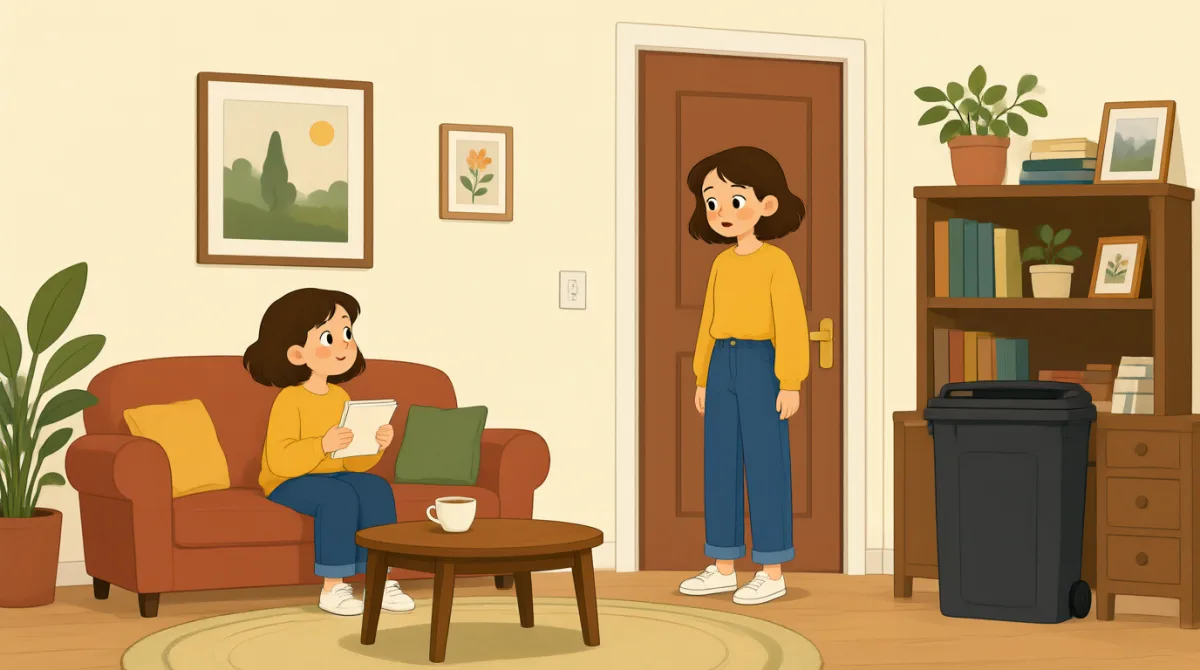

Grace, when is trash day?
Grace,哪天收垃圾?

It is every Tuesday.
每周二收。
What time do they come?
他们几点来?
They come early in the morning.
他们一大早就来。
Should I put the bags out tonight?
我今晚要把垃圾袋拿出去吗?
Yes. Put them by the curb tonight.
要。今晚把它们放在路边。
Okay, I’ll do that. Thanks!
好的,我会这么做。谢谢!
词汇6
- trash day收垃圾日
This is the day when trash is picked up. You can ask, “When is trash day?”
指收运垃圾的日子。你可以问:“When is trash day?”(哪天收垃圾?)
- every Tuesday每周二
This means something happens each Tuesday. Use it to say how often an event happens.
意思是每个星期二都会发生某件事。可以用它来说明一件事发生的频率。
- early in the morning一大早
This means near the start of the morning. You can use it to say when someone arrives.
指早晨刚开始不久。你可以用它来说明某人什么时候到。
- put the bags out把垃圾袋拿出去
This means to take the bags outside for pickup. Use “put” plus an object and “out” to talk about placing something outside.
指把垃圾袋拿到外面,等着收运。用“put”加上物品,再加“out”,可以表示把某物放到外面。
- by the curb在路边
This means next to the edge of the street. It tells someone where to leave the bags.
指在街道边缘旁边。这个说法用来告诉别人把垃圾袋放在哪里。
- tonight今晚
This means this evening or night. Use it to say when you will do something.
指今天傍晚或晚上。可以用它来说明你什么时候会做某事。
重点句子8
- 1
Grace, when is trash day?
格蕾丝,哪天收垃圾?
Use this simple question to ask which day trash is picked up. You can replace “trash day” with another event, such as “the meeting.”
用这个简单的问题询问哪天收垃圾。你可以把“trash day”换成其他活动,比如“the meeting”。
- 2
It is every Tuesday.
每周二收。
This gives the day something happens. You can replace “Tuesday” with another day of the week.
用这句话说明某件事发生在星期几。你可以把“Tuesday”换成一周中的其他日子。
- 3
What time do they come?
他们几点来?
Use this question to ask when people or a service will arrive. You can replace “they” with a person or group.
用这个问题询问某人或某项服务什么时候会到。你可以把“they”换成某个人或某个群体。
- 4
They come early in the morning.
他们一大早就来。
This tells someone when people will arrive. Replace “early in the morning” with another time phrase.
用这句话告诉别人他们什么时候会到。你可以把“early in the morning”换成其他表示时间的短语。
- 5
Should I put the bags out tonight?
我今晚要把垃圾袋拿出去吗?
Use “Should I…?” to ask if something is a good idea or is needed. You can replace “put the bags out” with another task.
用“Should I…?”询问做某事是不是合适或有必要。你可以把“put the bags out”换成其他要做的事情。
- 6
Yes.
要。
This is a short way to answer a yes-or-no question positively. You can use it in everyday conversations.
这是对一般疑问句作肯定回答的简短说法。日常对话中很常用。
- 7
Put them by the curb tonight.
今晚把它们放在路边。
This is a direct, simple instruction about where and when to leave the bags. Replace “them” with the item you need to place.
这是一条简单直接的指示,说明垃圾袋该放在哪里、什么时候放。你可以把“them”换成需要放置的物品。
- 8
Okay, I’ll do that.
好,我会这么做。
Use this to agree to do something someone has asked you to do. “I’ll” is a common short form of “I will.”
用这句话表示你答应做别人请你做的事。“I’ll”是“I will”的常见缩写形式。