When Is Trash Day?
쓰레기 수거일이 언제야?
Emma asks Grace when trash day is. Grace tells her the pickup day and time.
에마가 그레이스에게 쓰레기 수거일이 언제인지 물어봐요. 그레이스는 쓰레기를 수거하는 요일과 시간을 알려 줘요.
대화7
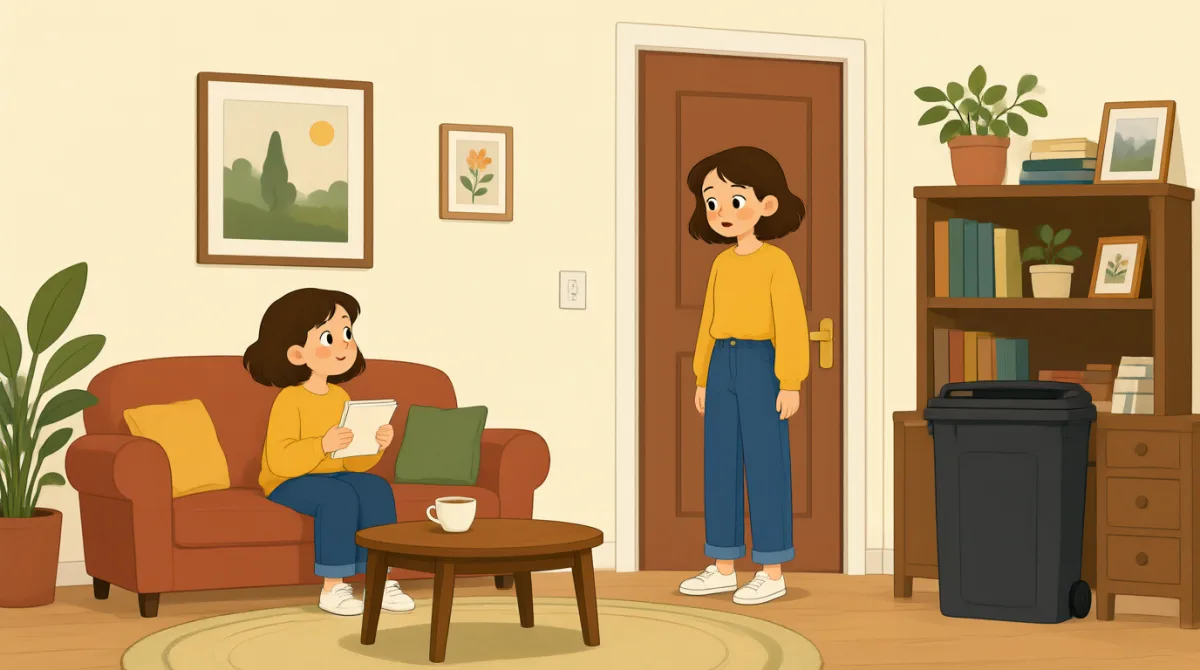

Grace, when is trash day?
그레이스, 쓰레기 수거일이 언제야?

It is every Tuesday.
매주 화요일이야.
What time do they come?
몇 시에 와?
They come early in the morning.
아침 일찍 와.
Should I put the bags out tonight?
오늘 밤에 쓰레기봉투를 내놓으면 돼?
Yes. Put them by the curb tonight.
응. 오늘 밤에 길가에 내놔.
Okay, I’ll do that. Thanks!
알았어, 그럴게. 고마워!
어휘6
- trash day쓰레기 수거일
This is the day when trash is picked up. You can ask, “When is trash day?”
쓰레기를 수거하는 날을 뜻해요. “When is trash day?”라고 물어볼 수 있어요.
- every Tuesday매주 화요일
This means something happens each Tuesday. Use it to say how often an event happens.
매주 화요일마다 어떤 일이 일어난다는 뜻이에요. 어떤 일이 얼마나 자주 일어나는지 말할 때 써요.
- early in the morning아침 일찍
This means near the start of the morning. You can use it to say when someone arrives.
아침이 시작된 지 얼마 되지 않은 때를 뜻해요. 누군가 언제 도착하는지 말할 때 쓸 수 있어요.
- put the bags out쓰레기봉투를 내놓다
This means to take the bags outside for pickup. Use “put” plus an object and “out” to talk about placing something outside.
수거할 수 있도록 쓰레기봉투를 밖에 내놓는다는 뜻이에요. 물건을 밖에 두는 일을 말할 때 “put” 뒤에 물건을 놓고 “out”을 붙여 쓸 수 있어요.
- by the curb길가에
This means next to the edge of the street. It tells someone where to leave the bags.
도로 가장자리 옆을 뜻해요. 쓰레기봉투를 어디에 두면 되는지 알려 줄 때 써요.
- tonight오늘 밤
This means this evening or night. Use it to say when you will do something.
오늘 저녁이나 밤을 뜻해요. 어떤 일을 언제 할지 말할 때 써요.
핵심 문장8
- 1
Grace, when is trash day?
그레이스, 쓰레기 수거일이 언제야?
Use this simple question to ask which day trash is picked up. You can replace “trash day” with another event, such as “the meeting.”
쓰레기를 무슨 요일에 수거하는지 물어볼 때 쓰는 간단한 질문이에요. “trash day”를 “the meeting”처럼 다른 일정으로 바꿔 말할 수도 있어요.
- 2
It is every Tuesday.
매주 화요일이야.
This gives the day something happens. You can replace “Tuesday” with another day of the week.
어떤 일이 일어나는 요일을 알려 주는 표현이에요. “Tuesday”를 다른 요일로 바꿔 말할 수 있어요.
- 3
What time do they come?
몇 시에 와?
Use this question to ask when people or a service will arrive. You can replace “they” with a person or group.
사람이나 서비스가 언제 도착하는지 물어볼 때 쓰는 질문이에요. “they”를 사람이나 단체를 가리키는 말로 바꿀 수 있어요.
- 4
They come early in the morning.
아침 일찍 와.
This tells someone when people will arrive. Replace “early in the morning” with another time phrase.
사람들이 언제 도착하는지 알려 주는 말이에요. “early in the morning”을 다른 시간 표현으로 바꿔 쓸 수 있어요.
- 5
Should I put the bags out tonight?
오늘 밤에 쓰레기봉투를 내놓으면 돼?
Use “Should I…?” to ask if something is a good idea or is needed. You can replace “put the bags out” with another task.
“Should I…?”는 어떤 일을 하는 게 좋을지, 또는 해야 하는지 물어볼 때 써요. “put the bags out”을 다른 할 일로 바꿀 수 있어요.
- 6
Yes.
응.
This is a short way to answer a yes-or-no question positively. You can use it in everyday conversations.
예·아니요로 답하는 질문에 긍정적으로 짧게 답하는 표현이에요. 일상 대화에서 쓸 수 있어요.
- 7
Put them by the curb tonight.
오늘 밤에 길가에 내놔.
This is a direct, simple instruction about where and when to leave the bags. Replace “them” with the item you need to place.
쓰레기봉투를 어디에 언제 두면 되는지 직접 간단히 알려 주는 말이에요. 놓아야 하는 물건에 맞게 “them”을 바꿔 쓸 수 있어요.
- 8
Okay, I’ll do that.
알았어, 그럴게.
Use this to agree to do something someone has asked you to do. “I’ll” is a common short form of “I will.”
누군가 부탁한 일을 하겠다고 동의할 때 쓰는 표현이에요. “I’ll”은 “I will”을 줄인 흔한 표현이에요.