When Is Trash Day?
วันเก็บขยะคือวันไหน?
Emma asks Grace when trash day is. Grace tells her the pickup day and time.
เอ็มมาถามเกรซว่าวันเก็บขยะคือวันไหน เกรซบอกวันและเวลาที่จะมาเก็บขยะ
บทสนทนา7
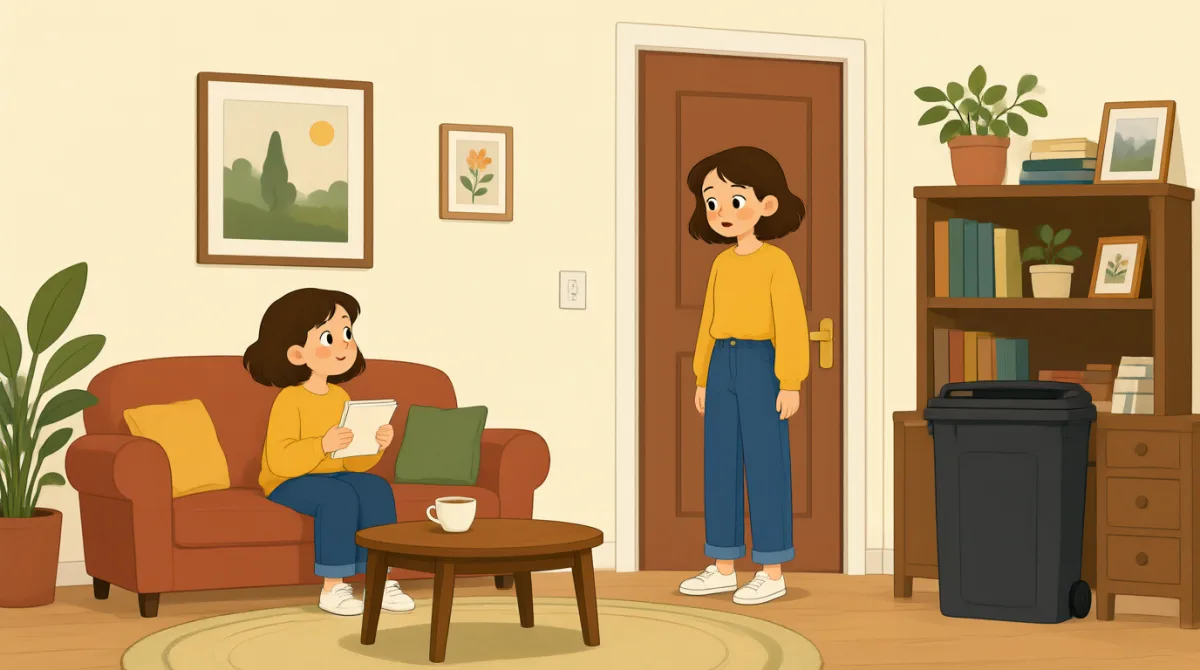

Grace, when is trash day?
เกรซ วันเก็บขยะวันไหนเหรอ?

It is every Tuesday.
ทุกวันอังคารน่ะ
What time do they come?
เขามากันกี่โมงเหรอ?
They come early in the morning.
มาตอนเช้าตรู่เลย
Should I put the bags out tonight?
คืนนี้ฉันควรเอาถุงขยะออกไปวางไหม?
Yes. Put them by the curb tonight.
ใช่ วางไว้ข้างทางเท้าคืนนี้นะ
Okay, I’ll do that. Thanks!
โอเค ฉันจะทำแบบนั้น ขอบใจนะ!
คำศัพท์6
- trash dayวันเก็บขยะ
This is the day when trash is picked up. You can ask, “When is trash day?”
หมายถึงวันที่มีคนมาเก็บขยะ คุณถามได้ว่า “When is trash day?” (วันเก็บขยะวันไหน?)
- every Tuesdayทุกวันอังคาร
This means something happens each Tuesday. Use it to say how often an event happens.
หมายถึงสิ่งนั้นเกิดขึ้นทุกวันอังคาร ใช้บอกว่าเหตุการณ์เกิดขึ้นบ่อยแค่ไหน
- early in the morningตอนเช้าตรู่
This means near the start of the morning. You can use it to say when someone arrives.
หมายถึงช่วงต้น ๆ ของตอนเช้า ใช้บอกว่าใครสักคนมาถึงเมื่อไหร่ได้
- put the bags outเอาถุงออกไปวาง
This means to take the bags outside for pickup. Use “put” plus an object and “out” to talk about placing something outside.
หมายถึงเอาถุงออกไปข้างนอกเพื่อให้มาเก็บ ใช้ “put” ตามด้วยสิ่งของและ “out” เพื่อพูดถึงการนำของไปวางไว้ข้างนอก
- by the curbข้างทางเท้า
This means next to the edge of the street. It tells someone where to leave the bags.
หมายถึงข้าง ๆ ริมถนน ใช้บอกว่าจะวางถุงไว้ตรงไหน
- tonightคืนนี้
This means this evening or night. Use it to say when you will do something.
หมายถึงเย็นนี้หรือคืนนี้ ใช้บอกว่าจะทำอะไรเมื่อไหร่
ประโยคสำคัญ8
- 1
Grace, when is trash day?
เกรซ วันเก็บขยะวันไหนเหรอ?
Use this simple question to ask which day trash is picked up. You can replace “trash day” with another event, such as “the meeting.”
ใช้คำถามง่าย ๆ นี้เพื่อถามว่าวันไหนมีคนมาเก็บขยะ คุณเปลี่ยน “trash day” เป็นกิจกรรมอื่นได้ เช่น “the meeting” (การประชุม)
- 2
It is every Tuesday.
ทุกวันอังคารน่ะ
This gives the day something happens. You can replace “Tuesday” with another day of the week.
ประโยคนี้ใช้บอกว่าสิ่งหนึ่งเกิดขึ้นวันไหน คุณเปลี่ยน “Tuesday” เป็นวันอื่นในสัปดาห์ได้
- 3
What time do they come?
เขามากันกี่โมงเหรอ?
Use this question to ask when people or a service will arrive. You can replace “they” with a person or group.
ใช้คำถามนี้ถามว่าคนหรือบริการจะมาถึงเมื่อไหร่ คุณเปลี่ยน “they” เป็นคนหรือกลุ่มคนอื่นได้
- 4
They come early in the morning.
มาตอนเช้าตรู่เลย
This tells someone when people will arrive. Replace “early in the morning” with another time phrase.
ประโยคนี้ใช้บอกว่าใครจะมาถึงเมื่อไหร่ คุณเปลี่ยน “early in the morning” เป็นวลีบอกเวลาอื่นได้
- 5
Should I put the bags out tonight?
คืนนี้ฉันควรเอาถุงขยะออกไปวางไหม?
Use “Should I…?” to ask if something is a good idea or is needed. You can replace “put the bags out” with another task.
ใช้ “Should I…?” เพื่อถามว่าควรทำอะไรหรือจำเป็นต้องทำไหม คุณเปลี่ยน “put the bags out” เป็นงานอย่างอื่นได้
- 6
Yes.
ใช่
This is a short way to answer a yes-or-no question positively. You can use it in everyday conversations.
เป็นวิธีสั้น ๆ ในการตอบรับคำถามที่ตอบได้ว่าใช่หรือไม่ใช่ ใช้ได้ในการสนทนาทั่วไป
- 7
Put them by the curb tonight.
วางไว้ข้างทางเท้าคืนนี้นะ
This is a direct, simple instruction about where and when to leave the bags. Replace “them” with the item you need to place.
เป็นคำสั่งตรง ๆ ที่เข้าใจง่ายว่าควรวางถุงไว้ที่ไหนและเมื่อไหร่ คุณเปลี่ยน “them” เป็นสิ่งของที่ต้องวางได้
- 8
Okay, I’ll do that.
โอเค ฉันจะทำแบบนั้น
Use this to agree to do something someone has asked you to do. “I’ll” is a common short form of “I will.”
ใช้ประโยคนี้เพื่อตกลงว่าจะทำสิ่งที่อีกฝ่ายขอให้ทำ “I’ll” เป็นรูปย่อที่ใช้กันทั่วไปของ “I will”