Asking Where Someone Is From
Pytanie, skąd ktoś pochodzi
At breakfast, Emma asks Mia and Leo where they are from. They answer and ask Emma the same question.
Przy śniadaniu Emma pyta Mię i Leo, skąd pochodzą. Odpowiadają i zadają Emmie to samo pytanie.
Dialog7
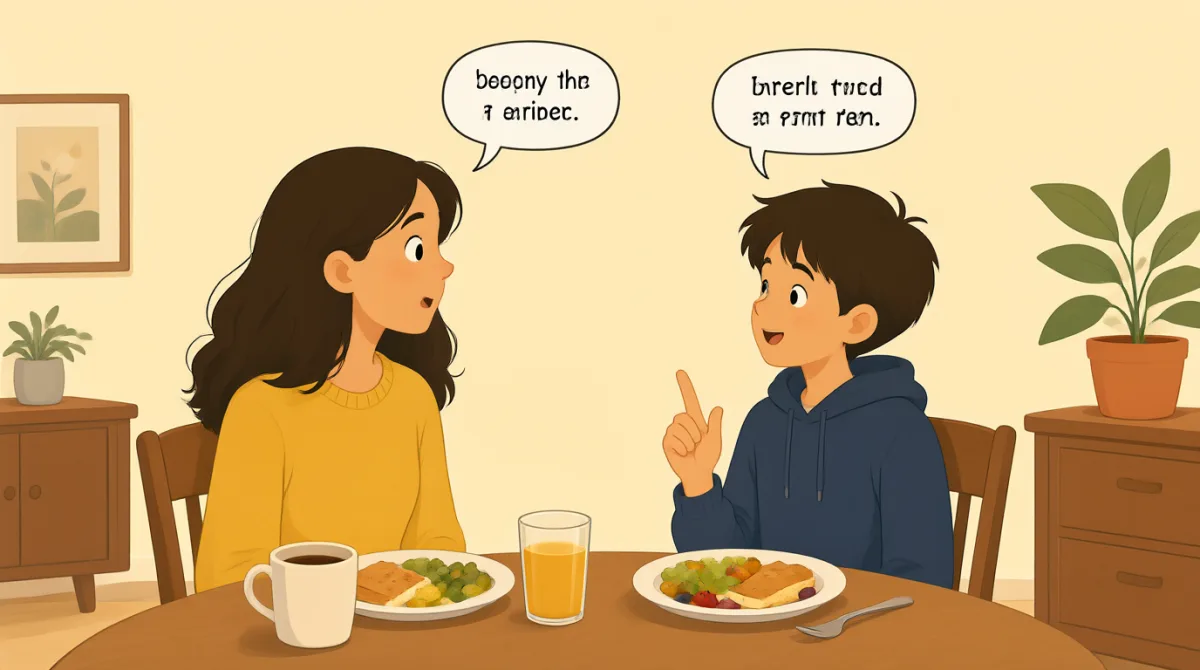

Where are you from, Mia?
Skąd jesteś, Mia?

I’m from India. I’m from Delhi.
Jestem z Indii. Pochodzę z Delhi.
And you, Leo? Where are you from?
A ty, Leo? Skąd jesteś?

I’m from Mexico. I’m from Mexico City.
Jestem z Meksyku. Pochodzę z Meksyku.
Emma, where are you from?
Emma, skąd jesteś?
I’m from the United States. I’m from Boston.
Jestem ze Stanów Zjednoczonych. Pochodzę z Bostonu.
That’s cool! We’re all from different places.
Ale fajnie! Wszyscy jesteśmy z różnych miejsc.
Słownictwo7
- Where are you from?Skąd jesteś?
This is a common way to ask about someone’s home country or city. You can use it to start a friendly conversation.
To częsty sposób, by zapytać kogoś, z jakiego kraju lub miasta pochodzi. Możesz tak rozpocząć przyjazną rozmowę.
- I’m fromJestem z
Use this phrase to say where you come from. Add a country or city after it.
Użyj tego wyrażenia, by powiedzieć, skąd pochodzisz. Po nim podaj nazwę kraju lub miasta.
- And you?A ty?
This short question asks the same thing about another person. Use it to return a question in a conversation.
To krótkie pytanie, w którym pytasz inną osobę o to samo. Możesz go użyć, by w rozmowie zadać pytanie w odpowiedzi.
- IndiaIndie
India is a country in South Asia. In the dialogue, Mia says she is from India.
Indie to państwo w Azji Południowej. W dialogu Mia mówi, że pochodzi z Indii.
- DelhiDelhi
Delhi is a large city in India. You can name a city after saying, “I’m from.”
Delhi to duże miasto w Indiach. Po „I’m from” możesz podać nazwę miasta.
- Mexico CityMeksyk
Mexico City is the capital city of Mexico. Leo says he is from this city.
Meksyk to stolica Meksyku. Leo mówi, że pochodzi z tego miasta.
- different placesróżne miejsca
This means places that are not the same. It describes how Emma, Mia, and Leo come from different locations.
To miejsca, które nie są takie same. To wyrażenie opisuje, że Emma, Mia i Leo pochodzą z różnych miejsc.
Kluczowe zdania8
- 1
Where are you from, Mia?
Skąd jesteś, Mia?
Use this to ask one person where they come from. You can replace “Mia” with the person’s name.
Użyj tego pytania, by zapytać jedną osobę, skąd pochodzi. Możesz zamiast „Mia” podać imię tej osoby.
- 2
I’m from India.
Jestem z Indii.
This is a simple way to name your country. Replace “India” with your own country.
To prosty sposób, by podać nazwę swojego kraju. Zamiast „India” wpisz nazwę własnego kraju.
- 3
I’m from Delhi.
Pochodzę z Delhi.
Use this sentence to say which city you come from. Replace “Delhi” with your city.
Użyj tego zdania, by powiedzieć, z jakiego miasta pochodzisz. Zamiast „Delhi” podaj nazwę swojego miasta.
- 4
And you, Leo?
A ty, Leo?
This is a short way to ask another person the same question. Use it after someone has answered you.
To krótki sposób, by zadać innej osobie to samo pytanie. Użyj go, gdy ktoś już ci odpowiedział.
- 5
Where are you from?
Skąd jesteś?
This is a useful everyday question for learning about someone. You can ask it with or without saying the person’s name.
To przydatne, codzienne pytanie, które pozwala dowiedzieć się czegoś o drugiej osobie. Możesz zadać je z imieniem tej osoby lub bez niego.
- 6
I’m from the United States.
Jestem ze Stanów Zjednoczonych.
Use this sentence to say you come from the United States. You can replace the country name with another place.
Użyj tego zdania, by powiedzieć, że pochodzisz ze Stanów Zjednoczonych. Możesz zastąpić nazwę kraju nazwą innego miejsca.
- 7
That’s cool!
Ale fajnie!
This is a friendly way to show that you like what someone said. You can use it in casual conversation.
To przyjazny sposób, by pokazać, że podoba ci się to, co ktoś powiedział. Możesz używać tego wyrażenia w swobodnej rozmowie.
- 8
We’re all from different places.
Wszyscy jesteśmy z różnych miejsc.
Use this sentence to say that a group comes from different locations. “We’re” is the short form of “we are.”
Użyj tego zdania, by powiedzieć, że grupa osób pochodzi z różnych miejsc. „We’re” to skrócona forma „we are”.