Asking Where Someone Is From
At breakfast, Emma asks Mia and Leo where they are from. They answer and ask Emma the same question.
Dialogue7
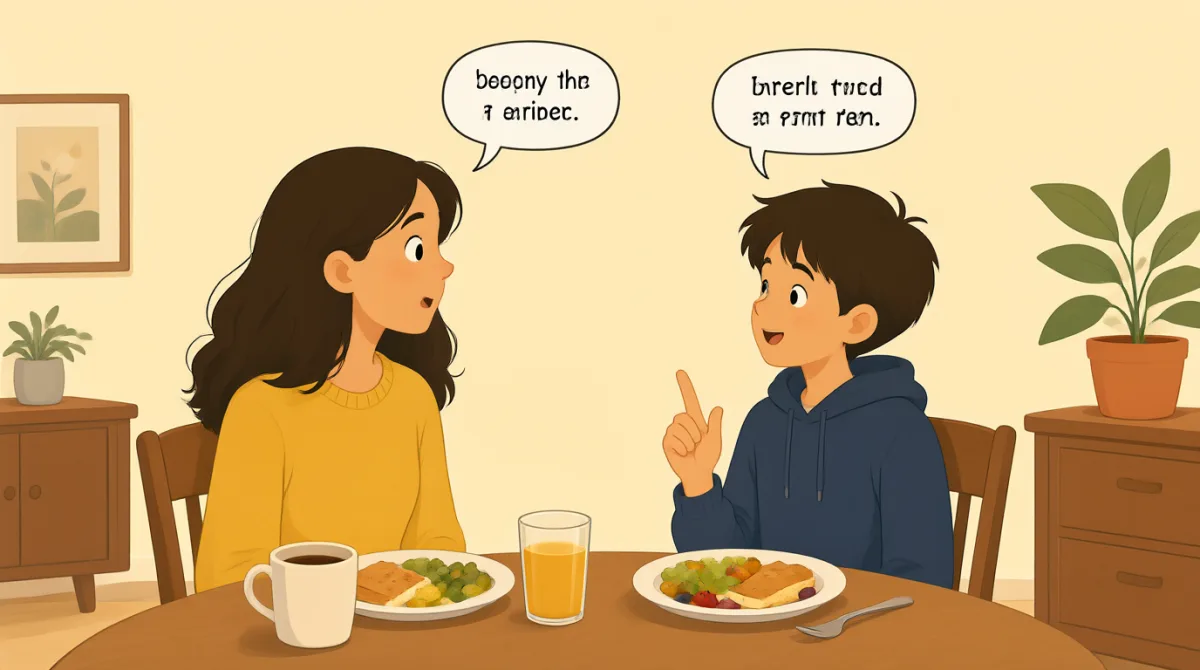

Where are you from, Mia?

I’m from India. I’m from Delhi.
And you, Leo? Where are you from?

I’m from Mexico. I’m from Mexico City.
Emma, where are you from?
I’m from the United States. I’m from Boston.
That’s cool! We’re all from different places.
Vocabulary7
- Where are you from?
This is a common way to ask about someone’s home country or city. You can use it to start a friendly conversation.
- I’m from
Use this phrase to say where you come from. Add a country or city after it.
- And you?
This short question asks the same thing about another person. Use it to return a question in a conversation.
- India
India is a country in South Asia. In the dialogue, Mia says she is from India.
- Delhi
Delhi is a large city in India. You can name a city after saying, “I’m from.”
- Mexico City
Mexico City is the capital city of Mexico. Leo says he is from this city.
- different places
This means places that are not the same. It describes how Emma, Mia, and Leo come from different locations.
Key Sentences8
- 1
Where are you from, Mia?
Use this to ask one person where they come from. You can replace “Mia” with the person’s name.
- 2
I’m from India.
This is a simple way to name your country. Replace “India” with your own country.
- 3
I’m from Delhi.
Use this sentence to say which city you come from. Replace “Delhi” with your city.
- 4
And you, Leo?
This is a short way to ask another person the same question. Use it after someone has answered you.
- 5
Where are you from?
This is a useful everyday question for learning about someone. You can ask it with or without saying the person’s name.
- 6
I’m from the United States.
Use this sentence to say you come from the United States. You can replace the country name with another place.
- 7
That’s cool!
This is a friendly way to show that you like what someone said. You can use it in casual conversation.
- 8
We’re all from different places.
Use this sentence to say that a group comes from different locations. “We’re” is the short form of “we are.”