Finding a Good Spot
Znajdowanie dobrego miejsca
Emma and Jack look for a nice place to sit in the park. They find a spot under a tree.
Emma i Jack szukają w parku przyjemnego miejsca do siedzenia. Znajdują miejsce pod drzewem.
Dialog7
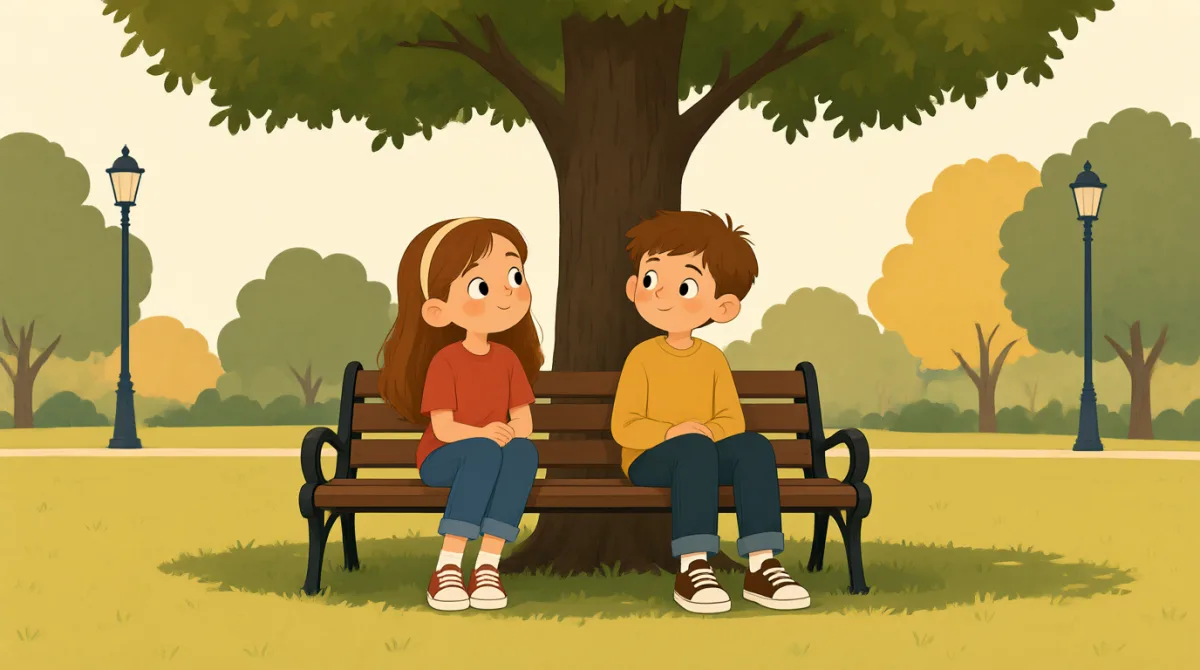

Where should we sit, Jack?
Gdzie powinniśmy usiąść, Jack?

Let’s find a nice spot.
Znajdźmy jakieś miłe miejsce.
That spot looks nice. Is it free?
Tamto miejsce wygląda fajnie. Jest wolne?
Yes, it’s free. But it’s very sunny.
Tak, jest wolne. Ale jest tam bardzo słonecznie.
I see a big tree over there.
Widzę tam duże drzewo.
Good idea. Let’s sit under it.
Dobry pomysł. Usiądźmy pod nim.
It’s cool and quiet here.
Jest tu chłodno i cicho.
Słownictwo7
- a nice spotmiłe miejsce
A pleasant place to sit. You can say, “Let’s find a nice spot” when you want to choose a good place.
Przyjemne miejsce do siedzenia. Możesz powiedzieć „Let’s find a nice spot” (Znajdźmy jakieś miłe miejsce), gdy chcesz wybrać dobre miejsce.
- freewolny; dostępny
Available for someone to use. Ask “Is it free?” to check whether a seat or place is available.
Dostępny dla kogoś. Zapytaj „Is it free?” (Czy jest wolne?), żeby sprawdzić, czy miejsce albo krzesło jest dostępne.
- sunnysłoneczny
Bright with a lot of sunlight. You can use this word to describe the weather or a place in the sun.
Jasny, pełen światła słonecznego. Tego słowa możesz użyć, mówiąc o pogodzie albo miejscu nasłonecznionym.
- over theretam
A phrase for pointing to a place that is not close to you. For example, “The café is over there.”
Wyrażenie wskazujące na miejsce, które nie znajduje się blisko ciebie. Na przykład: „The café is over there.” (Kawiarnia jest tam.)
- Good idea.Dobry pomysł.
A simple way to say that you like someone’s suggestion. You can also say, “That’s a good idea.”
Prosty sposób, by powiedzieć, że podoba ci się czyjaś propozycja. Możesz też powiedzieć „That’s a good idea.” (To dobry pomysł.)
- under itpod nim
In this dialogue, it means in the space below the tree. Use “under” to say that something is below another thing.
W tym dialogu oznacza to miejsce pod drzewem. Użyj „under”, żeby powiedzieć, że coś znajduje się pod czymś innym.
- cool and quietchłodno i cicho
“Cool” means not warm, and “quiet” means with little noise. These words describe a comfortable place to sit.
„Cool” znaczy, że nie jest ciepło, a „quiet” oznacza, że jest mało hałasu. Te słowa opisują przyjemne miejsce do siedzenia.
Kluczowe zdania8
- 1
Where should we sit, Jack?
Gdzie powinniśmy usiąść, Jack?
Use this question to ask someone to help choose a place to sit. You can replace “sit” with another activity, such as “Where should we eat?”
Użyj tego pytania, by poprosić kogoś o pomoc w wyborze miejsca do siedzenia. Możesz zastąpić „sit” inną czynnością, na przykład „Where should we eat?” (Gdzie powinniśmy zjeść?).
- 2
Let’s find a nice spot.
Znajdźmy jakieś miłe miejsce.
Use “Let’s” to suggest doing something together. You can say, “Let’s find a table” or “Let’s find a place to rest.”
Użyj „Let’s”, by zaproponować wspólne zrobienie czegoś. Możesz powiedzieć „Let’s find a table” (Znajdźmy stolik) albo „Let’s find a place to rest.” (Znajdźmy miejsce, żeby odpocząć.).
- 3
That spot looks nice.
Tamto miejsce wygląda fajnie.
Use this sentence to say that a place seems pleasant. Replace “spot” with a place, such as “That park looks nice.”
Użyj tego zdania, by powiedzieć, że jakieś miejsce wydaje się przyjemne. Zastąp „spot” nazwą innego miejsca, na przykład „That park looks nice.” (Ten park wygląda fajnie.).
- 4
Is it free?
Jest wolne?
Ask this to check whether a place or seat is available. You can also ask, “Is this chair free?”
Zapytaj tak, by sprawdzić, czy miejsce albo krzesło jest dostępne. Możesz też zapytać „Is this chair free?” (Czy to krzesło jest wolne?).
- 5
I see a big tree over there.
Widzę tam duże drzewo.
Use “I see” to point out something you notice. Replace “a big tree” with another thing, such as “a bench.”
Użyj „I see”, by zwrócić komuś uwagę na coś, co zauważasz. Zastąp „a big tree” czymś innym, na przykład „a bench” (ławkę).
- 6
Good idea.
Dobry pomysł.
Use this short phrase to agree with a suggestion. It is a friendly, natural response in everyday conversation.
Użyj tego krótkiego wyrażenia, by zgodzić się z czyjąś propozycją. To przyjazna, naturalna odpowiedź w codziennej rozmowie.
- 7
Let’s sit under it.
Usiądźmy pod nim.
Use this sentence to suggest sitting below or beneath something. Replace “it” with the thing you mean, such as “the tree.”
Użyj tego zdania, by zaproponować siedzenie pod czymś. Zastąp „it” tym, o czym mówisz, na przykład „the tree” (drzewem).
- 8
It’s cool and quiet here.
Jest tu chłodno i cicho.
Use this sentence to describe a comfortable place. Replace “cool and quiet” with other describing words, such as “warm and sunny.”
Użyj tego zdania, by opisać przyjemne miejsce. Zastąp „cool and quiet” innymi określeniami, na przykład „warm and sunny” (ciepło i słonecznie).