Asking for a Clean Fork
Emma needs a clean fork and asks Jack for one. He brings her a clean fork.
Dialogue6
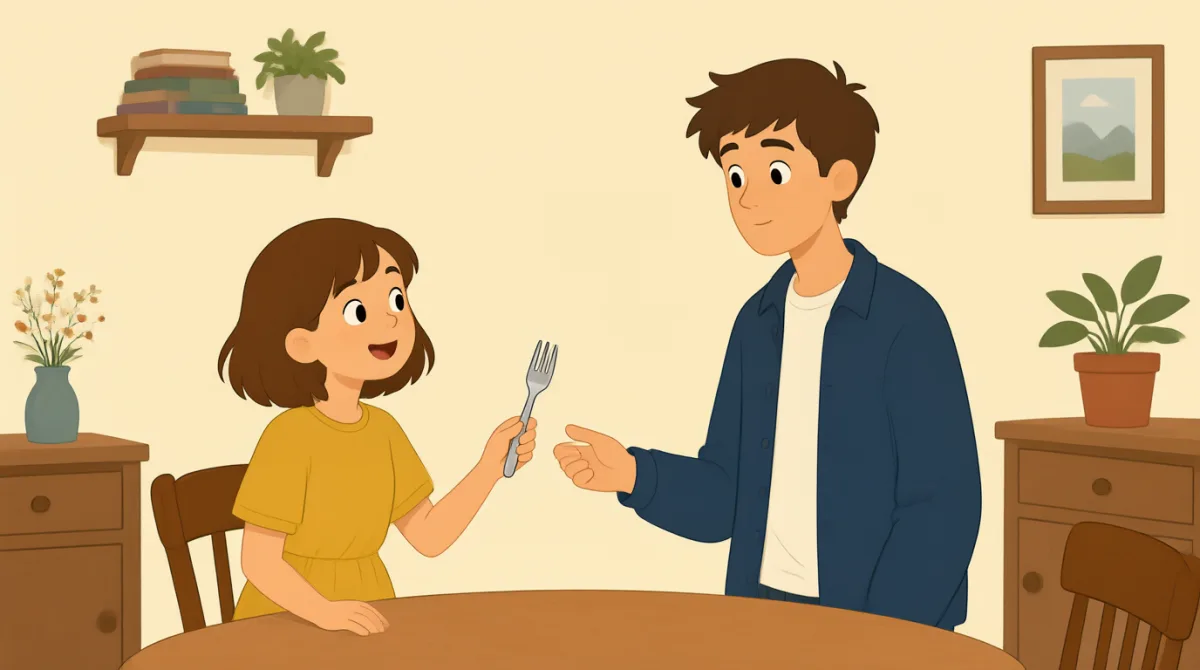

Excuse me, Jack. Can I have a clean fork?

Of course. I’ll get one for you.
Thank you. This one is dirty.
No problem. Here’s a clean fork.
Thanks. That’s perfect.
You’re welcome. Enjoy your meal!
Vocabulary8
- Excuse me
A polite way to get someone's attention. Use it before asking the server for something.
- Can I have
A polite way to ask for something. You can use it to order food or request an item.
- clean fork
A fork that has been washed and is ready to use. Say this when you need a fresh fork.
- Of course
A friendly way to say yes. It shows that you are happy to help.
- get one for you
To go and bring one to someone. Use this phrase when offering to bring an item.
- dirty
Not clean. You can use this word to explain why you need a new item.
- No problem
A casual way to say that something is okay. It is often used when helping someone.
- Enjoy your meal
A friendly phrase people say before someone eats. Servers often say it to guests.
Key Sentences8
- 1
Excuse me, Jack.
Use this polite phrase to get someone's attention. You can say it to a server before making a request.
- 2
Can I have a clean fork?
This is a polite way to ask for something. Replace “a clean fork” with another item you need.
- 3
Of course.
Use this short phrase to agree or say yes in a friendly way.
- 4
I’ll get one for you.
This is a helpful response when you will bring someone an item. Replace “one” with the item they need.
- 5
This one is dirty.
Use this sentence to explain that an item is not clean. You can point to the item as you say it.
- 6
Here’s a clean fork.
Use this phrase when giving someone the item they asked for. You can replace “a clean fork” with another item.
- 7
That’s perfect.
Use this to say that something is exactly right for you. It is a friendly way to show you are satisfied.
- 8
Enjoy your meal!
This is a friendly phrase to say to someone who is about to eat. You can use it when serving food.