Debriefing After a Hard Day
힘든 하루를 보낸 뒤의 회고
After the conversation, Dr. Patel debriefs with Dr. Chen about what went well and what still weighs on her. He reminds her that being honest and compassionate matters even when she cannot take away the patient’s uncertainty.
대화를 마친 뒤, 파텔 의사는 첸 의사와 함께 잘된 점과 여전히 마음에 걸리는 점을 되짚어 봅니다. 첸 의사는 환자의 불확실성을 없애 줄 수 없더라도 솔직하고 따뜻하게 대하는 것이 중요하다고 일깨워 줍니다.
대화11
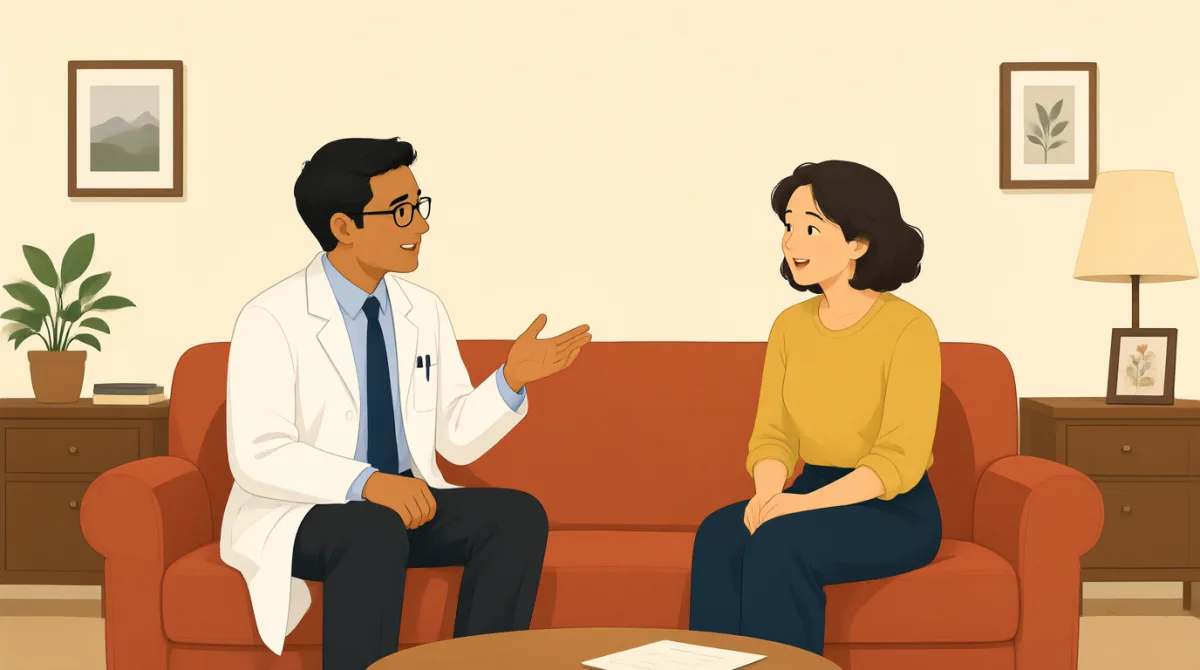

I keep replaying the moment I told him. I think I explained the results clearly, but when he went quiet, I wasn’t sure whether to say more or let the silence stand.
그에게 말했던 순간이 자꾸 떠올라요. 결과를 명확하게 설명했다고 생각했는데, 그가 말이 없어지자 더 이야기해야 할지, 그 침묵을 그대로 두어야 할지 모르겠더라고요.

You don’t have to fill every silence, Mia. Sometimes giving someone room to absorb the news is more respectful than offering another explanation they can’t take in yet.
모든 침묵을 꼭 채울 필요는 없어요, 미아. 때로는 환자가 소식을 받아들일 시간을 주는 게, 아직 받아들이기 힘든 설명을 더 하는 것보다 더 배려하는 일이에요.
I asked what felt most important to him right then. He said he needed to know whether he could still work, and I didn’t have a definite answer.
그 순간 그에게 가장 중요한 게 무엇인지 물어봤어요. 계속 일을 할 수 있는지 알고 싶다고 했는데, 저도 확답을 드릴 수가 없었어요.
That uncertainty is difficult, but you were right not to manufacture certainty. You can acknowledge what you don’t know and explain how you’ll work toward an answer.
그런 불확실성은 힘들죠. 그래도 확실하지 않은 걸 확실한 것처럼 말하지 않은 건 잘한 일이에요. 모르는 부분은 인정하고, 답을 찾기 위해 어떻게 할 건지 설명할 수 있어요.
I told him we’d discuss the treatment plan together and that I’d follow up about the practical questions. Still, I worry that sounded procedural when he was frightened.
치료 계획은 함께 의논하고, 현실적인 질문들에 대해서는 제가 확인해서 알려드리겠다고 했어요. 그래도 그분이 두려워하고 있을 때 제가 너무 절차적으로 말한 건 아닌가 걱정돼요.
Practical steps can be a form of care, provided they don’t crowd out the emotion. Did you make room for him to say what was frightening him most?
실질적인 조치도 돌봄의 한 방식이 될 수 있어요. 다만 감정을 뒷전으로 밀어내지 않는다면요. 그분이 무엇을 가장 두려워하는지 말할 수 있도록 시간을 드렸나요?
I did, eventually. He said he was afraid of losing his independence. I told him that mattered, and we’d include it in our decisions rather than treat it as an afterthought.
결국엔 그랬어요. 독립성을 잃을까 봐 두렵다고 하시더라고요. 그게 중요하다고 말씀드렸고, 나중에 덧붙이는 게 아니라 의사 결정에 반영하겠다고 했어요.
That was thoughtful. Compassion doesn’t mean promising that everything will be all right; it means taking the person’s concerns seriously while being honest about what remains uncertain.
사려 깊게 잘하셨어요. 연민을 보인다는 건 모든 일이 잘될 거라고 약속하는 게 아니에요. 불확실한 부분은 솔직히 말하면서 그 사람의 걱정을 진지하게 받아들이는 거죠.
I know that intellectually. Emotionally, I still want to take the uncertainty away for him, and I feel I’ve failed when I can’t.
머리로는 알아요. 하지만 마음으로는 여전히 그분의 불확실성을 없애 주고 싶고, 그럴 수 없을 때면 제가 실패한 것처럼 느껴져요.
You can’t take away the uncertainty, but you can make sure he doesn’t have to face it without support. That’s not a small thing, even if it doesn’t feel like a solution.
그 불확실성을 없애 줄 수는 없지만, 그분이 아무런 도움도 받지 못한 채 혼자 감당하지 않도록 할 수는 있어요. 해결책처럼 느껴지지 않더라도, 그건 결코 작은 일이 아니에요.
Thank you. I’ll document what he said about independence and make sure we return to it when we discuss options. I think I can leave the hospital a little lighter now.
고마워요. 독립성에 관해 하신 말씀을 기록해 두고, 선택지를 의논할 때 꼭 다시 짚어 볼게요. 이제 조금은 가벼운 마음으로 병원을 나설 수 있을 것 같아요.
어휘7
- let the silence stand침묵을 그대로 두다
To leave a pause without speaking or trying to fill it. Here, it means giving the patient time to absorb difficult news.
말을 하거나 침묵을 억지로 채우지 않고 잠시 그대로 두는 거예요. 여기서는 환자가 힘든 소식을 받아들일 시간을 주는 것을 뜻해요.
- absorb the news소식을 받아들이다
To take in and begin to understand important or upsetting information. It can take time before someone is ready to discuss what they have heard.
중요하거나 마음을 무겁게 하는 정보를 듣고 이해하기 시작하는 거예요. 들은 내용을 이야기할 준비가 되기까지 시간이 걸릴 수 있어요.
- manufacture certainty확실하지 않은 일을 확실한 것처럼 말하다
To claim something is certain when you do not actually know. In this context, it means avoiding false reassurance about the patient's future.
실제로는 알지 못하는 일을 확실하다고 말하는 거예요. 여기서는 환자의 미래에 대해 근거 없이 안심시키지 않는다는 뜻이에요.
- follow up후속 조치를 하다
To contact someone again or take further action after an initial conversation. You can use it for checking on a question, concern, or next step.
처음 대화를 나눈 뒤 다시 연락하거나 추가로 필요한 조치를 하는 거예요. 질문이나 걱정거리를 확인하거나 다음 단계를 진행할 때 쓸 수 있어요.
- crowd out the emotion감정을 뒷전으로 밀어내다
To leave too little room for someone’s feelings by focusing too much on other things. It is useful when balancing practical information with emotional support.
다른 일에 지나치게 집중해 상대방의 감정을 살필 여지를 거의 남기지 않는 거예요. 실질적인 정보를 주면서 정서적인 지원도 함께 제공할 때 유용한 표현이에요.
- take the uncertainty away불확실성을 없애 주다
To remove someone’s doubts or lack of certainty. The phrase can express a wish to protect someone, even when the situation cannot be made certain.
누군가의 의심이나 확신이 없는 상태를 없애 주는 거예요. 상황을 확실하게 만들 수 없더라도 상대를 지켜 주고 싶은 마음을 나타낼 수 있어요.
- face it without support도움 없이 혼자 감당하다
To deal with a difficult situation alone, without help from others. It highlights that support matters even when there is no immediate solution.
다른 사람의 도움 없이 어려운 상황을 혼자 겪는 거예요. 당장 해결책이 없더라도 지원이 중요하다는 점을 강조하는 표현이에요.
핵심 문장7
- 1
Sometimes giving someone room to absorb the news is more respectful than offering another explanation they can’t take in yet.
때로는 누군가에게 소식을 받아들일 시간을 주는 것이, 아직 받아들이기 힘든 설명을 더 하는 것보다 더 배려하는 일이에요.
This sentence explains why a pause can be compassionate rather than awkward. Use the structure “giving someone room to [do something]” to describe allowing space or time.
이 문장은 잠시 침묵하는 것이 어색한 행동이 아니라 배려가 될 수 있는 이유를 설명해요. “giving someone room to [do something]”은 누군가에게 어떤 일을 할 여유나 시간을 준다는 뜻이에요.
- 2
You can acknowledge what you don’t know and explain how you’ll work toward an answer.
모르는 부분은 인정하고, 답을 찾기 위해 어떻게 할 건지 설명할 수 있어요.
This is a useful way to be honest about uncertainty while still offering a plan. Reuse it when you need to distinguish what is known from what you will do next.
불확실한 점을 솔직히 밝히면서도 계획을 제시할 때 유용한 표현이에요. 아는 것과 다음에 할 일을 구분해야 할 때 활용해 보세요.
- 3
Practical steps can be a form of care, provided they don’t crowd out the emotion.
실질적인 조치도 돌봄의 한 방식이 될 수 있어요. 감정을 뒷전으로 밀어내지 않는다면요.
This sentence balances concrete help with attention to feelings. “Provided” means “as long as,” and can introduce a condition or qualification.
이 문장은 구체적인 도움과 감정에 대한 배려 사이의 균형을 보여 줘요. “Provided”는 “~하는 한”이라는 뜻으로, 조건이나 단서를 덧붙일 때 쓸 수 있어요.
- 4
I told him that mattered, and we’d include it in our decisions rather than treat it as an afterthought.
그게 중요하다고 말씀드렸고, 나중에 덧붙이는 게 아니라 의사 결정에 반영하겠다고 했어요.
This shows how to validate someone's concern and make it part of future decisions. Reuse “rather than treat it as an afterthought” when emphasizing that something deserves consideration from the beginning.
상대방의 걱정을 인정하고 앞으로의 의사 결정에 반영하는 방법을 보여 주는 문장이에요. 무언가를 처음부터 고려할 가치가 있다고 강조할 때 “rather than treat it as an afterthought”를 활용해 보세요.
- 5
Compassion doesn’t mean promising that everything will be all right; it means taking the person’s concerns seriously while being honest about what remains uncertain.
연민을 보인다는 건 모든 일이 잘될 거라고 약속하는 게 아니에요. 불확실한 부분은 솔직히 말하면서 그 사람의 걱정을 진지하게 받아들이는 거죠.
This sentence defines compassion without offering false reassurance. The “doesn’t mean ...; it means ...” structure is useful for clarifying a nuanced idea.
이 문장은 근거 없는 안심을 시키지 않으면서 연민이 무엇인지 설명해요. “doesn’t mean ...; it means ...” 구조는 미묘한 생각을 명확하게 풀어 설명할 때 유용해요.
- 6
Emotionally, I still want to take the uncertainty away for him, and I feel I’ve failed when I can’t.
마음으로는 여전히 그분의 불확실성을 없애 주고 싶고, 그럴 수 없을 때면 제가 실패한 것처럼 느껴져요.
This sentence expresses the emotional tension between wanting to help and accepting one's limits. Reuse “I feel I’ve failed when I can’t” to describe self-doubt about something outside your control.
이 문장은 돕고 싶은 마음과 자신의 한계를 받아들이는 일 사이의 감정적인 갈등을 표현해요. 자신이 통제할 수 없는 일에 대해 자책할 때 “I feel I’ve failed when I can’t”를 활용해 보세요.
- 7
You can’t take away the uncertainty, but you can make sure he doesn’t have to face it without support.
그 불확실성을 없애 줄 수는 없지만, 그분이 아무런 도움도 받지 못한 채 혼자 감당하지 않도록 할 수는 있어요.
This reassures someone by focusing on what they can provide, even when they cannot solve the whole problem. The “You can’t ..., but you can ...” pattern is useful for acknowledging limits while identifying meaningful action.
이 문장은 문제 전체를 해결할 수 없더라도 자신이 제공할 수 있는 도움에 초점을 맞춰 상대를 안심시켜요. “You can’t ..., but you can ...” 패턴은 한계를 인정하면서도 의미 있는 행동을 찾아 말할 때 유용해요.