Asking Where the Bins Are
쓰레기통이 어디 있는지 묻기
Emma asks Grace where the bins are in their building. Grace shows her the way.
에마가 그레이스에게 건물 안 쓰레기통이 어디 있는지 물어봐요. 그레이스가 가는 길을 알려 줘요.
대화7
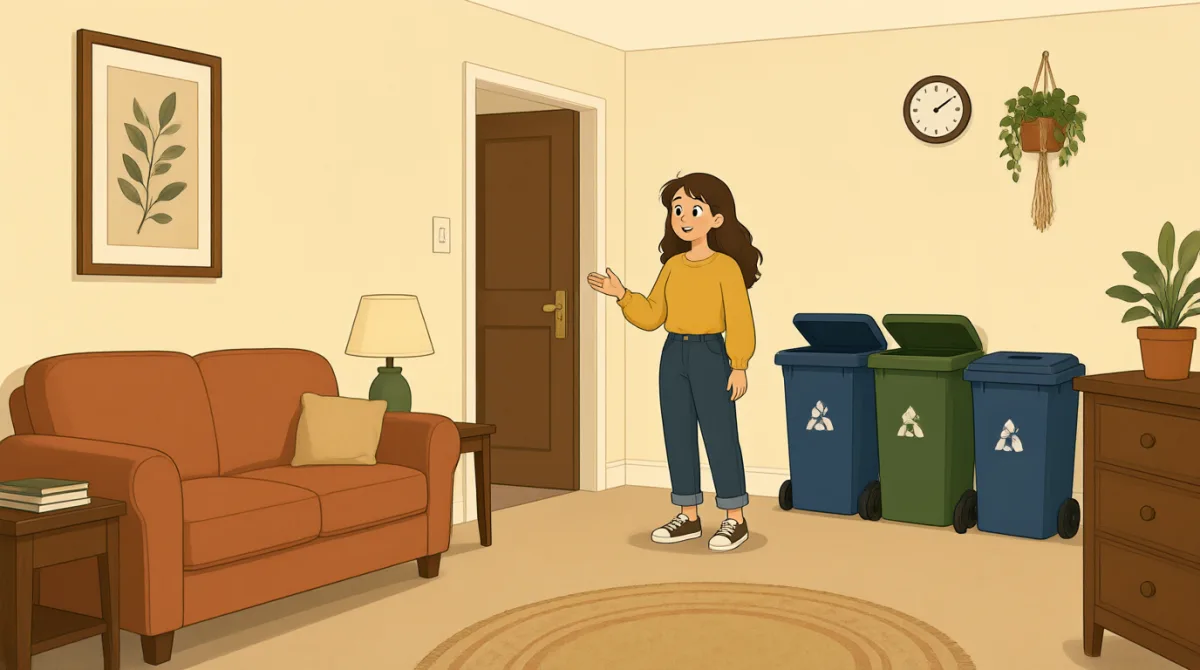

Hi, Grace. Where are the trash bins?
안녕, 그레이스. 쓰레기통 어디 있어?

They’re downstairs, next to the back door.
아래층에 있어. 뒷문 옆이야.
How do I get there?
거기 어떻게 가?
Go down the stairs, then turn left.
계단으로 내려가서 왼쪽으로 돌아.
Are the bins outside?
쓰레기통은 밖에 있어?
Yes. They’re just outside the back door.
응. 뒷문 바로 밖에 있어.
Great. Thanks for showing me!
좋아. 알려 줘서 고마워!
어휘8
- trash bins쓰레기통
Containers for trash. You can ask where they are.
쓰레기를 담는 통이에요. 어디 있는지 물어볼 때 쓸 수 있어요.
- downstairs아래층에
On a lower floor. Use it to say where something is.
더 낮은 층에 있다는 뜻이에요. 무언가의 위치를 말할 때 써요.
- next to~ 옆에
Beside something. Use it to describe where a place or thing is.
무언가의 옆이라는 뜻이에요. 장소나 물건이 어디 있는지 설명할 때 써요.
- back door뒷문
A door at the back of a building. It can help someone find a place.
건물 뒤쪽에 있는 문이에요. 장소를 찾는 데 도움이 될 수 있어요.
- get there거기에 가다
Go to a place. Use it to ask how to reach somewhere.
어떤 장소로 가는 거예요. 그곳에 어떻게 가는지 물을 때 써요.
- turn left왼쪽으로 돌다
Move in the direction on your left. Use it to give directions.
왼쪽 방향으로 가는 거예요. 길을 알려 줄 때 써요.
- outside밖에
Not inside a building. Use it to say where something is.
건물 안이 아니라는 뜻이에요. 무언가의 위치를 말할 때 써요.
- showing me나에게 알려 주는 것
Helping me find or see something. Use it to thank someone for their help.
내가 무언가를 찾거나 볼 수 있도록 도와주는 거예요. 도움을 준 사람에게 고마움을 표현할 때 쓸 수 있어요.
핵심 문장8
- 1
Where are the trash bins?
쓰레기통 어디 있어?
Use this to ask where the trash containers are. You can replace “trash bins” with another place or thing.
쓰레기통이 어디 있는지 물어볼 때 써요. “trash bins” 대신 다른 장소나 물건을 넣어 말할 수도 있어요.
- 2
They’re downstairs, next to the back door.
아래층에 있어. 뒷문 옆이야.
This gives a location using two simple details. Use “They’re [place], next to [thing]” to help someone find something.
간단한 정보 두 가지로 위치를 알려 주는 표현이에요. 무언가를 찾도록 도와줄 때 “They’re [장소], next to [물건]”이라고 말할 수 있어요.
- 3
How do I get there?
거기 어떻게 가?
Use this to ask for directions to a place. You can say it after someone tells you where something is.
어떤 장소로 가는 길을 물어볼 때 써요. 누군가 무언가의 위치를 알려 준 다음에 말할 수 있어요.
- 4
Go down the stairs, then turn left.
계단으로 내려가서 왼쪽으로 돌아.
This gives two simple directions in order. Use “Go [direction], then turn [left/right]” to guide someone.
간단한 길 안내 두 가지를 순서대로 하는 표현이에요. 누군가에게 길을 알려 줄 때 “Go [방향], then turn [left/right]”라고 말할 수 있어요.
- 5
Are the bins outside?
쓰레기통은 밖에 있어?
Use this yes-or-no question to check where something is. Replace “the bins” with another place or thing.
무언가의 위치를 확인할 때 쓰는 예·아니요 질문이에요. “the bins” 대신 다른 장소나 물건을 넣어 말할 수 있어요.
- 6
Yes.
응.
This is a short way to answer yes to a question. You can add more information after it, as Grace does in the dialogue.
질문에 긍정으로 짧게 답하는 표현이에요. 대화 속 그레이스처럼 뒤에 정보를 더 덧붙일 수도 있어요.
- 7
They’re just outside the back door.
뒷문 바로 밖에 있어.
This gives a clear location. Use “They’re just outside [place]” to say something is very near a door or building.
위치를 분명하게 알려 주는 표현이에요. 문이나 건물 가까이에 무언가가 있다고 말할 때 “They’re just outside [장소]”라고 쓸 수 있어요.
- 8
Great. Thanks for showing me!
좋아. 알려 줘서 고마워!
Use this to thank someone who helped you find something. You can change “showing me” to another -ing action, such as “helping me.”
무언가를 찾도록 도와준 사람에게 고마움을 표현할 때 써요. “showing me”를 “helping me”처럼 다른 -ing 형태의 행동으로 바꿀 수도 있어요.