Talking About Your Morning
聊聊你的早晨
Emma asks Mia about her morning routine. Mia talks about when she gets up and what she eats for breakfast.
Emma询问Mia早晨的日常安排。Mia谈到自己几点起床,以及早餐吃什么。
对话8
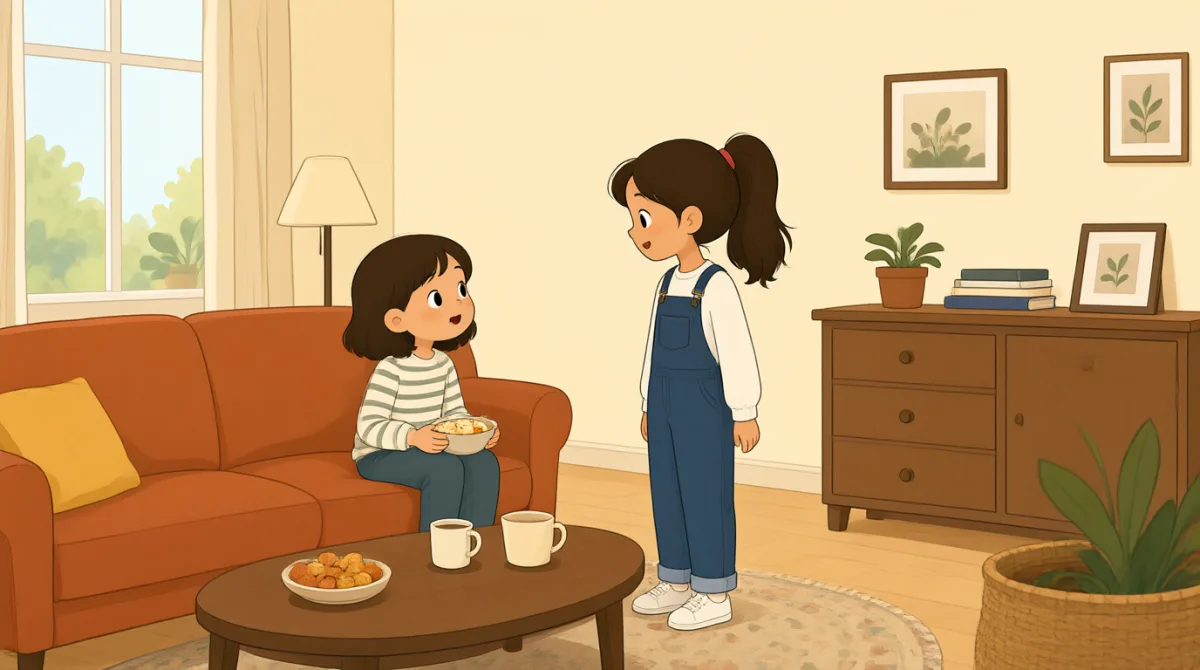

What time do you get up, Mia?
你几点起床,米娅?

I get up at seven every morning.
我每天早上七点起床。
Do you eat breakfast at home?
你在家吃早餐吗?
Yes, I eat breakfast in the kitchen.
是的,我在厨房吃早餐。
What do you have for breakfast?
你早餐吃什么?
I have eggs and toast. I drink tea.
我吃鸡蛋和吐司,还喝茶。
That sounds nice. Do you eat early?
听起来不错。你吃得早吗?
Yes, I eat at seven thirty.
是的,我七点半吃早餐。
词汇8
- get up起床
To get up means to leave your bed and start your day. You can say, “I get up at seven.”
“get up”指离开床铺,开始新的一天。你可以说:“I get up at seven.”
- every morning每天早上
This means something happens each morning. Use it to talk about a daily routine.
这个短语表示某件事每天早上都会发生。你可以用它来谈论日常安排。
- eat breakfast吃早餐
This means to have the first meal of the day. You can say where or when you eat breakfast.
这个短语指吃一天中的第一顿饭。你可以说在哪里或什么时候吃早餐。
- at home在家
This means in your own house. Use it to say where you do something.
这个短语指在自己家里。你可以用它来说明在哪里做某件事。
- in the kitchen在厨房里
This means inside the room where you cook and eat. Use “in” to say where an activity happens.
这个短语指在做饭和吃饭的房间里。用“in”来说明某项活动在哪里进行。
- have for breakfast早餐吃……
This asks or tells what food someone eats in the morning. For example, “I have eggs for breakfast.”
这个表达用来询问或说明某人早上吃什么。例如:“I have eggs for breakfast.”
- toast吐司
Toast is bread that is cooked until it is warm and crisp. It is often eaten for breakfast.
吐司是烤到温热、酥脆的面包,常在早餐时吃。
- early早
Early means before the usual or expected time. You can use it to talk about when you eat or get up.
“early”表示比平常或预期的时间早。你可以用它来谈论吃饭或起床的时间。
重点句子8
- 1
What time do you get up, Mia?
米娅,你几点起床?
Use this question to ask when someone gets out of bed. Replace “Mia” with the person’s name or use “you” alone.
用这个问题询问别人什么时候起床。把“Mia”换成对方的名字,也可以只说“you”。
- 2
I get up at seven every morning.
我每天早上七点起床。
This is a simple way to describe a daily routine. Change the time to say when you get up.
这是描述日常安排的一种简单说法。你可以替换时间,说明自己几点起床。
- 3
Do you eat breakfast at home?
你在家吃早餐吗?
Use this yes-or-no question to ask where someone eats breakfast. Change “at home” to another place if needed.
用这个一般疑问句询问别人在哪里吃早餐。如果需要,可以把“at home”换成其他地点。
- 4
Yes, I eat breakfast in the kitchen.
是的,我在厨房吃早餐。
This answers a question about where you eat breakfast. You can replace “in the kitchen” with another place.
这是对在哪里吃早餐的回答。你可以把“in the kitchen”换成其他地点。
- 5
What do you have for breakfast?
你早餐吃什么?
Use this question to ask what food someone eats in the morning. You can answer with “I have” and the food.
用这个问题询问别人早上吃什么。回答时可以用“I have”加上食物名称。
- 6
I have eggs and toast.
我吃鸡蛋和吐司。
This is a simple way to name foods you eat. Replace “eggs and toast” with your own breakfast foods.
这是简单列出自己吃的食物的一种说法。你可以把“eggs and toast”换成自己早餐吃的食物。
- 7
I drink tea.
我喝茶。
Use this sentence to say what you drink. Replace “tea” with another drink, such as “coffee” or “water.”
用这个句子说明自己喝什么。你可以把“tea”换成其他饮品,比如“coffee”或“water”。
- 8
Yes, I eat at seven thirty.
是的,我七点半吃饭。
This gives the time you eat. Replace “seven thirty” with another time.
这个句子说明你吃饭的时间。你可以把“seven thirty”换成其他时间。