Talking About Your Morning
Rozmowa o poranku
Emma asks Mia about her morning routine. Mia talks about when she gets up and what she eats for breakfast.
Emma pyta Mię o jej poranną rutynę. Mia opowiada, o której wstaje i co je na śniadanie.
Dialog8
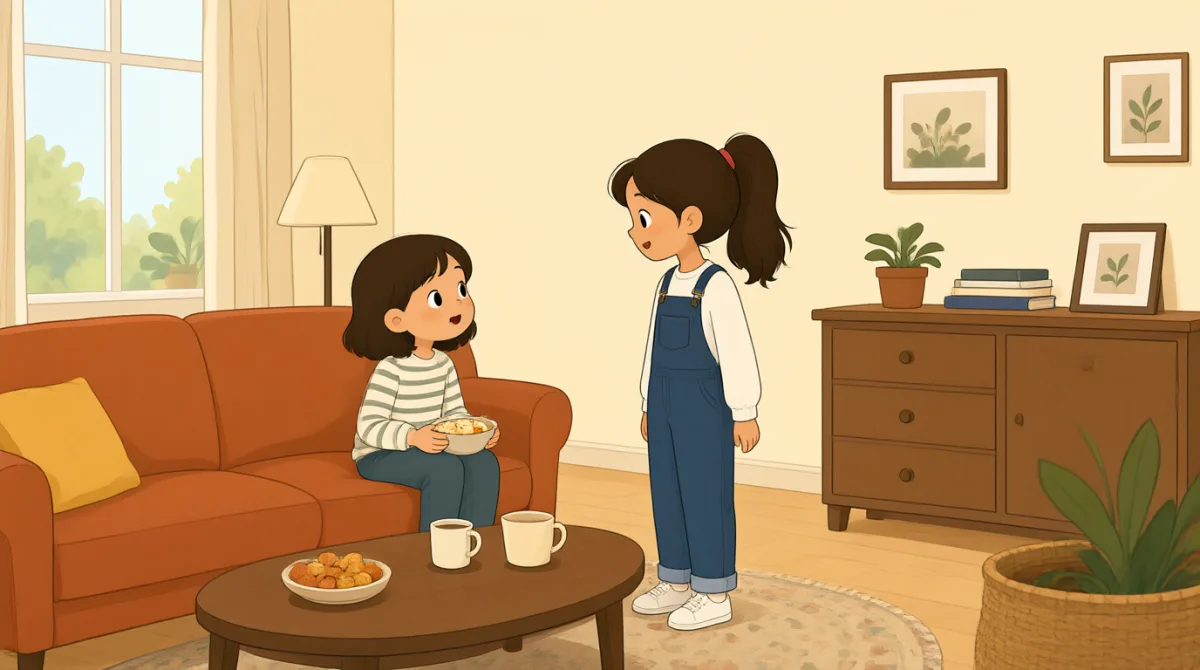

What time do you get up, Mia?
O której wstajesz, Mia?

I get up at seven every morning.
Wstaję codziennie rano o siódmej.
Do you eat breakfast at home?
Jesz śniadanie w domu?
Yes, I eat breakfast in the kitchen.
Tak, jem śniadanie w kuchni.
What do you have for breakfast?
Co jesz na śniadanie?
I have eggs and toast. I drink tea.
Jem jajka i tosty. Piję herbatę.
That sounds nice. Do you eat early?
Brzmi fajnie. Jesz wcześnie?
Yes, I eat at seven thirty.
Tak, jem o wpół do ósmej.
Słownictwo8
- get upwstawać
To get up means to leave your bed and start your day. You can say, “I get up at seven.”
Get up znaczy wstać z łóżka i zacząć dzień. Możesz powiedzieć: “I get up at seven.” (Wstaję o siódmej.)
- every morningcodziennie rano
This means something happens each morning. Use it to talk about a daily routine.
To znaczy, że coś dzieje się każdego ranka. Użyj tego wyrażenia, żeby opowiedzieć o swojej codziennej rutynie.
- eat breakfastjeść śniadanie
This means to have the first meal of the day. You can say where or when you eat breakfast.
To znaczy zjeść pierwszy posiłek dnia. Możesz powiedzieć, gdzie lub kiedy jesz śniadanie.
- at homew domu
This means in your own house. Use it to say where you do something.
To znaczy w swoim domu. Użyj tego wyrażenia, żeby powiedzieć, gdzie coś robisz.
- in the kitchenw kuchni
This means inside the room where you cook and eat. Use “in” to say where an activity happens.
To znaczy w pomieszczeniu, w którym gotujesz i jesz. Użyj “in”, żeby powiedzieć, gdzie coś się dzieje.
- have for breakfastjeść na śniadanie
This asks or tells what food someone eats in the morning. For example, “I have eggs for breakfast.”
To pytanie lub informacja o tym, jakie jedzenie ktoś je rano. Na przykład: “I have eggs for breakfast.” (Jem jajka na śniadanie.)
- toasttosty
Toast is bread that is cooked until it is warm and crisp. It is often eaten for breakfast.
Toast to pieczywo podgrzane, aż stanie się ciepłe i chrupiące. Często je się je na śniadanie.
- earlywcześnie
Early means before the usual or expected time. You can use it to talk about when you eat or get up.
Early znaczy przed zwykłą lub oczekiwaną porą. Możesz użyć tego słowa, mówiąc o tym, kiedy jesz lub wstajesz.
Kluczowe zdania8
- 1
What time do you get up, Mia?
O której wstajesz, Mia?
Use this question to ask when someone gets out of bed. Replace “Mia” with the person’s name or use “you” alone.
Użyj tego pytania, żeby zapytać, kiedy ktoś wstaje z łóżka. Zamiast “Mia” wstaw imię tej osoby albo po prostu użyj “you”.
- 2
I get up at seven every morning.
Wstaję codziennie rano o siódmej.
This is a simple way to describe a daily routine. Change the time to say when you get up.
To prosty sposób na opisanie codziennej rutyny. Zmień godzinę, żeby powiedzieć, kiedy wstajesz.
- 3
Do you eat breakfast at home?
Jesz śniadanie w domu?
Use this yes-or-no question to ask where someone eats breakfast. Change “at home” to another place if needed.
Użyj tego pytania, na które można odpowiedzieć „tak” lub „nie”, żeby dowiedzieć się, gdzie ktoś je śniadanie. W razie potrzeby zamień “at home” na inne miejsce.
- 4
Yes, I eat breakfast in the kitchen.
Tak, jem śniadanie w kuchni.
This answers a question about where you eat breakfast. You can replace “in the kitchen” with another place.
Tak odpowiesz na pytanie o to, gdzie jesz śniadanie. Możesz zastąpić “in the kitchen” innym miejscem.
- 5
What do you have for breakfast?
Co jesz na śniadanie?
Use this question to ask what food someone eats in the morning. You can answer with “I have” and the food.
Użyj tego pytania, żeby zapytać, co ktoś je rano. Możesz odpowiedzieć, używając “I have” i podając nazwę jedzenia.
- 6
I have eggs and toast.
Jem jajka i tosty.
This is a simple way to name foods you eat. Replace “eggs and toast” with your own breakfast foods.
To prosty sposób na wymienienie produktów, które jesz. Zastąp “eggs and toast” tym, co sam lubisz jeść na śniadanie.
- 7
I drink tea.
Piję herbatę.
Use this sentence to say what you drink. Replace “tea” with another drink, such as “coffee” or “water.”
Użyj tego zdania, żeby powiedzieć, co pijesz. Zastąp “tea” innym napojem, na przykład “coffee” lub “water.”
- 8
Yes, I eat at seven thirty.
Tak, jem o wpół do ósmej.
This gives the time you eat. Replace “seven thirty” with another time.
To zdanie podaje godzinę, o której jesz. Zastąp “seven thirty” inną godziną.