Inquiring About Machine Usage
मशीन इस्तेमाल करने के बारे में पूछताछ
A customer is unsure how to operate a specific washing machine or dryer and asks for instructions.
एक ग्राहक को समझ नहीं आ रहा कि किसी खास वॉशिंग मशीन या ड्रायर को कैसे चलाया जाए, इसलिए वह निर्देश पूछता है।
संवाद8
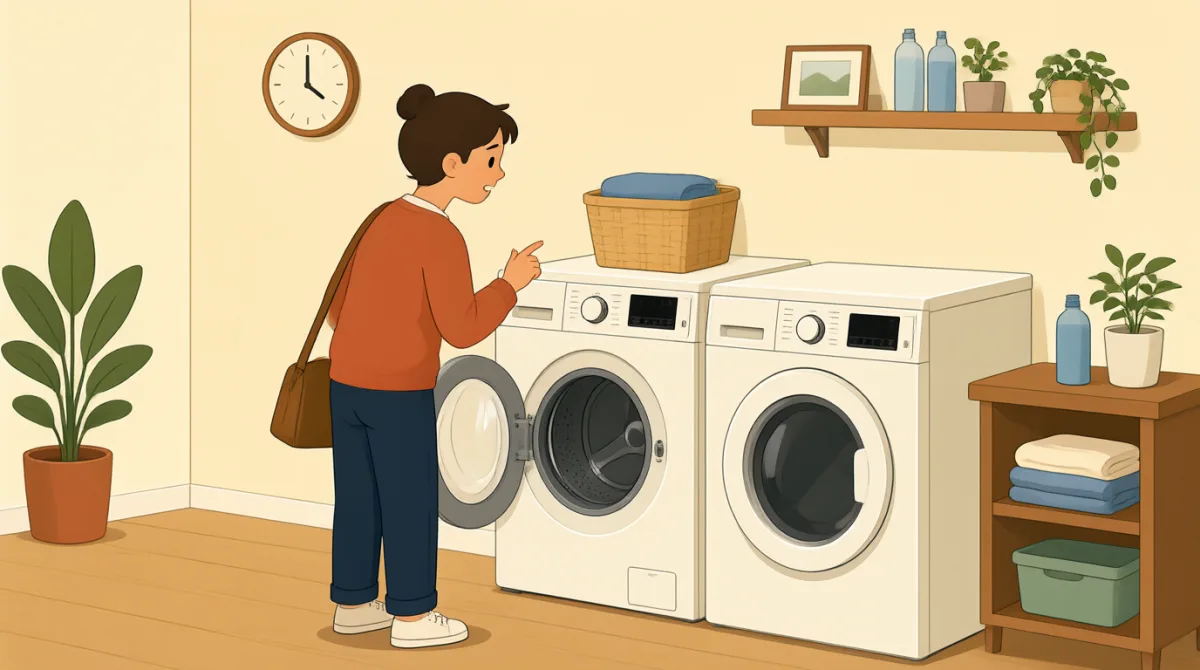

Excuse me, I'm new to this laundromat. Could you possibly tell me how to start this washing machine? It's the big one, machine number 7.
माफ़ कीजिए, मैं इस लॉन्ड्रोमैट में पहली बार आया/आई हूँ। क्या आप बता सकते हैं कि इस वॉशिंग मशीन को कैसे चालू करना है? यह बड़ी वाली है, मशीन नंबर 7।

No problem! For machine number 7, first you need to load your clothes and close the door tightly. Then, insert your coins or use your card here on the right side.
कोई बात नहीं! मशीन नंबर 7 के लिए, पहले अपने कपड़े डालें और दरवाज़ा अच्छी तरह बंद कर दें। फिर सिक्के डालें या यहाँ दाईं ओर अपना कार्ड इस्तेमाल करें।
Okay, got it. Load clothes, close door, then pay. What about selecting the wash cycle? Do I do that before or after paying?
ठीक है, समझ गया/गई। कपड़े डालें, दरवाज़ा बंद करें, फिर पैसे दें। वॉश साइकल चुनने के बारे में क्या? यह मुझे पैसे देने से पहले करना है या बाद में?
Good question. You select the cycle after paying. Once payment is confirmed, the cycle options will light up. Just press the button for whatever program you want, like 'Hot Wash' or 'Cold Wash'.
अच्छा सवाल है। पैसे देने के बाद साइकल चुनें। भुगतान की पुष्टि होते ही, साइकल के विकल्पों की बत्तियाँ जल उठेंगी। बस अपनी पसंद के प्रोग्राम का बटन दबाएँ, जैसे 'Hot Wash' या 'Cold Wash'।
Alright, that makes sense. And where do I put the detergent? Is there a dispenser for it, or do I just pour it directly into the drum?
अच्छा, अब समझ आया। और डिटर्जेंट कहाँ डालना है? क्या उसके लिए कोई डिस्पेंसर है, या मैं उसे सीधे ड्रम में डाल दूँ?
There's a dispenser tray at the top left, right above the door. It has sections for detergent, fabric softener, and bleach. Just pull it out.
दरवाज़े के ठीक ऊपर, बाईं ओर ऊपर एक डिस्पेंसर ट्रे है। उसमें डिटर्जेंट, फ़ैब्रिक सॉफ़्टनर और ब्लीच के लिए अलग-अलग खाने हैं। बस उसे बाहर खींच लें।
Oh, I see it now! Thanks so much, you've been a great help. I really appreciate you taking the time to explain everything.
ओह, अब मुझे दिख गया! आपका बहुत-बहुत धन्यवाद, आपने मेरी बहुत मदद की। आपने सब कुछ समझाने के लिए समय निकाला, इसकी मैं सचमुच सराहना करता/करती हूँ।
You're very welcome! Let me know if you have any other questions. Enjoy your wash!
आपका स्वागत है! कोई और सवाल हो तो मुझे बताइएगा। कपड़े अच्छे से धुलें!
शब्दावली8
- laundromatलॉन्ड्रोमैट; स्वयं-सेवा कपड़े धोने की जगह
A laundromat is a place where people go to wash and dry their clothes using coin-operated machines. It's common in the US for people without home washers.
लॉन्ड्रोमैट ऐसी जगह होती है जहाँ लोग सिक्कों से चलने वाली मशीनों में अपने कपड़े धोते और सुखाते हैं। अमेरिका में घर पर वॉशिंग मशीन न होने पर लोग अक्सर यहाँ आते हैं।
- washing machineवॉशिंग मशीन
A washing machine is a device that cleans clothes by spinning them with water and soap. In a laundromat, you pay to use one.
वॉशिंग मशीन एक उपकरण है जो पानी और साबुन के साथ कपड़ों को घुमाकर साफ़ करता है। लॉन्ड्रोमैट में इसे इस्तेमाल करने के लिए पैसे देने पड़ते हैं।
- loadडालना; भरना
To load means to put clothes into the machine before starting it. For example, 'load your clothes' means place them inside.
यहाँ “load” का मतलब मशीन चालू करने से पहले उसमें कपड़े डालना है। उदाहरण के लिए, 'load your clothes' का मतलब है अपने कपड़े मशीन के अंदर रखना।
- detergentडिटर्जेंट; कपड़े धोने का साबुन
Detergent is a soap or powder used to clean clothes. It's essential for washing to remove dirt and stains.
डिटर्जेंट कपड़े साफ़ करने के लिए इस्तेमाल होने वाला साबुन या पाउडर है। कपड़ों से गंदगी और दाग हटाने के लिए यह ज़रूरी है।
- cycleधुलाई का कार्यक्रम; साइकल
In this context, a cycle refers to a washing program, like a short or long wash. You choose it based on your clothes' needs.
इस संदर्भ में, “cycle” का मतलब है धुलाई का कोई कार्यक्रम, जैसे कम समय या ज़्यादा समय की धुलाई। आप अपने कपड़ों की ज़रूरत के अनुसार इसे चुनते हैं।
- dispenserडिस्पेंसर; डालने की ट्रे
A dispenser is a small tray or compartment where you put detergent or softener so the machine adds it automatically during the wash.
डिस्पेंसर एक छोटी ट्रे या खाने जैसा हिस्सा होता है जिसमें डिटर्जेंट या सॉफ़्टनर डाला जाता है, ताकि धुलाई के दौरान मशीन उसे अपने आप इस्तेमाल कर सके।
- fabric softenerफ़ैब्रिक सॉफ़्टनर; कपड़े मुलायम करने वाला तरल
Fabric softener is a liquid added to the wash to make clothes softer and reduce static. It's optional but common for towels or linens.
फ़ैब्रिक सॉफ़्टनर धुलाई में मिलाया जाने वाला तरल है, जो कपड़ों को मुलायम बनाता और उनमें स्थिर बिजली कम करता है। इसका इस्तेमाल ज़रूरी नहीं है, लेकिन तौलियों और चादरों के लिए आम है।
- bleachब्लीच; विरंजक
Bleach is a chemical used to whiten clothes and remove stains. Use it carefully as it can damage colors.
ब्लीच एक रसायन है जिसका इस्तेमाल कपड़ों को सफ़ेद करने और दाग हटाने के लिए होता है। इसे सावधानी से इस्तेमाल करें, क्योंकि इससे रंगीन कपड़े खराब हो सकते हैं।
मुख्य वाक्य7
- 1
Excuse me, I'm new to this laundromat. Could you possibly tell me how to start this washing machine?
माफ़ कीजिए, मैं इस लॉन्ड्रोमैट में पहली बार आया/आई हूँ। क्या आप बता सकते हैं कि इस वॉशिंग मशीन को कैसे चालू करना है?
This polite sentence is useful for asking for help when you're in an unfamiliar place. 'Excuse me' gets attention, 'I'm new to' shows you're a beginner, and 'could you possibly' makes the request very polite. Use it in service situations like stores or public places.
किसी अनजान जगह पर मदद माँगने के लिए यह एक विनम्र वाक्य है। 'Excuse me' से आप सामने वाले का ध्यान खींचते हैं, 'I'm new to' बताता है कि आप वहाँ नए हैं, और 'could you possibly' अनुरोध को बहुत विनम्र बनाता है। दुकानों या सार्वजनिक जगहों पर मदद माँगते समय इसका इस्तेमाल करें।
- 2
First you need to load your clothes and close the door tightly.
पहले अपने कपड़े डालें और दरवाज़ा अच्छी तरह बंद कर दें।
This sentence gives step-by-step instructions. 'First' shows sequence, 'load' means put in, and 'tightly' emphasizes firmness. It's useful for explaining processes, like recipes or machine use, to help others follow orders.
यह वाक्य चरण-दर-चरण निर्देश देता है। 'First' क्रम बताता है, 'load' का अर्थ है अंदर डालना, और 'tightly' ज़ोर देकर बताता है कि चीज़ को कसकर बंद करना है। किसी प्रक्रिया, जैसे खाना बनाने या मशीन चलाने के बारे में समझाते समय यह उपयोगी है।
- 3
What about selecting the wash cycle? Do I do that before or after paying?
वॉश साइकल चुनने के बारे में क्या? यह मुझे पैसे देने से पहले करना है या बाद में?
This question clarifies timing in a process. 'What about' introduces a related topic, and the question form practices yes/no questions with alternatives. Use it when you need details on order of steps in tasks like cooking or operating devices.
इस सवाल से किसी प्रक्रिया में सही समय या क्रम स्पष्ट होता है। 'What about' किसी संबंधित विषय की बात शुरू करता है, और सवाल के दूसरे हिस्से में दो विकल्पों में से एक चुनने के बारे में पूछा गया है। खाना बनाने या उपकरण चलाने के चरणों का क्रम जानने के लिए इसका इस्तेमाल करें।
- 4
You select the cycle after paying. Once payment is confirmed, the cycle options will light up.
पैसे देने के बाद साइकल चुनें। भुगतान की पुष्टि होते ही, साइकल के विकल्पों की बत्तियाँ जल उठेंगी।
This explains sequence with 'after' and 'once,' which show conditions. 'Confirmed' means verified, and 'light up' describes buttons activating. It's practical for instructions, helping learners understand conditional actions in everyday tech use.
इसमें 'after' और 'once' से कामों का क्रम और शर्त बताई गई है। 'Confirmed' का मतलब है पुष्टि हो जाना, और 'light up' का मतलब है बत्तियों का जल उठना। रोज़मर्रा में तकनीकी उपकरण इस्तेमाल करते समय ऐसे निर्देश काम आते हैं।
- 5
And where do I put the detergent? Is there a dispenser for it, or do I just pour it directly into the drum?
और डिटर्जेंट कहाँ डालना है? क्या उसके लिए कोई डिस्पेंसर है, या मैं उसे सीधे ड्रम में डाल दूँ?
This asks for location and options. 'Where do I put' is a common question for placement, and 'or' presents alternatives. Useful in shopping or using appliances to get precise guidance on handling items.
इस वाक्य में जगह और उपलब्ध विकल्पों के बारे में पूछा गया है। 'Where do I put' किसी चीज़ को कहाँ रखना है, यह पूछने का आम तरीका है, और 'or' दो विकल्प देता है। चीज़ों को रखने या घरेलू उपकरण इस्तेमाल करने के बारे में सही निर्देश पाने के लिए इसका इस्तेमाल करें।
- 6
There's a dispenser tray at the top left, right above the door. It has sections for detergent, fabric softener, and bleach.
दरवाज़े के ठीक ऊपर, बाईं ओर ऊपर एक डिस्पेंसर ट्रे है। उसमें डिटर्जेंट, फ़ैब्रिक सॉफ़्टनर और ब्लीच के लिए अलग-अलग खाने हैं।
This describes location precisely with prepositions like 'at the top left' and 'above.' 'Sections for' lists compartments. It's helpful for giving directions or descriptions in real-life scenarios like home or public facilities.
इस वाक्य में 'at the top left' और 'above' जैसे शब्दों से जगह ठीक-ठीक बताई गई है। 'Sections for' अलग-अलग चीज़ों के लिए बने खानों की जानकारी देता है। घर या सार्वजनिक जगहों पर रास्ता बताने या किसी चीज़ का वर्णन करने में यह उपयोगी है।
- 7
Thanks so much, you've been a great help. I really appreciate you taking the time to explain everything.
आपका बहुत-बहुत धन्यवाद, आपने मेरी बहुत मदद की। सब कुछ समझाने के लिए समय निकालने की मैं सचमुच सराहना करता/करती हूँ।
This expresses gratitude politely. 'Thanks so much' is emphatic thanks, 'you've been a great help' acknowledges assistance, and 'I really appreciate' shows sincere thanks. Use it after receiving help to build positive interactions.
यह विनम्रता से आभार जताने का तरीका है। 'Thanks so much' से बहुत धन्यवाद दिया जाता है, 'you've been a great help' सामने वाले की मदद को स्वीकार करता है, और 'I really appreciate' सच्ची कृतज्ञता दिखाता है। मदद मिलने के बाद अच्छे संबंध बनाने के लिए इसका इस्तेमाल करें।