Reviewing Rules of the Road and Traffic Signs
ทบทวนกฎจราจรและป้ายจราจร
The student and instructor are going over common traffic signs, road markings, and basic traffic laws to prepare for the written theory test or to reinforce observational skills.
นักเรียนกับครูผู้สอนทบทวนป้ายจราจร เส้นและเครื่องหมายบนถนนที่พบได้ทั่วไป รวมถึงกฎหมายจราจรพื้นฐาน เพื่อเตรียมสอบข้อเขียนภาคทฤษฎีหรือฝึกทักษะการสังเกต
บทสนทนา9
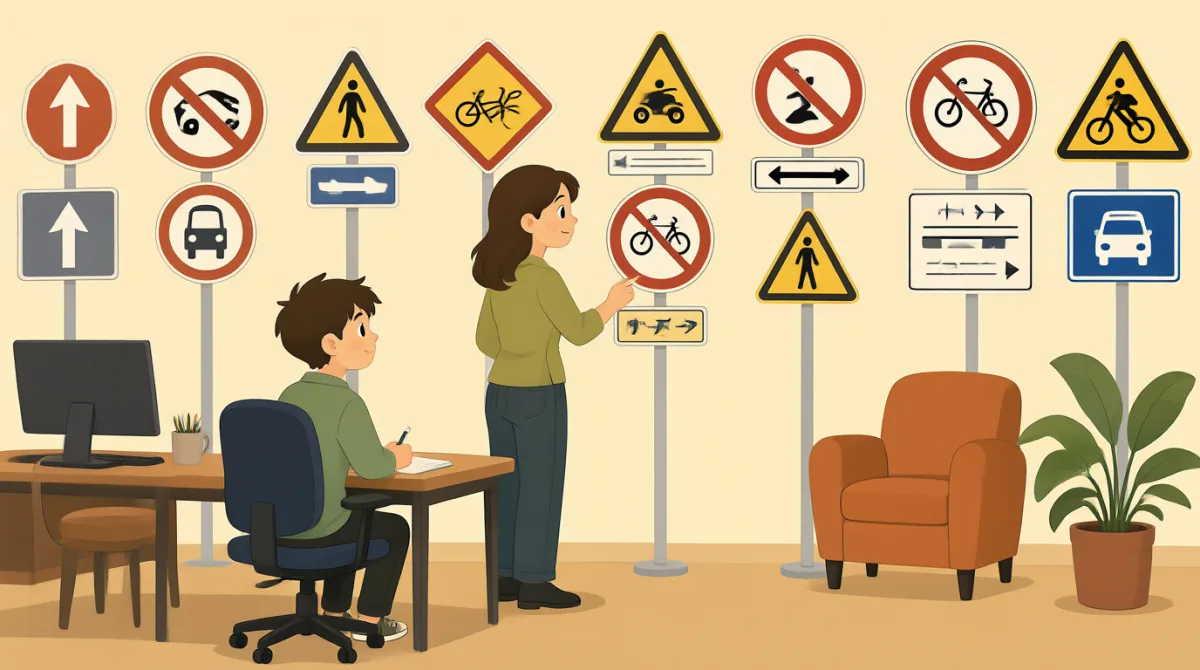

Alright Emma, let's go over some of the trickier traffic signs and road markings today. These often trip people up on the written test.
เอาล่ะ เอ็มมา วันนี้เรามาทบทวนป้ายจราจรกับเครื่องหมายบนถนนที่ชวนสับสนกันหน่อยนะ พวกนี้มักทำให้คนตอบผิดในการสอบข้อเขียน

Sounds good, David! I'm ready. I've been reviewing the manual, but some of the subtle differences between signs still confuse me.
ดีเลย เดวิด! พร้อมแล้ว ฉันทบทวนคู่มือมาบ้าง แต่ความแตกต่างเล็ก ๆ น้อย ๆ ระหว่างป้ายยังทำให้ฉันงงอยู่
Perfect. Let's start with 'No Parking' vs. 'No Stopping' signs. What's the key difference you need to remember for the test?
เยี่ยม งั้นเริ่มจากป้าย 'No Parking' กับ 'No Stopping' กัน ความแตกต่างสำคัญที่ต้องจำไปสอบคืออะไรนะ
Okay, 'No Parking' means you can stop briefly to pick up or drop off passengers, but you can't leave your vehicle. 'No Stopping' means you can't stop for any reason, not even for a moment.
โอเค 'No Parking' หมายความว่าหยุดรถแป๊บหนึ่งเพื่อรับหรือส่งผู้โดยสารได้ แต่ห้ามจอดทิ้งรถไว้ ส่วน 'No Stopping' หมายความว่าห้ามหยุดรถไม่ว่ากรณีไหน แม้แต่แค่ชั่วครู่ก็ไม่ได้
Excellent! You got it. That's a common one people mix up. Now, tell me about the meaning of a solid white line versus a dashed white line on a multi-lane highway.
ถูกต้องเลย! เข้าใจแล้ว นี่เป็นข้อที่คนมักสับสนกัน ต่อไปบอกครูหน่อยว่าเส้นทึบสีขาวกับเส้นประสีขาวบนทางหลวงหลายเลนต่างกันอย่างไร
A solid white line means you shouldn't change lanes, while a dashed white line means you can change lanes if it's safe to do so.
เส้นทึบสีขาวหมายความว่าไม่ควรเปลี่ยนเลน ส่วนเส้นประสีขาวหมายความว่าเปลี่ยนเลนได้ถ้าปลอดภัย
Spot on. And where do you typically see solid white lines often used, besides marking the edge of the road?
ถูกเผง แล้วนอกจากใช้บอกขอบถนนแล้ว ปกติเส้นทึบสีขาวมักใช้ตรงไหนอีก
At intersections, solid white lines are often used as stop lines or crosswalks. And also on bridges, I believe, where lane changes are discouraged.
ตรงทางแยกมักใช้เส้นทึบสีขาวเป็นเส้นหยุดรถหรือเส้นทางม้าลาย แล้วก็บนสะพานด้วยมั้ง ฉันคิดว่าเขาใช้เพื่อไม่ให้เปลี่ยนเลนกัน
That's right, especially near intersections or in tunnels/bridges where visibility is limited or safety is paramount. You're doing great, Emma. Keep up the good work and you'll ace that theory test!
ใช่เลย โดยเฉพาะบริเวณใกล้ทางแยกหรือในอุโมงค์กับบนสะพาน ที่ทัศนวิสัยจำกัดหรือความปลอดภัยสำคัญที่สุด ทำได้ดีมาก เอ็มมา ตั้งใจแบบนี้ต่อไปนะ แล้วเธอจะสอบทฤษฎีผ่านฉลุย!
คำศัพท์12
- trickierชวนสับสนกว่าเดิม
Means more difficult or complicated than usual. Use it when talking about challenging parts of a test or task, like 'These questions are trickier than I thought.'
หมายถึงยากหรือซับซ้อนกว่าปกติ ใช้พูดถึงส่วนที่ท้าทายในข้อสอบหรืองาน เช่น 'These questions are trickier than I thought.' (คำถามพวกนี้ชวนสับสนกว่าที่ฉันคิดไว้)
- traffic signsป้ายจราจร
Signs on roads that give rules, warnings, or directions to drivers. Important for driving tests; for example, 'Always obey traffic signs to stay safe.'
ป้ายที่ติดอยู่ตามถนนเพื่อบอกกฎ เตือนภัย หรือให้ข้อมูลเส้นทางแก่ผู้ขับขี่ สำคัญต่อการสอบขับรถ เช่น 'Always obey traffic signs to stay safe.' (ปฏิบัติตามป้ายจราจรเสมอเพื่อความปลอดภัย)
- road markingsเครื่องหมายบนถนน
Lines or symbols painted on the road to guide drivers, like lane lines. Useful in driving contexts: 'Watch the road markings when changing lanes.'
เส้นหรือสัญลักษณ์ที่ทาบนถนนเพื่อช่วยแนะนำผู้ขับขี่ เช่น เส้นแบ่งช่องทาง ใช้ได้ในบริบทการขับรถ เช่น 'Watch the road markings when changing lanes.' (ดูเครื่องหมายบนถนนตอนเปลี่ยนเลนด้วย)
- subtleเล็กน้อยจนสังเกตได้ยาก
Small and not easy to notice. Use when describing small differences: 'The subtle changes in the signs can be confusing at first.'
หมายถึงสิ่งที่มีความแตกต่างเพียงเล็กน้อยและสังเกตได้ไม่ง่าย ใช้บรรยายความแตกต่างเล็ก ๆ เช่น 'The subtle changes in the signs can be confusing at first.' (ความเปลี่ยนแปลงเล็กน้อยของป้ายอาจทำให้สับสนในตอนแรก)
- No Parkingห้ามจอด
A traffic sign meaning you cannot leave your vehicle parked there, but you can stop briefly. Common in urban areas; remember it for driving rules.
ป้ายจราจรที่หมายความว่าห้ามจอดรถทิ้งไว้ตรงนั้น แต่หยุดรถชั่วครู่ได้ มักพบในเขตเมือง ควรจำไว้เมื่อต้องเรียนรู้กฎจราจร
- No Stoppingห้ามหยุดรถ
A stricter traffic sign meaning you cannot stop your vehicle at all, even for a short time. Used in dangerous areas; key for safety tests.
ป้ายจราจรที่เข้มงวดกว่า หมายความว่าห้ามหยุดรถเลย แม้เพียงช่วงสั้น ๆ มักใช้ในบริเวณอันตราย และเป็นเรื่องสำคัญในการสอบความปลอดภัย
- solid white lineเส้นทึบสีขาว
A continuous white line on the road that means you should not cross it or change lanes. Often seen at edges or no-passing zones.
เส้นสีขาวต่อเนื่องบนถนน หมายความว่าไม่ควรข้ามเส้นหรือเปลี่ยนเลน มักพบที่ขอบถนนหรือบริเวณห้ามแซง
- dashed white lineเส้นประสีขาว
A broken white line on the road allowing safe lane changes. Use in sentences like 'You can pass over a dashed white line if clear.'
เส้นสีขาวที่ขาดเป็นช่วง ๆ บนถนน ซึ่งอนุญาตให้เปลี่ยนเลนได้เมื่อปลอดภัย ใช้ในประโยคอย่าง 'You can pass over a dashed white line if clear.' (ถ้าทางโล่ง คุณสามารถข้ามเส้นประสีขาวได้)
- intersectionsทางแยก
Places where two or more roads meet and cross. Crucial for driving: 'Be careful at intersections and yield to others.'
บริเวณที่ถนนตั้งแต่สองสายขึ้นไปมาบรรจบและตัดกัน เป็นจุดสำคัญในการขับรถ เช่น 'Be careful at intersections and yield to others.' (ระวังตอนถึงทางแยกและให้ทางรถคันอื่น)
- visibilityทัศนวิสัย
How well you can see ahead, affected by weather or light. In driving: 'Poor visibility means slow down and use lights.'
ระดับความชัดเจนที่มองเห็นทางข้างหน้า ซึ่งได้รับผลจากสภาพอากาศหรือแสงสว่าง ในการขับรถ เช่น 'Poor visibility means slow down and use lights.' (ถ้าทัศนวิสัยไม่ดี ให้ขับช้าลงและเปิดไฟ)
- paramountสำคัญที่สุด
Means of the highest importance. Use formally: 'Safety is paramount when driving on bridges.'
หมายถึงมีความสำคัญสูงสุด ใช้ในบริบทที่เป็นทางการ เช่น 'Safety is paramount when driving on bridges.' (ความปลอดภัยสำคัญที่สุดเมื่อขับรถบนสะพาน)
- aceทำได้ดีมาก
Slang for doing something extremely well, like passing a test easily. Informal: 'You'll ace the exam if you study hard.'
คำไม่เป็นทางการที่หมายถึงทำบางอย่างได้ดีเยี่ยม เช่น สอบผ่านอย่างง่ายดาย ใช้แบบกันเอง เช่น 'You'll ace the exam if you study hard.' (ถ้าตั้งใจเรียน เธอจะสอบได้คะแนนดีเยี่ยม)
ประโยคสำคัญ7
- 1
Alright Emma, let's go over some of the trickier traffic signs and road markings today.
เอาล่ะ เอ็มมา วันนี้เรามาทบทวนป้ายจราจรกับเครื่องหมายบนถนนที่ชวนสับสนกันหน่อยนะ
This is a way to start a lesson or review session politely. 'Go over' means to review or discuss. Useful for teachers or students preparing for exams; shows initiative in learning.
ประโยคนี้ใช้เริ่มบทเรียนหรือการทบทวนอย่างสุภาพ 'Go over' หมายถึงทบทวนหรือพูดคุยเกี่ยวกับบางเรื่อง เหมาะกับครูหรือนักเรียนที่เตรียมสอบ และแสดงถึงความตั้งใจเรียนรู้
- 2
Sounds good, David! I'm ready.
ดีเลย เดวิด! พร้อมแล้ว
A positive response showing agreement and preparedness. 'Sounds good' is casual for 'That seems fine.' Great for conversations when accepting plans; builds rapport in class.
เป็นคำตอบเชิงบวกที่แสดงว่าเห็นด้วยและพร้อมแล้ว 'Sounds good' เป็นคำพูดกันเองที่หมายถึง 'ฟังดูดีนะ' เหมาะเมื่อคุยกันและตอบรับแผนต่าง ๆ ทั้งยังช่วยสร้างความสนิทสนมในชั้นเรียน
- 3
What's the key difference you need to remember for the test?
ความแตกต่างสำคัญที่ต้องจำไปสอบคืออะไรนะ
Asks for the main distinction in rules. 'Key difference' highlights important contrasts. Useful in study sessions to focus on test essentials; practices question forms with 'what's' for contractions.
ใช้ถามถึงความแตกต่างหลักของกฎต่าง ๆ 'Key difference' เน้นความแตกต่างที่สำคัญ เหมาะกับการทบทวนเพื่อให้เน้นสิ่งที่ต้องรู้ไปสอบ และยังได้ฝึกใช้รูปคำถามย่อ 'what's'
- 4
'No Parking' means you can stop briefly to pick up or drop off passengers, but you can't leave your vehicle.
'No Parking' หมายความว่าหยุดรถแป๊บหนึ่งเพื่อรับหรือส่งผู้โดยสารได้ แต่ห้ามจอดทิ้งรถไว้
Explains a rule using 'means' for definition and 'but' for contrast. Practical for describing traffic laws; helps learners understand exceptions in driving regulations.
อธิบายกฎโดยใช้ 'means' เพื่อให้คำจำกัดความ และใช้ 'but' เพื่อแสดงความแตกต่าง เหมาะกับการพูดถึงกฎหมายจราจร และช่วยให้เข้าใจข้อยกเว้นในข้อบังคับการขับขี่
- 5
A solid white line means you shouldn't change lanes, while a dashed white line means you can change lanes if it's safe to do so.
เส้นทึบสีขาวหมายความว่าไม่ควรเปลี่ยนเลน ส่วนเส้นประสีขาวหมายความว่าเปลี่ยนเลนได้ถ้าปลอดภัย
Compares two things using 'while' for contrast and conditional 'if it's safe.' Useful for explaining road rules; teaches relative clauses and safety conditions in driving.
เปรียบเทียบสองสิ่งโดยใช้ 'while' เพื่อแสดงความแตกต่าง และใช้เงื่อนไข 'if it's safe' (ถ้าปลอดภัย) เหมาะกับการอธิบายกฎบนถนน และช่วยเรียนรู้เงื่อนไขด้านความปลอดภัย
- 6
Spot on.
ถูกเผง
Idiomatic expression meaning exactly correct. Short and informal praise. Use in feedback situations like tests; common in British English but understood widely for quick approval.
สำนวนที่หมายถึงถูกต้องเป๊ะ เป็นคำชมสั้น ๆ แบบไม่เป็นทางการ ใช้ให้คำตอบรับหรือชมเวลาตรวจข้อสอบ พบได้บ่อยในภาษาอังกฤษแบบบริติช แต่คนทั่วไปก็เข้าใจเช่นกัน
- 7
You're doing great, Emma. Keep up the good work and you'll ace that theory test!
ทำได้ดีมาก เอ็มมา ตั้งใจแบบนี้ต่อไปนะ แล้วเธอจะสอบทฤษฎีผ่านฉลุย!
Encourages with compliments and future prediction using 'will.' 'Keep up the good work' means continue performing well. Ideal for motivating learners; includes contraction 'you'll' for natural speech.
เป็นการให้กำลังใจด้วยคำชมและการคาดการณ์ถึงอนาคตโดยใช้ 'will' 'Keep up the good work' หมายถึงทำได้ดีแบบนี้ต่อไป เหมาะสำหรับให้กำลังใจผู้เรียน และมีรูปย่อ 'you'll' ที่ใช้ในภาษาพูดอย่างเป็นธรรมชาติ