Reviewing Rules of the Road and Traffic Signs
مراجعة قواعد السير وإشارات المرور
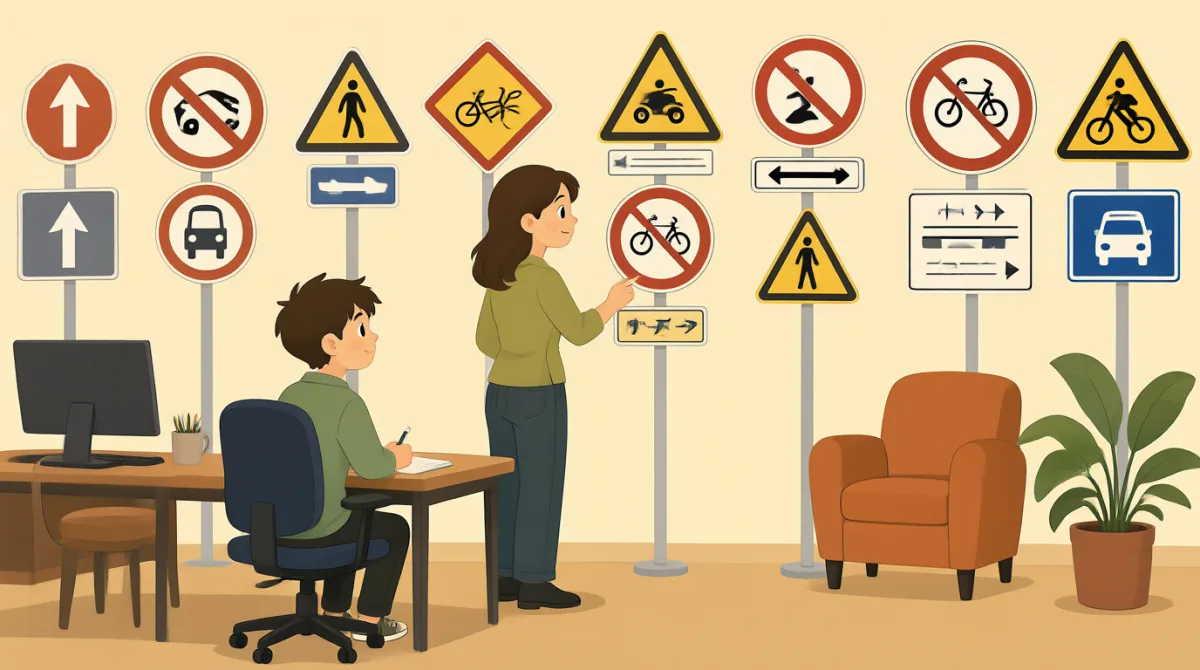
The student and instructor are going over common traffic signs, road markings, and basic traffic laws to prepare for the written theory test or to reinforce observational skills.
يراجع الطالب والمدرّب إشارات المرور الشائعة والعلامات المرسومة على الطريق والقواعد الأساسية للسير استعدادًا لاختبار النظري التحريري أو لتعزيز مهارات الملاحظة.
حوار9

Alright Emma, let's go over some of the trickier traffic signs and road markings today. These often trip people up on the written test.
حسنًا يا Emma، لِنراجع اليوم بعض إشارات المرور وعلامات الطريق الأصعب قليلًا. فكثيرًا ما تُربك هذه الأمور الناس في الاختبار التحريري.

Sounds good, David! I'm ready. I've been reviewing the manual, but some of the subtle differences between signs still confuse me.
رائع يا David! أنا مستعدة. كنت أراجع دليل القيادة، لكن بعض الفروق الدقيقة بين الإشارات ما زالت تربكني.
Perfect. Let's start with 'No Parking' vs. 'No Stopping' signs. What's the key difference you need to remember for the test?
ممتاز. لنبدأ بإشارتي «ممنوع الوقوف» و«ممنوع التوقف». ما الفرق الأساسي الذي عليك تذكّره للاختبار؟
Okay, 'No Parking' means you can stop briefly to pick up or drop off passengers, but you can't leave your vehicle. 'No Stopping' means you can't stop for any reason, not even for a moment.
حسنًا، تعني إشارة «ممنوع الوقوف» أنه يمكنك التوقف لفترة وجيزة لركوب الركاب أو إنزالهم، لكن لا يمكنك ترك سيارتك. أما «ممنوع التوقف» فتعني أنه لا يمكنك التوقف لأي سبب، ولا حتى للحظة.
Excellent! You got it. That's a common one people mix up. Now, tell me about the meaning of a solid white line versus a dashed white line on a multi-lane highway.
ممتاز! إجابتك صحيحة. هذا من الأمور التي يخلط الناس بينها كثيرًا. والآن، أخبريني عن معنى الخط الأبيض المتصل مقارنةً بالخط الأبيض المتقطع على طريق سريع متعدد المسارات.
A solid white line means you shouldn't change lanes, while a dashed white line means you can change lanes if it's safe to do so.
يعني الخط الأبيض المتصل أنه ينبغي ألا تغيّري المسار، بينما يعني الخط الأبيض المتقطع أنه يمكنك تغيير المسار إذا كان ذلك آمنًا.
Spot on. And where do you typically see solid white lines often used, besides marking the edge of the road?
صحيح تمامًا. وأين ترين عادةً الخطوط البيضاء المتصلة مستخدمةً، إلى جانب تحديد حافة الطريق؟
At intersections, solid white lines are often used as stop lines or crosswalks. And also on bridges, I believe, where lane changes are discouraged.
عند التقاطعات، تُستخدم الخطوط البيضاء المتصلة غالبًا كخطوط توقف أو لتحديد ممرات المشاة. وأعتقد أنها تُستخدم أيضًا على الجسور، حيث يُنصح بتجنب تغيير المسار.
That's right, especially near intersections or in tunnels/bridges where visibility is limited or safety is paramount. You're doing great, Emma. Keep up the good work and you'll ace that theory test!
صحيح، خصوصًا بالقرب من التقاطعات أو في الأنفاق وعلى الجسور، حيث تكون الرؤية محدودة أو تكون السلامة ذات أهمية قصوى. أداؤك رائع يا Emma. واصلي العمل الجيد وستجتازين الاختبار النظري بتفوّق!
المفردات12
- trickierأصعب قليلًا
Means more difficult or complicated than usual. Use it when talking about challenging parts of a test or task, like 'These questions are trickier than I thought.'
تعني أكثر صعوبةً أو تعقيدًا من المعتاد. تُستخدم عند الحديث عن أجزاء صعبة من اختبار أو مهمة، مثل: 'These questions are trickier than I thought.' (هذه الأسئلة أصعب مما ظننت.)
- traffic signsإشارات المرور
Signs on roads that give rules, warnings, or directions to drivers. Important for driving tests; for example, 'Always obey traffic signs to stay safe.'
إشارات توضع على الطرق لإبلاغ السائقين بالقواعد أو تحذيرهم أو إرشادهم. وهي مهمة في اختبارات القيادة؛ مثل: 'Always obey traffic signs to stay safe.' (التزم دائمًا بإشارات المرور لتحافظ على سلامتك.)
- road markingsعلامات الطريق
Lines or symbols painted on the road to guide drivers, like lane lines. Useful in driving contexts: 'Watch the road markings when changing lanes.'
خطوط أو رموز مرسومة على الطريق لإرشاد السائقين، مثل خطوط المسارات. وهي مفيدة في سياق القيادة؛ مثل: 'Watch the road markings when changing lanes.' (انتبه إلى علامات الطريق عند تغيير المسار.)
- subtleدقيق
Small and not easy to notice. Use when describing small differences: 'The subtle changes in the signs can be confusing at first.'
يعني صغيرًا وغير سهل الملاحظة. يُستخدم لوصف الفروق الصغيرة، مثل: 'The subtle changes in the signs can be confusing at first.' (قد تكون التغييرات الدقيقة في الإشارات مربكة في البداية.)
- No Parkingممنوع الوقوف
A traffic sign meaning you cannot leave your vehicle parked there, but you can stop briefly. Common in urban areas; remember it for driving rules.
إشارة مرورية تعني أنه لا يمكنك ترك مركبتك متوقفة في ذلك المكان، لكن يمكنك التوقف لفترة وجيزة. وهي شائعة في المناطق الحضرية؛ فتذكّرها عند دراسة قواعد القيادة.
- No Stoppingممنوع التوقف
A stricter traffic sign meaning you cannot stop your vehicle at all, even for a short time. Used in dangerous areas; key for safety tests.
إشارة مرورية أكثر صرامة تعني أنه لا يمكنك إيقاف مركبتك مطلقًا، حتى لفترة قصيرة. تُستخدم في المناطق الخطرة، وهي مهمة في اختبارات السلامة.
- solid white lineخط أبيض متصل
A continuous white line on the road that means you should not cross it or change lanes. Often seen at edges or no-passing zones.
خط أبيض متواصل مرسوم على الطريق، ويعني أنه ينبغي ألا تتجاوزه أو تغيّر المسار. يُرى غالبًا عند حواف الطريق أو في مناطق منع التجاوز.
- dashed white lineخط أبيض متقطع
A broken white line on the road allowing safe lane changes. Use in sentences like 'You can pass over a dashed white line if clear.'
خط أبيض متقطع على الطريق، يسمح بتغيير المسار بأمان. استخدمه في جملة مثل: 'You can pass over a dashed white line if clear.' (يمكنك عبور خط أبيض متقطع إذا كان الطريق خاليًا.)
- intersectionsالتقاطعات
Places where two or more roads meet and cross. Crucial for driving: 'Be careful at intersections and yield to others.'
أماكن تلتقي فيها طريقان أو أكثر وتتقاطع. وهي مهمة جدًا في القيادة؛ مثل: 'Be careful at intersections and yield to others.' (كن حذرًا عند التقاطعات وأفسح الطريق للآخرين.)
- visibilityمدى الرؤية
How well you can see ahead, affected by weather or light. In driving: 'Poor visibility means slow down and use lights.'
مدى وضوح ما تراه أمامك، ويتأثر بالطقس أو الإضاءة. وفي القيادة نقول: 'Poor visibility means slow down and use lights.' (ضعف الرؤية يعني أن عليك تخفيف السرعة واستخدام الأضواء.)
- paramountذو أهمية قصوى
Means of the highest importance. Use formally: 'Safety is paramount when driving on bridges.'
تعني بالغ الأهمية. تُستخدم في السياقات الرسمية، مثل: 'Safety is paramount when driving on bridges.' (السلامة ذات أهمية قصوى عند القيادة على الجسور.)
- aceيُبلي بلاءً حسنًا جدًا
Slang for doing something extremely well, like passing a test easily. Informal: 'You'll ace the exam if you study hard.'
تعبير عامي يعني إنجاز شيء على نحو ممتاز، مثل اجتياز اختبار بسهولة. يُستخدم في الكلام غير الرسمي: 'You'll ace the exam if you study hard.' (ستجتاز الاختبار بتفوّق إذا درست بجد.)
الجمل الأساسية7
- 1
Alright Emma, let's go over some of the trickier traffic signs and road markings today.
حسنًا يا Emma، لِنراجع اليوم بعض إشارات المرور وعلامات الطريق الأصعب قليلًا.
This is a way to start a lesson or review session politely. 'Go over' means to review or discuss. Useful for teachers or students preparing for exams; shows initiative in learning.
هذه طريقة لبدء درس أو جلسة مراجعة بأسلوب مهذب. تعني 'go over' المراجعة أو المناقشة. وهي مفيدة للمدرّسين والطلاب الذين يستعدون للاختبارات، وتُظهر المبادرة في التعلّم.
- 2
Sounds good, David! I'm ready.
رائع يا David! أنا مستعدة.
A positive response showing agreement and preparedness. 'Sounds good' is casual for 'That seems fine.' Great for conversations when accepting plans; builds rapport in class.
رد إيجابي يُظهر الموافقة والاستعداد. عبارة 'Sounds good' طريقة غير رسمية لقول «يبدو هذا مناسبًا». وهي مفيدة عند الموافقة على الخطط، وتساعد على بناء علاقة ودية في الصف.
- 3
What's the key difference you need to remember for the test?
ما الفرق الأساسي الذي عليك تذكّره للاختبار؟
Asks for the main distinction in rules. 'Key difference' highlights important contrasts. Useful in study sessions to focus on test essentials; practices question forms with 'what's' for contractions.
يسأل هذا السؤال عن الفارق الرئيسي بين القواعد. وتسلّط عبارة 'Key difference' الضوء على أوجه الاختلاف المهمة. وهي مفيدة في جلسات الدراسة للتركيز على أساسيات الاختبار، كما تدرّبك على صياغة الأسئلة باستخدام الاختصار 'what's'.
- 4
'No Parking' means you can stop briefly to pick up or drop off passengers, but you can't leave your vehicle.
تعني إشارة 'No Parking' أنه يمكنك التوقف لفترة وجيزة لركوب الركاب أو إنزالهم، لكن لا يمكنك ترك سيارتك.
Explains a rule using 'means' for definition and 'but' for contrast. Practical for describing traffic laws; helps learners understand exceptions in driving regulations.
تشرح هذه الجملة قاعدةً باستخدام 'means' للتعريف و'but' للتعبير عن التباين. وهي مفيدة لوصف قوانين المرور وتساعدك على فهم الاستثناءات في قواعد القيادة.
- 5
A solid white line means you shouldn't change lanes, while a dashed white line means you can change lanes if it's safe to do so.
يعني الخط الأبيض المتصل أنه ينبغي ألا تغيّر المسار، بينما يعني الخط الأبيض المتقطع أنه يمكنك تغيير المسار إذا كان ذلك آمنًا.
Compares two things using 'while' for contrast and conditional 'if it's safe.' Useful for explaining road rules; teaches relative clauses and safety conditions in driving.
تقارن الجملة بين أمرين باستخدام 'while' للتباين، و'if it's safe' للتعبير عن شرط. وهي مفيدة لشرح قواعد الطريق، وتعلّمك المقارنة بين الأشياء وذكر شروط السلامة في القيادة.
- 6
Spot on.
صحيح تمامًا.
Idiomatic expression meaning exactly correct. Short and informal praise. Use in feedback situations like tests; common in British English but understood widely for quick approval.
تعبير اصطلاحي يعني أن الإجابة صحيحة تمامًا. وهو ثناء موجز وغير رسمي يُستخدم للتشجيع أو التقييم، مثلما يحدث في الاختبارات. يشيع في الإنجليزية البريطانية، لكنه مفهوم على نطاق واسع.
- 7
You're doing great, Emma. Keep up the good work and you'll ace that theory test!
أداؤك رائع يا Emma. واصلي العمل الجيد وستجتازين الاختبار النظري بتفوّق!
Encourages with compliments and future prediction using 'will.' 'Keep up the good work' means continue performing well. Ideal for motivating learners; includes contraction 'you'll' for natural speech.
تشجّع هذه الجملة من خلال الإطراء والتنبؤ بالمستقبل باستخدام 'will'. وتعني 'Keep up the good work' مواصلة الأداء الجيد. وهي مناسبة لتحفيز المتعلمين، وتتضمن الاختصار 'you'll' الشائع في الكلام الطبيعي.