Discussing Flower Care and Longevity
फूलों की देखभाल और उन्हें लंबे समय तक ताज़ा रखने के बारे में बातचीत
After selecting the flowers, the customer asks the florist for advice on how to care for them, including watering, light, temperature, and tips to maximize their freshness and lifespan.
फूल चुनने के बाद, ग्राहक फूलवाले से उनकी देखभाल के बारे में सलाह माँगता है—जैसे पानी देना, रोशनी और तापमान, और उन्हें ज़्यादा समय तक ताज़ा रखने के तरीके।
संवाद8
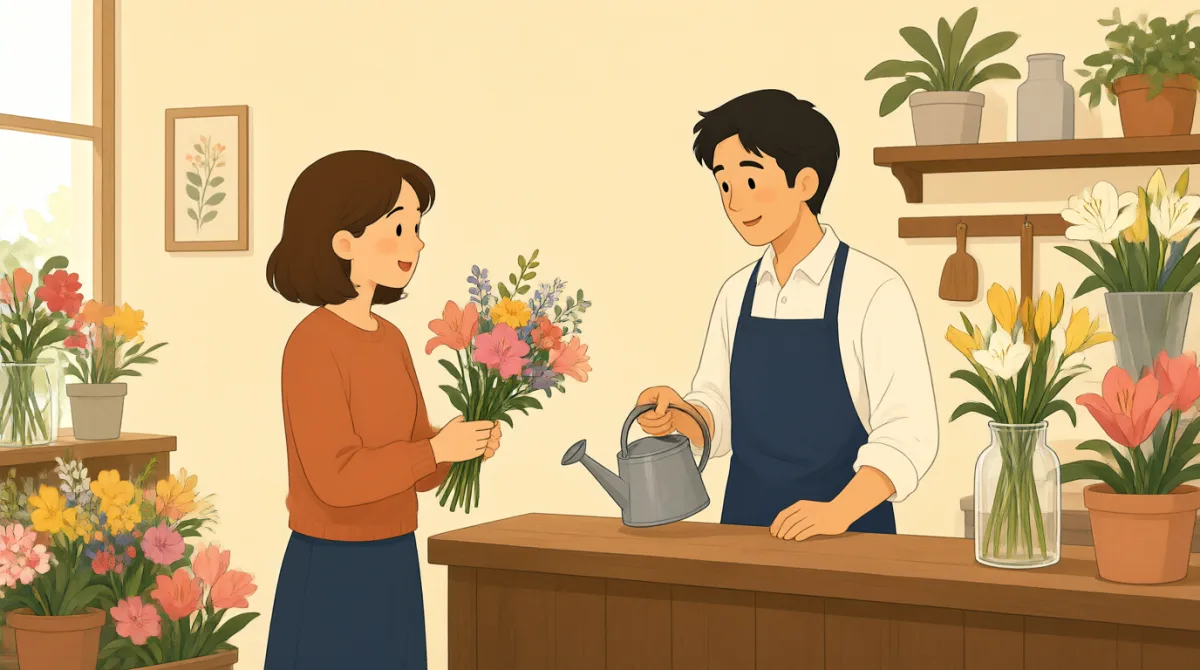

These roses are beautiful! Now, about keeping them fresh, what's the best way to care for them once I get them home?
ये गुलाब कितने खूबसूरत हैं! अब इन्हें ताज़ा रखने की बात करें, तो घर ले जाने के बाद इनकी देखभाल का सबसे अच्छा तरीका क्या है?

Great question, Jack! First, trim about an inch off the bottoms of the stems diagonally when you get home. This helps them absorb water better. Make sure to remove any leaves below the water line too, to prevent bacterial growth.
बहुत अच्छा सवाल, जैक! घर पहुँचकर सबसे पहले तनों के निचले हिस्से से करीब एक इंच तिरछा काट दीजिए। इससे वे पानी बेहतर तरीके से सोख पाएँगे। पानी की सतह के नीचे आने वाली पत्तियाँ भी हटा दीजिए, ताकि बैक्टीरिया न पनपें।
Okay, trim diagonally and remove submerged leaves. Got it. What about watering? Should I use tap water or something else?
ठीक है, तनों को तिरछा काटना है और पानी में डूबी पत्तियाँ हटा देनी हैं। समझ गया। पानी के बारे में क्या? नल का पानी इस्तेमाल करूँ या कुछ और?
Tap water is fine, but lukewarm water is actually best as it's easier for the stems to draw up. And always use the flower food packet we gave you – it makes a huge difference. Change the water every two days, or daily if it looks cloudy.
नल का पानी ठीक है, लेकिन गुनगुना पानी सबसे अच्छा रहता है, क्योंकि तने उसे आसानी से सोख लेते हैं। और हमारे दिए हुए फूलों के पोषण का पैकेट ज़रूर इस्तेमाल कीजिए—इससे बहुत फ़र्क पड़ता है। हर दो दिन में पानी बदल दीजिए, या अगर पानी धुँधला दिखे तो रोज़।
Lukewarm water and flower food, definitely. And what about light and temperature? Should they be in direct sunlight?
गुनगुना पानी और फूलों का पोषण—बिल्कुल। रोशनी और तापमान के बारे में क्या? क्या उन्हें सीधी धूप में रखना चाहिए?
Absolutely not direct sunlight, Jack. That will make them wilt quickly. Keep them in a cool spot, away from direct sun, drafts, and ripening fruit – fruit releases ethylene gas which can prematurely age flowers.
बिल्कुल नहीं, जैक। उन्हें सीधी धूप में रखने से वे जल्दी मुरझा जाएँगे। उन्हें किसी ठंडी जगह पर रखिए, जहाँ सीधी धूप, हवा के झोंके और पकते फल न हों—फल एथिलीन गैस छोड़ते हैं, जिससे फूल समय से पहले मुरझा सकते हैं।
Away from sun, drafts, and fruit. Wow, that's a lot of helpful tips. Any other secrets to maximize their freshness?
धूप, हवा के झोंकों और फलों से दूर। वाह, कितनी काम की सलाह है! उन्हें ज़्यादा समय तक ताज़ा रखने का कोई और नुस्खा?
One more thing: if any blooms start to look a little droopy, you can try giving them a 'flower bath.' Submerge the entire flower head and stem in cool water for about 30 minutes. It often revives them! Enjoy your beautiful roses!
एक और बात: अगर कोई फूल थोड़ा झुका हुआ दिखने लगे, तो उसे ‘फूलों का स्नान’ दे सकते हैं। पूरे फूल और तने को करीब 30 मिनट के लिए ठंडे पानी में डुबो दीजिए। इससे वे अक्सर फिर से ताज़ा हो जाते हैं! अपने खूबसूरत गुलाबों का आनंद लीजिए!
शब्दावली8
- trimकाट-छाँट करना
To cut off a small part of something, like stems, to make it neat or help it grow better. In flower care, you trim stems to improve water absorption.
किसी चीज़ का छोटा-सा हिस्सा काटना, जैसे तने का, ताकि वह साफ़-सुथरी रहे या बेहतर बढ़े। फूलों की देखभाल में पानी का बेहतर अवशोषण करने के लिए तनों की काट-छाँट की जाती है।
- diagonallyतिरछे
In a slanted or angled line, not straight across. For flowers, cut stems diagonally so they can take in more water.
सीधा काटने के बजाय ढलान या कोण में। फूलों के तनों को तिरछा काटें, ताकि वे ज़्यादा पानी सोख सकें।
- absorbसोखना
To take in or soak up liquid or nutrients. Flowers absorb water through their stems to stay fresh and healthy.
तरल या पोषक तत्वों को अपने भीतर लेना। ताज़ा और स्वस्थ रहने के लिए फूल अपने तनों से पानी सोखते हैं।
- lukewarmगुनगुना
Water that is neither hot nor cold, but room temperature or slightly warm. Use lukewarm water for flowers because it's easier for them to drink it up.
ऐसा पानी जो न गर्म हो, न ठंडा—कमरे के तापमान का या थोड़ा गर्म। फूलों के लिए गुनगुना पानी इस्तेमाल करें, क्योंकि वे इसे आसानी से सोख पाते हैं।
- wiltमुरझाना
When a plant or flower becomes soft and droops because it lacks water or is too hot. Direct sunlight can make flowers wilt quickly.
जब पानी की कमी या ज़्यादा गर्मी के कारण पौधा या फूल नरम होकर झुक जाता है। सीधी धूप से फूल जल्दी मुरझा सकते हैं।
- draftsहवा के झोंके
Currents of cool air from open windows or doors. Keep flowers away from drafts to prevent them from getting too cold and wilting.
खुली खिड़कियों या दरवाज़ों से आने वाली ठंडी हवा। फूलों को हवा के झोंकों से दूर रखें, ताकि उन्हें ज़्यादा ठंड न लगे और वे मुरझाएँ नहीं।
- droopyझुका हुआ
Hanging down or sagging, like a flower that is tired or needs water. If flowers look droopy, they might need reviving.
नीचे की ओर लटका हुआ या झुका हुआ, जैसे कोई फूल थका हो या उसे पानी की ज़रूरत हो। अगर फूल झुके हुए दिखें, तो उन्हें फिर से ताज़ा करने की ज़रूरत हो सकती है।
- submergeडुबोना
To put something completely under water. For droopy flowers, submerge them to refresh and revive them.
किसी चीज़ को पूरी तरह पानी के नीचे रखना। झुके हुए फूलों को ताज़ा करने के लिए पानी में डुबोएँ।
मुख्य वाक्य7
- 1
Trim about an inch off the bottoms of the stems diagonally.
तनों के निचले हिस्से से करीब एक इंच तिरछा काट दीजिए।
This sentence gives a practical instruction using the imperative form 'trim' for advice. It's useful when asking for or giving care tips; the word 'diagonally' shows how to do it correctly to help water absorption.
इस वाक्य में सलाह देने के लिए आज्ञार्थक रूप 'trim' का इस्तेमाल किया गया है। देखभाल से जुड़ी सलाह पूछते या देते समय यह काम आता है। 'diagonally' बताता है कि पानी बेहतर सोखने में मदद के लिए तने को सही तरीके से कैसे काटना है।
- 2
This helps them absorb water better.
इससे वे पानी बेहतर तरीके से सोख पाएँगे।
A simple explanatory sentence using 'helps' to show cause and effect. Useful for explaining why we do something in care routines; practice it to describe benefits in everyday advice.
इस आसान वाक्य में 'helps' का इस्तेमाल करके कारण और परिणाम बताया गया है। देखभाल के रोज़मर्रा के तरीकों में किसी काम का कारण समझाने के लिए यह उपयोगी है। रोज़मर्रा की सलाह में इसके फ़ायदे बताने के लिए इसका अभ्यास करें।
- 3
Remove any leaves below the water line too, to prevent bacterial growth.
बैक्टीरिया को पनपने से रोकने के लिए पानी की सतह के नीचे आने वाली पत्तियाँ भी हटा दीजिए।
This uses 'to' for purpose (prevent something bad). It's practical for hygiene tips; the infinitive phrase explains the reason, common in instructional English.
इस वाक्य में किसी बुरी चीज़ को रोकने का उद्देश्य बताने के लिए 'to' का इस्तेमाल हुआ है। स्वच्छता से जुड़ी सलाह में यह काम आता है। 'to' के बाद आने वाला क्रिया-वाक्यांश कारण समझाता है—निर्देश देने वाली अंग्रेज़ी में यह आम है।
- 4
Tap water is fine, but lukewarm water is actually best as it's easier for the stems to draw up.
नल का पानी ठीक है, लेकिन गुनगुना पानी बेहतर रहता है, क्योंकि तने उसे आसानी से सोख लेते हैं।
A comparative sentence with 'but' for contrast and 'as' for reason. Useful when recommending options; it teaches polite suggestions and why one is better.
इस वाक्य में तुलना और अंतर दिखाने के लिए 'but' और कारण बताने के लिए 'as' का इस्तेमाल किया गया है। विकल्प सुझाते समय यह उपयोगी है; इससे विनम्र सुझाव देना और यह बताना सीखते हैं कि एक विकल्प बेहतर क्यों है।
- 5
Change the water every two days, or daily if it looks cloudy.
हर दो दिन में पानी बदल दीजिए, या अगर वह धुँधला दिखे तो रोज़।
This shows frequency with 'every two days' and conditional 'if' for alternatives. Great for routine instructions; use it to give flexible advice in care or maintenance talks.
इस वाक्य में 'every two days' से कितनी बार करना है, यह बताया गया है और 'if' से वैकल्पिक स्थिति। रोज़मर्रा के निर्देशों के लिए यह बढ़िया है; देखभाल या रखरखाव की बातचीत में लचीली सलाह देने के लिए इसका इस्तेमाल करें।
- 6
Keep them in a cool spot, away from direct sun, drafts, and ripening fruit.
उन्हें किसी ठंडी जगह पर रखिए, सीधी धूप, हवा के झोंकों और पकते फलों से दूर।
Imperative advice with prepositions like 'away from' for locations. Practical for describing ideal conditions; the list structure helps remember multiple tips easily.
यहाँ जगह बताने वाले 'away from' जैसे शब्दों के साथ आज्ञार्थक रूप में सलाह दी गई है। सही परिस्थितियाँ बताने के लिए यह काम आता है। सूची के रूप में दी गई सलाह से कई बातें आसानी से याद रहती हैं।
- 7
If any blooms start to look a little droopy, you can try giving them a 'flower bath.'
अगर कोई फूल थोड़ा झुका हुआ दिखने लगे, तो आप उसे 'flower bath' देने की कोशिश कर सकते हैं।
A conditional sentence with 'if' for situations and 'can try' for suggestions. Useful for troubleshooting; it introduces creative fixes like the 'flower bath' idiom for reviving plants.
इस वाक्य में किसी स्थिति के लिए 'if' और सुझाव देने के लिए 'can try' का इस्तेमाल हुआ है। समस्या का हल बताते समय यह उपयोगी है। इसमें पौधों को फिर से ताज़ा करने के एक रचनात्मक तरीके, 'flower bath', का ज़िक्र है।