Brief Chat in the Garden/Yard
बगीचे में छोटी-सी बातचीत
Neighbors engaged in outdoor activities (e.g., gardening, walking a pet) exchange greetings and engage in a brief, friendly conversation.
बाहर के कामों में लगे पड़ोसी (जैसे बागवानी करना या पालतू जानवर को टहलाना) एक-दूसरे का अभिवादन करते हैं और थोड़ी दोस्ताना बातचीत करते हैं।
संवाद9
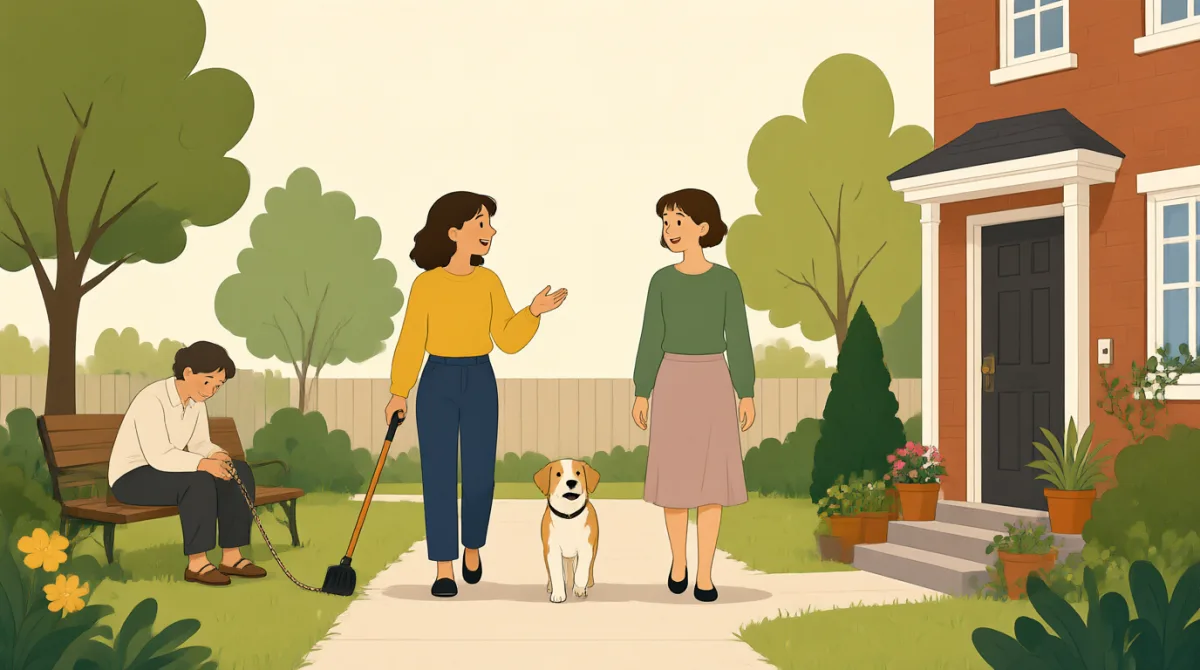

Oh, hello there! You must be one of our new neighbors. Welcome to the street!
अरे, नमस्ते! आप ज़रूर हमारे नए पड़ोसियों में से होंगे। हमारी गली में आपका स्वागत है!

Hi! Yes, that's us. I'm Jack, and this is my wife, Sarah. We just moved in yesterday. Thanks for the warm welcome!
नमस्ते! हाँ, हम ही हैं। मैं जैक हूँ और ये मेरी पत्नी सारा हैं। हम कल ही यहाँ रहने आए हैं। इतने प्यार से स्वागत करने के लिए धन्यवाद!
It's lovely to meet you both! I'm Grace, and my husband, David, is just inside. We're right next door. Let me know if you need anything at all while you're settling in.
आप दोनों से मिलकर बहुत अच्छा लगा! मैं ग्रेस हूँ और मेरे पति डेविड अंदर ही हैं। हम ठीक बगल में रहते हैं। यहाँ बसने के दौरान अगर आपको किसी भी चीज़ की ज़रूरत हो, तो मुझे ज़रूर बताइएगा।
That's so kind of you, Grace. We appreciate that. It's been a bit hectic, as you can imagine.
आपकी बहुत मेहरबानी है, ग्रेस। हम इसकी बहुत कद्र करते हैं। जैसा कि आप समझ सकती हैं, इन दिनों थोड़ी भागदौड़ रही है।
Oh, I can definitely imagine! Moving is never easy. Your garden looks like it's coming along nicely already.
अरे, मैं समझ सकती हूँ! घर बदलना कभी आसान नहीं होता। आपका बगीचा तो अभी से अच्छा सँवरता दिख रहा है।
Thanks! Just trying to tame these hedges a bit. We're looking forward to getting it how we like it.
धन्यवाद! बस इन झाड़ियों को थोड़ा काबू में करने की कोशिश कर रहा हूँ। हम इसे अपनी पसंद के मुताबिक बनाने के लिए उत्साहित हैं।
Well, if you ever need a hand or have any questions about the area, just pop over. There's a great little coffee shop just a few blocks away.
खैर, अगर कभी मदद की ज़रूरत हो या इस इलाके के बारे में कोई सवाल हो, तो बस हमारे यहाँ आ जाइएगा। कुछ ही ब्लॉक दूर एक बहुत अच्छा-सा कॉफ़ी शॉप है।
That's good to know! We'll definitely take you up on that offer. Thanks again, Grace. It was really nice meeting you.
यह जानकर अच्छा लगा! हम ज़रूर आपके इस प्रस्ताव का फ़ायदा उठाएँगे। फिर से धन्यवाद, ग्रेस। आपसे मिलकर सचमुच बहुत अच्छा लगा।
You too, Jack! Enjoy the rest of your afternoon. We'll chat again soon!
मुझे भी, जैक! अपनी दोपहर का बाकी समय मज़े से बिताइए। फिर जल्द ही बात होगी!
शब्दावली8
- neighborपड़ोसी
A person who lives next to you or near your home. Use this word when talking about people in your community, like 'My new neighbor is friendly.'
जो व्यक्ति आपके घर के पास या बगल में रहता है, उसे पड़ोसी कहते हैं। अपने समुदाय के लोगों की बात करते समय इस शब्द का इस्तेमाल करें, जैसे 'My new neighbor is friendly.' (मेरा नया पड़ोसी मिलनसार है।)
- welcomeस्वागत करना
To greet someone warmly when they arrive somewhere new. It's a polite way to make people feel at home, as in 'Welcome to our street!'
किसी के नई जगह आने पर उसका प्यार से अभिवादन करना। इससे सामने वाले को अपनापन महसूस होता है, जैसे 'Welcome to our street!' (हमारी गली में आपका स्वागत है!)
- moved inरहने आना
To start living in a new house or apartment after bringing your things there. Say this when describing a recent change, like 'We just moved in yesterday.'
सामान लाकर किसी नए घर या अपार्टमेंट में रहने लगना। हाल में हुए बदलाव के बारे में बताते समय यह कहें, जैसे 'We just moved in yesterday.' (हम कल ही यहाँ रहने आए हैं।)
- settling inनई जगह पर ढलना
Getting comfortable and organized in a new place. It's useful for talking about adjusting to changes, such as 'We're still settling in after the move.'
नई जगह पर सहज होना और चीज़ों को व्यवस्थित करना। बदलाव के साथ तालमेल बिठाने की बात करते समय यह उपयोगी है, जैसे 'We're still settling in after the move.' (घर बदलने के बाद हम अभी भी नई जगह पर ढल रहे हैं।)
- hecticभागदौड़ भरा
Very busy and full of activity, often in a stressful way. Use it to describe chaotic situations, like 'Moving day was hectic.'
बहुत व्यस्त और हलचल से भरा, अक्सर तनावपूर्ण। अस्त-व्यस्त हालात बताने के लिए इसका इस्तेमाल करें, जैसे 'Moving day was hectic.' (घर बदलने का दिन बहुत भागदौड़ भरा था।)
- tameकाबू में करना
To control or make something wild or overgrown less wild, like trimming bushes. In gardening, say 'I need to tame these hedges.'
किसी जंगली या बहुत बढ़ी हुई चीज़ को काबू में करना या कम बेकाबू बनाना, जैसे झाड़ियों की छँटाई करना। बागवानी में कहें, 'I need to tame these hedges.' (मुझे इन झाड़ियों को थोड़ा काबू में करना है।)
- pop overथोड़ी देर के लिए मिलने आना
To visit someone quickly and casually, without much planning. It's informal and friendly, as in 'Pop over for a chat anytime.'
बिना ज़्यादा योजना बनाए, सहज रूप से किसी से मिलने जाना। यह अनौपचारिक और दोस्ताना है, जैसे 'Pop over for a chat anytime.' (कभी भी थोड़ी देर बातचीत करने आ जाइए।)
- take up on an offerकिसी के प्रस्ताव को स्वीकार करना
To accept someone's suggestion or help. Use this phrase to show appreciation, like 'We'll take you up on that offer of help.'
किसी के सुझाव या मदद को स्वीकार करना। आभार जताने के लिए यह वाक्यांश इस्तेमाल करें, जैसे 'We'll take you up on that offer of help.' (हम आपकी मदद की पेशकश ज़रूर स्वीकार करेंगे।)
मुख्य वाक्य8
- 1
You must be one of our new neighbors. Welcome to the street!
आप ज़रूर हमारे नए पड़ोसियों में से होंगे। हमारी गली में आपका स्वागत है!
This is a friendly greeting for meeting someone new. 'Must be' expresses a logical guess, useful for introductions. Use it to make newcomers feel welcome in casual social situations.
किसी नए व्यक्ति से मिलने पर यह दोस्ताना अभिवादन है। 'Must be' का इस्तेमाल तर्क के आधार पर अंदाज़ा लगाने के लिए होता है और परिचय देते समय उपयोगी है। अनौपचारिक सामाजिक मौकों पर नए लोगों का स्वागत करने के लिए यह कहें।
- 2
I'm Jack, and this is my wife, Sarah. We just moved in yesterday.
मैं जैक हूँ और ये मेरी पत्नी सारा हैं। हम कल ही यहाँ रहने आए हैं।
A simple self-introduction including family. The structure 'I'm [name], and this is [relation]' is common for polite meetings. Say this when introducing yourself and others during small talk.
परिवार के सदस्य का परिचय देते हुए अपना परिचय देने का एक सरल तरीका। 'I'm [name], and this is [relation]' किसी से विनम्रता से मिलते समय आम ढाँचा है। छोटी-मोटी बातचीत के दौरान अपना और दूसरों का परिचय देने के लिए यह कहें।
- 3
Let me know if you need anything at all while you're settling in.
यहाँ बसने के दौरान अगर आपको किसी भी चीज़ की ज़रूरत हो, तो मुझे ज़रूर बताइएगा।
This offers help politely using 'let me know' for future requests. The conditional 'if' shows openness. It's useful for building neighborly relationships by showing kindness.
'let me know' का इस्तेमाल करके भविष्य में मदद माँगने का विनम्र निमंत्रण दिया जाता है। 'if' वाली शर्त से पता चलता है कि आप मदद के लिए तैयार हैं। पड़ोसियों के बीच अपनापन बढ़ाने और मदद की पेशकश करने में यह उपयोगी है।
- 4
That's so kind of you, Grace. We appreciate that.
आपकी बहुत मेहरबानी है, ग्रेस। हम इसकी बहुत कद्र करते हैं।
A way to thank someone for their generosity. 'That's so kind of you' highlights the action positively. Use this in responses to offers to sound grateful and polite.
किसी की उदारता के लिए धन्यवाद कहने का एक तरीका। 'That's so kind of you' सामने वाले के काम की सराहना करता है। किसी की मदद की पेशकश का जवाब देते समय आभार और विनम्रता जताने के लिए इसका इस्तेमाल करें।
- 5
Oh, I can definitely imagine! Moving is never easy.
अरे, मैं समझ सकती हूँ! घर बदलना कभी आसान नहीं होता।
This shows empathy by agreeing and sharing a general truth. 'Never' emphasizes always true statements. Use it to connect with others' experiences during conversations about challenges.
यह बात से सहमति जताकर और एक आम सच्चाई साझा करके हमदर्दी दिखाता है। 'Never' ऐसी बात पर ज़ोर देता है जो हमेशा सच होती है। मुश्किलों के बारे में बातचीत करते समय दूसरे के अनुभव से जुड़ने के लिए इसका इस्तेमाल करें।
- 6
Well, if you ever need a hand or have any questions about the area, just pop over.
खैर, अगर कभी मदद की ज़रूरत हो या इस इलाके के बारे में कोई सवाल हो, तो बस हमारे यहाँ आ जाइएगा।
Offers casual help with 'need a hand' meaning assistance, and 'pop over' for visiting. The 'if...ever' structure invites future contact. Great for neighborly offers in everyday English.
'need a hand' का मतलब मदद की ज़रूरत होना है और 'pop over' का मतलब थोड़ी देर के लिए मिलने आना है। 'if...ever' का ढाँचा भविष्य में संपर्क करने का खुला निमंत्रण देता है। रोज़मर्रा की अंग्रेज़ी में पड़ोसियों को मदद की पेशकश करने के लिए यह बढ़िया वाक्य है।
- 7
We'll definitely take you up on that offer.
हम ज़रूर आपके इस प्रस्ताव का फ़ायदा उठाएँगे।
Accepts help positively with 'definitely' for emphasis. This idiom 'take up on' is common in polite agreements. Use it when responding to invitations or assistance to keep the talk friendly.
'definitely' से ज़ोर देकर मदद को खुशी से स्वीकार किया जाता है। 'take up on' एक आम मुहावरा है, जिसका इस्तेमाल विनम्रता से किसी प्रस्ताव को स्वीकार करने के लिए होता है। बातचीत को दोस्ताना बनाए रखते हुए निमंत्रण या मदद का जवाब देने के लिए इसका इस्तेमाल करें।
- 8
You too, Jack! Enjoy the rest of your afternoon.
मुझे भी, जैक! अपनी दोपहर का बाकी समय मज़े से बिताइए।
A warm goodbye mirroring the other person's words with 'You too!' and wishing well. It's a simple, positive close. Use this to end short chats politely in social settings.
'You too!' कहकर सामने वाले की बात दोहराते हुए गर्मजोशी से विदा ली जाती है और शुभकामना दी जाती है। यह बातचीत को अच्छे ढंग से खत्म करने का सरल तरीका है। सामाजिक मौकों पर छोटी बातचीत को विनम्रता से समाप्त करने के लिए इसका इस्तेमाल करें।