Discussing Anxiety Symptoms
चिंता के लक्षणों पर चर्चा
The client describes their experiences with anxiety, including physical symptoms, triggers, and impact on their daily life. The therapist asks clarifying questions and helps the client identify anxiety patterns.
मुवक्किल चिंता से जुड़े अपने अनुभव बताते हैं, जिनमें शारीरिक लक्षण, उन्हें शुरू करने वाले कारण और रोज़मर्रा की ज़िंदगी पर उनका असर शामिल है। चिकित्सक स्पष्टता के लिए सवाल पूछते हैं और मुवक्किल को चिंता के पैटर्न पहचानने में मदद करते हैं।
संवाद7
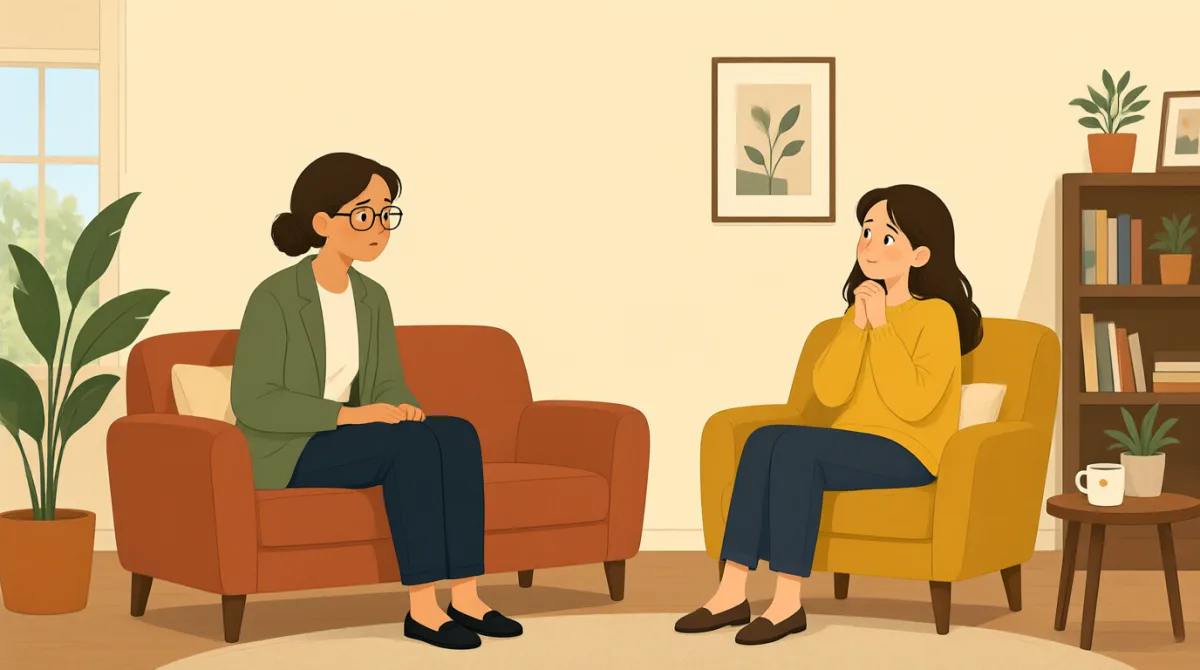

Good morning, Emma. Thanks for coming in. You mentioned a desire to discuss some anxiety you've been experiencing. Could you tell me a bit more about what that feels like for you?
सुप्रभात, एमा। आने के लिए धन्यवाद। आपने बताया था कि आप अपनी चिंता के बारे में बात करना चाहती हैं। क्या आप मुझे थोड़ा और बता सकती हैं कि आपको यह कैसा महसूस होता है?

Good morning. Yes, thank you. It's... it's like a constant knot in my stomach. Sometimes my heart races, and my palms get sweaty, even when there's no obvious reason. It's exhausting.
सुप्रभात। जी, धन्यवाद। यह... ऐसा लगता है जैसे मेरे पेट में हमेशा एक गाँठ-सी बँधी रहती है। कभी-कभी मेरा दिल तेज़ धड़कने लगता है और हथेलियों में पसीना आ जाता है, जबकि कोई साफ़ वजह भी नहीं होती। यह बहुत थका देने वाला है।
I understand. And when these physical symptoms appear, do you notice any specific thoughts or situations that might trigger them? Or do they seem to come out of nowhere?
मैं समझता हूँ। जब ये शारीरिक लक्षण दिखाई देते हैं, तो क्या आपको कोई खास विचार या स्थिति नज़र आती है जो इन्हें शुरू कर सकती है? या ये बिना किसी वजह के अचानक आ जाते हैं?
Sometimes it's when I have a big presentation at work, or even just thinking about social gatherings. But other times, it just hits me while I'm doing something completely mundane, like grocery shopping. It's hard to pinpoint.
कभी-कभी ऐसा तब होता है जब काम पर मेरी कोई बड़ी प्रस्तुति होती है, या फिर सामाजिक मेल-जोल के बारे में सोचने भर से। लेकिन कभी-कभी यह तब भी अचानक महसूस होने लगता है जब मैं कोई बिल्कुल रोज़मर्रा का काम कर रही होती हूँ, जैसे किराने का सामान खरीदना। इसकी सही वजह बताना मुश्किल है।
That's a very common experience with anxiety. How does this feeling impact your daily life? For example, your sleep, concentration, or interactions with others?
चिंता में ऐसा अनुभव होना बहुत आम है। इस एहसास का आपकी रोज़मर्रा की ज़िंदगी पर क्या असर पड़ता है? मसलन, आपकी नींद, ध्यान लगाने की क्षमता या दूसरों के साथ आपके मेल-जोल पर?
My sleep is terrible. I toss and turn, my mind races. During the day, it's hard to focus at work, and I've started avoiding social events more. I just feel so on edge all the time.
मेरी नींद बहुत खराब है। मैं बिस्तर पर करवटें बदलती रहती हूँ और दिमाग़ तेज़ी से चलता रहता है। दिन में काम पर ध्यान लगाना मुश्किल होता है, और मैंने सामाजिक कार्यक्रमों से बचना भी शुरू कर दिया है। मुझे हर समय बहुत बेचैनी महसूस होती है।
It sounds like it's taking quite a toll on you. Thank you for sharing these details. It helps me understand the patterns. We can work together to identify these triggers more clearly and develop coping strategies.
लगता है कि यह आप पर काफ़ी भारी पड़ रहा है। इतनी बातें साझा करने के लिए धन्यवाद। इससे मुझे इन पैटर्न को समझने में मदद मिलती है। हम साथ मिलकर इन कारणों को और साफ़ तौर पर पहचान सकते हैं और उनसे निपटने के तरीके विकसित कर सकते हैं।
शब्दावली8
- anxietyचिंता
A feeling of worry, nervousness, or unease, often about something with an uncertain outcome. In counseling, it's common to discuss symptoms like this.
चिंता का मतलब है फ़िक्र, घबराहट या बेचैनी महसूस करना, अक्सर किसी ऐसी बात को लेकर जिसका नतीजा तय न हो। परामर्श के दौरान ऐसे लक्षणों पर बात करना आम है।
- knotगाँठ
Here, 'a knot in my stomach' is an idiom for a tight, uncomfortable feeling in the belly caused by stress or anxiety.
यहाँ, 'a knot in my stomach' पेट में तनाव या चिंता के कारण होने वाले कसाव और बेचैनी के एहसास के लिए इस्तेमाल होने वाला मुहावरा है।
- triggerकारण बनना; शुरू करना
Something that causes or starts a reaction, like anxiety symptoms. For example, a stressful event can trigger feelings of worry.
ऐसी कोई चीज़ जो प्रतिक्रिया पैदा करे या शुरू करे, जैसे चिंता के लक्षण। उदाहरण के लिए, कोई तनावपूर्ण घटना फ़िक्र की भावना शुरू कर सकती है।
- pinpointसटीक पहचान करना
To identify or locate something exactly. It's useful when trying to find the exact cause of a problem, like 'It's hard to pinpoint the reason.'
किसी चीज़ की ठीक-ठीक पहचान करना या उसका पता लगाना। किसी समस्या की सटीक वजह ढूँढ़ते समय यह शब्द काम आता है, जैसे 'It's hard to pinpoint the reason.' (वजह की ठीक-ठीक पहचान करना मुश्किल है।)
- mundaneरोज़मर्रा का; साधारण
Ordinary or everyday activities, not exciting. Like 'grocery shopping' which is a mundane task that can sometimes trigger anxiety.
ऐसी आम या रोज़मर्रा की गतिविधियाँ जो रोमांचक न हों। जैसे 'grocery shopping' (किराने का सामान खरीदना) एक साधारण काम है, जो कभी-कभी चिंता शुरू कर सकता है।
- toss and turnबिस्तर पर करवटें बदलना
To move around restlessly in bed because you can't sleep well, often due to worry. It's a common phrase for describing poor sleep from anxiety.
अच्छी नींद न आने के कारण बेचैनी से बिस्तर पर इधर-उधर हिलते रहना, अक्सर फ़िक्र की वजह से। चिंता के कारण खराब नींद का वर्णन करने के लिए यह एक आम मुहावरा है।
- on edgeबेचैन और तनावग्रस्त
Feeling nervous, tense, or irritable, as if ready to react. People with anxiety often say they feel 'on edge' all the time.
घबराया हुआ, तनाव में या चिड़चिड़ा महसूस करना, मानो आप तुरंत प्रतिक्रिया देने वाले हों। चिंता से जूझ रहे लोग अक्सर कहते हैं कि वे हर समय 'on edge' महसूस करते हैं।
- coping strategiesनिपटने के तरीके
Methods or techniques to deal with stress or problems effectively. In therapy, you learn coping strategies to manage anxiety.
तनाव या समस्याओं से प्रभावी ढंग से निपटने के तरीके या तकनीकें। थेरेपी में आप चिंता को संभालने के लिए निपटने के तरीके सीखते हैं।
मुख्य वाक्य7
- 1
It's like a constant knot in my stomach.
ऐसा लगता है जैसे मेरे पेट में हमेशा एक गाँठ-सी बँधी रहती है।
This is a simile using 'like' to describe a physical feeling of anxiety. It's useful for expressing emotions vividly in conversations about health; the present tense shows ongoing experience.
इस वाक्य में 'like' का इस्तेमाल करके चिंता की शारीरिक अनुभूति की तुलना की गई है। स्वास्थ्य से जुड़ी बातचीत में भावनाओं को सजीव ढंग से बताने के लिए यह उपयोगी है; वर्तमान काल से पता चलता है कि यह एहसास लगातार बना हुआ है।
- 2
Sometimes my heart races, and my palms get sweaty, even when there's no obvious reason.
कभी-कभी मेरा दिल तेज़ धड़कने लगता है और हथेलियों में पसीना आ जाता है, जबकि कोई साफ़ वजह भी नहीं होती।
This sentence lists physical symptoms with 'and' for connection and 'even when' for contrast. It's practical for describing anxiety in medical or therapy talks; note the simple present for habits.
इस वाक्य में शारीरिक लक्षणों को जोड़ने के लिए 'and' और उनके विपरीत स्थिति दिखाने के लिए 'even when' का इस्तेमाल हुआ है। डॉक्टर या थेरेपिस्ट से चिंता के बारे में बात करते समय यह काम आता है; आदतों के लिए सामान्य वर्तमान काल पर ध्यान दें।
- 3
Do you notice any specific thoughts or situations that might trigger them?
क्या आपको कोई खास विचार या स्थिति नज़र आती है जो इन लक्षणों को शुरू कर सकती है?
A question using 'do you notice' for seeking information and 'might' for possibility. Useful in counseling to ask about causes; it helps clarify patterns in discussions.
यह सवाल जानकारी माँगने के लिए 'do you notice' और संभावना जताने के लिए 'might' का इस्तेमाल करता है। परामर्श में कारणों के बारे में पूछने के लिए यह उपयोगी है और बातचीत में पैटर्न स्पष्ट करने में मदद करता है।
- 4
It's hard to pinpoint.
इसकी सही वजह बताना मुश्किल है।
A short phrase meaning difficult to identify exactly. 'It' refers to the cause; this is common in everyday English when something is unclear, like anxiety triggers.
इस छोटे वाक्यांश का अर्थ है कि किसी चीज़ की ठीक-ठीक पहचान करना मुश्किल है। यहाँ 'It' का मतलब वजह से है। चिंता के कारणों की तरह, जब कोई बात साफ़ न हो तो रोज़मर्रा की अंग्रेज़ी में यह आम तौर पर कहा जाता है।
- 5
How does this feeling impact your daily life?
इस एहसास का आपकी रोज़मर्रा की ज़िंदगी पर क्या असर पड़ता है?
This wh-question uses 'does' for present simple and 'impact' as a verb meaning 'affect'. It's a key therapist question to explore effects; useful for interviews or self-reflection.
इस प्रश्न में वर्तमान सामान्य काल के लिए 'does' और 'impact' का इस्तेमाल क्रिया के रूप में, यानी 'असर डालना', के अर्थ में हुआ है। प्रभाव जानने के लिए चिकित्सक अक्सर यह अहम सवाल पूछते हैं; साक्षात्कार या आत्मचिंतन में भी यह उपयोगी है।
- 6
I toss and turn, my mind races.
मैं बिस्तर पर करवटें बदलती रहती हूँ और मेरा दिमाग़ तेज़ी से चलता रहता है।
Two clauses joined without conjunction for emphasis on sleep issues. 'Toss and turn' is an idiom, 'mind races' means thoughts go fast; great for describing insomnia from anxiety.
नींद की समस्या पर ज़ोर देने के लिए दो उपवाक्यों को बिना संयोजक के जोड़ा गया है। 'Toss and turn' एक मुहावरा है और 'mind races' का मतलब है कि विचार तेज़ी से आते हैं। चिंता के कारण होने वाली अनिद्रा का वर्णन करने के लिए यह अच्छा वाक्य है।
- 7
We can work together to identify these triggers more clearly and develop coping strategies.
हम साथ मिलकर इन कारणों को और साफ़ तौर पर पहचान सकते हैं और उनसे निपटने के तरीके विकसित कर सकते हैं।
Future modal 'can' with infinitives shows possibility and teamwork. Useful in therapy or collaborative talks; it uses 'to' for purposes and lists actions with 'and'.
भविष्य की संभावना और मिलकर काम करने का भाव दिखाने के लिए इसमें 'can' के साथ क्रिया के मूल रूपों का इस्तेमाल हुआ है। थेरेपी या सहयोग वाली बातचीत में यह उपयोगी है; उद्देश्य बताने के लिए 'to' और कामों को जोड़ने के लिए 'and' का प्रयोग किया गया है।