Presenting Research Findings
शोध के निष्कर्ष प्रस्तुत करना
A researcher is giving a formal presentation to an academic audience, detailing their latest research findings, methodology, and conclusions. This involves introducing the topic, explaining complex data, and managing a Q&A session.
एक शोधकर्ता अकादमिक श्रोताओं के सामने औपचारिक प्रस्तुति दे रहा है और अपने नवीनतम शोध निष्कर्षों, कार्यप्रणाली तथा निष्कर्षों का विस्तार से वर्णन कर रहा है। इसमें विषय का परिचय देना, जटिल आँकड़ों को समझाना और प्रश्नोत्तर सत्र का संचालन करना शामिल है।
संवाद9
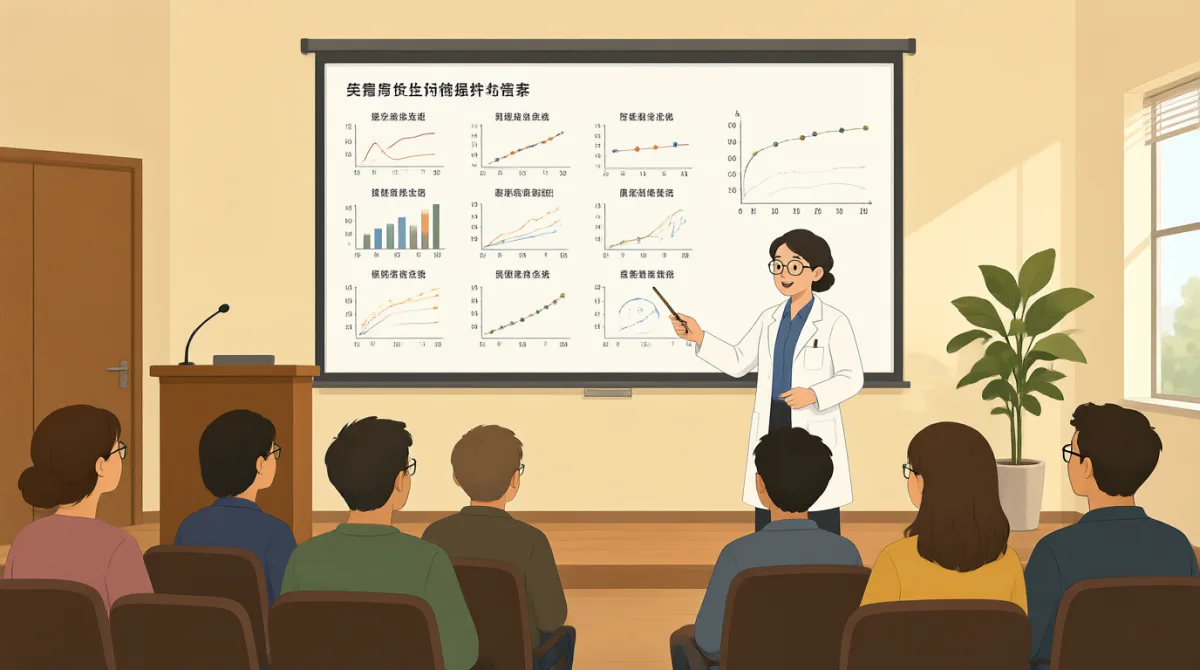

Good morning, everyone. Thank you for attending today's presentation. My name is Dr. David Chen, and I'm a senior researcher at the Institute for Advanced Materials. Today, I'll be presenting our latest findings on the 'Synthesis and Characterization of Novel Perovskite Solar Cells'.
सुप्रभात, आप सभी का। आज की प्रस्तुति में शामिल होने के लिए धन्यवाद। मेरा नाम डॉ. डेविड चेन है, और मैं इंस्टीट्यूट फॉर एडवांस्ड मटेरियल्स में वरिष्ठ शोधकर्ता हूँ। आज मैं ‘नवीन पेरोव्स्काइट सौर कोशिकाओं का संश्लेषण और अभिलक्षणन’ पर अपने नवीनतम निष्कर्ष प्रस्तुत करूँगा।
To begin, let's briefly look at the current landscape of solar energy and the limitations of traditional silicon-based photovoltaic devices. Our research aims to address these challenges by exploring the potential of perovskite materials.
शुरुआत में, आइए सौर ऊर्जा की मौजूदा स्थिति और पारंपरिक सिलिकॉन-आधारित फोटोवोल्टिक उपकरणों की सीमाओं पर संक्षेप में नज़र डालें। हमारा शोध पेरोव्स्काइट पदार्थों की संभावनाओं की पड़ताल करके इन चुनौतियों का समाधान करने का प्रयास करता है।
As you can see from this slide, our optimized synthesis method has significantly improved the power conversion efficiency to a record 24.5%, while also demonstrating remarkable long-term stability under humid conditions. These results are incredibly promising.
जैसा कि आप इस स्लाइड में देख सकते हैं, हमारी अनुकूलित संश्लेषण विधि ने ऊर्जा रूपांतरण दक्षता को उल्लेखनीय रूप से बढ़ाकर रिकॉर्ड 24.5% तक पहुँचा दिया है। साथ ही, आर्द्र परिस्थितियों में लंबे समय तक इसकी स्थिरता भी असाधारण रूप से अच्छी रही। ये नतीजे बेहद आशाजनक हैं।

Dr. Chen, fantastic presentation. I have a question regarding the stability data you presented. Could you elaborate on the specific environmental conditions used for the long-term stability testing, especially concerning temperature fluctuations?
डॉ. चेन, आपकी प्रस्तुति शानदार थी। आपके द्वारा प्रस्तुत स्थिरता के आँकड़ों के बारे में मेरा एक सवाल है। क्या आप दीर्घकालिक स्थिरता परीक्षण में इस्तेमाल की गई विशिष्ट पर्यावरणीय परिस्थितियों के बारे में विस्तार से बता सकते हैं, खासकर तापमान में होने वाले उतार-चढ़ाव के संदर्भ में?
Thank you for the excellent question. We conducted the stability tests under a controlled environment with relative humidity maintained at 85% and temperature cycled between 25 and 60 degrees Celsius over a 1000-hour period. We also performed accelerated aging tests, but those data are for a follow-up publication.
बेहतरीन सवाल के लिए धन्यवाद। हमने नियंत्रित वातावरण में स्थिरता परीक्षण किए, जहाँ सापेक्ष आर्द्रता 85% पर बनाए रखी गई और 1000 घंटे की अवधि में तापमान को 25 से 60 डिग्री सेल्सियस के बीच चक्रित किया गया। हमने त्वरित वृद्धावस्था परीक्षण भी किए, लेकिन उनके आँकड़े आगामी प्रकाशन में शामिल होंगे।

Following up on that, did you observe any material degradation or morphological changes after the long-term stability tests that might account for the slight reduction in efficiency seen at the very end of your data set?
उसी बात को आगे बढ़ाते हुए, क्या आपने दीर्घकालिक स्थिरता परीक्षणों के बाद पदार्थ में कोई क्षरण या आकृति-विज्ञान संबंधी बदलाव देखे, जो आपके आँकड़ों के अंत में दिखाई देने वाली दक्षता में मामूली कमी की वजह हो सकते हों?
That's a very keen observation. We did indeed notice some minor recrystallization at the grain boundaries, which we believe contributes to that slight drop. Further work is underway to mitigate this issue through interface engineering. Does that address your question?
यह बहुत सूक्ष्म अवलोकन है। हमने वास्तव में क्रिस्टल कणों की सीमाओं पर कुछ मामूली पुनःक्रिस्टलीकरण देखा, जिसके बारे में हमारा मानना है कि उससे दक्षता में थोड़ी गिरावट आती है। इंटरफेस इंजीनियरिंग के ज़रिए इस समस्या को कम करने के लिए आगे का काम जारी है। क्या इससे आपके सवाल का जवाब मिला?
Yes, completely. Thank you.
जी हाँ, पूरी तरह। धन्यवाद।
Are there any other questions from the audience? If not, I'd like to thank you all again for your time and attention. We look forward to sharing more updates on this research in the near future.
क्या श्रोताओं के कोई और सवाल हैं? अगर नहीं, तो मैं आप सभी को आपके समय और ध्यान के लिए एक बार फिर धन्यवाद देना चाहूँगा। हमें उम्मीद है कि निकट भविष्य में इस शोध के बारे में और जानकारी साझा करेंगे।
शब्दावली8
- presentationप्रस्तुति
A formal talk given to an audience about a topic, often using slides, like in a conference or class.
किसी विषय पर श्रोताओं के सामने दी जाने वाली औपचारिक बातचीत, जिसमें अक्सर स्लाइडों का उपयोग होता है, जैसे किसी सम्मेलन या कक्षा में।
- findingsनिष्कर्ष
The results or discoveries from research or an investigation, useful when sharing what you learned.
शोध या जाँच से मिले नतीजे या खोजें। आपने क्या सीखा, यह साझा करते समय इस शब्द का उपयोग होता है।
- synthesisसंश्लेषण
The process of combining things to create something new, often used in science for making materials.
नई चीज़ बनाने के लिए अलग-अलग चीज़ों को मिलाने की प्रक्रिया। विज्ञान में इसका उपयोग अक्सर पदार्थ बनाने के संदर्भ में होता है।
- efficiencyदक्षता
How well something works or uses resources, like the percentage of energy converted in solar cells.
कोई चीज़ कितनी अच्छी तरह काम करती है या संसाधनों का उपयोग करती है। उदाहरण के लिए, सौर कोशिकाओं में ऊर्जा का कितना प्रतिशत रूपांतरित होता है।
- stabilityस्थिरता
The ability to stay the same over time without breaking down, important in testing materials.
समय के साथ बिना खराब हुए अपनी अवस्था बनाए रखने की क्षमता। पदार्थों के परीक्षण में यह महत्वपूर्ण होती है।
- elaborateविस्तार से बताना
To explain something in more detail, often used when answering questions politely.
किसी बात को अधिक विस्तार से समझाना। सवालों का विनम्रता से जवाब देते समय इसका उपयोग अक्सर होता है।
- degradationक्षरण
The process of something getting worse or breaking down over time, like material wear.
समय के साथ किसी चीज़ का खराब होने या टूटने की प्रक्रिया, जैसे किसी पदार्थ का घिसना।
- mitigateकम करना
To make a problem less severe or reduce its effects, common in research discussions.
किसी समस्या की गंभीरता या उसके प्रभावों को घटाना। शोध-चर्चाओं में यह शब्द आम है।
मुख्य वाक्य8
- 1
Good morning, everyone. Thank you for attending today's presentation.
सुप्रभात, आप सभी का। आज की प्रस्तुति में शामिल होने के लिए धन्यवाद।
This is a polite way to start a formal talk; it greets the audience and shows appreciation. Use it at the beginning of presentations to set a professional tone. Grammar note: 'Thank you for + gerund (attending)' expresses gratitude for an action.
औपचारिक भाषण की शुरुआत करने का यह एक विनम्र तरीका है; इसमें श्रोताओं का अभिवादन और उनके प्रति आभार व्यक्त किया जाता है। पेशेवर माहौल बनाने के लिए प्रस्तुतियों की शुरुआत में इसका उपयोग करें। व्याकरण संबंधी बात: 'Thank you for + gerund (attending)' का उपयोग किसी काम के लिए आभार जताने में होता है।
- 2
Today, I'll be presenting our latest findings on the 'Synthesis and Characterization of Novel Perovskite Solar Cells'.
आज मैं ‘नवीन पेरोव्स्काइट सौर कोशिकाओं का संश्लेषण और अभिलक्षणन’ पर अपने नवीनतम निष्कर्ष प्रस्तुत करूँगा।
Introduces the topic clearly; useful for academic talks to outline what you'll cover. 'I'll be presenting' uses future continuous tense to describe a planned action. Practice this to announce your presentation topic confidently.
यह वाक्य विषय का स्पष्ट परिचय देता है और अकादमिक भाषण में बताता है कि आप किन बातों पर चर्चा करेंगे। 'I'll be presenting' भविष्य निरंतर काल का प्रयोग है, जो पहले से तय कार्य को बताता है। अपनी प्रस्तुति का विषय आत्मविश्वास से बताने के लिए इसका अभ्यास करें।
- 3
Our research aims to address these challenges by exploring the potential of perovskite materials.
हमारा शोध पेरोव्स्काइट पदार्थों की संभावनाओं की पड़ताल करके इन चुनौतियों का समाधान करने का प्रयास करता है।
Explains the purpose of research; helpful for showing how your work solves problems. 'Aims to + verb' indicates goal or intention. Use in presentations to connect background to your study.
यह वाक्य शोध का उद्देश्य बताता है और यह दिखाने में मदद करता है कि आपका काम समस्याओं का समाधान कैसे करता है। 'Aims to + verb' किसी लक्ष्य या इरादे को दर्शाता है। पृष्ठभूमि से अपने अध्ययन की ओर बढ़ने के लिए प्रस्तुतियों में इसका उपयोग करें।
- 4
Could you elaborate on the specific environmental conditions used for the long-term stability testing?
क्या आप दीर्घकालिक स्थिरता परीक्षण में इस्तेमाल की गई विशिष्ट पर्यावरणीय परिस्थितियों के बारे में विस्तार से बता सकते हैं?
A polite question to ask for more details during Q&A; shows interest. 'Could you + verb' is a formal request. Ideal for academic audiences to seek clarification without being direct.
प्रश्नोत्तर के दौरान अधिक जानकारी माँगने का यह एक विनम्र तरीका है और इससे आपकी रुचि भी ज़ाहिर होती है। 'Could you + verb' एक औपचारिक अनुरोध है। बिना सीधे या रूखे लगे, स्पष्टीकरण माँगने के लिए यह अकादमिक श्रोताओं के बीच उपयोगी है।
- 5
Thank you for the excellent question.
बेहतरीन सवाल के लिए धन्यवाद।
Acknowledges a question positively; builds rapport in discussions. Use this response to start answering, making the asker feel valued. It's a common phrase in formal settings.
इससे सवाल को सकारात्मक रूप से स्वीकार किया जाता है और चर्चा में अच्छा तालमेल बनता है। जवाब शुरू करते समय इसका उपयोग करें, ताकि सवाल पूछने वाले को लगे कि उनके सवाल को महत्व दिया गया है। औपचारिक माहौल में यह एक आम वाक्यांश है।
- 6
We did indeed notice some minor recrystallization at the grain boundaries, which we believe contributes to that slight drop.
हमने वास्तव में क्रिस्टल कणों की सीमाओं पर कुछ मामूली पुनःक्रिस्टलीकरण देखा, जिसके बारे में हमारा मानना है कि उससे दक्षता में थोड़ी गिरावट आती है।
Provides detailed response with evidence; useful for explaining results. 'Which' clause adds reason. Use in Q&A to address observations thoughtfully.
यह वाक्य प्रमाण के साथ विस्तृत जवाब देता है और नतीजों को समझाने में उपयोगी है। 'Which' वाला उपवाक्य कारण जोड़ता है। किसी अवलोकन का सोच-समझकर जवाब देने के लिए प्रश्नोत्तर में इसका उपयोग करें।
- 7
Further work is underway to mitigate this issue through interface engineering.
इंटरफेस इंजीनियरिंग के ज़रिए इस समस्या को कम करने के लिए आगे का काम जारी है।
Describes ongoing efforts; shows research is active. 'Is underway' means in progress. Good for ending answers by mentioning future plans.
यह वाक्य चल रहे प्रयासों का वर्णन करता है और दिखाता है कि शोध अभी जारी है। 'Is underway' का अर्थ है कि काम चल रहा है। जवाब के अंत में भविष्य की योजनाओं का ज़िक्र करने के लिए यह उपयोगी है।
- 8
Are there any other questions from the audience? If not, I'd like to thank you all again for your time and attention.
क्या श्रोताओं के कोई और सवाल हैं? अगर नहीं, तो मैं आप सभी को आपके समय और ध्यान के लिए एक बार फिर धन्यवाद देना चाहूँगा।
Closes Q&A and presentation; polite way to wrap up. Conditional 'if not' handles two possibilities. Use this to transition to ending and express thanks.
यह वाक्य प्रश्नोत्तर और प्रस्तुति का समापन करता है और बात खत्म करने का एक विनम्र तरीका है। 'If not' दो संभावनाओं को ध्यान में रखता है। समापन की ओर बढ़ने और आभार जताने के लिए इसका उपयोग करें।