Calling Before You Visit
Anrufen, bevor man zu Besuch kommt
Emma calls Mia to ask if she can visit. Mia says yes and tells her when to come.
Emma ruft Mia an und fragt, ob sie sie besuchen kann. Mia sagt ja und teilt ihr mit, wann sie kommen soll.
Dialog6
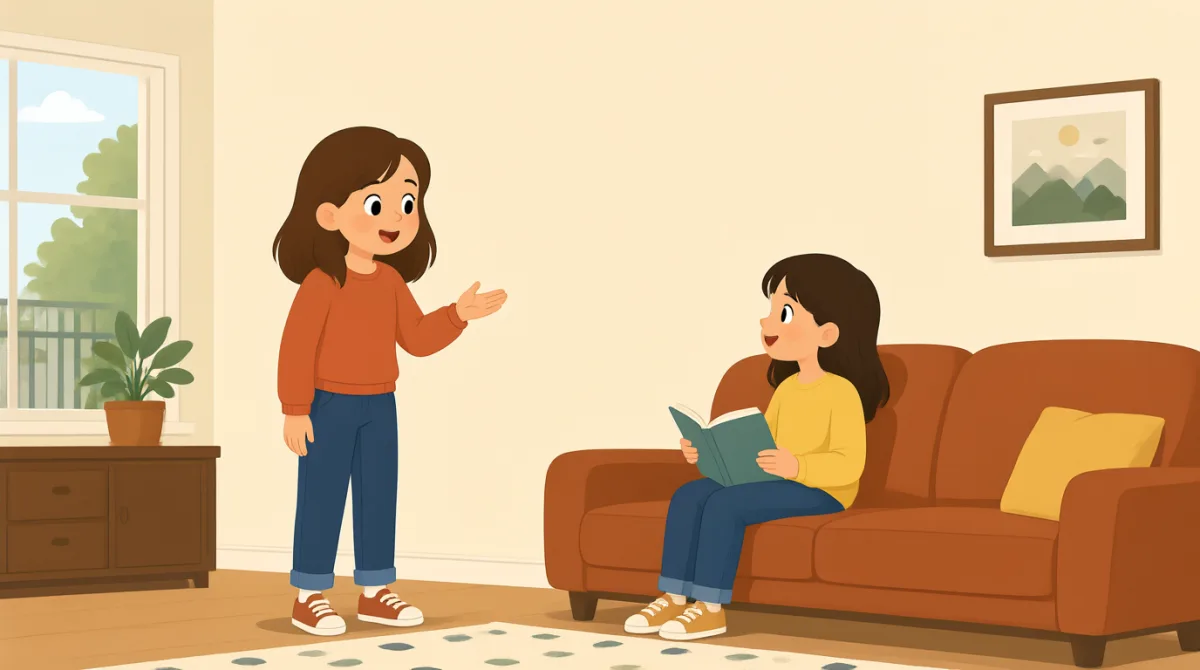

Hi, Mia. Can I visit you today?
Hi, Mia. Kann ich dich heute besuchen?

Hi, Emma. Yes, you can come.
Hi, Emma. Ja, du kannst kommen.
Are you free this afternoon?
Hast du heute Nachmittag Zeit?
Yes. Please come at three.
Ja. Komm bitte um drei.
Okay. I’ll see you at three.
Okay. Dann sehen wir uns um drei.
Thanks, Emma. See you then.
Danke, Emma. Bis dann.
Wortschatz7
- visit youdich besuchen
To go and spend time with someone. Here, Emma wants to see Mia.
Zu jemandem gehen und Zeit mit der Person verbringen. Hier möchte Emma Mia sehen.
- todayheute
This means the day that it is now.
Damit ist der aktuelle Tag gemeint.
- comekommen
To go to the place where someone is. Mia invites Emma to her home.
Sich an den Ort begeben, an dem jemand ist. Mia lädt Emma zu sich nach Hause ein.
- this afternoonheute Nachmittag
The time after the morning and before the evening on this day.
Die Zeit nach dem Morgen und vor dem Abend an diesem Tag.
- freefrei
Not busy and able to do something.
Nicht beschäftigt und in der Lage, etwas zu unternehmen.
- at threeum drei
This tells the exact time to come.
Damit wird die genaue Uhrzeit angegeben, zu der jemand kommen soll.
- see you thenBis dann.
A friendly way to say goodbye when you plan to meet later.
Eine freundliche Verabschiedung, wenn man plant, sich später zu treffen.
Wichtige Sätze7
- 1
Can I visit you today?
Kann ich dich heute besuchen?
Use this to ask if you can go see someone. You can change “today” to another time.
Mit „Can I visit you today?“ fragst du, ob du jemanden besuchen kannst. Du kannst „today“ durch einen anderen Zeitpunkt ersetzen.
- 2
Yes, you can come.
Ja, du kannst kommen.
Use this to say that someone is welcome to visit.
Mit „Yes, you can come.“ sagst du, dass jemand gerne zu Besuch kommen kann.
- 3
Are you free this afternoon?
Hast du heute Nachmittag Zeit?
Use this to ask if someone is available later today. You can change “this afternoon” to another time.
Mit „Are you free this afternoon?“ fragst du, ob jemand später am selben Tag Zeit hat. Du kannst „this afternoon“ durch einen anderen Zeitpunkt ersetzen.
- 4
Please come at three.
Komm bitte um drei.
Use this to invite someone and give them a time. Change “three” to the time you want.
Mit „Please come at three.“ lädst du jemanden ein und nennst eine Uhrzeit. Ersetze „three“ durch die gewünschte Uhrzeit.
- 5
Okay.
Okay.
Use this simple word to show you agree or understand.
Mit diesem einfachen Wort zeigst du, dass du zustimmst oder etwas verstanden hast.
- 6
I’ll see you at three.
Dann sehen wir uns um drei.
Use this to confirm when you will meet someone. Change “at three” to your meeting time.
Mit „I’ll see you at three.“ bestätigst du, wann du jemanden treffen wirst. Ersetze „at three“ durch die vereinbarte Uhrzeit.
- 7
See you then.
Bis dann.
Use this as a friendly goodbye when you have agreed on a time to meet.
Mit „See you then.“ verabschiedest du dich freundlich, wenn ihr euch auf eine Uhrzeit für ein Treffen geeinigt habt.