Concluding the Ride and Saying Goodbye
যাত্রার শেষে বিদায় জানানো
As the ride approaches its end, the rider thanks the driver and says goodbye while exiting the vehicle.
যাত্রা শেষের দিকে এলে, যাত্রী গাড়ি থেকে নামার সময় চালককে ধন্যবাদ জানিয়ে বিদায় বলেন।
সংলাপ6
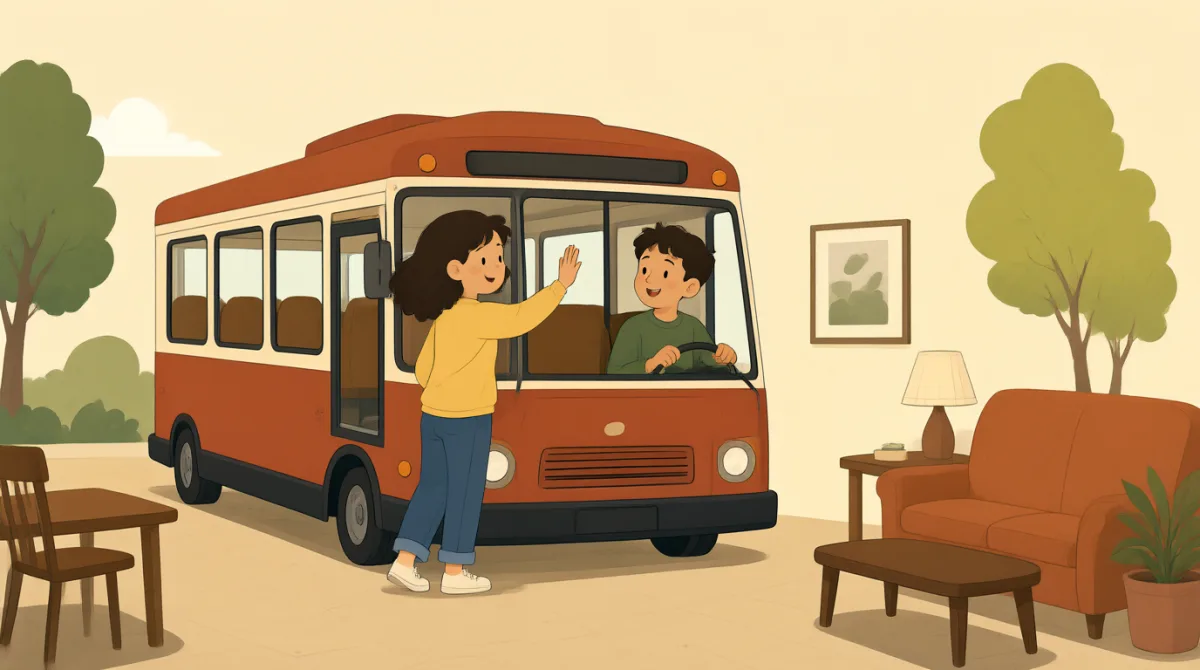

Looks like we're almost there. Thanks for the quick ride!
মনে হচ্ছে প্রায় পৌঁছে গেছি। তাড়াতাড়ি পৌঁছে দেওয়ার জন্য ধন্যবাদ!

You're welcome! Just pulling up to the curb now. Is this a good spot for you?
আপনাকে স্বাগতম! এখনই রাস্তার ধারে গাড়ি থামাচ্ছি। এই জায়গাটা কি আপনার জন্য ঠিক আছে?
Perfect, this is great. Right in front of the entrance.
একদম ঠিক আছে, দারুণ। প্রবেশপথের ঠিক সামনেই।
Alright. Watch your step getting out.
ঠিক আছে। নামার সময় পা দেখে নামবেন।
Will do. Thanks again for everything, Jack. Have a good rest of your day!
অবশ্যই। সবকিছুর জন্য আবারও ধন্যবাদ, Jack। আপনার বাকি দিনটা ভালো কাটুক!
You too, Emma! Take care.
আপনারও, Emma! ভালো থাকবেন।
শব্দভান্ডার6
- curbরাস্তার ধার
The edge of a sidewalk where vehicles stop; in rideshare talks, drivers say 'pulling up to the curb' to mean arriving at the drop-off point.
যেখানে গাড়ি থামে, সেই ফুটপাতের কিনারাকে বোঝায়। রাইডশেয়ারের কথাবার্তায়, নামার জায়গায় পৌঁছানো বোঝাতে চালকেরা 'pulling up to the curb' বলেন।
- pulling upগাড়ি থামিয়ে এগিয়ে আসা
Arriving and stopping a vehicle; it's a common phrase used by drivers to indicate they're reaching the destination safely.
গাড়ি নিয়ে এসে থামানো বোঝায়। গন্তব্যে নিরাপদে পৌঁছে যাওয়ার কথা জানাতে চালকেরা প্রায়ই এই কথাটি বলেন।
- spotজায়গা
A place or location; in this context, 'good spot' means a convenient parking or drop-off area for the passenger.
কোনো স্থান বা অবস্থান। এই প্রসঙ্গে, 'good spot' বলতে যাত্রীর নামার বা গাড়ি থামানোর সুবিধাজনক জায়গা বোঝায়।
- watch your stepসাবধানে পা ফেলুন
Be careful when walking or stepping; it's a polite safety reminder, often said when exiting a car to avoid tripping.
হাঁটার বা পা ফেলার সময় সতর্ক থাকতে বলা হয়। গাড়ি থেকে নামার সময় হোঁচট খাওয়া এড়াতে ভদ্রভাবে সতর্ক করার জন্য কথাটি প্রায়ই বলা হয়।
- will doঅবশ্যই, তাই করব
A casual way to say 'I will' or 'okay, I understand'; it's used to acknowledge advice or instructions politely.
'আমি তা করব' বা 'ঠিক আছে, বুঝেছি' বলার একটি সহজ, অনানুষ্ঠানিক উপায়। কোনো পরামর্শ বা নির্দেশনা বুঝেছেন—এ কথা ভদ্রভাবে জানাতে এটি ব্যবহার করা হয়।
- take careভালো থাকবেন
A friendly goodbye meaning 'stay safe' or 'be well'; it's common in English to end conversations warmly.
বন্ধুত্বপূর্ণ বিদায়ের কথা, যার অর্থ 'নিরাপদে থাকবেন' বা 'ভালো থাকবেন'। কথোপকথন আন্তরিকভাবে শেষ করতে ইংরেজিতে এটি প্রচলিত।
গুরুত্বপূর্ণ বাক্য6
- 1
Looks like we're almost there. Thanks for the quick ride!
মনে হচ্ছে প্রায় পৌঁছে গেছি। তাড়াতাড়ি পৌঁছে দেওয়ার জন্য ধন্যবাদ!
This sentence signals the end of the trip and expresses gratitude; 'looks like' is a casual way to observe something obvious, useful for polite small talk when arriving.
এই বাক্যে যাত্রা শেষের দিকে বোঝানো হয় এবং কৃতজ্ঞতা জানানো হয়। 'looks like' কোনো স্পষ্ট বিষয় অনানুষ্ঠানিকভাবে লক্ষ করে বলার উপায়; গন্তব্যে পৌঁছানোর সময় ভদ্র কথাবার্তায় এটি কাজে লাগে।
- 2
You're welcome! Just pulling up to the curb now. Is this a good spot for you?
আপনাকে স্বাগতম! এখনই রাস্তার ধারে গাড়ি থামাচ্ছি। এই জায়গাটা কি আপনার জন্য ঠিক আছে?
A polite response to thanks, followed by confirming the drop-off; the question shows consideration for the passenger's convenience, great for service interactions.
ধন্যবাদের ভদ্র জবাবের পর নামার জায়গাটি ঠিক আছে কি না নিশ্চিত করা হয়েছে। প্রশ্নটি যাত্রীর সুবিধার কথা বিবেচনা করে করা হয়েছে, তাই পরিষেবা-সংক্রান্ত কথোপকথনে এটি বেশ উপযোগী।
- 3
Perfect, this is great. Right in front of the entrance.
একদম ঠিক আছে, দারুণ। প্রবেশপথের ঠিক সামনেই।
Expresses satisfaction with the location; 'right in front of' describes precise positioning, helpful for confirming and appreciating helpfulness in daily situations.
এখানে জায়গাটি পছন্দ হয়েছে বোঝানো হচ্ছে। 'right in front of' দিয়ে কোনো কিছুর ঠিক সামনে অবস্থান বোঝায়; দৈনন্দিন কথাবার্তায় সঠিক জায়গা নিশ্চিত করতে এবং কারও সহায়তার প্রশংসা করতে এটি কাজে লাগে।
- 4
Alright. Watch your step getting out.
ঠিক আছে। নামার সময় পা দেখে নামবেন।
Acknowledges and gives a safety tip; 'alright' means 'okay' casually, and this phrase uses imperative form for polite advice during exits.
এখানে চালক যাত্রীর কথা মেনে নিয়ে নিরাপত্তার জন্য সতর্ক করছেন। 'alright' অনানুষ্ঠানিকভাবে 'ঠিক আছে' বোঝায়, আর এই বাক্যে নামার সময় ভদ্রভাবে পরামর্শ দিতে নির্দেশমূলক রূপ ব্যবহার করা হয়েছে।
- 5
Will do. Thanks again for everything, Jack. Have a good rest of your day!
অবশ্যই। সবকিছুর জন্য আবারও ধন্যবাদ, Jack। আপনার বাকি দিনটা ভালো কাটুক!
Responds to advice and says goodbye warmly; 'thanks again' reinforces gratitude, and 'have a good rest of your day' is a common idiomatic farewell for the remaining time.
এখানে পরামর্শের জবাব দেওয়ার পাশাপাশি আন্তরিকভাবে বিদায় জানানো হয়েছে। 'thanks again' কৃতজ্ঞতা আরও জোরালো করে, আর 'have a good rest of your day' দিনের বাকি সময়ের জন্য শুভকামনা জানানোর একটি প্রচলিত কথ্য অভিব্যক্তি।
- 6
You too, Emma! Take care.
আপনারও, Emma! ভালো থাকবেন।
Returns the well-wish and ends politely; 'you too' mirrors the previous sentiment, making conversations reciprocal and friendly in English culture.
এখানে চালক শুভকামনার জবাবে একই শুভকামনা জানিয়ে ভদ্রভাবে কথোপকথন শেষ করছেন। 'you too' আগের কথার প্রতিধ্বনি করে, যা ইংরেজি ভাষার সংস্কৃতিতে কথোপকথনকে পারস্পরিক ও বন্ধুত্বপূর্ণ করে তোলে।