Interpreting Anomalous Data
অস্বাভাবিক তথ্যের ব্যাখ্যা
Scientists analyze data that deviates from expected outcomes or previous theories, discussing potential reasons for the anomalies and their implications for the research hypothesis.
বিজ্ঞানীরা প্রত্যাশিত ফলাফল বা পূর্ববর্তী তত্ত্বের সঙ্গে না-মেলা তথ্য বিশ্লেষণ করেন। তাঁরা এই অস্বাভাবিকতার সম্ভাব্য কারণ এবং গবেষণার অনুমানের ওপর এর প্রভাব নিয়ে আলোচনা করেন।
সংলাপ10
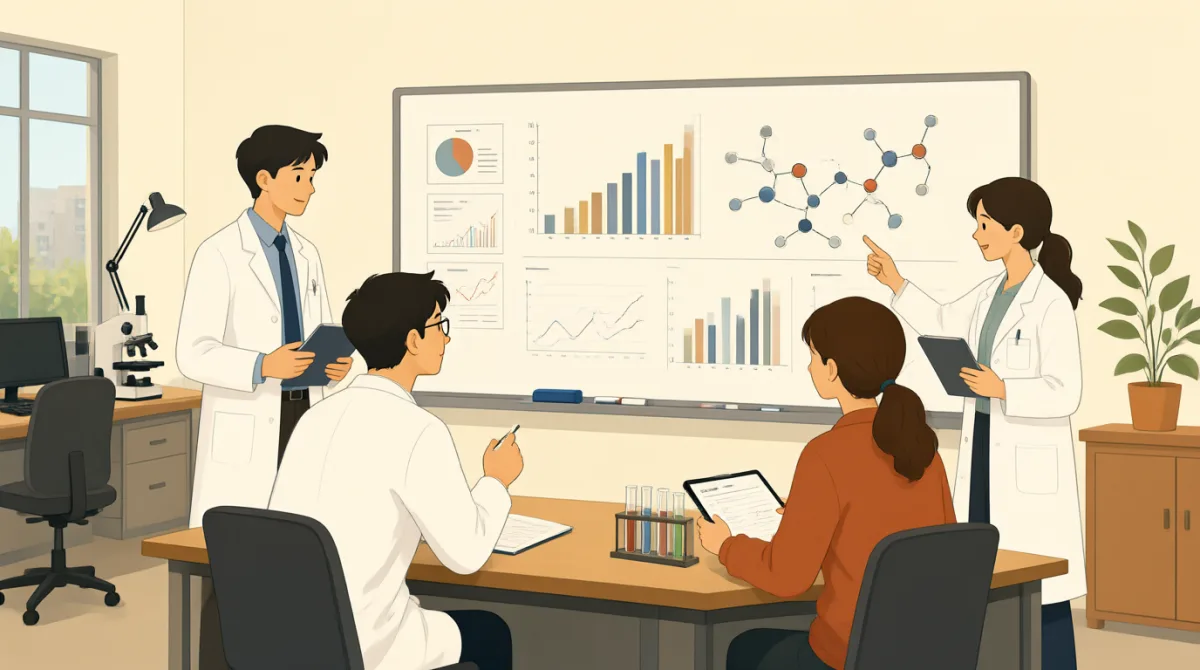

Alright team, let's discuss these latest spectroscopy results. I'm seeing some significant deviations in the 500-600 nm range, especially in samples C and D. It's quite unexpected given our previous runs.
ঠিক আছে, সবাই, সাম্প্রতিক স্পেকট্রোস্কপি পরীক্ষার ফলাফল নিয়ে আলোচনা করি। 500-600 nm পরিসরে বেশ কিছু উল্লেখযোগ্য বিচ্যুতি দেখছি, বিশেষ করে C ও D নমুনায়। আগের পরীক্ষাগুলোর ফল বিবেচনা করলে এটা বেশ অপ্রত্যাশিত।

Yes, Dr. Miller, I noticed that too. I've re-run the analysis twice on those specific samples, and the pattern persists. Could it be an artifact of the sample preparation, perhaps some contamination?
হ্যাঁ, ড. মিলার, আমিও সেটা লক্ষ করেছি। ওই নির্দিষ্ট নমুনাগুলোর বিশ্লেষণ দুবার নতুন করে করেছি, আর একই ধরন দেখা যাচ্ছে। নমুনা তৈরির প্রক্রিয়ার কোনো ত্রুটি হতে পারে কি? হয়তো কোনো দূষণ?

Good point, Emma. We meticulously cleaned the cuvettes and used fresh reagents. However, the magnitude of the anomaly suggests it might be more than just a minor contamination; it's almost indicating a different compound entirely.
ভালো বলেছ, এমা। আমরা কিউভেটগুলো খুব যত্ন করে পরিষ্কার করেছি এবং নতুন বিকারক ব্যবহার করেছি। তবে অস্বাভাবিকতার মাত্রা দেখে মনে হচ্ছে, এটা সামান্য দূষণের চেয়েও বেশি কিছু; প্রায় যেন একেবারে অন্য কোনো যৌগের ইঙ্গিত দিচ্ছে।
My thoughts exactly, Jack. Could our original hypothesis about the reaction pathway be incomplete then? This data challenges our current understanding of the intermediate products.
আমিও ঠিক সেটাই ভাবছিলাম, জ্যাক। তাহলে বিক্রিয়ার পথ নিয়ে আমাদের প্রাথমিক অনুমানটা অসম্পূর্ণ হতে পারে? এই তথ্য মধ্যবর্তী উৎপাদ সম্পর্কে আমাদের বর্তমান ধারণাকে চ্যালেঞ্জ করছে।
What if it's a transient species that only forms under specific conditions that we hadn't accounted for in the initial model? Perhaps a minor shift in temperature or pressure during the reaction phase?
এমনও কি হতে পারে যে এটা ক্ষণস্থায়ী কোনো প্রজাতি, যা কেবল নির্দিষ্ট কিছু অবস্থায় তৈরি হয়—যে অবস্থাগুলো আমরা প্রাথমিক মডেলে বিবেচনা করিনি? বিক্রিয়ার সময় তাপমাত্রা বা চাপে সামান্য পরিবর্তন হয়েছিল হয়তো?
That's a plausible explanation, Emma. We did observe a slight fluctuation in reactor temperature during the runs for samples C and D, though it was within what we considered the acceptable range.
এটা একটা যুক্তিসংগত ব্যাখ্যা, এমা। C ও D নমুনার পরীক্ষার সময় রিঅ্যাক্টরের তাপমাত্রায় সামান্য ওঠানামা আমরা দেখেছিলাম। যদিও তা আমাদের বিবেচনায় গ্রহণযোগ্য সীমার মধ্যেই ছিল।
So, the next step should be to design an experiment that specifically isolates the impact of temperature fluctuations within that 'acceptable' range. We need to see if we can intentionally reproduce these anomalous peaks.
তাহলে পরের ধাপ হওয়া উচিত এমন একটি পরীক্ষা নকশা করা, যাতে ওই ‘গ্রহণযোগ্য’ সীমার মধ্যে তাপমাত্রার ওঠানামার প্রভাব আলাদাভাবে যাচাই করা যায়। আমরা ইচ্ছাকৃতভাবে এই অস্বাভাবিক শিখরগুলো আবার তৈরি করতে পারি কি না, তা দেখতে হবে।
Agreed. We could set up parallel runs, one with tight temperature control and another with controlled slight variations. That would provide strong evidence either way.
একমত। আমরা সমান্তরালভাবে দুটি পরীক্ষা চালাতে পারি—একটিতে তাপমাত্রা কঠোরভাবে নিয়ন্ত্রণ করা হবে, আর অন্যটিতে নিয়ন্ত্রিতভাবে সামান্য পরিবর্তন করা হবে। এতে যেকোনো একটি ব্যাখ্যার পক্ষে জোরালো প্রমাণ মিলবে।
I can start drafting the new experimental protocol this afternoon. It's exciting, really; this anomaly might actually lead us to a more complete understanding of the reaction.
আজ বিকেলেই আমি নতুন পরীক্ষার প্রোটোকলের খসড়া তৈরি করতে পারি। সত্যিই ব্যাপারটা উত্তেজনাপূর্ণ; এই অস্বাভাবিক ফল হয়তো বিক্রিয়াটা আরও ভালোভাবে বুঝতে আমাদের সাহায্য করবে।
That's the spirit, Emma! Anomalies aren't failures; they're opportunities for discovery. Let's aim to get those new runs started by the end of the week.
এই তো চাই, এমা! অস্বাভাবিকতা ব্যর্থতা নয়; এগুলো নতুন কিছু আবিষ্কারের সুযোগ। সপ্তাহের শেষ নাগাদ নতুন পরীক্ষাগুলো শুরু করার লক্ষ্য রাখি।
শব্দভান্ডার10
- deviationsবিচ্যুতি
Differences or changes from what is expected or normal. In science, it often means data that doesn't match predictions. Use it when discussing unexpected results, like 'There are deviations in the measurements.'
যা প্রত্যাশিত বা স্বাভাবিক, তার থেকে পার্থক্য বা পরিবর্তন বোঝায়। বিজ্ঞানে এটি প্রায়ই এমন তথ্য বোঝায়, যা পূর্বাভাসের সঙ্গে মেলে না। অপ্রত্যাশিত ফল নিয়ে কথা বলার সময় ব্যবহার করতে পারো, যেমন: 'There are deviations in the measurements.' (পরিমাপগুলোতে বিচ্যুতি রয়েছে।)
- artifactপরীক্ষাজনিত ত্রুটি
Something that appears in data or results but is caused by error or method, not the real phenomenon. Common in research; say 'It might be an artifact from the equipment' to suggest it's not genuine.
তথ্য বা ফলাফলে দেখা যায়, কিন্তু বাস্তব ঘটনা নয়—বরং ভুল বা ব্যবহৃত পদ্ধতির কারণে তৈরি হয়, এমন কিছুকে বোঝায়। গবেষণায় শব্দটি প্রচলিত। কোনো ফল আসল নয়, এমন ইঙ্গিত দিতে বলতে পারো: 'It might be an artifact from the equipment' (এটা যন্ত্রপাতির কারণে তৈরি কোনো পরীক্ষাজনিত ত্রুটি হতে পারে)।
- contaminationদূষণ
The presence of unwanted substances that can affect results. In experiments, it means pollution; useful in lab talk, e.g., 'Check for contamination in the samples.'
ফলাফলে প্রভাব ফেলতে পারে এমন অবাঞ্ছিত পদার্থের উপস্থিতি বোঝায়। পরীক্ষায় এটি নমুনায় দূষিত পদার্থ মিশে যাওয়াকে বোঝায়। গবেষণাগারে বলতে পারো: 'Check for contamination in the samples.' (নমুনাগুলোতে দূষণ আছে কি না পরীক্ষা করো।)
- anomalyঅস্বাভাবিকতা
An unusual or unexpected event or result. In science, it highlights something odd; use it like 'This anomaly needs further investigation' to point out surprises.
অস্বাভাবিক বা অপ্রত্যাশিত ঘটনা কিংবা ফলাফল বোঝায়। বিজ্ঞানে কোনো অদ্ভুত বিষয় তুলে ধরতে এই শব্দটি ব্যবহার করা হয়। চমকে দেওয়া ফলের দিকে ইঙ্গিত করে বলতে পারো: 'This anomaly needs further investigation' (এই অস্বাভাবিকতার আরও অনুসন্ধান প্রয়োজন)।
- hypothesisঅনুমান
An educated guess or proposed explanation for a phenomenon. Key in research; say 'Our hypothesis was that...' when stating a theory to test.
কোনো ঘটনা ব্যাখ্যা করার জন্য প্রমাণভিত্তিক প্রস্তাবিত ধারণা বোঝায়। গবেষণায় এটি খুব গুরুত্বপূর্ণ। যাচাই করার জন্য কোনো তত্ত্ব তুলে ধরতে বলতে পারো: 'Our hypothesis was that...' (আমাদের অনুমান ছিল যে...)।
- transientক্ষণস্থায়ী
Something temporary or short-lived that doesn't last. In chemistry, it refers to short-term compounds; use 'a transient effect' for things that appear briefly.
যা অল্প সময় থাকে, তারপর আর থাকে না—এমন কিছু বোঝায়। রসায়নে এটি স্বল্পস্থায়ী যৌগের ক্ষেত্রে ব্যবহৃত হয়। অল্প সময়ের জন্য দেখা দেয় এমন কিছুকে বোঝাতে বলতে পারো: 'a transient effect' (একটি ক্ষণস্থায়ী প্রভাব)।
- plausibleযুক্তিসংগত
Seeming reasonable or believable. Use in discussions to agree, like 'That's a plausible idea' when something makes sense but isn't proven.
যা যুক্তিযুক্ত বা বিশ্বাসযোগ্য বলে মনে হয়, তা বোঝায়। আলোচনায় কোনো ধারণা অর্থবহ মনে হলেও প্রমাণিত না হলে সম্মতি জানাতে ব্যবহার করতে পারো: 'That's a plausible idea' (এটা একটা যুক্তিসংগত ধারণা)।
- fluctuationওঠানামা
A small, irregular change or variation. Common for measurements; say 'There was a fluctuation in temperature' to describe ups and downs.
সামান্য ও অনিয়মিত পরিবর্তন বোঝায়। পরিমাপের ক্ষেত্রে শব্দটি প্রচলিত। তাপমাত্রা বাড়া-কমা করলে বলতে পারো: 'There was a fluctuation in temperature' (তাপমাত্রায় ওঠানামা ছিল)।
- isolateআলাদা করে যাচাই করা
To separate or examine one factor alone. In experiments, it means controlling variables; use 'We need to isolate the effect' in planning tests.
কোনো একটি বিষয়কে অন্যগুলো থেকে আলাদা করে পরীক্ষা করা বোঝায়। পরীক্ষায় এর অর্থ হলো অন্যান্য চলক নিয়ন্ত্রণ করা। পরীক্ষা পরিকল্পনার সময় বলতে পারো: 'We need to isolate the effect' (আমাদের প্রভাবটি আলাদা করে যাচাই করতে হবে)।
- reproduceপুনরায় ঘটানো
To make something happen again, especially results. Essential in science for verification; say 'Can we reproduce this result?' to check reliability.
কোনো কিছু, বিশেষ করে কোনো ফলাফল, আবার ঘটানো বোঝায়। ফল যাচাইয়ের জন্য বিজ্ঞানে এটি জরুরি। ফলটি নির্ভরযোগ্য কি না দেখতে বলতে পারো: 'Can we reproduce this result?' (আমরা কি এই ফলাফল আবার পেতে পারি?)
গুরুত্বপূর্ণ বাক্য9
- 1
I'm seeing some significant deviations in the 500-600 nm range.
500-600 nm পরিসরে বেশ কিছু উল্লেখযোগ্য বিচ্যুতি দেখছি।
This sentence uses present continuous ('I'm seeing') to describe current observations in data. It's useful for reporting findings in meetings; the structure helps focus on what's happening now. Practice it when sharing results to sound professional.
বর্তমান তথ্য পর্যবেক্ষণ করার কথা বোঝাতে এই বাক্যে present continuous ('I'm seeing') ব্যবহার করা হয়েছে। সভায় ফলাফল তুলে ধরার সময় এটি কাজে লাগে; গঠনটি এখন কী ঘটছে, সেদিকে মনোযোগ দেয়। পেশাদারভাবে ফলাফল জানাতে বাক্যটি অনুশীলন করো।
- 2
Could it be an artifact of the sample preparation?
নমুনা তৈরির প্রক্রিয়ার কোনো ত্রুটি হতে পারে কি?
A polite question suggesting a possible cause using 'Could it be...?' for speculation. Great for scientific discussions to propose ideas without certainty. The modal 'could' softens the suggestion, making it collaborative.
'Could it be...?' দিয়ে সম্ভাব্য কারণের কথা ভদ্রভাবে জানতে চাওয়া হয়। নিশ্চিত না হয়েও কোনো ধারণা প্রস্তাব করতে বৈজ্ঞানিক আলোচনায় এটি বেশ কাজে লাগে। 'could' ব্যবহার করায় প্রস্তাবটি কম জোরালো শোনায় এবং আলোচনায় সহযোগিতার ভাব থাকে।
- 3
Good point.
ভালো বলেছ।
A short phrase to acknowledge someone's idea positively. Useful in team talks to show agreement and encourage discussion. It's simple and common in professional English to build rapport.
কারও ধারণাকে ইতিবাচকভাবে স্বীকার করার ছোট্ট একটি বাক্যাংশ। দলের আলোচনায় সম্মতি জানাতে ও আলোচনা এগিয়ে নিতে এটি কাজে লাগে। পেশাদার ইংরেজিতে সম্পর্ক ভালো রাখার জন্য এটি সহজ ও প্রচলিত একটি অভিব্যক্তি।
- 4
My thoughts exactly.
আমিও ঠিক সেটাই ভাবছিলাম।
An idiomatic expression for strong agreement, meaning 'That's what I was thinking.' Use it in conversations to show alignment without repeating ideas. It's natural in collaborative settings like research teams.
এটি জোরালো সম্মতি বোঝানোর একটি বাগ্ধারামূলক অভিব্যক্তি; এর অর্থ 'আমি যা ভাবছিলাম, সেটাই'। কারও কথা আবার না বলেই তার সঙ্গে একমত হতে এটি ব্যবহার করো। গবেষক দলের মতো সহযোগিতামূলক পরিবেশে এটি স্বাভাবিক শোনায়।
- 5
What if it's a transient species?
এটা যদি ক্ষণস্থায়ী কোনো প্রজাতি হয়?
A hypothetical question starting with 'What if...' to explore possibilities. Helpful for brainstorming in science; it invites discussion on alternatives. The structure uses conditional for 'suppose' scenarios.
'What if...' দিয়ে শুরু হওয়া একটি কাল্পনিক প্রশ্ন, যা সম্ভাবনা খতিয়ে দেখতে সাহায্য করে। বিজ্ঞানের আলোচনায় নতুন ধারণা ভাবতে এটি উপকারী, কারণ এটি বিকল্প নিয়ে কথা বলার সুযোগ দেয়। এখানে 'suppose' অর্থে শর্তসূচক গঠন ব্যবহার করা হয়েছে।
- 6
That's a plausible explanation.
এটা একটা যুক্তিসংগত ব্যাখ্যা।
This agrees with an idea by calling it reasonable. Use in debates or analyses to validate suggestions. The adjective 'plausible' adds a scientific tone, and it's a pattern for polite responses.
কোনো ধারণাকে যুক্তিসংগত বলে স্বীকার করে এতে সম্মতি জানানো হয়। আলোচনা বা বিশ্লেষণে প্রস্তাবকে গ্রহণযোগ্য মনে হলে এটি ব্যবহার করো। 'plausible' শব্দটি বাক্যটিকে বৈজ্ঞানিক আবহ দেয়, আর এটি ভদ্রভাবে সাড়া দেওয়ার একটি প্রচলিত ধরন।
- 7
So, the next step should be to design an experiment.
তাহলে, পরের ধাপ হওয়া উচিত একটি পরীক্ষা নকশা করা।
Uses 'should be' for suggestions on actions, common for planning. Useful after discussions to propose next moves. The modal 'should' indicates recommendation, helping structure team decisions.
করণীয় বিষয়ে পরামর্শ দিতে এখানে 'should be' ব্যবহার করা হয়েছে; পরিকল্পনা করার সময় এটি খুবই প্রচলিত। আলোচনা শেষে পরবর্তী পদক্ষেপ প্রস্তাব করতে বাক্যটি কাজে লাগে। 'should' সুপারিশ বোঝায় এবং দলের সিদ্ধান্ত গুছিয়ে নিতে সাহায্য করে।
- 8
Agreed.
একমত।
A concise way to show full agreement. Simple and direct, use it in meetings to confirm plans quickly. It's formal yet efficient in professional English.
সম্পূর্ণ সম্মতি জানানোর সংক্ষিপ্ত উপায়। সভায় পরিকল্পনা দ্রুত নিশ্চিত করতে এটি সরাসরি ও সহজভাবে ব্যবহার করো। পেশাদার ইংরেজিতে এটি আনুষ্ঠানিক, তবে কার্যকর।
- 9
Anomalies aren't failures; they're opportunities for discovery.
অস্বাভাবিকতা ব্যর্থতা নয়; এগুলো নতুন কিছু আবিষ্কারের সুযোগ।
This uses a contrast with semicolon ('aren't...; they're...') to reframe negative ideas positively. Valuable for motivation in research; teach it as a mindset shift, useful when encouraging teams facing unexpected results.
এখানে সেমিকোলন দিয়ে ('aren't...; they're...') বৈপরীত্য দেখিয়ে নেতিবাচক ধারণাকে ইতিবাচকভাবে উপস্থাপন করা হয়েছে। গবেষণায় উৎসাহ দেওয়ার জন্য এই বাক্যটি উপকারী। অপ্রত্যাশিত ফলের মুখে দলকে অনুপ্রাণিত করতে এটি দৃষ্টিভঙ্গি বদলানোর কৌশল হিসেবে শেখাও।