Interpreting Anomalous Data
تفسير البيانات الشاذة
Scientists analyze data that deviates from expected outcomes or previous theories, discussing potential reasons for the anomalies and their implications for the research hypothesis.
يحلل العلماء البيانات التي تحيد عن النتائج المتوقعة أو النظريات السابقة، ويناقشون الأسباب المحتملة لهذه الحالات الشاذة وآثارها على فرضية البحث.
حوار10
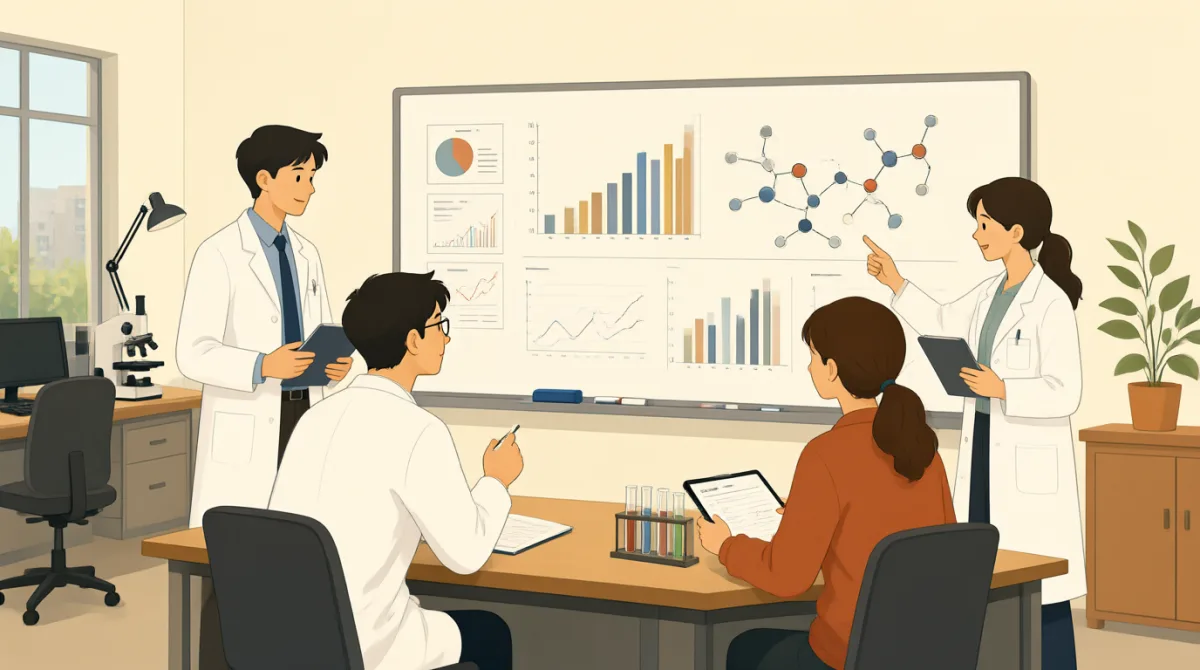

Alright team, let's discuss these latest spectroscopy results. I'm seeing some significant deviations in the 500-600 nm range, especially in samples C and D. It's quite unexpected given our previous runs.
حسنًا يا فريق، لنناقش أحدث نتائج التحليل الطيفي. ألاحظ انحرافات ملحوظة في نطاق 500-600 nm، ولا سيما في العينتين C وD. هذا غير متوقع إلى حد كبير بالنظر إلى تجاربنا السابقة.

Yes, Dr. Miller, I noticed that too. I've re-run the analysis twice on those specific samples, and the pattern persists. Could it be an artifact of the sample preparation, perhaps some contamination?
نعم، دكتور ميلر، لاحظت ذلك أيضًا. أعدت تحليل هاتين العينتين مرتين، وما زال النمط قائمًا. هل يمكن أن يكون ذلك أثرًا ناتجًا عن تحضير العينة، ربما بسبب بعض التلوث؟

Good point, Emma. We meticulously cleaned the cuvettes and used fresh reagents. However, the magnitude of the anomaly suggests it might be more than just a minor contamination; it's almost indicating a different compound entirely.
ملاحظة وجيهة يا إيما. نظفنا الخلايا بعناية واستخدمنا كواشف جديدة. لكن حجم الحالة الشاذة يوحي بأنها قد تكون أكثر من مجرد تلوث طفيف؛ فهي تكاد تشير إلى وجود مركب مختلف تمامًا.
My thoughts exactly, Jack. Could our original hypothesis about the reaction pathway be incomplete then? This data challenges our current understanding of the intermediate products.
هذا ما أفكر فيه تمامًا يا جاك. أيمكن أن تكون فرضيتنا الأصلية بشأن مسار التفاعل غير مكتملة إذن؟ هذه البيانات تتحدى فهمنا الحالي للمنتجات الوسيطة.
What if it's a transient species that only forms under specific conditions that we hadn't accounted for in the initial model? Perhaps a minor shift in temperature or pressure during the reaction phase?
ماذا لو كان نوعًا كيميائيًا عابرًا لا يتكوّن إلا في ظروف محددة لم نأخذها في الحسبان في النموذج الأولي؟ ربما حدث تغير طفيف في درجة الحرارة أو الضغط أثناء مرحلة التفاعل؟
That's a plausible explanation, Emma. We did observe a slight fluctuation in reactor temperature during the runs for samples C and D, though it was within what we considered the acceptable range.
هذا تفسير معقول يا إيما. لاحظنا بالفعل تذبذبًا طفيفًا في درجة حرارة المفاعل أثناء تجارب العينتين C وD، مع أنه ظل ضمن النطاق الذي اعتبرناه مقبولًا.
So, the next step should be to design an experiment that specifically isolates the impact of temperature fluctuations within that 'acceptable' range. We need to see if we can intentionally reproduce these anomalous peaks.
إذًا، ينبغي أن تكون خطوتنا التالية تصميم تجربة تعزل أثر تقلبات الحرارة ضمن ذلك النطاق «المقبول» تحديدًا. علينا أن نرى إن كان بإمكاننا إعادة إحداث هذه القمم الشاذة عمدًا.
Agreed. We could set up parallel runs, one with tight temperature control and another with controlled slight variations. That would provide strong evidence either way.
أتفق. يمكننا إجراء تجربتين متوازيتين، إحداهما مع ضبط دقيق لدرجة الحرارة، والأخرى مع تغييرات طفيفة مضبوطة. سيمنحنا ذلك دليلًا قويًا في كلا الاتجاهين.
I can start drafting the new experimental protocol this afternoon. It's exciting, really; this anomaly might actually lead us to a more complete understanding of the reaction.
يمكنني البدء بصياغة بروتوكول التجربة الجديد بعد ظهر اليوم. الأمر مثير حقًا؛ فقد تقودنا هذه الحالة الشاذة إلى فهم أشمل للتفاعل.
That's the spirit, Emma! Anomalies aren't failures; they're opportunities for discovery. Let's aim to get those new runs started by the end of the week.
هذا هو الحماس المطلوب يا إيما! الحالات الشاذة ليست إخفاقات؛ بل فرص للاكتشاف. لنحاول بدء التجارب الجديدة بحلول نهاية الأسبوع.
المفردات10
- deviationsانحرافات
Differences or changes from what is expected or normal. In science, it often means data that doesn't match predictions. Use it when discussing unexpected results, like 'There are deviations in the measurements.'
هي اختلافات أو تغيرات عما هو متوقع أو معتاد. وفي العلوم، تشير غالبًا إلى بيانات لا تتوافق مع التوقعات. استخدمها عند الحديث عن نتائج غير متوقعة، مثل: 'There are deviations in the measurements.' (توجد انحرافات في القياسات.)
- artifactأثر ناتج عن خطأ أو طريقة
Something that appears in data or results but is caused by error or method, not the real phenomenon. Common in research; say 'It might be an artifact from the equipment' to suggest it's not genuine.
هو شيء يظهر في البيانات أو النتائج، لكنه ناجم عن خطأ أو عن الطريقة المستخدمة، لا عن الظاهرة الحقيقية. يشيع هذا المصطلح في الأبحاث؛ ويمكنك قول 'It might be an artifact from the equipment' (قد يكون ذلك أثرًا ناتجًا عن الجهاز) للإشارة إلى أن النتيجة قد لا تكون حقيقية.
- contaminationتلوّث
The presence of unwanted substances that can affect results. In experiments, it means pollution; useful in lab talk, e.g., 'Check for contamination in the samples.'
هو وجود مواد غير مرغوب فيها قد تؤثر في النتائج. وفي التجارب، يشير إلى تلوث العينات أو المواد؛ وهو مفيد في الحديث المختبري، مثل: 'Check for contamination in the samples.' (تحقق من وجود تلوث في العينات.)
- anomalyحالة شاذة
An unusual or unexpected event or result. In science, it highlights something odd; use it like 'This anomaly needs further investigation' to point out surprises.
هي واقعة أو نتيجة غير مألوفة أو غير متوقعة. وفي العلوم، تشير إلى أمر غير اعتيادي؛ استخدمها مثلًا في 'This anomaly needs further investigation' (تحتاج هذه الحالة الشاذة إلى مزيد من البحث) للتنبيه إلى نتيجة مفاجئة.
- hypothesisفرضية
An educated guess or proposed explanation for a phenomenon. Key in research; say 'Our hypothesis was that...' when stating a theory to test.
هي تخمين مدروس أو تفسير مقترح لظاهرة ما. وهي أساسية في البحث؛ ويمكنك قول 'Our hypothesis was that...' (كانت فرضيتنا أن...) عند طرح فكرة لاختبارها.
- transientعابر
Something temporary or short-lived that doesn't last. In chemistry, it refers to short-term compounds; use 'a transient effect' for things that appear briefly.
يصف شيئًا مؤقتًا أو قصير الأمد لا يدوم. وفي الكيمياء، قد يشير إلى مركبات قصيرة العمر؛ استخدم 'a transient effect' (تأثير عابر) لوصف شيء يظهر لفترة وجيزة.
- plausibleمعقول
Seeming reasonable or believable. Use in discussions to agree, like 'That's a plausible idea' when something makes sense but isn't proven.
يصف ما يبدو منطقيًا أو جديرًا بالتصديق. استخدمه في النقاشات للموافقة، مثل: 'That's a plausible idea' (هذه فكرة معقولة) عندما تبدو الفكرة منطقية لكن لم يثبت صحتها بعد.
- fluctuationتذبذب
A small, irregular change or variation. Common for measurements; say 'There was a fluctuation in temperature' to describe ups and downs.
هو تغير أو تفاوت طفيف وغير منتظم. ويشيع استخدامه عند الحديث عن القياسات؛ قل مثلًا: 'There was a fluctuation in temperature' (حدث تذبذب في درجة الحرارة) لوصف ارتفاعها وانخفاضها.
- isolateيعزل
To separate or examine one factor alone. In experiments, it means controlling variables; use 'We need to isolate the effect' in planning tests.
يعني فصل عامل واحد أو دراسته بمفرده. وفي التجارب، يشير إلى ضبط المتغيرات؛ استخدم 'We need to isolate the effect' (علينا عزل هذا التأثير) عند التخطيط للاختبارات.
- reproduceيعيد إنتاج
To make something happen again, especially results. Essential in science for verification; say 'Can we reproduce this result?' to check reliability.
يعني التسبب في حدوث شيء مرة أخرى، ولا سيما نتيجة ما. وهو أمر أساسي للتحقق في العلوم؛ قل 'Can we reproduce this result?' (هل يمكننا إعادة إنتاج هذه النتيجة؟) للتحقق من موثوقيتها.
الجمل الأساسية9
- 1
I'm seeing some significant deviations in the 500-600 nm range.
ألاحظ انحرافات ملحوظة في نطاق 500-600 nm.
This sentence uses present continuous ('I'm seeing') to describe current observations in data. It's useful for reporting findings in meetings; the structure helps focus on what's happening now. Practice it when sharing results to sound professional.
تستخدم هذه الجملة المضارع المستمر 'I'm seeing' لوصف ما تلاحظه حاليًا في البيانات. وهي مفيدة عند عرض النتائج في الاجتماعات؛ إذ تركز الصيغة على ما يحدث الآن. تدرب عليها عند مشاركة النتائج لتبدو مهنيًا.
- 2
Could it be an artifact of the sample preparation?
هل يمكن أن يكون ذلك أثرًا ناتجًا عن تحضير العينة؟
A polite question suggesting a possible cause using 'Could it be...?' for speculation. Great for scientific discussions to propose ideas without certainty. The modal 'could' softens the suggestion, making it collaborative.
هذا سؤال مهذب يقترح سببًا محتملًا باستخدام 'Could it be...?' للتعبير عن التخمين. وهو مناسب للنقاشات العلمية لطرح الأفكار دون جزم. وتخفف 'could' من حدة الاقتراح، فتجعله أقرب إلى التعاون.
- 3
Good point.
ملاحظة وجيهة.
A short phrase to acknowledge someone's idea positively. Useful in team talks to show agreement and encourage discussion. It's simple and common in professional English to build rapport.
عبارة قصيرة تُظهر تقديرك الإيجابي لفكرة شخص آخر. وهي مفيدة في نقاشات الفريق لإبداء الموافقة وتشجيع الحوار. إنها عبارة بسيطة وشائعة في الإنجليزية المهنية لبناء الألفة.
- 4
My thoughts exactly.
هذا ما أفكر فيه تمامًا.
An idiomatic expression for strong agreement, meaning 'That's what I was thinking.' Use it in conversations to show alignment without repeating ideas. It's natural in collaborative settings like research teams.
تعبير اصطلاحي يدل على الموافقة التامة، ومعناه 'هذا ما كنت أفكر فيه'. استخدمه في المحادثات لتُظهر اتفاقك من دون تكرار الأفكار. وهو طبيعي في البيئات التعاونية، مثل فرق البحث.
- 5
What if it's a transient species?
ماذا لو كان نوعًا كيميائيًا عابرًا؟
A hypothetical question starting with 'What if...' to explore possibilities. Helpful for brainstorming in science; it invites discussion on alternatives. The structure uses conditional for 'suppose' scenarios.
سؤال افتراضي يبدأ بـ 'What if...' لاستكشاف الاحتمالات. وهو مفيد في العصف الذهني العلمي لأنه يفتح المجال لمناقشة البدائل. وتُستخدم هذه الصيغة لطرح سيناريوهات افتراضية.
- 6
That's a plausible explanation.
هذا تفسير معقول.
This agrees with an idea by calling it reasonable. Use in debates or analyses to validate suggestions. The adjective 'plausible' adds a scientific tone, and it's a pattern for polite responses.
توافق هذه العبارة على فكرة بوصفها منطقية. استخدمها في النقاش أو التحليل لتأييد اقتراح. وتضفي الصفة 'plausible' طابعًا علميًا، كما أنها صيغة مناسبة للرد بأدب.
- 7
So, the next step should be to design an experiment.
إذًا، ينبغي أن تكون الخطوة التالية تصميم تجربة.
Uses 'should be' for suggestions on actions, common for planning. Useful after discussions to propose next moves. The modal 'should' indicates recommendation, helping structure team decisions.
تستخدم العبارة 'should be' لاقتراح إجراء، وهي شائعة عند التخطيط. تفيد بعد النقاش لاقتراح الخطوات التالية. وتدل 'should' على التوصية، مما يساعد على تنظيم قرارات الفريق.
- 8
Agreed.
أتفق.
A concise way to show full agreement. Simple and direct, use it in meetings to confirm plans quickly. It's formal yet efficient in professional English.
طريقة موجزة للتعبير عن الموافقة التامة. استخدمها في الاجتماعات لتأكيد الخطط بسرعة وبوضوح. وهي رسمية ومباشرة في الإنجليزية المهنية.
- 9
Anomalies aren't failures; they're opportunities for discovery.
الحالات الشاذة ليست إخفاقات؛ بل هي فرص للاكتشاف.
This uses a contrast with semicolon ('aren't...; they're...') to reframe negative ideas positively. Valuable for motivation in research; teach it as a mindset shift, useful when encouraging teams facing unexpected results.
تستخدم هذه العبارة المقابلة مع الفاصلة المنقوطة ('aren't...; they're...') لإعادة صياغة فكرة سلبية بطريقة إيجابية. وهي مفيدة للتحفيز في البحث؛ تعلّمها باعتبارها طريقة لتغيير النظرة، واستخدمها لتشجيع الفرق التي تواجه نتائج غير متوقعة.