Holding Heavy Items/Stroller
手拿重物或推嬰兒車時的感謝
Someone holds the door when they see you struggling with heavy bags, a stroller, or a wheelchair, and you express deeper gratitude for their thoughtfulness.
當你拿著沉重的行李、推著嬰兒車或輪椅時,有人為你開門,你對他們的體貼表示更深的感謝。
對話7
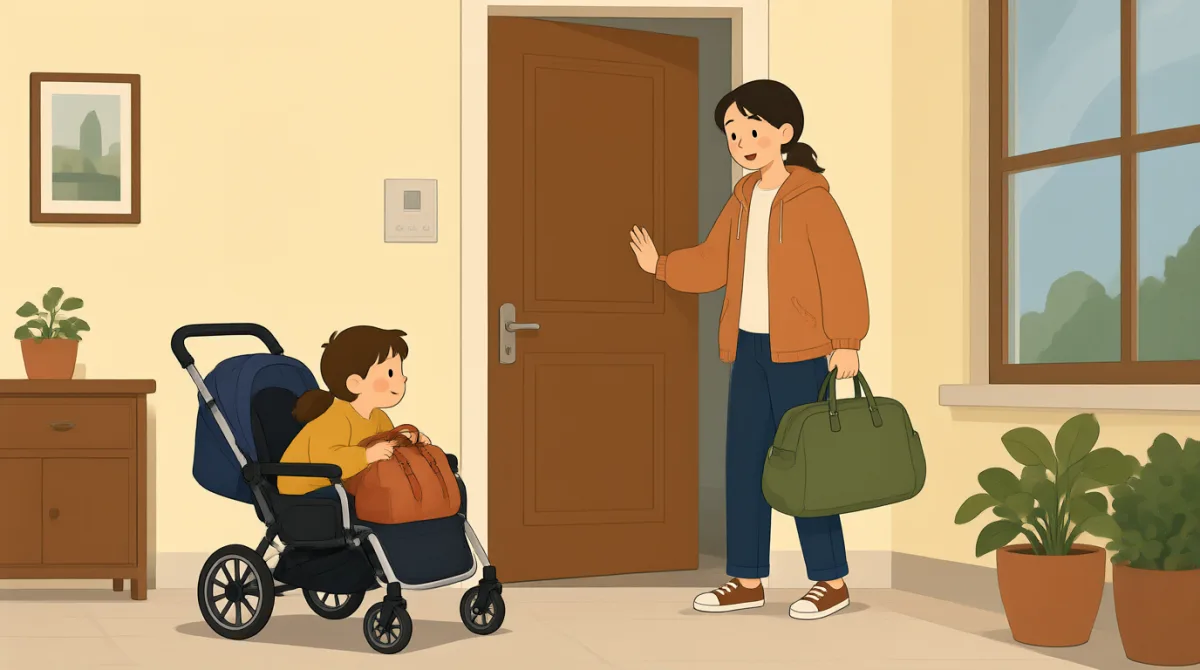

Oh, thank you so much! I really appreciate that. My hands are full.
哦,太感謝你了!我真的很感激。我手都滿了。

No problem at all! I saw you coming with the stroller and thought I could help.
沒問題!我看到你推著嬰兒車過來,就想我能幫上忙。
That's so thoughtful of you. It's always a struggle getting through doors with this thing.
你真是太體貼了。帶著這東西過門總是很費勁。
I can imagine! Glad I was here to lend a hand.
我能想象!很高興我能幫上忙。
You're a lifesaver! Seriously, thank you very much.
你真是我的救星!說真的,非常感謝你。
Anytime! Have a good day.
不客氣!祝你有個美好的一天。
You too! Thanks again.
你也是!再次感謝。
詞彙6
- appreciate感激
To feel grateful for something someone does for you. Use it to express thanks more deeply, like 'I appreciate your help.' It's common in polite conversations.
表示你對別人為你做的事心懷感激。你可以用它來更真誠地表達謝意,比如 'I appreciate your help.'(我很感激你的幫助。)在禮貌的交談中很常見。
- thoughtful體貼的
Showing care and consideration for others' needs. Say 'That's thoughtful of you' when someone does something kind without being asked. It's a way to compliment politeness.
表示關心他人,也會為他人的需要著想。有人主動做了好事時,你可以說 'That's thoughtful of you'(你真體貼),稱讚對方有禮貌、會替人著想。
- struggle費力;吃力
To have difficulty or fight against something challenging. Use it for situations like 'I struggle with heavy bags' to describe everyday problems. It's practical for talking about daily challenges.
表示做某事有困難,或正在應對棘手的事情。你可以用它描述日常遇到的麻煩,比如 'I struggle with heavy bags'(我拿著沉重的袋子很吃力)。談論生活中的挑戰時很實用。
- lend a hand幫一把
An idiom meaning to help someone. It's casual and friendly, like 'Can you lend a hand?' Use it in informal settings to offer or accept help.
一個表示幫助某人的習語。它語氣隨意、友好,比如 'Can you lend a hand?'(你能幫我一把嗎?)。在非正式場合,可以用它提出或接受幫助。
- lifesaver救星
Someone who provides crucial help in a tough situation. It's an exaggeration for emphasis, like 'You're a lifesaver!' Use it to show strong gratitude in casual talks.
指在困難時刻給予關鍵幫助的人。這個說法會誇張地強調謝意,比如 'You're a lifesaver!'(你真是我的救星!)。在輕鬆的交談中,可以用它表達強烈的感激。
- stroller嬰兒車
A small wheeled vehicle for pushing a baby or young child. Common in American English; say 'I have a stroller' when describing family outings. It's useful for everyday vocabulary.
一種帶輪子、用來推嬰兒或幼兒的小車。在美式英語中很常見;聊到帶孩子出門時,可以說 'I have a stroller'(我有一輛嬰兒車)。這是日常生活中很實用的詞。
關鍵句7
- 1
Oh, thank you so much! I really appreciate that.
哦,太感謝你了!我真的很感激。
This expresses strong gratitude. 'Thank you so much' is more emphatic than basic thanks, and 'I really appreciate that' adds sincerity. Use it when someone helps you significantly, like with heavy items. It's a polite pattern for intermediate learners to show deeper thanks.
這句話用來表達強烈的謝意。'Thank you so much'(非常感謝你)比簡單地說謝謝語氣更強,'I really appreciate that'(我真的很感激)則讓謝意顯得更加真誠。別人給了你很大的幫助,比如幫你拿重物時,可以這樣說。這是學習者表達深切謝意的一種禮貌說法。
- 2
No problem at all!
完全沒問題!
A casual way to say 'You're welcome' or it's not a big deal. 'No problem' is informal, and 'at all' softens it further. Use this response when someone thanks you for simple help. It's very common in daily English to keep conversations light.
這是一種隨意的說法,意思是“不客氣”或“這沒什麼”。'No problem'(沒問題)語氣比較輕鬆,加上 'at all'(完全)會顯得更親切。別人感謝你提供的小幫助時,可以這樣回應。這種說法在日常英語中很常見,能讓交談氣氛更輕鬆。
- 3
That's so thoughtful of you.
你真是太體貼了。
Compliments someone's kindness and consideration. 'That's so' adds emphasis, and 'of you' personalizes it. Use it to acknowledge helpful actions, like holding a door. This sentence teaches how to express appreciation for thoughtfulness in social situations.
這句話用來稱讚別人的善意和體貼。'That's so'(真是太……了)起強調作用,'of you'(你真……)則讓稱讚更貼近對方。別人做了幫忙開門之類的好事時,可以這樣表達謝意。這句話能教你在社交場合稱讚他人的體貼。
- 4
It's always a struggle getting through doors with this thing.
推著這東西過門總是很費勁。
Describes a recurring difficulty. 'It's always a struggle' uses present simple for habits, and 'this thing' refers casually to an object like a stroller. Use it to explain challenges and build empathy. Helpful for practicing descriptive sentences about daily life.
這句話描述反覆遇到的困難。'It's always a struggle'(總是很費勁)用一般現在時來表達習慣或常見情況,'this thing'(這東西)則是對嬰兒車之類物品的隨意稱呼。你可以用它說明自己遇到的麻煩,讓對方更能體會。這也有助於練習描述日常生活的句子。
- 5
Glad I was here to lend a hand.
很高興能在這兒幫上忙。
Shows happiness about being able to help. 'Glad' means pleased, and 'lend a hand' is an idiom for assisting. Use this to respond positively after helping. It demonstrates idiomatic expressions and past continuous for context.
這句話表示很高興自己能幫上忙。'Glad'(很高興)表示開心,'lend a hand'(幫一把)是“提供幫助”的習語。幫助別人之後,可以用這句話積極地回應對方。它還展示了習語的用法,以及用過去時交代事情背景的表達方式。
- 6
You're a lifesaver! Seriously, thank you very much.
你真是我的救星!說真的,非常感謝你。
Exaggerates thanks for big help. 'You're a lifesaver' is idiomatic, 'seriously' adds emphasis, and 'thank you very much' is formal gratitude. Use in situations needing strong appreciation, like with heavy loads. Teaches emphatic language for emotional impact.
這句話用誇張的方式表達對重要幫助的謝意。'You're a lifesaver'(你真是我的救星)是一個習語,'seriously'(說真的)用來加強語氣,而 'thank you very much'(非常感謝你)則表達鄭重的謝意。遇到拿重物這類情況,需要表達強烈感激時,可以這樣說。這句話能教你用強調性的語言傳達真摯的情感。
- 7
Anytime! Have a good day.
隨時樂意幫忙!祝你今天愉快。
Means 'You're welcome anytime' and ends politely. 'Anytime' is casual for repeated offers, followed by a farewell. Use to close helpful interactions positively. It's a useful pattern for courteous endings in American English conversations.
這句話表示“隨時都願意幫忙”,也能禮貌地結束交談。'Anytime'(隨時)是隨意的說法,表示以後也願意幫忙,後面再接一句道別。互相幫忙之後,可以用它積極地結束對話。這是美式英語日常交談中很實用的禮貌收尾方式。