Finding the Elevator
Tìm thang máy
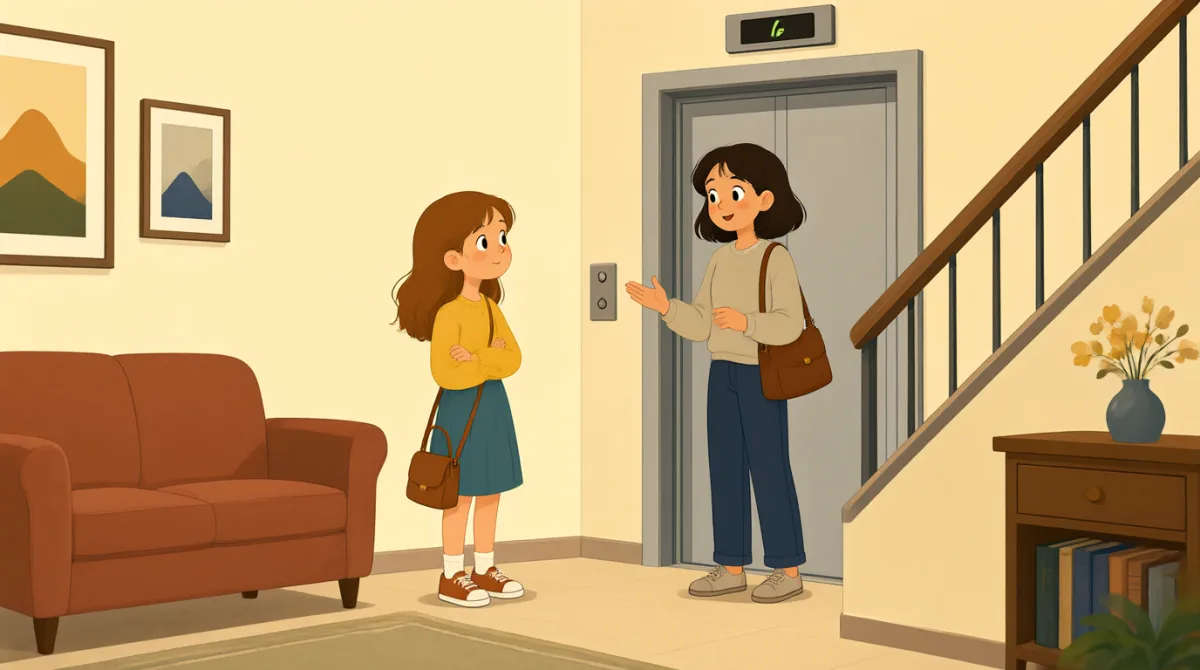
Emma asks Mia where the elevator is. Mia helps her find it near the stairs.
Emma hỏi Mia thang máy ở đâu. Mia giúp Emma tìm thang máy gần cầu thang.
Hội thoại8

Excuse me, where is the elevator?
Xin lỗi, cho mình hỏi thang máy ở đâu?

It is near the stairs, over there.
Ở gần cầu thang, đằng kia kìa.
Are those the stairs by the big sign?
Có phải cầu thang ở cạnh tấm biển lớn kia không?
Yes. Walk straight, then turn left.
Đúng rồi. Đi thẳng, rồi rẽ trái.
Is the elevator next to the stairs?
Thang máy ở cạnh cầu thang à?
Yes, it is on your right.
Ừ, ở bên phải bạn.
Great, thank you for your help!
Tuyệt, cảm ơn bạn đã giúp mình nhé!
You’re welcome. Have a nice day!
Không có gì. Chúc bạn một ngày vui vẻ nhé!
Từ vựng8
- Excuse meXin lỗi / Cho hỏi
Use this polite phrase to get someone's attention before asking a question.
Dùng cụm từ lịch sự “Excuse me” để thu hút sự chú ý của ai đó trước khi đặt câu hỏi.
- where is the elevator?Thang máy ở đâu?
Use this question to ask for the location of an elevator.
Dùng câu hỏi “where is the elevator?” để hỏi vị trí của thang máy.
- near the stairsGần cầu thang
This means the elevator is close to the stairs.
“near the stairs” có nghĩa là thang máy ở gần cầu thang.
- over thereĐằng kia
Use this phrase to point to a place that is not close to you.
Dùng cụm từ “over there” để chỉ một nơi không ở gần bạn.
- Walk straightĐi thẳng
Use this direction to tell someone to go forward without turning.
Dùng chỉ dẫn “Walk straight” để bảo ai đó đi về phía trước mà không rẽ.
- turn leftRẽ trái
Use this direction to tell someone to go to the left.
Dùng chỉ dẫn “turn left” để bảo ai đó rẽ sang bên trái.
- on your rightỞ bên phải bạn
This means something is on the right side as you face or walk forward.
“on your right” có nghĩa là một vật ở phía bên phải khi bạn nhìn về phía trước hoặc đi về phía trước.
- You’re welcome.Không có gì.
Say this after someone thanks you.
Nói “You’re welcome.” sau khi ai đó cảm ơn bạn.
Câu trọng tâm8
- 1
Excuse me, where is the elevator?
Xin lỗi, cho mình hỏi thang máy ở đâu?
Use this polite question to ask where an elevator is. You can replace “the elevator” with another place or thing.
Dùng câu hỏi lịch sự “Excuse me, where is the elevator?” để hỏi thang máy ở đâu. Bạn có thể thay “the elevator” bằng một địa điểm hoặc vật khác.
- 2
It is near the stairs, over there.
Ở gần cầu thang, đằng kia kìa.
Use this sentence to say that a place is close to the stairs and point toward it. Replace “the stairs” with another nearby place.
Dùng câu “It is near the stairs, over there.” để nói rằng một nơi ở gần cầu thang và chỉ về phía đó. Thay “the stairs” bằng một địa điểm khác ở gần.
- 3
Are those the stairs by the big sign?
Có phải cầu thang ở cạnh tấm biển lớn kia không?
Use this question to check whether you have found the right place. You can replace “the stairs” and “the big sign” with other landmarks.
Dùng câu hỏi “Are those the stairs by the big sign?” để xác nhận xem bạn đã tìm đúng chỗ chưa. Bạn có thể thay “the stairs” và “the big sign” bằng những địa điểm dễ nhận biết khác.
- 4
Walk straight, then turn left.
Đi thẳng, rồi rẽ trái.
Use this sentence to give two simple directions in order. Change “left” to “right” when needed.
Dùng câu “Walk straight, then turn left.” để chỉ đường theo hai bước đơn giản. Đổi “left” thành “right” khi cần.
- 5
Is the elevator next to the stairs?
Thang máy ở cạnh cầu thang à?
Use this question to check whether one place is beside another. Replace the places to ask about a different location.
Dùng câu hỏi “Is the elevator next to the stairs?” để xác nhận xem một nơi có ở cạnh nơi khác không. Thay các địa điểm bằng những nơi khác để hỏi về vị trí khác.
- 6
Yes, it is on your right.
Đúng rồi, ở bên phải bạn.
Use this sentence to confirm a location and say which side it is on. You can say “on your left” for the other side.
Dùng câu “Yes, it is on your right.” để xác nhận vị trí và cho biết nó ở phía nào. Bạn có thể nói “on your left” để chỉ phía bên kia.
- 7
Great, thank you for your help!
Tuyệt, cảm ơn bạn đã giúp mình nhé!
Use this friendly phrase to thank someone who has helped you. You can also say it after receiving directions.
Dùng câu thân thiện “Great, thank you for your help!” để cảm ơn người đã giúp bạn. Bạn cũng có thể nói câu này sau khi được chỉ đường.
- 8
You’re welcome. Have a nice day!
Không có gì. Chúc bạn một ngày vui vẻ nhé!
Use this polite reply after someone thanks you. The second sentence is a friendly way to end the conversation.
Dùng câu lịch sự “You’re welcome.” để đáp lại lời cảm ơn. Câu thứ hai là cách thân thiện để kết thúc cuộc trò chuyện.