Asking for Help with Payment Issues
ขอความช่วยเหลือเมื่อมีปัญหาในการชำระเงิน
A customer is having trouble with their credit card or mobile payment at the pump and asks the cashier for assistance.
ลูกค้าประสบปัญหาในการชำระเงินด้วยบัตรเครดิตหรือมือถือที่หัวจ่ายน้ำมัน จึงขอความช่วยเหลือจากพนักงานแคชเชียร์
บทสนทนา8
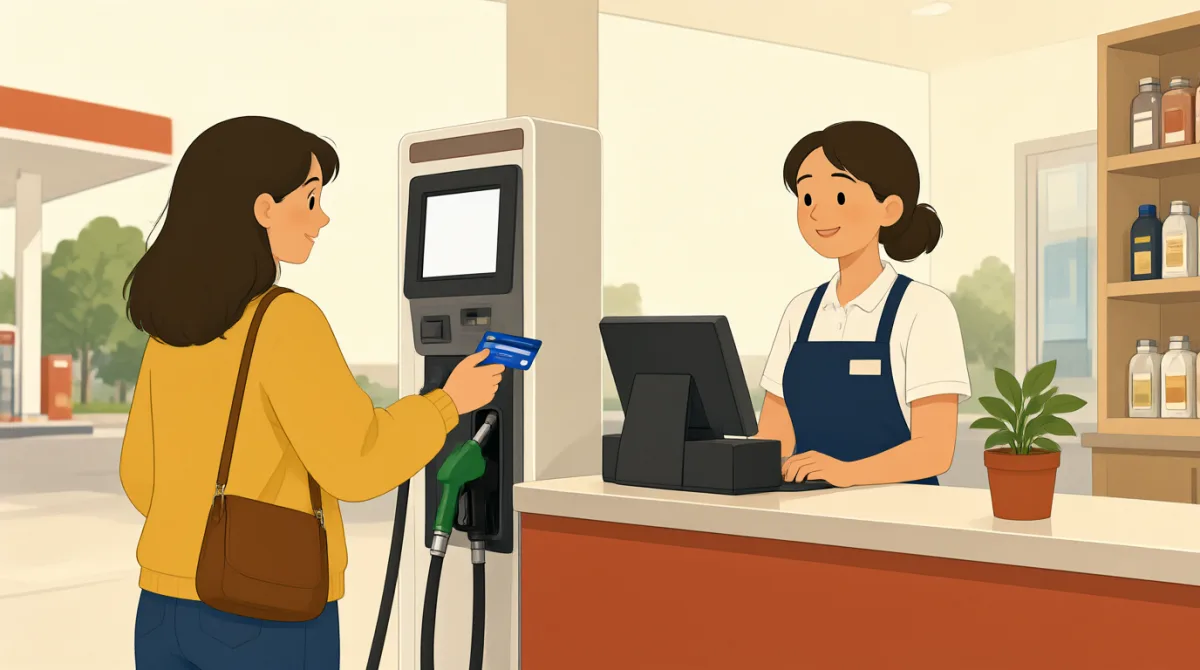

Excuse me, I'm having a bit of trouble at pump number 3. My credit card isn't working.
ขอโทษนะคะ ฉันมีปัญหากับหัวจ่ายหมายเลข 3 นิดหน่อย บัตรเครดิตใช้ไม่ได้ค่ะ

Oh, I'm sorry to hear that. Did you try tapping or inserting it? Sometimes the readers can be a bit finicky.
อ๋อ เสียใจด้วยนะครับ ลองแตะบัตรหรือเสียบบัตรแล้วหรือยังครับ บางทีเครื่องอ่านบัตรก็รวนได้เหมือนกัน
I tried both, and it just keeps saying 'declined' or 'payment error'. I even tried my mobile payment, but that didn't work either.
ลองทั้งสองวิธีแล้วค่ะ แต่เครื่องก็ขึ้นว่า 'ปฏิเสธ' หรือ 'ข้อผิดพลาดในการชำระเงิน' อยู่เรื่อยเลย ฉันลองจ่ายผ่านมือถือแล้วก็ไม่ได้เหมือนกันค่ะ
Hmm, that's unusual. Did you want to come inside and pay here, or I can try resetting the pump for you? Sometimes that helps.
อืม แปลกจังครับ อยากเข้ามาจ่ายเงินข้างในไหมครับ หรือจะให้ผมลองรีเซ็ตหัวจ่ายให้ดูก็ได้ บางครั้งก็ช่วยได้นะครับ
Could you please try resetting it first? I've already put the nozzle in, and I didn't want to start the whole process over again.
ช่วยลองรีเซ็ตให้ก่อนจะได้ไหมคะ ฉันเสียบหัวจ่ายเข้าไปแล้ว ไม่อยากเริ่มขั้นตอนใหม่ทั้งหมดค่ะ
No problem. Give me one moment. I'll reset pump 3 from my side. Once I do that, you can try your card again. If it still doesn't work, we can always process it inside.
ได้เลยครับ รอสักครู่นะครับ ผมจะรีเซ็ตหัวจ่ายหมายเลข 3 จากทางนี้ พอเสร็จแล้วคุณลองใช้บัตรอีกครั้งได้เลย ถ้ายังไม่ได้ เราก็จัดการชำระเงินที่ข้างในได้ครับ
Alright, thank you so much for your help!
ได้ค่ะ ขอบคุณมากนะคะที่ช่วย!
You're welcome. Let me know if that fixes it!
ยินดีครับ ถ้าใช้ได้แล้วบอกผมด้วยนะครับ!
คำศัพท์7
- troubleปัญหา
Means a problem or difficulty. In this dialogue, it's used to politely describe an issue, like 'having a bit of trouble' to soften the complaint.
หมายถึงปัญหาหรือความยุ่งยาก ในบทสนทนานี้ใช้พูดถึงปัญหาอย่างสุภาพ เช่น 'having a bit of trouble' (มีปัญหานิดหน่อย) เพื่อให้ฟังดูไม่เป็นการร้องเรียนรุนแรงเกินไป
- credit cardบัตรเครดิต
A plastic card used to pay for things without cash. Common in the US for payments at gas stations; say 'my credit card' when it doesn't work.
บัตรที่ใช้ชำระเงินแทนเงินสด ในสหรัฐฯ นิยมใช้จ่ายตามปั๊มน้ำมัน ถ้าบัตรใช้ไม่ได้ ให้พูดว่า 'my credit card' (บัตรเครดิตของฉัน)
- tappingแตะบัตร
Touching a card lightly on a machine to pay without inserting it. This is a modern contactless payment method often used at pumps.
การแตะบัตรเบา ๆ กับเครื่องเพื่อชำระเงินโดยไม่ต้องเสียบบัตร เป็นวิธีชำระเงินแบบไร้สัมผัสที่ทันสมัยและมักใช้กับหัวจ่ายน้ำมัน
- declinedถูกปฏิเสธ
Means the payment is rejected by the bank or system. Useful when cards don't work; it's a common error message in stores.
หมายถึงธนาคารหรือระบบปฏิเสธการชำระเงิน เป็นคำที่มีประโยชน์เมื่อบัตรใช้ไม่ได้ และมักพบในข้อความแจ้งข้อผิดพลาดตามร้านค้า
- finickyรวน
Describes something that is picky or unreliable, like a machine that doesn't work properly. Use it casually to explain technical glitches.
ใช้อธิบายสิ่งที่ทำงานไม่ค่อยน่าเชื่อถือหรือมีปัญหา เช่น เครื่องที่ทำงานไม่ปกติ ใช้พูดถึงปัญหาทางเทคนิคแบบไม่เป็นทางการได้
- resettingรีเซ็ต
Restarting a machine to fix it, like turning it off and on. In service situations, ask for 'resetting' when tech issues occur.
การเริ่มเครื่องใหม่เพื่อแก้ปัญหา คล้ายกับการปิดแล้วเปิดอีกครั้ง เวลามีปัญหาทางเทคนิคในการใช้บริการ คุณขอให้ช่วย 'resetting' (รีเซ็ต) เครื่องได้
- nozzleหัวจ่ายน้ำมัน
The part of the gas pump that you put into your car's fuel tank. Practical for car-related talks; say 'I've put the nozzle in' to explain progress.
ส่วนของเครื่องจ่ายน้ำมันที่เสียบเข้าไปในช่องเติมน้ำมันของรถ ใช้พูดถึงเรื่องรถได้ เช่น 'I've put the nozzle in' (ฉันเสียบหัวจ่ายเข้าไปแล้ว) เพื่อบอกว่าทำถึงขั้นตอนไหน
ประโยคสำคัญ7
- 1
Excuse me, I'm having a bit of trouble at pump number 3. My credit card isn't working.
ขอโทษนะคะ ฉันมีปัญหากับหัวจ่ายหมายเลข 3 นิดหน่อย บัตรเครดิตใช้ไม่ได้ค่ะ
This is a polite way to start asking for help. 'Excuse me' gets attention, 'a bit of trouble' softens the problem, and 'isn't working' describes the issue simply. Use it when approaching staff for assistance in public places.
นี่เป็นวิธีสุภาพในการเริ่มขอความช่วยเหลือ 'Excuse me' ใช้เรียกความสนใจ 'a bit of trouble' ช่วยพูดถึงปัญหาให้นุ่มนวลลง และ 'isn't working' ใช้อธิบายปัญหาตรง ๆ ใช้ประโยคนี้เมื่อต้องการขอความช่วยเหลือจากพนักงานในที่สาธารณะ
- 2
Did you try tapping or inserting it? Sometimes the readers can be a bit finicky.
ลองแตะบัตรหรือเสียบบัตรแล้วหรือยังครับ บางทีเครื่องอ่านบัตรก็รวนได้เหมือนกัน
A helpful question to troubleshoot. 'Did you try...?' suggests actions politely, and 'or' connects options. 'Finicky' adds a casual explanation. Useful for customer service to show empathy and suggest fixes.
เป็นคำถามที่ช่วยตรวจสอบปัญหา 'Did you try...?' ใช้ถามถึงวิธีที่ลองทำอย่างสุภาพ และ 'or' ใช้เชื่อมตัวเลือก ส่วน 'finicky' เป็นคำอธิบายแบบไม่เป็นทางการ ประโยคนี้มีประโยชน์ในการบริการลูกค้า เพราะแสดงความเข้าใจและเสนอวิธีแก้ปัญหา
- 3
I tried both, and it just keeps saying 'declined' or 'payment error'.
ลองทั้งสองวิธีแล้วค่ะ แต่เครื่องก็ขึ้นว่า 'ปฏิเสธ' หรือ 'ข้อผิดพลาดในการชำระเงิน' อยู่เรื่อยเลย
Explains what was attempted and the result. 'I tried both' shows effort, 'keeps saying' uses present continuous for repeated actions, and quotes errors directly. Say this to clarify problems when seeking more help.
ประโยคนี้บอกว่าลองทำอะไรไปแล้วและได้ผลอย่างไร 'I tried both' แสดงว่าพยายามแล้ว 'keeps saying' ใช้บอกสิ่งที่เกิดซ้ำ ๆ และเครื่องหมายคำพูดใช้ยกข้อความแจ้งข้อผิดพลาดตามที่เห็น พูดแบบนี้เพื่ออธิบายปัญหาให้ชัดเจนเมื่อต้องการความช่วยเหลือเพิ่มเติม
- 4
Did you want to come inside and pay here, or I can try resetting the pump for you?
อยากเข้ามาจ่ายเงินข้างในไหมครับ หรือจะให้ผมลองรีเซ็ตหัวจ่ายให้ดูก็ได้
Offers choices politely. 'Did you want to...?' is a soft suggestion, 'or' presents alternatives, and 'I can try' shows willingness to help. Great for service roles to give options without pressure.
เป็นการเสนอทางเลือกอย่างสุภาพ 'Did you want to...?' ใช้เสนอแนะอย่างนุ่มนวล 'or' ใช้บอกทางเลือกอีกทาง และ 'I can try' แสดงความเต็มใจช่วยเหลือ เหมาะสำหรับพนักงานบริการที่ต้องการเสนอทางเลือกโดยไม่กดดันลูกค้า
- 5
Could you please try resetting it first? I've already put the nozzle in, and I didn't want to start the whole process over again.
ช่วยลองรีเซ็ตให้ก่อนจะได้ไหมคะ ฉันเสียบหัวจ่ายเข้าไปแล้ว ไม่อยากเริ่มขั้นตอนใหม่ทั้งหมดค่ะ
A polite request with reasons. 'Could you please' is formal and courteous, 'first' shows priority, and explaining why ('I've already...') justifies it. Use in situations to avoid repeating steps.
เป็นคำขออย่างสุภาพพร้อมเหตุผล 'Could you please' ใช้ขอร้องอย่างสุภาพ 'first' แสดงลำดับความสำคัญ และการอธิบายเหตุผลด้วย 'I've already...' ช่วยให้เข้าใจว่าทำไมจึงขอเช่นนั้น ใช้ในสถานการณ์ที่ไม่อยากทำขั้นตอนเดิมซ้ำ
- 6
No problem. Give me one moment. I'll reset pump 3 from my side.
ได้เลยครับ รอสักครู่นะครับ ผมจะรีเซ็ตหัวจ่ายหมายเลข 3 จากทางนี้
Reassures and asks for patience. 'No problem' means it's easy, 'give me one moment' is a common phrase for brief waits, and 'from my side' explains the action. Helpful for building trust in service interactions.
ประโยคนี้ช่วยให้ลูกค้าสบายใจและขอให้รอสักครู่ 'No problem' หมายถึงไม่เป็นไรหรือทำได้สบาย ๆ 'give me one moment' เป็นสำนวนทั่วไปเมื่อขอเวลาไม่นาน และ 'from my side' อธิบายว่าจะดำเนินการจากฝั่งของผู้พูด ใช้ประโยคเหล่านี้เพื่อสร้างความไว้วางใจในการให้บริการ
- 7
You're welcome. Let me know if that fixes it!
ยินดีครับ ถ้าใช้ได้แล้วบอกผมด้วยนะครับ!
Standard polite response to thanks. 'You're welcome' acknowledges gratitude, and 'let me know' invites feedback. Use at the end of helping to keep communication open; the exclamation adds friendliness.
เป็นคำตอบสุภาพตามปกติเมื่อมีคนขอบคุณ 'You're welcome' ใช้ตอบรับคำขอบคุณ และ 'let me know' เป็นการขอให้อีกฝ่ายแจ้งให้ทราบ ใช้ตอนจบหลังจากช่วยเหลือเพื่อเปิดโอกาสให้พูดคุยต่อ เครื่องหมายอัศเจรีย์ช่วยให้ฟังดูเป็นมิตร