Explaining Serving and Garnish
Podawanie i dekorowanie potrawy
The speaker describes how to properly serve the dish, including any final touches or garnishes. This touches upon presentation and finishing touches.
Mówca opisuje, jak prawidłowo podać danie, w tym jak je wykończyć i udekorować. Tematem są prezentacja potrawy i ostatnie szlify.
Dialog6
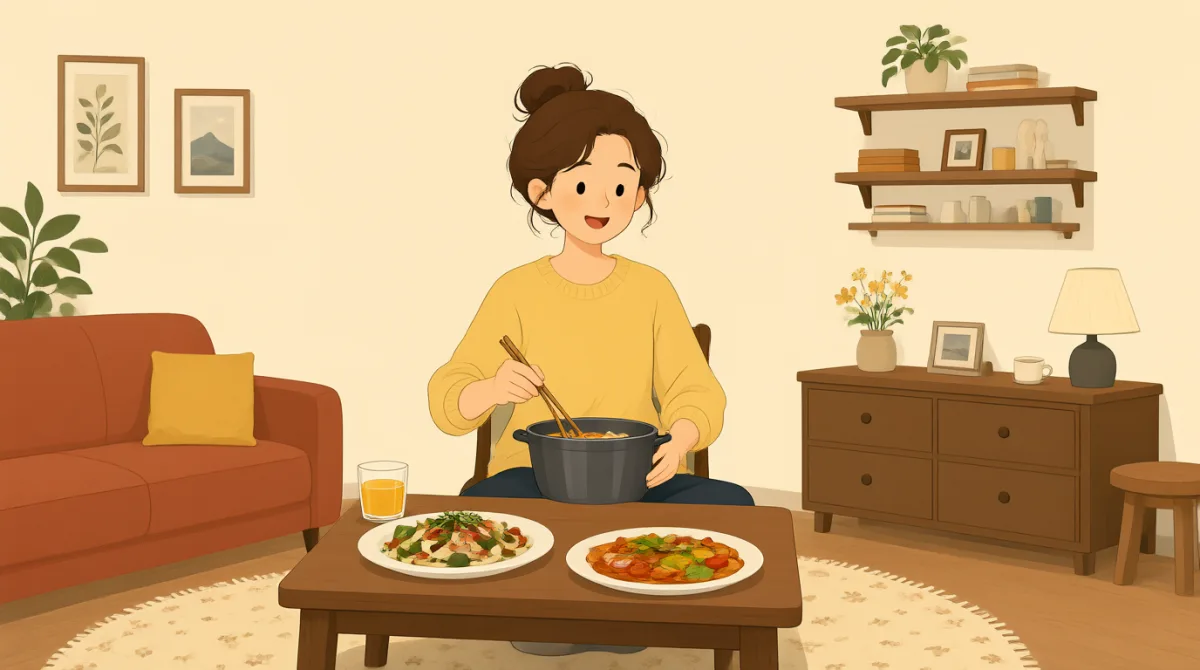

Okay, so once it's cooked, how do I actually serve it? Does it just go straight onto a plate?
Okej, a więc kiedy już się ugotuje, jak właściwie mam to podać? Po prostu przełożyć od razu na talerz?

Good question! Before you serve, let it rest for a couple of minutes off the heat. That helps the flavors really meld. Then, yes, you can spoon it directly onto your plates.
Dobre pytanie! Zanim podasz danie, odstaw je na parę minut poza palnik. Dzięki temu smaki dobrze się połączą. Potem możesz nałożyć je łyżką bezpośrednio na talerze.
Resting, got it. And what about garnishes? Do I need anything special for that?
Odstawić, jasne. A co z dekoracją? Potrzebuję czegoś specjalnego?
Absolutely! For a nice touch, a sprinkle of freshly chopped parsley or cilantro works wonders. It adds a pop of color and freshness. Or, if you have some lemon wedges, a squeeze of lemon juice at the end brightens everything up.
Pewnie! Świetnym dodatkiem będzie posypanie dania świeżo posiekaną pietruszką albo kolendrą. Doda koloru i świeżości. Możesz też skropić całość sokiem z cytryny tuż przed podaniem, jeśli masz cząstki cytryny.
Oh, parsley or cilantro, that makes sense. I have some fresh parsley. So, plate it, then sprinkle the parsley?
Aha, pietruszka albo kolendra, ma to sens. Mam świeżą pietruszkę. Czyli nakładam na talerz, a potem posypuję pietruszką?
Exactly. Arrange it nicely on the plate, then finish with the parsley right before serving. It'll make it look professional, and truly enhance the dining experience.
Dokładnie. Ładnie ułóż danie na talerzu, a tuż przed podaniem posyp je pietruszką. Będzie wyglądać profesjonalnie i naprawdę umili posiłek.
Słownictwo8
- restodstawić
In cooking, to 'rest' means to let food sit for a short time after cooking so the juices settle and flavors improve. For example, 'Let the meat rest for 5 minutes.'
W kuchni „rest” znaczy odstawić potrawę na krótki czas po ugotowaniu, żeby soki się ustabilizowały, a smaki nabrały głębi. Na przykład: „Let the meat rest for 5 minutes.” (Odstaw mięso na 5 minut.)
- meldłączyć się
To 'meld' means for flavors to blend or mix together nicely. It's often used in recipes: 'Allow the ingredients to meld for better taste.'
„Meld” znaczy, że smaki dobrze się ze sobą łączą. Tego słowa często używa się w przepisach: „Allow the ingredients to meld for better taste.” (Pozwól składnikom połączyć się, żeby danie lepiej smakowało.)
- spoonnakładać łyżką
To 'spoon' something means to use a spoon to scoop and transfer food, like serving soup. Example: 'Spoon the sauce over the pasta.'
„Spoon” znaczy nabierać jedzenie łyżką i przekładać je w inne miejsce, na przykład nakładać zupę. Na przykład: „Spoon the sauce over the pasta.” (Nałóż łyżką sos na makaron.)
- garnishdekoracja
A 'garnish' is a decoration added to food to make it look better and add flavor, like herbs or lemon. You 'garnish' by placing it on top.
„A garnish” to dodatek, którym dekoruje się potrawę, żeby lepiej wyglądała i zyskała na smaku, na przykład zioła lub cytryna. Czasownik „garnish” oznacza udekorować potrawę, układając dodatek na wierzchu.
- sprinkleposypywać
To 'sprinkle' means to scatter small amounts of something lightly over food, like salt or herbs. Example: 'Sprinkle cheese on top.'
„Sprinkle” znaczy lekko rozsypać niewielką ilość czegoś na jedzeniu, na przykład soli lub ziół. Na przykład: „Sprinkle cheese on top.” (Posyp wierzch serem.)
- squeezewyciskać
To 'squeeze' means to press something to get liquid out, like squeezing a lemon for juice. In cooking: 'Squeeze lime over the fish.'
„Squeeze” znaczy ściskać coś, żeby wydobyć z tego płyn, na przykład wyciskać sok z cytryny. W kuchni: „Squeeze lime over the fish.” (Wyciśnij sok z limonki na rybę.)
- brightenożywiać smak
In food context, to 'brighten' means to make flavors more fresh and lively. Example: 'A bit of vinegar brightens the salad.'
W kontekście jedzenia „brighten” znaczy sprawić, że smak staje się świeższy i bardziej wyrazisty. Na przykład: „A bit of vinegar brightens the salad.” (Odrobina octu ożywia smak sałatki.)
- enhancewzbogacać
To 'enhance' means to improve or make something better, like adding garnishes to make a dish more appealing. Example: 'Fresh herbs enhance the meal.'
„Enhance” znaczy ulepszać lub poprawiać coś, na przykład dodawać dekoracje, żeby potrawa wyglądała apetyczniej. Na przykład: „Fresh herbs enhance the meal.” (Świeże zioła wzbogacają danie.)
Kluczowe zdania8
- 1
Before you serve, let it rest for a couple of minutes off the heat.
Zanim podasz danie, odstaw je na parę minut poza palnik.
This sentence uses 'before' for sequence and shows a cooking tip. 'Let it rest' is a common imperative in recipes. Useful for explaining steps in food preparation to ensure better results.
W tym zdaniu „before” wskazuje kolejność czynności, a całość przedstawia kuchenną wskazówkę. „Let it rest” to częsty tryb rozkazujący w przepisach. Przydaje się, gdy opisujesz znajomym kolejne etapy przygotowania potrawy, by uzyskać lepszy efekt.
- 2
That helps the flavors really meld.
Dzięki temu smaki naprawdę dobrze się połączą.
Here, 'helps' explains a benefit, and 'meld' describes flavors blending. 'Really' adds emphasis. This is useful for giving reasons in cooking instructions to sound natural.
„Helps” opisuje korzyść, a „meld” oznacza, że smaki się łączą. „Really” dodaje nacisku. To przydatny sposób na uzasadnienie wskazówek kulinarnych i naturalne brzmienie.
- 3
You can spoon it directly onto your plates.
Możesz nałożyć je łyżką bezpośrednio na talerze.
'You can' suggests a simple option, and 'directly onto' shows straightforward action. This demonstrates permissive language in recipes, good for guiding friends casually.
„You can” sugeruje prostą możliwość, a „directly onto” opisuje bezpośrednią czynność. To przykład łagodnego języka używanego w przepisach, który dobrze sprawdza się, gdy swobodnie instruujesz znajomych.
- 4
For a nice touch, a sprinkle of freshly chopped parsley or cilantro works wonders.
Świetnym dodatkiem będzie posypanie dania świeżo posiekaną pietruszką albo kolendrą.
'For a nice touch' introduces a suggestion, and 'works wonders' means it greatly improves. 'Or' connects alternatives. Useful for recommending garnishes to enhance presentation.
„For a nice touch” wprowadza sugestię, a „works wonders” znaczy, że coś bardzo poprawia efekt. „Or” łączy alternatywy. To przydatne wyrażenia, gdy polecasz dodatki, które poprawią wygląd potrawy.
- 5
It adds a pop of color and freshness.
Doda koloru i świeżości.
'Adds a pop of' is an idiomatic expression for adding a bright, noticeable element. This sentence explains benefits of garnishes, helpful for describing visual and taste improvements.
„Adds a pop of” to idiom oznaczający dodanie wyrazistego, zauważalnego akcentu. To zdanie opisuje zalety dekoracji potrawy i pomaga mówić o poprawie jej wyglądu oraz smaku.
- 6
A squeeze of lemon juice at the end brightens everything up.
Odrobina soku z cytryny na koniec ożywi smak całego dania.
'At the end' indicates timing in sequence, and 'brightens everything up' is a phrasal verb meaning to make more vibrant. Great for final steps in recipes to add zing.
„At the end” określa moment w kolejności czynności, a „brightens everything up” to czasownik frazowy oznaczający ożywienie smaku. To świetne wyrażenia do opisywania ostatnich kroków w przepisie, które dodają potrawie wyrazistości.
- 7
Arrange it nicely on the plate, then finish with the parsley right before serving.
Ładnie ułóż danie na talerzu, a potem tuż przed podaniem posyp je pietruszką.
Uses 'arrange,' 'then,' and 'right before' for sequential instructions. This pattern is key for step-by-step explanations in cooking dialogues.
„Arrange”, „then” i „right before” służą do opisywania kolejnych czynności. Ten schemat jest ważny przy wyjaśnianiu krok po kroku, jak coś przygotować.
- 8
It'll make it look professional, and truly enhance the dining experience.
Dzięki temu będzie wyglądać profesjonalnie i naprawdę umili posiłek.
'It'll' is a contraction for 'it will,' and 'truly enhance' means really improve. 'And' connects ideas. Useful for concluding advice on presentation to impress guests.
„It'll” to skrócona forma „it will”, a „truly enhance” znaczy naprawdę poprawić. „And” łączy dwie myśli. To przydatny sposób na zakończenie porady dotyczącej podania potrawy, która zrobi wrażenie na gościach.