Paying at the Counter
Płacenie przy kasie
Emma takes her items to the counter and pays. Jack asks if she needs a bag and gives her the receipt.
Emma podchodzi z zakupami do kasy i płaci. Jack pyta, czy potrzebuje torby, i podaje jej paragon.
Dialog7
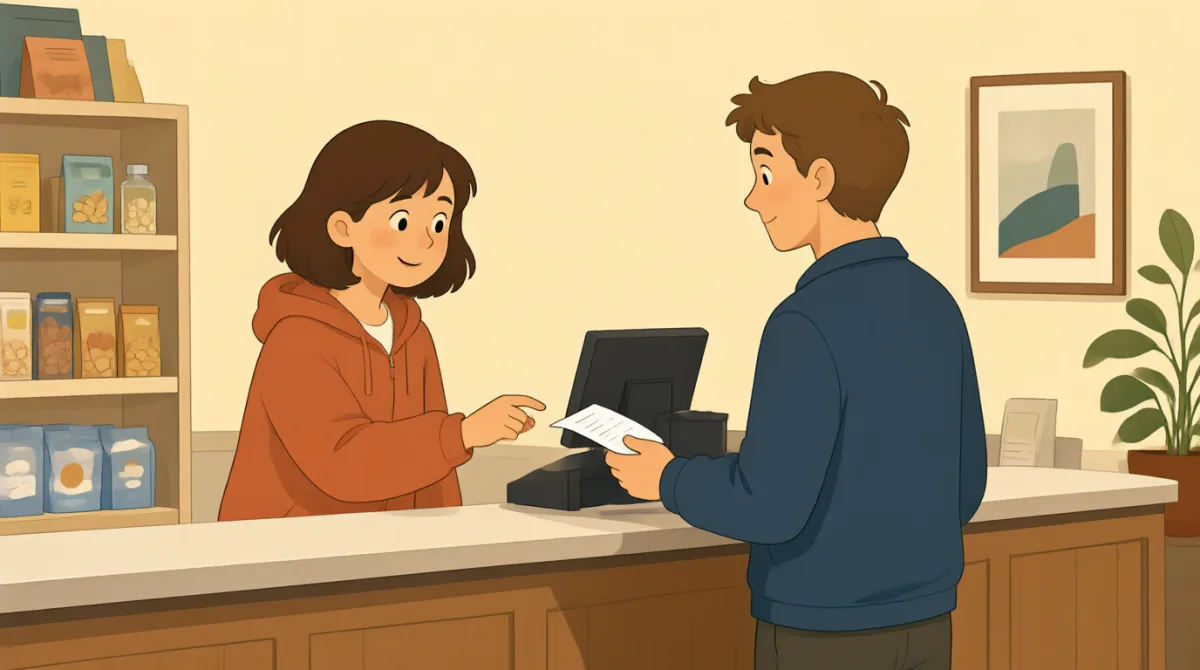

Hi. I'd like to pay for these, please.
Dzień dobry. Chciałabym zapłacić za te rzeczy.

Sure. Do you need a bag?
Oczywiście. Potrzebuje pani torby?
Yes, please. How much is it?
Tak, poproszę. Ile kosztuje?
The bag is ten cents. Your total is five dollars.
Torba kosztuje dziesięć centów. Razem pięć dolarów.
Here you go. I'm paying with cash.
Proszę. Płacę gotówką.
Thanks. Here's your change and receipt.
Dziękuję. Oto reszta i paragon.
Thank you. Have a nice day!
Dziękuję. Miłego dnia!
Słownictwo8
- pay for thesezapłacić za te rzeczy
This means to give money for the items you want to buy. Use it when you are ready to pay.
To znaczy dać pieniądze za rzeczy, które chcesz kupić. Użyj tego zwrotu, gdy jesteś gotowy do zapłaty.
- Do you need a bag?Czy potrzebuje pani torby?
This is a polite way to ask if someone wants a bag. You can ask this when shopping.
To uprzejmy sposób, by zapytać, czy ktoś chce torbę. Możesz tak zapytać podczas zakupów.
- How much is it?Ile to kosztuje?
Use this question to ask the price of one item.
Użyj tego pytania, by zapytać o cenę jednej rzeczy.
- ten centsdziesięć centów
This is a way to say the price is $0.10. You can use it when talking about a small amount of money.
Tak można powiedzieć, że cena wynosi 0,10 dolara. Tego wyrażenia używa się, mówiąc o niewielkiej kwocie.
- Your totalrazem
This is the full price for all the items together. You can use it when telling someone how much they need to pay.
Chodzi o pełną cenę wszystkich rzeczy łącznie. Możesz użyć tego słowa, mówiąc komuś, ile ma zapłacić.
- cashgotówka
Cash means money in bills or coins. You can say you are paying with cash at a store.
Gotówka to pieniądze w banknotach lub monetach. W sklepie możesz powiedzieć, że płacisz gotówką.
- changereszta
Change is the money you get back when you pay more than the price. You may receive change at the counter.
Reszta to pieniądze, które dostajesz, gdy zapłacisz więcej niż wynosi cena. Możesz ją otrzymać przy kasie.
- receiptparagon
A receipt is a paper that shows what you bought and how much you paid. Keep it after you shop.
Paragon to dokument pokazujący, co kupiłeś i ile zapłaciłeś. Zachowaj go po zakupach.
Kluczowe zdania8
- 1
I'd like to pay for these, please.
Chciałabym zapłacić za te rzeczy.
Use this polite sentence when you are ready to pay for your items. You can point to the items or put them on the counter.
Użyj tego uprzejmego zdania, gdy chcesz zapłacić za swoje zakupy. Możesz wskazać rzeczy albo położyć je na ladzie.
- 2
Do you need a bag?
Czy potrzebuje pani torby?
Use this question to ask if someone wants a bag. You can replace “a bag” with another item you can offer.
Użyj tego pytania, by zapytać, czy ktoś chce torbę. Zamiast „a bag” możesz podstawić nazwę innej rzeczy, którą możesz zaoferować.
- 3
How much is it?
Ile to kosztuje?
Use this sentence to ask the price of one item. For more than one item, you can say, “How much are they?”
Użyj tego zdania, by zapytać o cenę jednej rzeczy. Gdy chodzi o kilka rzeczy, możesz powiedzieć: „How much are they?” (Ile kosztują?).
- 4
The bag is ten cents.
Torba kosztuje dziesięć centów.
Use this sentence to tell someone the price of a bag. You can replace “ten cents” with another price.
Użyj tego zdania, by podać komuś cenę torby. Zamiast „ten cents” możesz podać inną cenę.
- 5
Your total is five dollars.
Razem pięć dolarów.
Use this sentence to tell someone the full price. You can replace “five dollars” with the correct amount.
Użyj tego zdania, by podać komuś pełną cenę. Zamiast „five dollars” możesz podać właściwą kwotę.
- 6
I'm paying with cash.
Płacę gotówką.
Use this sentence to say how you are paying. You can replace “cash” with “a card” when paying by card.
Użyj tego zdania, by powiedzieć, jak płacisz. Jeśli płacisz kartą, zamiast „cash” możesz powiedzieć „a card”.
- 7
Here's your change and receipt.
Oto reszta i paragon.
Use this sentence when giving someone their change and receipt. You can replace “change and receipt” with another item you are handing them.
Użyj tego zdania, gdy podajesz komuś resztę i paragon. Zamiast „change and receipt” możesz wymienić inną rzecz, którą wręczasz.
- 8
Have a nice day!
Miłego dnia!
This is a friendly way to say goodbye. You can use it with store workers or other people after a short conversation.
To przyjazny sposób na pożegnanie. Możesz tak powiedzieć pracownikom sklepu lub innym osobom po krótkiej rozmowie.