When a Friend Gets Defensive
Cuando un amigo se pone a la defensiva
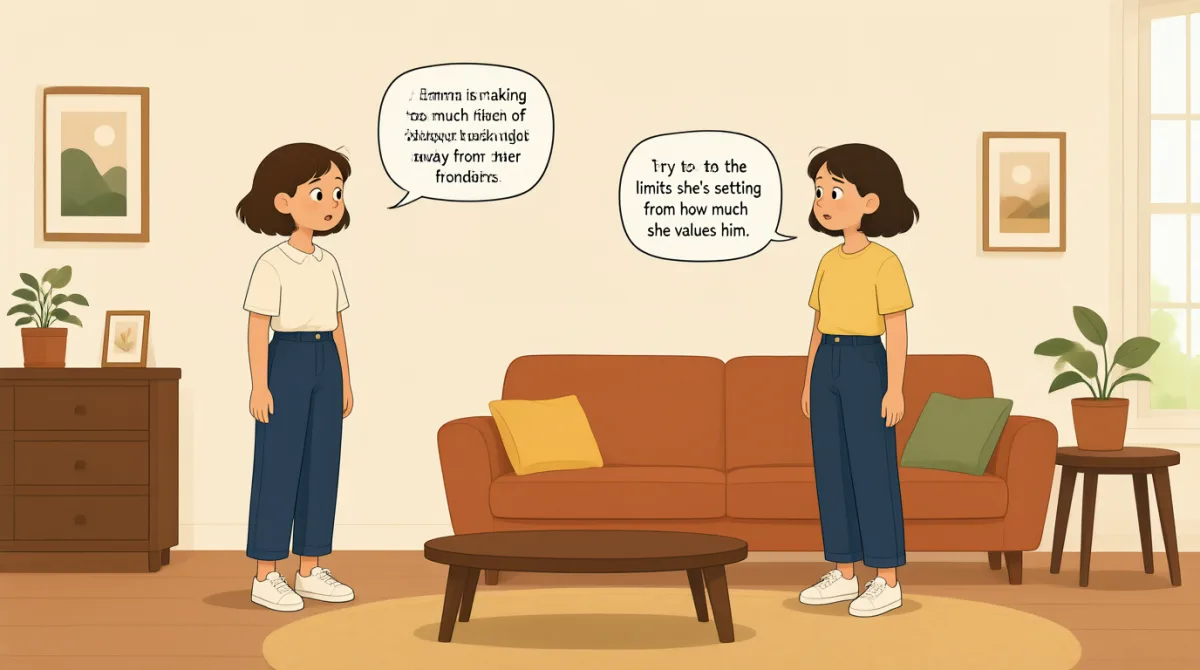
Leo feels criticized and says Emma is making too much of things. Emma acknowledges his feelings without backing away from her boundaries, and they try to separate the limits she’s setting from how much she values him.
Leo siente que lo critican y dice que Emma está exagerando. Emma reconoce cómo se siente sin renunciar a sus límites, e intentan separar los límites que ella está poniendo de lo mucho que lo valora.
Diálogo10

I get that you’re upset, but honestly, this feels like a lot. You’re making it sound as if I’m a terrible friend just because I’ve had a rough few weeks.
Entiendo que estés molesta, pero, sinceramente, esto me parece demasiado. Haces que parezca que soy un pésimo amigo solo porque he tenido unas semanas difíciles.

I’m not saying you’re a terrible friend, Leo. I can see why this feels like criticism, and I’m not trying to pile on when you’re already stressed.
No estoy diciendo que seas un pésimo amigo, Leo. Entiendo por qué esto te suena a crítica, y no quiero echar más leña al fuego cuando ya tienes bastante estrés.
It just seems like every time I need you, there’s a new rule. I thought friends were supposed to show up for each other without keeping score.
Es que parece que cada vez que te necesito, hay una nueva regla. Creía que los amigos estaban para apoyarse sin llevar la cuenta.
I do want to show up for you. But lending money, taking late calls, and having plans canceled at the last minute have started to wear me down.
Sí quiero estar ahí para ti. Pero prestarte dinero, atender llamadas a altas horas y que canceles los planes a último momento me están agotando.
I didn’t realize it was affecting you that much. When you bring up all three things at once, though, it feels like you’ve been keeping a list against me.
No me había dado cuenta de que te afectaba tanto. Pero cuando sacas las tres cosas a la vez, siento que llevas una lista de mis errores para echármelos en cara.
I can understand why it came across that way. I’m not keeping score; I’m trying to explain the pattern so we can deal with it instead of letting resentment build up.
Entiendo por qué te dio esa impresión. No estoy llevando la cuenta; intento explicar el patrón para que podamos resolverlo, en vez de dejar que se acumule el resentimiento.
So what are you actually asking me to do? I don’t want to feel like I have to pass a test just to stay your friend.
Entonces, ¿qué me estás pidiendo exactamente? No quiero sentir que tengo que pasar una prueba solo para seguir siendo tu amigo.
I’m asking you to check with me before calling late, give me more notice if plans change, and not count on me to cover expenses. Those are limits, not a test.
Te pido que me consultes antes de llamar tarde, que me avises con más tiempo si cambian los planes y que no cuentes conmigo para cubrir tus gastos. Son límites, no una prueba.
I can try to do that. I still feel a little defensive, but I don’t want you to think I take you for granted or that I don’t care about this friendship.
Puedo intentar hacerlo. Todavía estoy un poco a la defensiva, pero no quiero que pienses que te doy por sentado ni que no me importa nuestra amistad.
I don’t think that. I value you, and I want us to stay close. I also need to be honest about what I can manage, so neither of us ends up quietly resenting the other.
No pienso eso. Te valoro y quiero que sigamos siendo cercanos. También necesito ser sincera sobre lo que puedo asumir, para que ninguno de los dos acabe guardándole rencor al otro en silencio.
Vocabulario8
- pile onechar más leña al fuego
To add more criticism or pressure when someone is already dealing with a lot. Emma says she does not want to make Leo feel even more stressed.
Añadir más críticas o presión cuando alguien ya tiene muchas cosas encima. Emma dice que no quiere hacer que Leo se sienta todavía más estresado.
- show up for youestar ahí para ti
To be there for someone and support them when they need help. Here, Emma wants to support Leo while also setting limits.
Acompañar y apoyar a alguien cuando necesita ayuda. En este caso, Emma quiere apoyar a Leo y, al mismo tiempo, poner límites.
- wear me downagotarme
To gradually make someone feel tired or emotionally drained. Emma uses this phrase to explain how the repeated issues have affected her.
Hacer que alguien se sienta cada vez más cansado o emocionalmente exhausto. Emma usa esta expresión para explicar cómo le han afectado los problemas que se repiten.
- keeping a list against mellevar una lista de mis errores para echármelos en cara
Remembering and collecting someone’s mistakes to use against them later. Leo worries Emma has been tracking his behavior rather than trying to solve a problem.
Recordar y reunir los errores de alguien para usarlos en su contra más adelante. A Leo le preocupa que Emma esté llevando la cuenta de su comportamiento en vez de intentar resolver un problema.
- build upacumularse
To gradually grow or become stronger over time. Emma wants to talk about the pattern before resentment grows.
Aumentar poco a poco o hacerse más intenso con el tiempo. Emma quiere hablar del patrón antes de que se acumule el resentimiento.
- count on mecontar conmigo
To rely on someone or expect them to help. Emma is asking Leo not to assume she will pay his expenses.
Depender de alguien o esperar que te ayude. Emma le pide a Leo que no dé por hecho que ella va a pagar sus gastos.
- take you for granteddarte por sentado
To fail to appreciate someone because you assume they will always be there for you. Leo wants Emma to know that he values her and their friendship.
No valorar a alguien porque das por hecho que siempre estará ahí para ti. Leo quiere que Emma sepa que valora tanto a ella como su amistad.
- quietly resenting the otherguardarle rencor al otro en silencio
Feeling upset with someone over time without talking openly about it. Emma wants them to be honest so this does not happen.
Sentir resentimiento hacia alguien con el tiempo sin hablarlo abiertamente. Emma quiere que sean sinceros para evitar que eso pase.
Frases clave8
- 1
I can see why this feels like criticism, and I’m not trying to pile on when you’re already stressed.
Entiendo por qué esto te suena a crítica, y no quiero echar más leña al fuego cuando ya tienes bastante estrés.
This acknowledges another person’s feelings without agreeing that your concern is wrong. You can reuse the structure to show empathy while explaining your intention.
Esta frase reconoce los sentimientos de la otra persona sin admitir que tu preocupación no tiene razón. Puedes reutilizar esta estructura para mostrar empatía y explicar tu intención.
- 2
I do want to show up for you.
Sí quiero estar ahí para ti.
This reassures someone that you care and want to support them. The phrase “show up for you” is useful when talking about being there for a friend.
Esta frase le asegura a alguien que te importa y que quieres apoyarlo. La expresión “show up for you” sirve para hablar de estar ahí para un amigo.
- 3
But lending money, taking late calls, and having plans canceled at the last minute have started to wear me down.
Pero prestarte dinero, atender llamadas a altas horas y que canceles los planes a último momento me están agotando.
This explains how specific repeated behaviors have affected you. You can name several examples and use “have started to wear me down” to describe their cumulative impact.
Esta frase explica cómo te han afectado ciertas conductas concretas que se repiten. Puedes mencionar varios ejemplos y usar “have started to wear me down” para describir el efecto acumulado.
- 4
I’m not keeping score; I’m trying to explain the pattern so we can deal with it instead of letting resentment build up.
No estoy llevando la cuenta; intento explicar el patrón para que podamos resolverlo, en vez de dejar que se acumule el resentimiento.
This clarifies that you are raising an issue to solve it, not to blame someone. The contrast with “instead of” is useful for explaining what you hope to avoid.
Esta frase aclara que planteas un problema para resolverlo, no para culpar a alguien. El contraste con “instead of” sirve para explicar qué quieres evitar.
- 5
I’m asking you to check with me before calling late, give me more notice if plans change, and not count on me to cover expenses.
Te pido que me consultes antes de llamar tarde, que me avises con más tiempo si cambian los planes y que no cuentes conmigo para cubrir tus gastos.
This states practical boundaries as clear, specific requests. You can reuse the parallel verbs “check,” “give,” and “not count on” to explain what you need.
Esta frase expresa límites prácticos con peticiones claras y concretas. Puedes reutilizar los verbos paralelos “check”, “give” y “not count on” para explicar lo que necesitas.
- 6
Those are limits, not a test.
Son límites, no una prueba.
This brief sentence distinguishes boundaries from a demand to prove yourself. It is useful when someone worries that your request is a test of the relationship.
Esta frase breve distingue los límites de una exigencia para que alguien demuestre su valía. Es útil cuando alguien teme que tu petición sea una prueba de la relación.
- 7
I value you, and I want us to stay close.
Te valoro y quiero que sigamos siendo cercanos.
This directly reassures someone that a boundary does not mean you care less about them. You can use it to affirm a relationship during a difficult conversation.
Esta frase le asegura directamente a alguien que poner un límite no significa que te importe menos. Puedes usarla para reafirmar una relación durante una conversación difícil.
- 8
I also need to be honest about what I can manage, so neither of us ends up quietly resenting the other.
También necesito ser sincera sobre lo que puedo asumir, para que ninguno de los dos acabe guardándole rencor al otro en silencio.
This explains why it is important to speak openly about your limits. The phrase “so neither of us” is a useful way to describe a shared goal.
Esta frase explica por qué es importante hablar abiertamente de tus límites. La expresión “so neither of us” sirve para describir un objetivo compartido.