Finding a Gift for a Five-Year-Old
Mia asks a store assistant for a gift suggestion for her five-year-old child. The assistant recommends a few age-appropriate toys.
Dialogue8
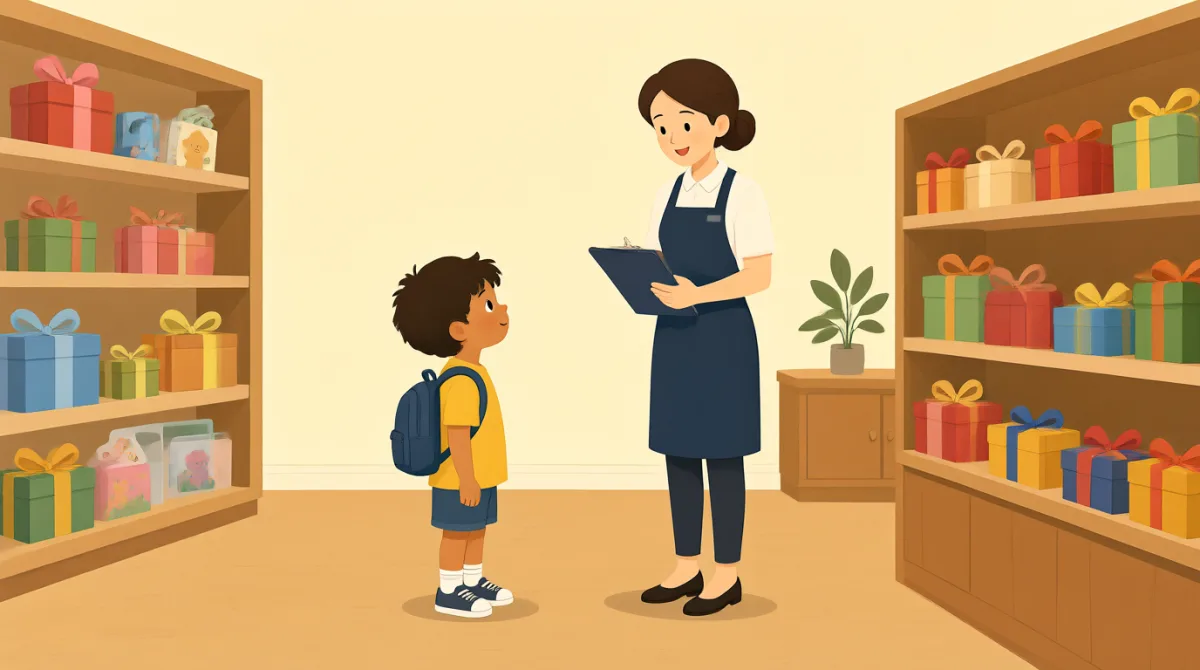

Hi, I’m looking for a gift for my five-year-old child. Any ideas?

Sure! Does your child like building things, drawing, or playing pretend?
She likes building things and playing with little animals.
This building set is made for ages four to six, and it comes with animals.
That sounds fun. Is it easy for a five-year-old to use?
Yes, the pieces are big, and the picture guide is simple to follow.
Do you have another suggestion, maybe something she can play with outside?
This bubble set is popular, and it’s also made for young children.
Vocabulary8
- looking for
This means trying to find something. Use it to tell a shop assistant what you want to buy.
- Any ideas?
This is a casual way to ask someone for suggestions. You can use it when you need help choosing something.
- building things
This means making things by putting pieces together. You can use it to talk about a child's interests or activities.
- playing pretend
This means using imagination to act out a story or role. It is a common way to describe how young children play.
- comes with
This means that something is included with a product. Ask what a toy or set comes with before you buy it.
- easy for a five-year-old to use
This asks whether something is simple enough for a five-year-old. You can change the age to ask about a different child.
- picture guide
This is a set of instructions that uses pictures. It can help someone understand how to use or build something.
- popular
This means liked or chosen by many people. You can use it to describe a toy that many customers enjoy.
Key Sentences8
- 1
Hi, I’m looking for a gift for my five-year-old child.
This is a clear way to begin asking for help in a store. Replace “a gift” with the item you need, such as “a book” or “a jacket.”
- 2
Any ideas?
Use this short question to ask for suggestions. It works in shops and in everyday conversations.
- 3
Does your child like building things, drawing, or playing pretend?
This question helps someone learn what a child enjoys. You can use the pattern “Does [person] like [activity]?” to ask about interests.
- 4
She likes building things and playing with little animals.
This sentence describes a child's interests to help someone make a suitable choice. You can replace “She” and the activities with your own details.
- 5
This building set is made for ages four to six, and it comes with animals.
This sentence gives useful information about a toy's recommended age and what is included. You can use “It comes with…” to describe items included with other products.
- 6
Is it easy for a five-year-old to use?
Use this question to check whether a product is suitable for a young child. You can change the age or replace “use” with another action, such as “carry.”
- 7
Do you have another suggestion, maybe something she can play with outside?
This is a polite way to ask for another option with a specific feature. Replace “outside” with a need such as “in the car” or “on a rainy day.”
- 8
This bubble set is popular, and it’s also made for young children.
This sentence recommends a product and explains who it is suitable for. You can use “This [product] is popular” when suggesting other items.