Briefing the Panelists
패널 토론자 사전 브리핑
Moderator Grace briefs Mia and David before a public panel on a divisive city policy. She sets ground rules for balanced speaking time, respectful disagreement, and concise answers.
사회자 그레이스가 논란이 큰 시 정책을 주제로 한 공개 토론에 앞서 미아와 데이비드에게 브리핑합니다. 발언 시간을 균형 있게 배분하고, 서로 존중하며 의견을 달리하고, 간결하게 답하는 기본 원칙을 정합니다.
대화12
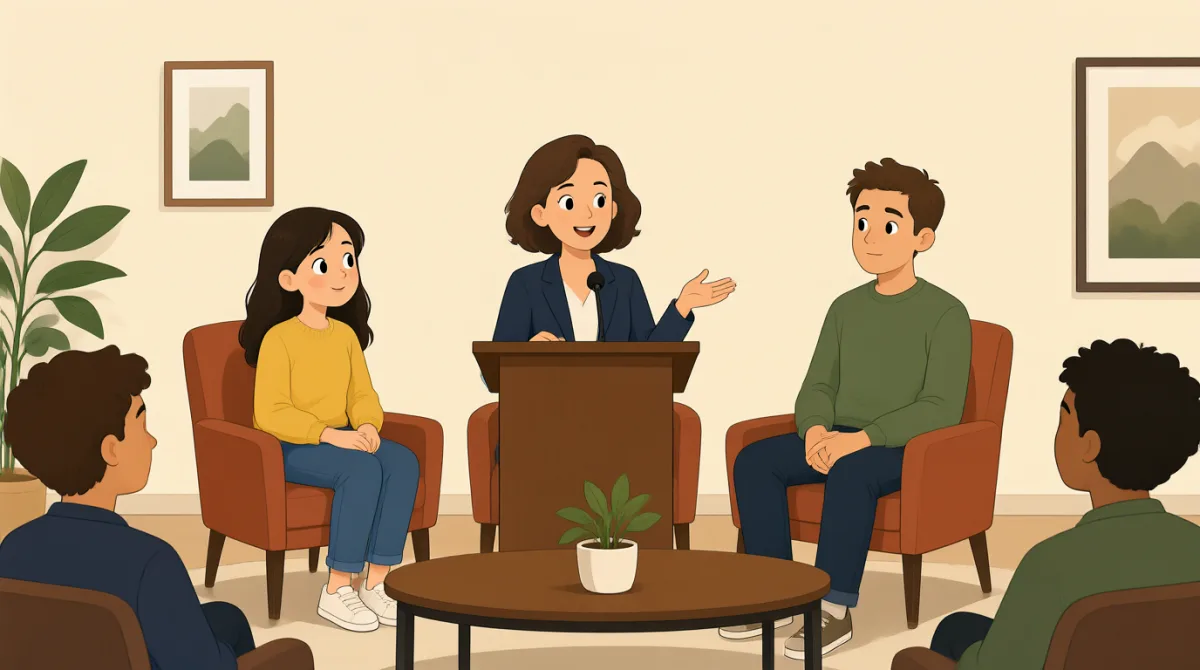

Thanks for coming in early. The city policy is contentious, and people in the room will have strong views. Our job is to make the disagreement informative, not to manufacture a winner.
일찍 와 주셔서 감사합니다. 이 시 정책은 논란이 많고, 여기 오신 분들도 강한 의견을 갖고 계실 거예요. 우리의 역할은 의견 차이를 통해 유익한 논의를 이끌어 내는 것이지, 억지로 승자를 만드는 게 아닙니다.

That works for me. I’d like to make sure we distinguish between the policy’s stated goals and the evidence that it can actually achieve them. Those aren’t always the same thing.
저는 좋습니다. 정책이 내세우는 목표와 실제로 그 목표를 달성할 수 있다는 근거를 구분하고 싶어요. 둘은 항상 같은 게 아니니까요.

Agreed. I’ll be arguing that the proposal could impose costs the city hasn’t fully accounted for. But I don’t want that point reduced to a blanket objection to change.
동의합니다. 저는 이 제안이 시에서 아직 충분히 고려하지 않은 비용을 초래할 수 있다고 주장할 생각입니다. 하지만 제 주장이 변화라면 무조건 반대한다는 뜻으로 축소되지는 않았으면 해요.
Good. Let’s keep answers concise—roughly a minute when I put a question to you. If you need more time, signal me, and I’ll make space rather than letting one answer crowd out the others.
좋습니다. 답변은 간결하게 해 주세요. 제가 질문을 드리면 대략 1분 정도로요. 시간이 더 필요하면 제게 신호를 주세요. 한 분의 답변이 다른 분들의 발언 기회를 빼앗지 않도록 시간을 더 드리겠습니다.
And if one of us cites a figure, should we give the source and the time frame? I’d rather qualify a number than present it as more definitive than it is.
그리고 누군가 수치를 인용할 때는 출처와 기간도 밝혀야 할까요? 수치를 실제보다 더 확정적인 것처럼 제시하기보다는, 한계를 분명히 하는 편이 낫다고 생각해요.
Exactly. Be clear about what a study measures, and what it doesn’t. If the evidence is incomplete, say so plainly; uncertainty is not a weakness when it’s stated honestly.
맞아요. 연구가 무엇을 측정하고 무엇은 측정하지 않는지 분명히 해 주세요. 근거가 불완전하다면 솔직하게 말씀하시고요. 불확실성을 정직하게 밝히는 건 약점이 아닙니다.
What about direct challenges? If I think Mia’s interpretation overlooks a cost, I don’t want to wait until my turn is nearly over to raise it.
직접 반박하는 건 어떻게 할까요? 미아의 해석이 비용을 간과한다고 생각하면, 제 발언 시간이 거의 끝날 때까지 기다렸다가 말하고 싶지는 않아요.
Challenge the argument, not the person. Let the speaker finish, then name the specific claim you dispute and why. No talking over each other, even if the point feels urgent.
사람이 아니라 주장을 반박하세요. 발언자가 말을 마칠 때까지 기다렸다가, 어떤 주장에 동의하지 않는지, 그리고 그 이유가 무엇인지 구체적으로 말해 주세요. 아무리 급하게 느껴지는 의견이라도 서로 말을 끊지는 마세요.
Understood. And if I’m interrupted, I’ll stop rather than compete for the floor. I’d expect you to bring us back to the point where the interruption happened.
알겠습니다. 그리고 누군가 제 말을 끊으면, 발언권을 두고 경쟁하기보다는 말을 멈출게요. 그레이스가 끊긴 지점부터 다시 이어갈 수 있도록 정리해 주셨으면 합니다.
I will. I’ll keep a visible speaking order and make sure each of you gets comparable time. If an answer runs long, I may step in—not to cut off the substance, but to keep the exchange balanced.
그렇게 하겠습니다. 발언 순서를 모두가 볼 수 있게 관리하고, 두 분이 비슷한 시간을 발언하도록 할게요. 답변이 길어지면 제가 중간에 끼어들 수도 있습니다. 핵심 내용을 자르려는 게 아니라 대화의 균형을 유지하려는 거예요.
That’s fair. I can be brief without pretending the issue is simple. If a question rests on a false choice, I’ll say so and explain the distinction as directly as I can.
공정하네요. 쟁점이 단순한 척하지 않으면서도 간결하게 말할 수 있어요. 질문이 잘못된 양자택일을 전제로 한다면, 그렇다고 밝히고 그 차이를 최대한 명확하게 설명하겠습니다.
That’s the standard, then: concise, specific, and respectful. We don’t have to agree, but we do have to leave the audience with a clearer sense of what’s known, disputed, and still uncertain.
그럼 기준은 이렇습니다. 간결하고, 구체적이며, 서로를 존중하는 것. 꼭 의견이 같을 필요는 없지만, 청중이 무엇이 알려져 있고 무엇이 논쟁 중이며 무엇이 여전히 불확실한지 더 분명히 알 수 있도록 해야 합니다.
어휘8
- contentious논란이 많은
Likely to cause disagreement or argument. Here, it describes a city policy that people have strong opposing views about.
의견 충돌이나 논쟁을 일으킬 가능성이 있다는 뜻이에요. 여기서는 사람들이 강하게 엇갈리는 의견을 가진 시 정책을 설명해요.
- distinguish between~을 구분하다
To recognize or explain the difference between two things. Use it when comparing ideas that might otherwise be treated as the same.
두 가지의 차이를 알아보거나 설명한다는 뜻이에요. 서로 다른 생각을 같은 것으로 취급할 수 있을 때 이 표현을 써요.
- blanket objection무조건적인 반대
A general rejection that does not consider specific details or exceptions. David uses it to clarify that his concern about costs is not opposition to all change.
구체적인 세부 사항이나 예외를 고려하지 않고 전반적으로 거부하는 태도예요. 데이비드는 비용에 대한 우려가 모든 변화에 반대한다는 뜻은 아니라고 설명하며 이 표현을 써요.
- crowd out~의 기회를 빼앗다
To take up so much time or space that others get less opportunity. Here, it describes one panelist’s answer preventing others from speaking.
너무 많은 시간이나 공간을 차지해 다른 사람이 기회를 덜 갖게 한다는 뜻이에요. 여기서는 패널 한 사람의 답변 때문에 다른 사람들이 발언하지 못하는 상황을 말해요.
- qualify a number수치에 단서를 달다
To add context or limits to a figure so it is not presented as more certain or general than it is. This is useful when explaining a statistic’s source or time frame.
수치가 실제보다 더 확실하거나 일반적인 것처럼 제시되지 않도록 맥락이나 한계를 덧붙이는 거예요. 통계의 출처나 기간을 설명할 때 유용해요.
- talking over each other서로 말을 끊으며 말하기
Speaking at the same time so that people cannot hear one another clearly. It describes the kind of interruption the moderator wants to prevent.
여러 사람이 동시에 말해서 서로의 말을 제대로 듣기 어려운 상황을 뜻해요. 사회자가 막으려는 방해 방식이에요.
- false choice잘못된 양자택일
A question or argument that presents only two options when other possibilities exist. David plans to point this out and explain the distinction.
다른 가능성이 있는데도 선택지가 두 개뿐인 것처럼 제시하는 질문이나 주장이에요. 데이비드는 이런 점을 짚고 차이를 설명하려고 해요.
- comparable time비슷한 발언 시간
A similar amount of time for each person. Here, it means ensuring the panelists have a fair opportunity to speak.
사람마다 비슷한 양의 시간을 갖는다는 뜻이에요. 여기서는 패널들이 공정하게 발언할 기회를 얻도록 하는 것을 말해요.
핵심 문장8
- 1
Our job is to make the disagreement informative, not to manufacture a winner.
우리의 역할은 의견 차이를 통해 유익한 논의를 이끌어 내는 것이지, 억지로 승자를 만드는 게 아닙니다.
This sentence sets a constructive goal for a difficult discussion. Reuse the pattern “Our job is to…, not to…” to clarify priorities.
이 문장은 어려운 논의를 건설적으로 이끌기 위한 목표를 제시해요. 우선순위를 분명히 할 때 “Our job is to…, not to…”라는 표현을 활용해 보세요.
- 2
I’d like to make sure we distinguish between the policy’s stated goals and the evidence that it can actually achieve them.
정책이 내세우는 목표와 실제로 그 목표를 달성할 수 있다는 근거를 구분하고 싶어요.
This is a tactful way to introduce a distinction between intentions and evidence. Reuse “distinguish between X and Y” when two related ideas need separate consideration.
의도와 근거를 구분해 말하고 싶을 때 쓰기 좋은 정중한 표현이에요. 관련은 있지만 따로 살펴봐야 하는 두 가지 생각을 구분할 때 “distinguish between X and Y”를 활용해 보세요.
- 3
If you need more time, signal me, and I’ll make space rather than letting one answer crowd out the others.
시간이 더 필요하면 제게 신호를 주세요. 한 분의 답변이 다른 분들의 발언 기회를 빼앗지 않도록 시간을 더 드리겠습니다.
This offers a practical way to manage speaking time while keeping the discussion fair. Reuse “rather than letting…” to explain how you will avoid an undesirable outcome.
토론의 공정성을 지키면서 발언 시간을 관리하는 실용적인 방법을 제안하는 문장이에요. 바람직하지 않은 결과를 피하는 방법을 설명할 때 “rather than letting…”을 활용해 보세요.
- 4
If the evidence is incomplete, say so plainly; uncertainty is not a weakness when it’s stated honestly.
근거가 불완전하다면 솔직하게 말씀하세요. 불확실성을 정직하게 밝히는 건 약점이 아닙니다.
This encourages speakers to acknowledge limits without sounding evasive. It is useful when presenting research, estimates, or other information that is not conclusive.
회피하는 듯한 인상을 주지 않으면서 정보의 한계를 인정하도록 권하는 표현이에요. 연구 결과나 추정치 등 확정적이지 않은 정보를 제시할 때 유용해요.
- 5
Challenge the argument, not the person.
사람이 아니라 주장을 반박하세요.
This concise rule separates criticism of an idea from personal criticism. It works well as a reminder to keep disagreement respectful.
이 간결한 원칙은 생각에 대한 비판과 사람에 대한 비판을 구분해요. 의견이 달라도 서로 존중하자는 점을 상기시킬 때 쓰기 좋아요.
- 6
Let the speaker finish, then name the specific claim you dispute and why.
발언자가 말을 마칠 때까지 기다렸다가, 어떤 주장에 동의하지 않는지, 그리고 그 이유가 무엇인지 구체적으로 말해 주세요.
This gives a clear sequence for disagreeing: listen first, then identify the claim and explain your reason. Reuse it to encourage focused, respectful responses.
먼저 듣고, 그다음 어떤 주장에 동의하지 않는지 밝힌 뒤 이유를 설명하는 순서를 알려 줘요. 집중력 있고 서로 존중하는 답변을 이끌어 낼 때 활용해 보세요.
- 7
I can be brief without pretending the issue is simple.
쟁점이 단순한 척하지 않으면서도 간결하게 말할 수 있어요.
This sentence expresses a balance between concision and nuance. Reuse “I can be X without Y” to show that one quality does not require sacrificing another.
간결함과 세심한 설명을 함께 추구할 수 있다는 뜻이에요. 한 가지를 지키기 위해 다른 것을 포기할 필요가 없다는 점을 나타낼 때 “I can be X without Y”를 활용해 보세요.
- 8
We don’t have to agree, but we do have to leave the audience with a clearer sense of what’s known, disputed, and still uncertain.
꼭 의견이 같을 필요는 없지만, 청중이 무엇이 알려져 있고 무엇이 논쟁 중이며 무엇이 여전히 불확실한지 더 분명히 알 수 있도록 해야 합니다.
This states a shared responsibility without demanding consensus. The three-part list is useful for summarizing the status of evidence in a complex discussion.
합의를 강요하지 않으면서도 모두가 함께 책임져야 할 점을 말해요. 세 가지 항목으로 나누어 정리하는 방식은 복잡한 논의에서 근거가 어느 정도 확립되었는지 요약할 때 유용해요.