Briefing the Panelists
إحاطة المشاركين في حلقة النقاش
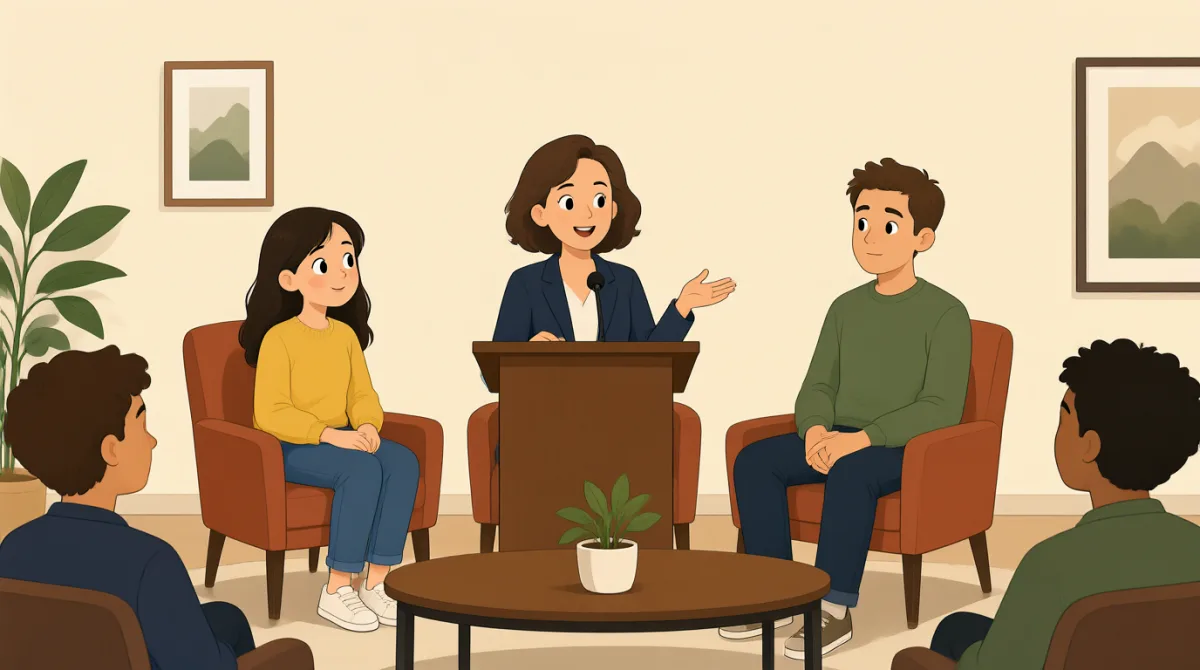
Moderator Grace briefs Mia and David before a public panel on a divisive city policy. She sets ground rules for balanced speaking time, respectful disagreement, and concise answers.
تُطلع المُيسّرة غريس ميا وديفيد على التفاصيل قبل مشاركتهما في حلقة نقاش عامة حول سياسة مثيرة للانقسام في المدينة. وتضع قواعد أساسية تضمن توازن وقت الحديث، والاختلاف باحترام، والإجابة بإيجاز.
حوار12

Thanks for coming in early. The city policy is contentious, and people in the room will have strong views. Our job is to make the disagreement informative, not to manufacture a winner.
شكرًا لحضوركما مبكرًا. سياسة المدينة مثيرة للجدل، وسيكون للحاضرين آراء قوية. مهمتنا أن نجعل الخلاف مفيدًا، لا أن نصطنع فائزًا.

That works for me. I’d like to make sure we distinguish between the policy’s stated goals and the evidence that it can actually achieve them. Those aren’t always the same thing.
هذا مناسب لي. أود أن نتأكد من التمييز بين الأهداف المعلنة للسياسة والأدلة على قدرتها الفعلية على تحقيقها. فهما ليسا دائمًا شيئًا واحدًا.

Agreed. I’ll be arguing that the proposal could impose costs the city hasn’t fully accounted for. But I don’t want that point reduced to a blanket objection to change.
أتفق. سأوضح أن المقترح قد يحمّل المدينة تكاليف لم تحسبها بالكامل. لكنني لا أريد اختزال هذه النقطة في اعتراض شامل على التغيير.
Good. Let’s keep answers concise—roughly a minute when I put a question to you. If you need more time, signal me, and I’ll make space rather than letting one answer crowd out the others.
جيد. لنحرص على إيجاز الإجابات، نحو دقيقة عندما أطرح عليكما سؤالًا. إذا احتجتما إلى مزيد من الوقت، فأشيرا إليّ، وسأتيح لكما المجال بدلًا من أن تطغى إجابة واحدة على إجابات الآخرين.
And if one of us cites a figure, should we give the source and the time frame? I’d rather qualify a number than present it as more definitive than it is.
وإذا استشهد أحدنا برقم، فهل ينبغي أن يذكر المصدر والإطار الزمني؟ أفضل أن أضع الرقم في سياقه بدلًا من عرضه على أنه أكثر حسمًا مما هو عليه.
Exactly. Be clear about what a study measures, and what it doesn’t. If the evidence is incomplete, say so plainly; uncertainty is not a weakness when it’s stated honestly.
بالضبط. وضّحوا ما تقيسه الدراسة وما لا تقيسه. وإذا كانت الأدلة غير مكتملة، فقولوا ذلك بوضوح؛ فعدم اليقين ليس نقطة ضعف حين نصرّح به بصدق.
What about direct challenges? If I think Mia’s interpretation overlooks a cost, I don’t want to wait until my turn is nearly over to raise it.
وماذا عن الاعتراض المباشر؟ إذا رأيت أن تفسير ميا يغفل تكلفة ما، فلا أريد أن أنتظر حتى تكاد تنتهي مداخلتي لأطرح ذلك.
Challenge the argument, not the person. Let the speaker finish, then name the specific claim you dispute and why. No talking over each other, even if the point feels urgent.
اعترضوا على الحجة، لا على صاحبها. دعوا المتحدث يُكمل، ثم حددوا الادعاء الذي تختلفون معه والسبب. لا تقاطعوا بعضكم بعضًا، حتى لو بدت النقطة ملحّة.
Understood. And if I’m interrupted, I’ll stop rather than compete for the floor. I’d expect you to bring us back to the point where the interruption happened.
مفهوم. وإذا قاطعني أحد، فسأتوقف بدلًا من أن أتنافس على الكلام. وأتوقع منكِ أن تعيدينا إلى النقطة التي وقعت عندها المقاطعة.
I will. I’ll keep a visible speaking order and make sure each of you gets comparable time. If an answer runs long, I may step in—not to cut off the substance, but to keep the exchange balanced.
سأفعل. سأُظهر ترتيب المتحدثين بوضوح، وأحرص على أن يحصل كل منكما على وقت متقارب. وإذا طالت إجابة، فقد أتدخل، لا لأبتسر مضمونها، بل للحفاظ على توازن النقاش.
That’s fair. I can be brief without pretending the issue is simple. If a question rests on a false choice, I’ll say so and explain the distinction as directly as I can.
هذا منصف. أستطيع أن أوجز من دون أن أتظاهر بأن المسألة بسيطة. وإذا استند السؤال إلى خيار زائف، فسأشير إلى ذلك وأوضح الفرق بأكبر قدر من المباشرة.
That’s the standard, then: concise, specific, and respectful. We don’t have to agree, but we do have to leave the audience with a clearer sense of what’s known, disputed, and still uncertain.
إذن هذا هو المعيار: الإيجاز والدقة والاحترام. ليس علينا أن نتفق، لكن علينا أن نترك لدى الجمهور فهمًا أوضح لما هو معلوم، وما هو محل خلاف، وما لا يزال غير مؤكد.
المفردات8
- contentiousمثير للجدل
Likely to cause disagreement or argument. Here, it describes a city policy that people have strong opposing views about.
يُقال عن أمر يُرجّح أن يثير الخلاف أو الجدال. وهنا تصف العبارة سياسةً في المدينة لدى الناس بشأنها آراء متعارضة قوية.
- distinguish betweenيميّز بين
To recognize or explain the difference between two things. Use it when comparing ideas that might otherwise be treated as the same.
أن يدرك الفرق بين شيئين أو يوضحه. استخدمها عند مقارنة أفكار قد يُتعامل معها لولا ذلك على أنها متطابقة.
- blanket objectionاعتراض شامل
A general rejection that does not consider specific details or exceptions. David uses it to clarify that his concern about costs is not opposition to all change.
رفض عام لا يأخذ التفاصيل أو الاستثناءات المحددة في الحسبان. يستخدمها ديفيد ليوضح أن قلقه بشأن التكاليف لا يعني معارضته لكل تغيير.
- crowd outيطغى على
To take up so much time or space that others get less opportunity. Here, it describes one panelist’s answer preventing others from speaking.
أن يستحوذ على وقت أو مساحة كبيرة، فلا تتاح للآخرين فرصة كافية. وهنا تصف العبارة إجابة أحد المشاركين التي تحول دون حديث الآخرين.
- qualify a numberيضع رقمًا في سياقه
To add context or limits to a figure so it is not presented as more certain or general than it is. This is useful when explaining a statistic’s source or time frame.
أن يضيف إلى رقمٍ ما سياقًا أو حدودًا، كيلا يُعرض على أنه أكثر يقينًا أو أوسع انطباقًا مما هو عليه. يفيد ذلك عند توضيح مصدر إحصائية أو إطارها الزمني.
- talking over each otherيتحدثون في الوقت نفسه
Speaking at the same time so that people cannot hear one another clearly. It describes the kind of interruption the moderator wants to prevent.
أن يتحدث الناس في آنٍ واحد، فلا يسمع بعضهم بعضًا بوضوح. وتصف العبارة نوع المقاطعة التي تريد المُيسّرة منعها.
- false choiceخيار زائف
A question or argument that presents only two options when other possibilities exist. David plans to point this out and explain the distinction.
سؤال أو حجة لا تعرض إلا خيارين، مع وجود احتمالات أخرى. يخطط ديفيد للإشارة إلى ذلك وتوضيح الفرق.
- comparable timeوقت متقارب
A similar amount of time for each person. Here, it means ensuring the panelists have a fair opportunity to speak.
مدة زمنية متشابهة لكل شخص. وهنا تعني ضمان فرصة عادلة لكل مشارك في حلقة النقاش كي يتحدث.
الجمل الأساسية8
- 1
Our job is to make the disagreement informative, not to manufacture a winner.
مهمتنا أن نجعل الخلاف مفيدًا، لا أن نصطنع فائزًا.
This sentence sets a constructive goal for a difficult discussion. Reuse the pattern “Our job is to…, not to…” to clarify priorities.
تحدد هذه الجملة هدفًا بنّاءً لنقاش صعب. يمكنك إعادة استخدام النمط “Our job is to…, not to…” لتوضيح الأولويات.
- 2
I’d like to make sure we distinguish between the policy’s stated goals and the evidence that it can actually achieve them.
أود أن نتأكد من التمييز بين الأهداف المعلنة للسياسة والأدلة على قدرتها الفعلية على تحقيقها.
This is a tactful way to introduce a distinction between intentions and evidence. Reuse “distinguish between X and Y” when two related ideas need separate consideration.
هذه طريقة لبقة للتمييز بين النوايا والأدلة. أعد استخدام “distinguish between X and Y” عندما تحتاج فكرتان مترابطتان إلى بحث كل منهما على حدة.
- 3
If you need more time, signal me, and I’ll make space rather than letting one answer crowd out the others.
إذا احتجتما إلى مزيد من الوقت، فأشيرا إليّ، وسأتيح لكما المجال بدلًا من أن أسمح لإجابة واحدة بأن تطغى على الإجابات الأخرى.
This offers a practical way to manage speaking time while keeping the discussion fair. Reuse “rather than letting…” to explain how you will avoid an undesirable outcome.
تقدم هذه الجملة طريقة عملية لتنظيم وقت الحديث والحفاظ على عدالة النقاش. أعد استخدام “rather than letting…” لتوضيح كيف ستتجنب نتيجة غير مرغوبة.
- 4
If the evidence is incomplete, say so plainly; uncertainty is not a weakness when it’s stated honestly.
إذا كانت الأدلة غير مكتملة، فقولوا ذلك بوضوح؛ فعدم اليقين ليس نقطة ضعف حين نصرّح به بصدق.
This encourages speakers to acknowledge limits without sounding evasive. It is useful when presenting research, estimates, or other information that is not conclusive.
تشجع هذه الجملة المتحدثين على الاعتراف بالحدود من دون أن يبدوا مراوغين. وهي مفيدة عند عرض أبحاث أو تقديرات أو معلومات أخرى غير حاسمة.
- 5
Challenge the argument, not the person.
اعترضوا على الحجة، لا على صاحبها.
This concise rule separates criticism of an idea from personal criticism. It works well as a reminder to keep disagreement respectful.
تفصل هذه القاعدة الموجزة بين نقد الفكرة وانتقاد الشخص. وهي تذكير مناسب بالحفاظ على الاحترام عند الاختلاف.
- 6
Let the speaker finish, then name the specific claim you dispute and why.
دعوا المتحدث يُكمل، ثم حددوا الادعاء الذي تختلفون معه والسبب.
This gives a clear sequence for disagreeing: listen first, then identify the claim and explain your reason. Reuse it to encourage focused, respectful responses.
توضح هذه الجملة تسلسلًا واضحًا للاختلاف: استمع أولًا، ثم حدد الادعاء واشرح سبب اعتراضك. أعد استخدامها لتشجيع ردود مركزة ومحترمة.
- 7
I can be brief without pretending the issue is simple.
أستطيع أن أوجز من دون أن أتظاهر بأن المسألة بسيطة.
This sentence expresses a balance between concision and nuance. Reuse “I can be X without Y” to show that one quality does not require sacrificing another.
تعبر هذه الجملة عن الجمع بين الإيجاز ومراعاة جوانب المسألة. أعد استخدام “I can be X without Y” لتوضيح أن التحلي بصفة لا يستلزم التضحية بصفة أخرى.
- 8
We don’t have to agree, but we do have to leave the audience with a clearer sense of what’s known, disputed, and still uncertain.
ليس علينا أن نتفق، لكن علينا أن نترك لدى الجمهور فهمًا أوضح لما هو معلوم، وما هو محل خلاف، وما لا يزال غير مؤكد.
This states a shared responsibility without demanding consensus. The three-part list is useful for summarizing the status of evidence in a complex discussion.
توضح هذه الجملة مسؤولية مشتركة من دون اشتراط التوصل إلى إجماع. وتفيد القائمة الثلاثية في تلخيص وضع الأدلة خلال نقاش معقد.