Closing With a Summary
요약으로 마무리하기
Grace gives each panelist a brief final opportunity, then summarizes their main points and the questions that remain unresolved. She closes without pretending the disagreement has been settled.
그레이스는 패널 토론자들에게 마지막으로 짧게 발언할 기회를 준 뒤, 각자의 핵심 주장과 아직 풀리지 않은 질문을 정리합니다. 의견 차이가 해소된 척하지 않고 토론을 마무리합니다.
대화11
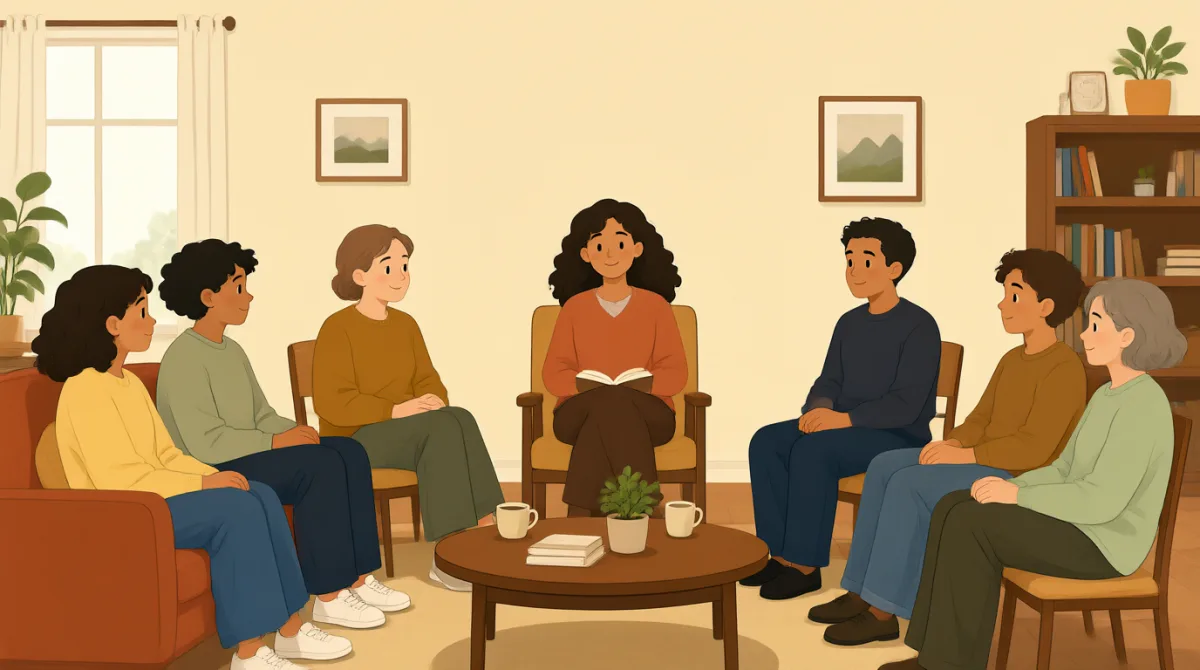

We have time for one brief closing thought from each of you. Mia, what would you most want people to carry away from this discussion?
각자 짧게 마무리 발언을 할 시간이 있습니다. 미아, 사람들이 이 토론에서 무엇을 가장 기억해 가길 바라세요?

That the policy’s costs are not distributed evenly. Any decision should include safeguards for residents who have the least room to absorb higher fees or reduced access.
정책 비용이 모두에게 똑같이 돌아가는 건 아니라는 점이요. 어떤 결정을 내리든, 비용이 오르거나 이용 기회가 줄어들 때 이를 감당할 여력이 가장 부족한 주민들을 보호할 장치가 마련돼야 해요.
Thank you. David, your final thought—and please address the central concern Mia raised, even if you still disagree about the remedy.
감사합니다. 데이비드, 마지막으로 한 말씀 해주시겠어요? 해결책에 대해서는 여전히 의견이 다르더라도, 미아가 제기한 핵심 우려에 답해 주세요.

The uneven burden is real, and it deserves serious attention. My concern is that rejecting the policy outright could leave the underlying problem untouched; careful implementation may be the more responsible course.
부담이 불균등하게 돌아간다는 건 사실이고, 진지하게 다뤄야 합니다. 다만 정책을 전면 거부하면 근본적인 문제는 그대로 남을 수 있다는 게 제 우려입니다. 신중하게 시행하는 편이 더 책임 있는 선택일 수 있어요.
I hear two points of agreement: the current situation has costs, and any change needs protections. The disagreement is over whether this policy can deliver benefits without imposing disproportionate harm.
두 가지 점에는 서로 동의하는 것 같습니다. 현재 상황에도 비용이 따르고, 어떤 변화를 주든 보호 장치가 필요하다는 점입니다. 의견이 갈리는 부분은 이 정책이 과도한 피해를 주지 않으면서 혜택을 가져올 수 있느냐는 거예요.
And we still lack reliable evidence about how those impacts would vary by neighborhood. Without that, a citywide average could make a policy look fairer than it is.
그리고 그런 영향이 동네마다 어떻게 달라질지 보여 주는 믿을 만한 근거가 아직 부족해요. 그런 자료가 없으면 시 전체 평균만으로 정책이 실제보다 더 공정해 보일 수 있어요.
That is a fair limitation. I would add that waiting for perfect data has consequences too; the question is what evidence is sufficient to act, and what monitoring follows.
그건 타당한 한계예요. 완벽한 자료를 기다리는 데에도 대가가 따른다는 점을 덧붙이고 싶습니다. 행동에 나서기에 근거가 어느 정도면 충분한지, 이후에 어떤 모니터링을 할지가 관건이에요.
So the unresolved questions are practical as well as ethical: what threshold of evidence is enough, who bears the risk, and whether safeguards can be enforced and revised.
그러니까 아직 풀리지 않은 질문은 실무적인 문제인 동시에 윤리적인 문제이기도 합니다. 어느 정도의 근거가 충분한지, 누가 위험을 감수하는지, 보호 장치를 실제로 시행하고 필요에 따라 수정할 수 있는지가 남아 있습니다.
If the city proceeds, those protections should be measurable and reviewed publicly, not left as assurances that sound reassuring but cannot be tested.
시가 정책을 시행한다면, 그런 보호 장치는 측정할 수 있어야 하고 공개적으로 검토받아야 해요. 듣기엔 안심이 되지만 실제로 확인할 수 없는 약속으로 남겨 둬서는 안 됩니다.
And if the policy is delayed, the city should explain what interim steps address the present harm. Inaction is also a choice, and it should face scrutiny.
그리고 정책 시행이 미뤄진다면, 현재의 피해를 줄이기 위해 그동안 어떤 조치를 할지 시가 설명해야 합니다. 아무것도 하지 않는 것도 하나의 선택이고, 그 선택도 면밀히 검토받아야 해요.
Thank you both. We have not resolved whether the policy should proceed, but we have identified what a responsible decision must confront. The debate remains open; the evidence and the people affected must stay at its center.
두 분 모두 감사합니다. 정책을 시행해야 하는지는 결론 내리지 못했지만, 책임 있는 결정을 내리려면 무엇을 반드시 고려해야 하는지는 짚어 봤습니다. 논의는 계속 열려 있습니다. 근거와 영향을 받는 사람들을 논의의 중심에 두어야 합니다.
어휘8
- distributed evenly고르게 분배되다
Shared in equal or fair proportions. Here, it describes how the policy’s costs may affect different groups.
동일하거나 공정한 비율로 나누어진다는 뜻이에요. 여기서는 정책 비용이 서로 다른 집단에 어떻게 영향을 미칠 수 있는지를 설명해요.
- safeguards보호 장치
Measures designed to protect people from harm or unfair treatment. In this discussion, they would protect residents from higher fees or reduced access.
사람들이 피해나 부당한 대우를 받지 않도록 마련하는 조치예요. 이 토론에서는 주민들이 비용 인상이나 이용 기회 감소로 피해를 보지 않도록 보호하는 장치를 뜻해요.
- underlying problem근본적인 문제
The basic issue that causes or lies behind a situation. Use this phrase when distinguishing a root cause from its visible effects.
상황의 원인이 되거나 그 이면에 있는 기본적인 문제를 뜻해요. 근본 원인과 겉으로 드러난 결과를 구분할 때 쓰면 좋아요.
- disproportionate harm과도한 피해
Harm that is greater for one group than would be fair or expected. It is useful when discussing unequal effects of a policy or decision.
한 집단이 공정하거나 예상되는 수준보다 더 큰 피해를 입는다는 뜻이에요. 정책이나 결정이 집단마다 다른 영향을 미치는 상황을 이야기할 때 유용해요.
- reliable evidence믿을 만한 근거
Information that is trustworthy and can support a sound conclusion. Use it when explaining what is needed before making a decision.
신뢰할 수 있고 타당한 결론을 뒷받침할 수 있는 정보예요. 결정을 내리기 전에 무엇이 필요한지 설명할 때 쓰면 좋아요.
- sufficient to act행동에 나서기에 충분한
Enough to justify taking action, even if some uncertainty remains. This phrase is useful when discussing how much evidence decision-makers need.
불확실성이 조금 남아 있더라도 조치를 정당화하기에 충분하다는 뜻이에요. 의사 결정에 필요한 근거가 어느 정도인지 이야기할 때 유용한 표현이에요.
- face scrutiny면밀히 검토받다
Be examined carefully and critically. Here, it means that inaction should be evaluated just as seriously as taking action.
신중하고 비판적으로 살펴본다는 뜻이에요. 여기서는 아무것도 하지 않는 선택도 행동에 나서는 것만큼 진지하게 평가해야 한다는 의미예요.
- stay at its center중심에 두다
Remain the main focus of attention. In this context, it means keeping evidence and affected people central to the debate.
계속해서 가장 중요한 관심의 대상이 되게 한다는 뜻이에요. 여기서는 근거와 영향을 받는 사람들을 논의의 중심에 두는 것을 말해요.
핵심 문장8
- 1
Any decision should include safeguards for residents who have the least room to absorb higher fees or reduced access.
Any decision should include safeguards for residents who have the least room to absorb higher fees or reduced access.
This sentence explains who needs protection and why. Reuse its structure to name a decision and the people most vulnerable to its effects.
이 문장은 누가 보호받아야 하는지, 그리고 그 이유가 무엇인지 설명해요. 어떤 결정과 그 결정의 영향에 가장 취약한 사람들을 함께 언급할 때 이 구조를 활용해 보세요.
- 2
The uneven burden is real, and it deserves serious attention.
The uneven burden is real, and it deserves serious attention.
This is a concise way to acknowledge another speaker’s concern without necessarily agreeing with their proposed solution. You can replace “uneven burden” with another concern.
상대방이 제안한 해결책에 동의하지 않더라도, 상대의 우려를 인정하는 간결한 표현이에요. “uneven burden”을 다른 우려 사항으로 바꿔 써도 돼요.
- 3
My concern is that rejecting the policy outright could leave the underlying problem untouched; careful implementation may be the more responsible course.
My concern is that rejecting the policy outright could leave the underlying problem untouched; careful implementation may be the more responsible course.
This sentence respectfully presents a disagreement and offers an alternative. Use “My concern is that…” to introduce a risk, then “may be the more responsible course” to suggest a cautious option.
이 문장은 상대를 존중하면서 의견 차이를 밝히고 대안을 제시해요. “My concern is that…”으로 우려되는 위험을 소개하고, “may be the more responsible course”로 신중한 대안을 제안해 보세요.
- 4
The disagreement is over whether this policy can deliver benefits without imposing disproportionate harm.
The disagreement is over whether this policy can deliver benefits without imposing disproportionate harm.
This sentence summarizes the central point of disagreement in a neutral way. Use “The disagreement is over whether…” to clarify what people are actually debating.
이 문장은 의견 차이의 핵심을 중립적으로 요약해요. 사람들이 실제로 무엇을 두고 논쟁하는지 분명히 할 때 “The disagreement is over whether…”를 활용해 보세요.
- 5
Without that, a citywide average could make a policy look fairer than it is.
Without that, a citywide average could make a policy look fairer than it is.
This sentence explains how incomplete evidence can create a misleading impression. Reuse “Without that…” to show the consequence of missing information.
이 문장은 불완전한 근거가 어떻게 잘못된 인상을 줄 수 있는지 설명해요. 정보가 없을 때 어떤 결과가 생기는지 보여 주려면 “Without that…”을 활용해 보세요.
- 6
The question is what evidence is sufficient to act, and what monitoring follows.
The question is what evidence is sufficient to act, and what monitoring follows.
This frames an unresolved issue as two practical questions: when to act and how to review the results. It is useful in policy, research, and planning discussions.
이 문장은 아직 풀리지 않은 문제를 두 가지 실무적인 질문, 즉 언제 행동에 나설지와 결과를 어떻게 점검할지로 나누어 제시해요. 정책, 연구, 계획에 관한 논의에서 유용해요.
- 7
Inaction is also a choice, and it should face scrutiny.
Inaction is also a choice, and it should face scrutiny.
This makes the point that doing nothing can also have consequences and deserves careful examination. Use it when a debate focuses only on the risks of taking action.
아무것도 하지 않는 데에도 결과가 따르며, 그 선택 역시 신중하게 살펴봐야 한다는 점을 강조해요. 행동에 나설 때의 위험만 논의되고 있을 때 사용해 보세요.
- 8
We have not resolved whether the policy should proceed, but we have identified what a responsible decision must confront.
We have not resolved whether the policy should proceed, but we have identified what a responsible decision must confront.
This closes a discussion honestly while showing what progress has been made. Adapt the first clause to acknowledge an unresolved question and the second to summarize what the group clarified.
이 문장은 아직 결론 내리지 못한 부분을 솔직하게 밝히면서도 논의가 진전된 점을 보여 주며 토론을 마무리해요. 첫 부분에는 해결되지 않은 질문을, 두 번째 부분에는 함께 명확히 한 내용을 담아 바꿔 써 보세요.