Paying
결제하기
Emma pays for the case and screen protector. Jack gives her the receipt.
에마가 휴대폰 케이스와 화면 보호 필름 값을 결제해요. 잭이 영수증을 건네줘요.
대화7
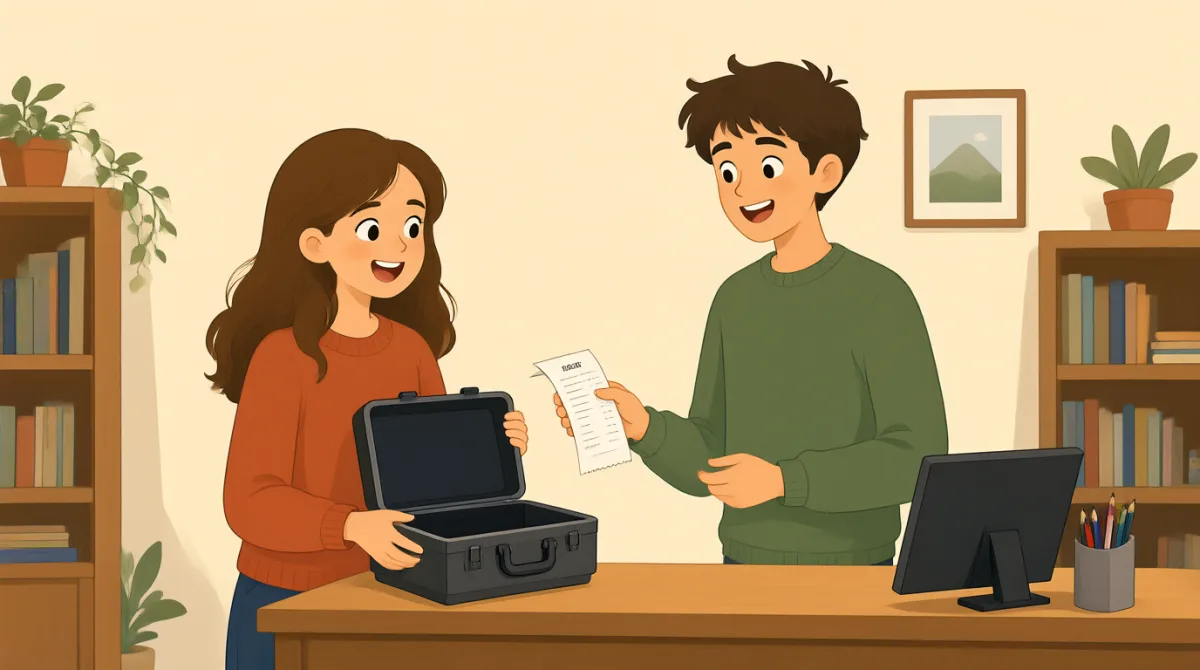

I’ll pay for the case and screen protector.
케이스랑 화면 보호 필름 값은 제가 낼게요.

That’s twenty dollars, please.
20달러입니다.
Can I pay by card?
카드로 결제해도 될까요?
Sure. Please tap your card here.
네. 여기 카드 갖다 대 주세요.
Okay. Is it done?
네. 결제됐나요?
Yes. Here’s your receipt.
네. 영수증 여기 있습니다.
Thanks! Have a nice day.
감사합니다! 좋은 하루 보내세요.
어휘6
- pay for~의 값을 내다
To give money for something you are buying. You can say, “I’ll pay for the case.”
사려는 물건의 값을 내는 거예요. “I’ll pay for the case.”(케이스 값은 제가 낼게요.)라고 말할 수 있어요.
- by card카드로
Using a bank card to pay instead of cash. Ask, “Can I pay by card?”
현금 대신 은행 카드를 이용해 결제하는 거예요. “Can I pay by card?”(카드로 결제해도 될까요?)라고 물어보세요.
- tap your card카드를 갖다 대다
Touch your card to the payment machine to pay. This is a common way to pay by card.
결제하려고 카드를 결제기에 갖다 대는 거예요. 카드 결제에서 흔히 쓰는 방법이에요.
- Is it done?다 됐나요?
A simple way to ask if something is finished. You can use it while waiting for a payment to go through.
무언가 끝났는지 간단히 물어보는 표현이에요. 결제가 처리되기를 기다릴 때도 쓸 수 있어요.
- receipt영수증
A paper or digital note that shows what you paid for. Keep your receipt after you buy something.
무엇을 사고 얼마를 냈는지 보여 주는 종이나 디지털 기록이에요. 물건을 산 뒤에는 영수증을 보관하세요.
- Have a nice day.좋은 하루 보내세요.
A friendly phrase to say goodbye. You can use it at a shop or at the end of a conversation.
작별 인사를 할 때 쓰는 친근한 표현이에요. 가게에서나 대화를 마칠 때 사용할 수 있어요.
핵심 문장8
- 1
I’ll pay for the case and screen protector.
케이스랑 화면 보호 필름 값은 제가 낼게요.
Use this sentence to say what you will pay for. You can replace the items with other things, such as “I’ll pay for the book.”
무엇의 값을 낼 건지 말할 때 쓰는 문장이에요. 물건 이름을 다른 것으로 바꿔 “I’ll pay for the book.”(책값은 제가 낼게요.)처럼 말할 수 있어요.
- 2
That’s twenty dollars, please.
20달러입니다.
A shop worker can use this to tell you the total price. Replace “twenty dollars” with the amount you need to pay.
가게 직원이 총액을 알려 줄 때 쓸 수 있는 표현이에요. “twenty dollars”를 내야 할 금액으로 바꿔 말하면 돼요.
- 3
Can I pay by card?
카드로 결제해도 될까요?
Use this question to ask if you can pay with a card. You can also replace “by card” with “in cash.”
카드로 결제할 수 있는지 물어볼 때 쓰는 질문이에요. “by card”를 “in cash”로 바꿔 물어볼 수도 있어요.
- 4
Sure.
네.
This is a friendly way to say yes. You can use it to agree to a simple request.
친근하게 승낙할 때 쓰는 표현이에요. 간단한 부탁을 들어줄 때 사용할 수 있어요.
- 5
Please tap your card here.
여기 카드 갖다 대 주세요.
A shop worker can say this to show you how to pay with a contactless card. You can use “Please” to make an instruction polite.
가게 직원이 비접촉식 카드로 결제하는 방법을 안내할 때 쓰는 표현이에요. “Please”를 붙이면 지시를 정중하게 할 수 있어요.
- 6
Okay.
네.
Use this short word to show that you understand or agree. It is common in everyday conversations.
이 짧은 말로 이해했거나 동의한다는 뜻을 전할 수 있어요. 일상 대화에서 자주 쓰여요.
- 7
Is it done?
결제됐나요?
Use this question to check if a payment or task is finished. You can also say it when you are waiting for something.
결제나 일이 끝났는지 확인할 때 쓰는 질문이에요. 무언가를 기다릴 때도 말할 수 있어요.
- 8
Yes. Here’s your receipt.
네. 영수증 여기 있습니다.
A shop worker can use this to confirm the payment and give you proof of purchase. “Here’s your…” is a useful way to hand something to someone.
가게 직원이 결제가 완료됐음을 확인하고 구매 증빙을 건네줄 때 쓰는 표현이에요. “Here’s your…”는 누군가에게 물건을 건넬 때 유용해요.