Finding Someone at the Station
駅で人を探す
Emma and Jack look for Emma’s sister at the station. Emma describes her sister’s hair, clothes, and glasses.
エマとジャックは駅でエマの妹を探しています。エマは妹の髪や服装、眼鏡について説明します。
会話7
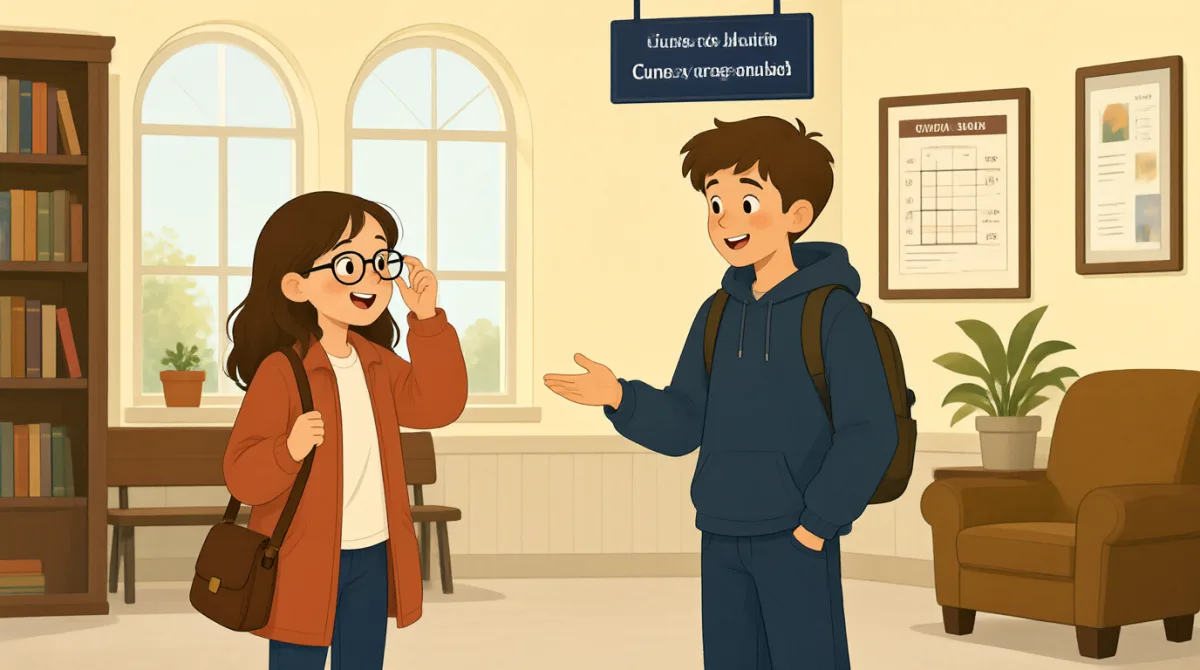

I can’t find my sister. She is at the station.
妹が見つからないんだ。駅にいるんだけど。

What does she look like?
どんな見た目なの?
She is tall, with long brown hair.
背が高くて、茶色の長い髪だよ。
What is she wearing today?
今日はどんな服を着てるの?
She has a blue coat and black glasses.
青いコートを着てて、黒い眼鏡をかけてるよ。
I see a tall woman in a blue coat.
青いコートを着た背の高い女性がいるよ。
Yes, that’s her! Thank you, Jack.
そう、その人だよ!ありがとう、ジャック。
語彙8
- find見つける
To find someone is to see where they are. You can say, “I can’t find my friend.”
“find”は、人がどこにいるか見つけるという意味です。“I can’t find my friend.”(友達が見つからない)と言えます。
- look likeどんな見た目か
This phrase asks about someone’s appearance. You can use it to ask what a person looks like.
“look like”は、人の外見について尋ねる表現です。その人がどんな見た目か聞くときに使えます。
- tall背が高い
Tall describes a person who is higher than average. You can say, “My brother is tall.”
“tall”は、平均より背が高い人を表します。“My brother is tall.”(兄は背が高いです)のように言えます。
- long brown hair茶色の長い髪
This describes hair that is long and brown. You can use it to help someone recognize a person.
“long brown hair”は、長くて茶色の髪のことです。人を見分けてもらうための特徴として使えます。
- wearing着ている
Wearing means having clothes or accessories on your body. You can ask, “What are you wearing today?”
“wearing”は、服やアクセサリーを身につけていることを表します。“What are you wearing today?”(今日は何を着てるの?)と尋ねられます。
- blue coat青いコート
A blue coat is a coat that is blue. You can use clothing colors to describe someone.
“blue coat”は、青色のコートのことです。服の色を使って人の特徴を説明できます。
- glasses眼鏡
Glasses are something people wear in front of their eyes. You can say, “She wears glasses.”
“glasses”は、目の前にかけるもの、つまり眼鏡です。“She wears glasses.”(彼女は眼鏡をかけています)と言えます。
- that’s herあの人が彼女だ
This means the woman you see is the person you are looking for. You can say it when you recognize someone.
“that’s her”は、見えている女性が探している人だという意味です。誰かを見つけたときに使えます。
重要な文8
- 1
I can’t find my sister.
妹が見つからないんだ。
Use this sentence when you cannot see or locate someone. You can change “my sister” to another person, such as “my friend.”
誰かが見当たらなかったり、どこにいるかわからなかったりするときに使う文です。“my sister”を“my friend”のように別の人に変えて使えます。
- 2
What does she look like?
彼女はどんな見た目なの?
This is a useful question when you need to recognize someone. Change “she” to “he” or “they” to ask about another person.
人を見分けたいときに便利な質問です。“she”を“he”や“they”に変えると、別の人について尋ねられます。
- 3
She is tall, with long brown hair.
彼女は背が高くて、茶色の長い髪だよ。
This sentence describes someone’s height and hair. You can reuse the pattern with other details, such as “He is short, with black hair.”
この文では、その人の身長と髪について説明しています。“He is short, with black hair.”のように、別の特徴を使って同じ形で表現できます。
- 4
What is she wearing today?
彼女は今日、何を着てるの?
Ask this when you want to know someone’s clothes. You can change “she” to “he” or “you.”
相手がどんな服を着ているか知りたいときに使います。“she”を“he”や“you”に変えられます。
- 5
She has a blue coat and black glasses.
彼女は青いコートを着ていて、黒い眼鏡をかけてるよ。
This sentence describes clothes and glasses. You can replace the colors or items to describe another person.
この文では服と眼鏡について説明しています。色やアイテムを変えて、別の人の特徴を伝えることができます。
- 6
I see a tall woman in a blue coat.
青いコートを着た背の高い女性がいるよ。
Use this sentence to tell someone you see a person who matches the description. You can change “woman” and the clothing details.
説明に当てはまる人が見えたと伝えるときに使います。“woman”や服装の特徴を変えて使えます。
- 7
Yes, that’s her!
うん、あの人だよ!
Say this when you recognize the person you are looking for. You can use “that’s him” for a man.
探している人だとわかったときに使います。男性の場合は“that’s him”と言えます。
- 8
Thank you, Jack.
ありがとう、ジャック。
This is a polite way to thank someone. Replace “Jack” with the person’s name, or simply say, “Thank you.”
相手に感謝を伝える表現です。“Jack”を相手の名前に変えたり、“Thank you.”だけで伝えたりできます。