Finding Someone at the Station
Odnaleźć kogoś na dworcu
Emma and Jack look for Emma’s sister at the station. Emma describes her sister’s hair, clothes, and glasses.
Emma i Jack szukają na dworcu siostry Emmy. Emma opisuje jej włosy, ubranie i okulary.
Dialog7
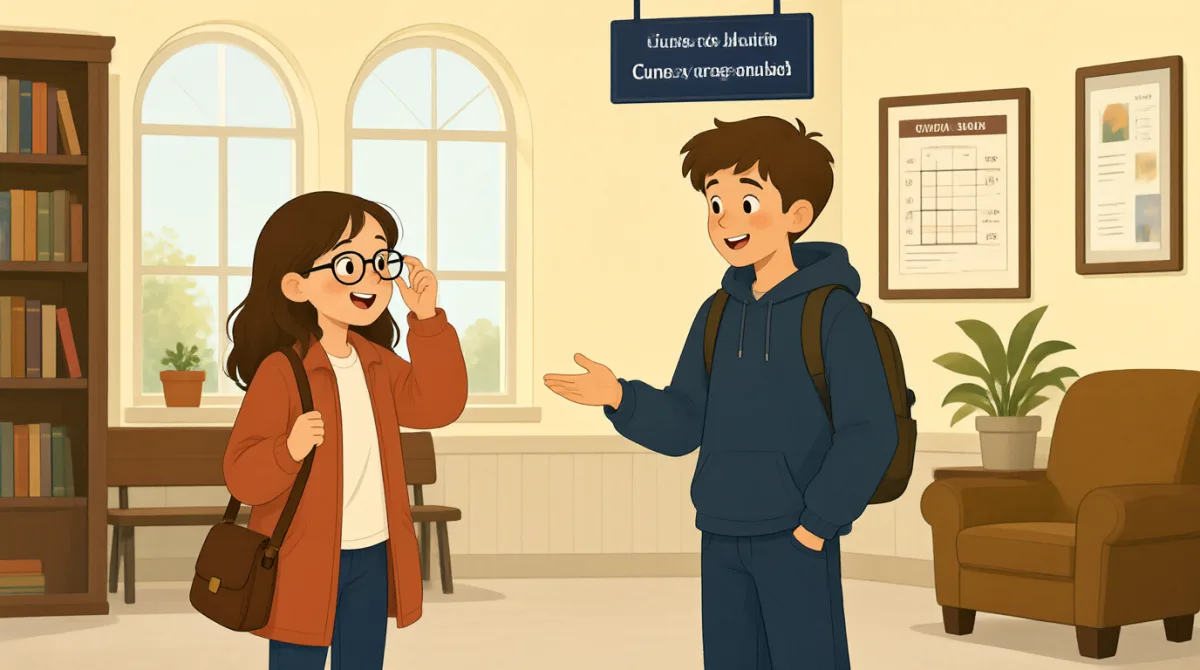

I can’t find my sister. She is at the station.
Nie mogę znaleźć siostry. Jest na dworcu.

What does she look like?
Jak wygląda?
She is tall, with long brown hair.
Jest wysoka i ma długie brązowe włosy.
What is she wearing today?
Co ma dziś na sobie?
She has a blue coat and black glasses.
Ma niebieski płaszcz i czarne okulary.
I see a tall woman in a blue coat.
Widzę wysoką kobietę w niebieskim płaszczu.
Yes, that’s her! Thank you, Jack.
Tak, to ona! Dzięki, Jack.
Słownictwo8
- findznaleźć
To find someone is to see where they are. You can say, “I can’t find my friend.”
„Find” oznacza odnaleźć kogoś lub ustalić, gdzie ktoś jest. Możesz powiedzieć: „I can’t find my friend.” (Nie mogę znaleźć przyjaciela/przyjaciółki).
- look likewyglądać
This phrase asks about someone’s appearance. You can use it to ask what a person looks like.
Tego wyrażenia używa się, by zapytać o czyjś wygląd. Możesz zapytać: „What does a person look like?” (Jak wygląda dana osoba?).
- tallwysoki
Tall describes a person who is higher than average. You can say, “My brother is tall.”
„Tall” opisuje osobę wyższą niż przeciętnie. Możesz powiedzieć: „My brother is tall.” (Mój brat jest wysoki).
- long brown hairdługie brązowe włosy
This describes hair that is long and brown. You can use it to help someone recognize a person.
To określenie opisuje długie, brązowe włosy. Możesz go użyć, by pomóc komuś rozpoznać daną osobę.
- wearingmieć na sobie
Wearing means having clothes or accessories on your body. You can ask, “What are you wearing today?”
„Wearing” oznacza mieć na sobie ubranie lub dodatki. Możesz zapytać: „What are you wearing today?” (Co masz dziś na sobie?).
- blue coatniebieski płaszcz
A blue coat is a coat that is blue. You can use clothing colors to describe someone.
„Blue coat” to płaszcz w kolorze niebieskim. Możesz opisać kogoś, podając kolory jego ubrania.
- glassesokulary
Glasses are something people wear in front of their eyes. You can say, “She wears glasses.”
„Glasses” to okulary noszone przed oczami. Możesz powiedzieć: „She wears glasses.” (Ona nosi okulary).
- that’s herto ona
This means the woman you see is the person you are looking for. You can say it when you recognize someone.
To znaczy, że widziana kobieta jest osobą, której szukasz. Możesz tak powiedzieć, gdy kogoś rozpoznasz.
Kluczowe zdania8
- 1
I can’t find my sister.
Nie mogę znaleźć siostry.
Use this sentence when you cannot see or locate someone. You can change “my sister” to another person, such as “my friend.”
Użyj tego zdania, gdy nie możesz kogoś zobaczyć ani odnaleźć. Zamiast „my sister” możesz podać inną osobę, na przykład „my friend” (mój przyjaciel / moja przyjaciółka).
- 2
What does she look like?
Jak ona wygląda?
This is a useful question when you need to recognize someone. Change “she” to “he” or “they” to ask about another person.
To przydatne pytanie, gdy chcesz rozpoznać jakąś osobę. Zamiast „she” możesz użyć „he” lub „they”, by zapytać o kogoś innego.
- 3
She is tall, with long brown hair.
Jest wysoka i ma długie brązowe włosy.
This sentence describes someone’s height and hair. You can reuse the pattern with other details, such as “He is short, with black hair.”
To zdanie opisuje wzrost i włosy danej osoby. Możesz wykorzystać ten sam schemat, dodając inne szczegóły, na przykład: „He is short, with black hair.” (Jest niski i ma czarne włosy).
- 4
What is she wearing today?
Co ona ma dziś na sobie?
Ask this when you want to know someone’s clothes. You can change “she” to “he” or “you.”
Zadaj to pytanie, gdy chcesz wiedzieć, w co ktoś jest ubrany. Zamiast „she” możesz użyć „he” albo „you”.
- 5
She has a blue coat and black glasses.
Ma niebieski płaszcz i czarne okulary.
This sentence describes clothes and glasses. You can replace the colors or items to describe another person.
To zdanie opisuje ubranie i okulary. Możesz zmieniać kolory lub wymieniać inne rzeczy, by opisać kogoś innego.
- 6
I see a tall woman in a blue coat.
Widzę wysoką kobietę w niebieskim płaszczu.
Use this sentence to tell someone you see a person who matches the description. You can change “woman” and the clothing details.
Użyj tego zdania, by powiedzieć komuś, że widzisz osobę pasującą do opisu. Możesz zmienić słowo „woman” i szczegóły dotyczące ubrania.
- 7
Yes, that’s her!
Tak, to ona!
Say this when you recognize the person you are looking for. You can use “that’s him” for a man.
Powiedz tak, gdy rozpoznasz osobę, której szukasz. O mężczyźnie możesz powiedzieć „that’s him”.
- 8
Thank you, Jack.
Dziękuję, Jack.
This is a polite way to thank someone. Replace “Jack” with the person’s name, or simply say, “Thank you.”
To uprzejmy sposób, by komuś podziękować. Zamiast „Jack” możesz podać imię tej osoby albo po prostu powiedzieć „Thank you.” (Dziękuję).