Comparing Routines With a Roommate
룸메이트와 일과 비교하기
Leo and Jack compare their daily routines at home. They talk about getting up, making breakfast, and sharing chores.
레오와 잭이 집에서 서로의 일과를 비교해요. 몇 시에 일어나는지, 아침을 어떻게 준비하는지, 집안일을 어떻게 나누는지 이야기해요.
대화8
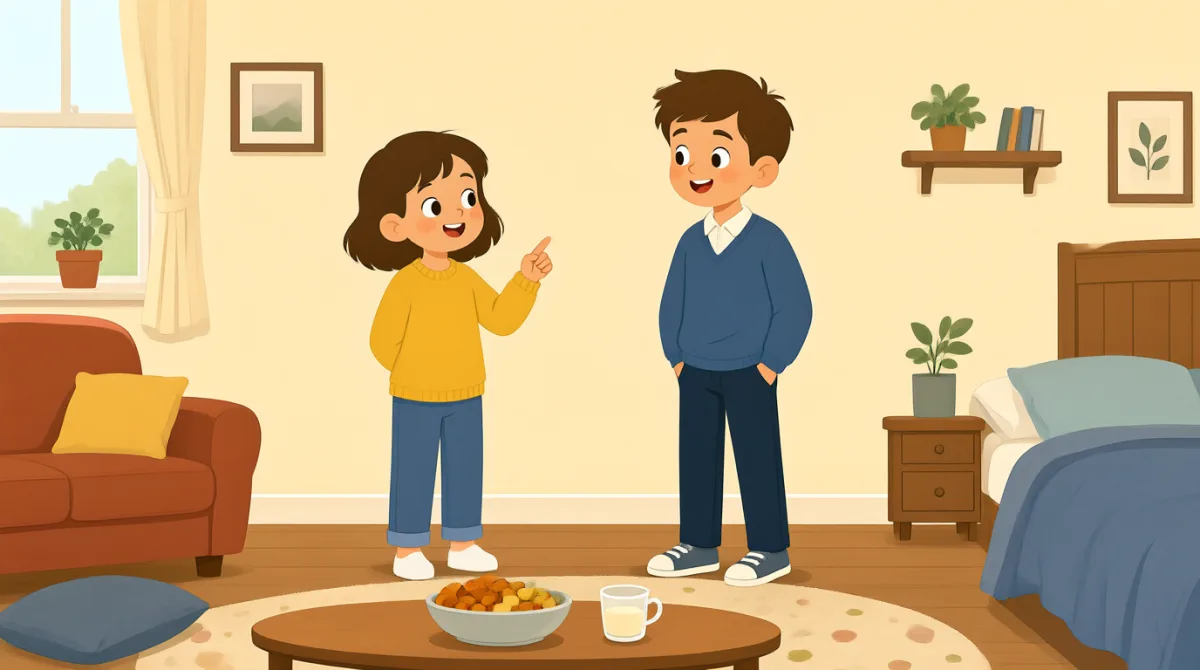

Jack, what time do you get up?
잭, 몇 시에 일어나?

I get up at seven. What about you?
난 7시에 일어나. 넌?
I get up at six thirty. I make breakfast.
난 6시 반에 일어나. 아침도 만들어.
I buy breakfast. I am not good at cooking.
난 아침을 사 먹어. 요리를 잘 못하거든.
I make eggs and coffee every morning.
난 매일 아침 달걀하고 커피를 준비해.
I wash the dishes after breakfast.
난 아침 먹고 나서 설거지해.
I clean the kitchen, and you take out the trash.
난 부엌 청소할게. 넌 쓰레기 버려 줘.
Good plan. We share the chores.
좋은 생각이야. 집안일을 나눠서 하자.
어휘7
- get up일어나다
To get up means to leave your bed in the morning. Use it to talk about when you start your day.
“get up”은 아침에 침대에서 일어나는 걸 뜻해요. 하루를 몇 시에 시작하는지 말할 때 써요.
- make breakfast아침을 만들다
To make breakfast means to prepare food for the morning meal. You can say, “I make breakfast at home.”
“make breakfast”는 아침 식사를 준비한다는 뜻이에요. “I make breakfast at home.”(나는 집에서 아침을 만들어.)처럼 말할 수 있어요.
- buy breakfast아침을 사 먹다
To buy breakfast means to pay for breakfast instead of making it. You can say what you usually buy or where you buy it.
“buy breakfast”는 아침을 직접 만들지 않고 돈을 내고 사 먹는다는 뜻이에요. 평소에 뭘 사 먹는지, 어디서 사는지 말할 때 쓸 수 있어요.
- every morning매일 아침
This means each morning. Use it to talk about a routine that happens daily.
“every morning”은 매일 아침이라는 뜻이에요. 매일 반복되는 일과를 말할 때 써요.
- wash the dishes설거지하다
This means to clean the plates, cups, and other things used for eating. You can say when you wash the dishes.
“wash the dishes”는 식사에 쓴 접시와 컵 등을 씻는다는 뜻이에요. 언제 설거지하는지 덧붙여 말할 수 있어요.
- take out the trash쓰레기를 버리다
This means to carry the garbage outside. It is a common chore at home.
“take out the trash”는 쓰레기를 밖으로 내다 버린다는 뜻이에요. 집에서 흔히 하는 집안일 중 하나예요.
- share the chores집안일을 나눠 하다
This means that two or more people divide the jobs they do at home. You can use it to talk about housework with a roommate.
“share the chores”는 두 명 이상이 집안일을 나눠서 한다는 뜻이에요. 룸메이트와 집안일을 어떻게 나누는지 이야기할 때 쓸 수 있어요.
핵심 문장8
- 1
Jack, what time do you get up?
잭, 몇 시에 일어나?
Use this question to ask when someone gets out of bed. Change “Jack” to the person’s name.
누군가 침대에서 몇 시에 일어나는지 물어볼 때 쓰는 질문이에요. “Jack”을 상대방 이름으로 바꿔 보세요.
- 2
I get up at seven.
난 7시에 일어나.
This is a simple way to say when you wake up and leave your bed. Replace “seven” with your time.
몇 시에 일어나 침대에서 나오는지 간단히 말하는 표현이에요. “seven”을 자신의 기상 시간으로 바꿔 보세요.
- 3
I get up at six thirty.
난 6시 반에 일어나.
Use this sentence to tell someone your morning wake-up time. You can change “six thirty” to another time.
아침에 몇 시에 일어나는지 말할 때 쓰는 문장이에요. “six thirty”를 다른 시간으로 바꿔 말할 수 있어요.
- 4
I make breakfast.
난 아침을 만들어.
Use this sentence to say that you prepare the morning meal. You can replace “breakfast” with another meal.
아침 식사를 준비한다고 말할 때 쓰는 문장이에요. “breakfast”를 다른 식사로 바꿔 말할 수도 있어요.
- 5
I buy breakfast.
난 아침을 사 먹어.
This sentence says that you purchase breakfast instead of making it. You can use it to describe your usual routine.
아침을 직접 만드는 대신 사 먹는다고 말하는 문장이에요. 평소의 일과를 설명할 때 쓸 수 있어요.
- 6
I wash the dishes after breakfast.
난 아침 먹고 나서 설거지해.
Use this sentence to say what chore you do and when you do it. Replace “after breakfast” with another time.
어떤 집안일을 언제 하는지 말할 때 쓰는 문장이에요. “after breakfast”를 다른 시간 표현으로 바꿔 보세요.
- 7
I clean the kitchen, and you take out the trash.
난 부엌 청소하고, 넌 쓰레기 버려.
This sentence divides two chores between two people. You can change the chores to describe how you share housework.
두 사람이 집안일을 하나씩 나눠 맡는 문장이에요. 집안일을 어떻게 나누는지 설명하도록 내용을 바꿔 말할 수 있어요.
- 8
We share the chores.
우린 집안일을 나눠 해.
Use this sentence to say that people divide household jobs. You can use it when talking about chores with a roommate or family member.
집안일을 나눠서 한다고 말할 때 쓰는 문장이에요. 룸메이트나 가족과 집안일을 이야기할 때 쓸 수 있어요.