Grocery Shopping for Healthy Ingredients
採購健康食材
A conversation between a shopper and a store employee or another shopper about choosing fresh, safe, and nutritious ingredients, perhaps discussing organic options, reading food labels, or avoiding certain additives.
購物者與店員或另一位購物者就如何選擇新鮮、安全和營養的食材展開對話,可能會討論有機食品、閱讀食品標籤或避免某些新增劑。
對話8
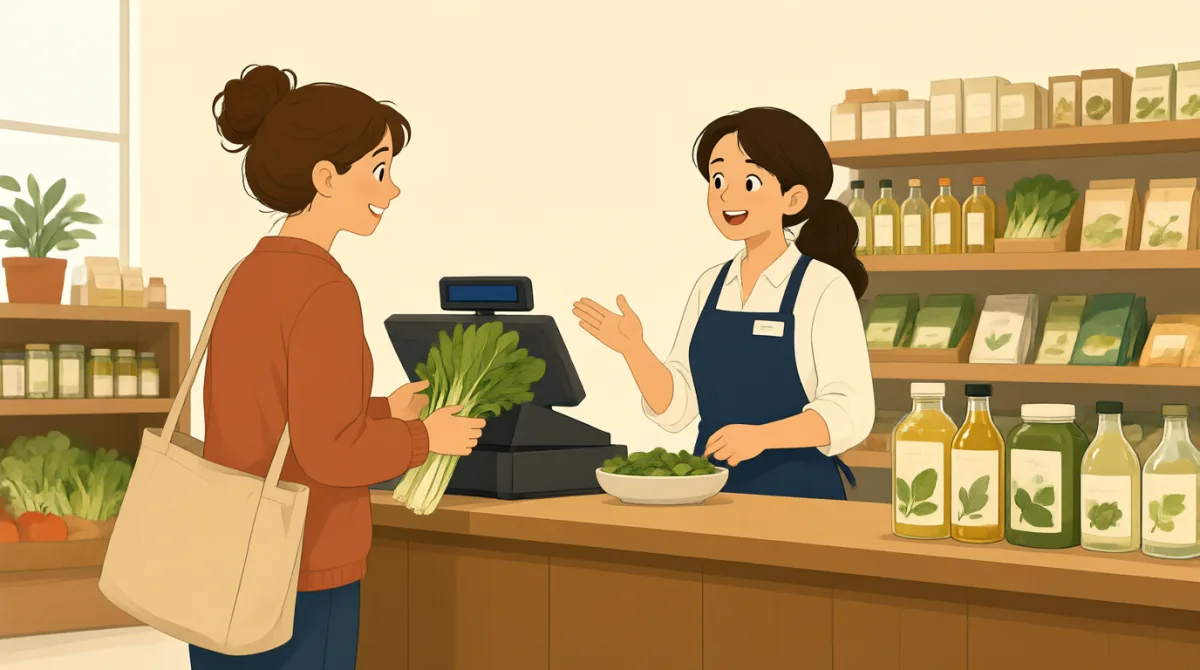

Excuse me, I'm trying to find some fresh, healthy ingredients. Do you have any recommendations for organic produce?
打擾一下,我正在尋找新鮮健康的食材。您有什麼有機農產品的推薦嗎?

Certainly! Our organic section is just around the corner, near the dairy. We get fresh deliveries every morning. What kind of vegetables or fruits are you looking for?
當然!我們的有機區就在拐角處,奶製品附近。我們每天早上都有新鮮的到貨。您在找什麼蔬菜或水果呢?
I'm looking for some leafy greens and perhaps some berries. I'm trying to cut down on processed foods and focus on whole ingredients. How can I ensure they're truly fresh and safe?
我正在找一些綠葉蔬菜和漿果。我正在努力減少加工食品,專注於全天然食材。我怎樣才能確保它們真正新鮮和安全呢?
For leafy greens, check for vibrant color and crispness. Avoid anything wilted or discolored. For berries, make sure they're firm and free of mold. And always wash your produce thoroughly before eating, even organic.
對於綠葉蔬菜,要檢查顏色是否鮮豔和是否有脆感。避免任何枯萎或變色的。對於漿果,確保它們結實並且沒有黴菌。而且,即使是有機的農產品,在食用前也要徹底清洗。
That's great advice, thank you! Also, when I'm reading food labels, what should I be looking out for if I want to avoid unhealthy additives?
這個建議太棒了,謝謝!另外,當我閱讀食品標籤時,如果我想避免不健康的新增劑,我應該注意些什麼呢?
Good question. Generally, look for shorter ingredient lists. Try to avoid things like high-fructose corn syrup, artificial colors, artificial sweeteners, and hydrogenated oils. The fewer ingredients you don't recognize, the better.
問得好。通常,尋找配料表較短的。儘量避免像高果糖玉米糖漿、人工色素、人造甜味劑和氫化油之類的東西。你不認識的配料越少越好。
That makes sense. It can be a bit overwhelming with all the options. I appreciate the guidance.
有道理。面對這麼多選擇,確實有點讓人不知所措。我很感謝您的指導。
No problem at all! Healthy eating is a journey. If you have any more questions about specific products, feel free to ask. Enjoy your shopping!
沒問題!健康飲食是一個旅程。如果你對任何特定產品還有疑問,隨時可以問。祝您購物愉快!
詞彙8
- organic有機的
Organic refers to food grown without synthetic chemicals, pesticides, or fertilizers. It's popular for healthier and more natural options in grocery shopping.
“Organic”指不使用合成化學品、農藥或化肥種植的食物。買菜時,很多人會選擇有機食品,認為它們更健康、更天然。
- produce農產品
Produce means fresh fruits and vegetables sold in stores. Use it when asking about or buying items like apples or lettuce.
“Produce”指商店裡出售的新鮮水果和蔬菜。買蘋果、生菜這類東西,或詢問相關商品時都可以用這個詞。
- leafy greens綠葉蔬菜
Leafy greens are vegetables with edible leaves, such as spinach or kale. They are nutritious and often recommended for healthy diets.
“Leafy greens”指可以食用葉子的蔬菜,比如菠菜或羽衣甘藍。它們營養豐富,常被推薦用於健康飲食。
- berries漿果
Berries are small, juicy fruits like strawberries or blueberries. They are rich in vitamins and good for snacks or smoothies.
“Berries”指草莓、藍莓等小而多汁的水果。它們富含維生素,適合當零食或加入冰沙。
- processed foods加工食品
Processed foods are items changed from their natural form, like canned or packaged snacks. Many people avoid them to eat healthier.
“Processed foods”指經過加工、形態不同於天然狀態的食品,比如罐頭或包裝零食。為了吃得更健康,很多人會盡量少吃這類食品。
- additives新增劑
Additives are substances added to food to enhance flavor, color, or shelf life. Check labels to avoid unhealthy ones like artificial sweeteners.
“Additives”指新增到食物中、用來改善味道、顏色或保質期的物質。看食品標籤時,可以留意並避免不健康的新增劑,比如人工甜味劑。
- vibrant鮮豔的
Vibrant describes bright, lively colors, often used for fresh fruits and vegetables to show they are high quality and not spoiled.
“Vibrant”形容顏色明亮、鮮活,常用來描述新鮮的水果和蔬菜,表示它們品質好、沒有變質。
- crispness爽脆
Crispness means a firm, fresh texture that snaps when broken. It's a sign of good quality in vegetables like lettuce.
“Crispness”指食物質地結實、新鮮,咬斷或掰開時會發出清脆的感覺。生菜等蔬菜爽脆,通常說明品質不錯。
關鍵句8
- 1
Excuse me, I'm trying to find some fresh, healthy ingredients. Do you have any recommendations for organic produce?
打擾一下,我想找一些新鮮健康的食材。您有什麼有機農產品推薦嗎?
This polite question is useful for starting a conversation in a store. It uses 'Excuse me' to get attention and asks for suggestions, showing how to seek advice on healthy shopping. The structure is a statement followed by a yes/no question.
這句禮貌的問話適合在商店裡開啟對話。用“Excuse me”來引起對方注意,再詢問對方的建議,能幫助你表達想了解健康購物選擇的意願。句子先陳述自己的需求,接著提出一個是非疑問句。
- 2
What kind of vegetables or fruits are you looking for?
您在找哪種蔬菜或水果?
This is a helpful follow-up question in service situations. It uses 'what kind of' to specify types, making it practical for clarifying customer needs. It's a simple wh-question for gathering more details.
在服務場合,這句追問很實用。“What kind of”用來詢問具體型別,方便了解顧客的需求。這是一個簡單的特殊疑問句。
- 3
I'm looking for some leafy greens and perhaps some berries.
我想找一些綠葉蔬菜,也許再買些漿果。
This sentence expresses specific shopping needs. 'Perhaps' adds a soft suggestion, useful for polite requests. It's good for intermediate learners to practice listing items with 'and' and 'some' for quantities.
這句話說明了具體的購物需求。“Perhaps”表示“也許”,讓語氣更委婉,適合禮貌地提出想法。中級英語學習者可以練習用“and”連線購物清單,並用“some”表示數量不具體的物品。
- 4
How can I ensure they're truly fresh and safe?
我怎樣才能確保它們真的新鮮、安全呢?
This asks for advice on safety, common in food contexts. 'Ensure' means to make sure, and 'truly' emphasizes genuineness. Use it when seeking tips on quality checks; it's a how-question with a subject-verb inversion.
這句話是在詢問食品安全方面的建議。“Ensure”意思是“確保”,“truly”用來強調確實如此。想了解如何檢查食品品質時可以這樣問;這是一個以“How”開頭的疑問句。
- 5
For leafy greens, check for vibrant color and crispness.
挑選綠葉蔬菜時,要檢查顏色是否鮮豔、口感是否爽脆。
This gives practical advice with imperatives like 'check for.' It's useful for explaining how to select food. The structure uses 'for [item], [action]' to organize tips clearly.
這句話用“check for”這樣的祈使表達給出實用建議,適合說明如何挑選食物。“For [item], [action]”這種結構能讓建議條理清晰:先說要檢查的物品,再說明要做什麼。
- 6
Always wash your produce thoroughly before eating, even organic.
吃之前一定要把農產品徹底洗乾淨,即使是有機的也一樣。
This is a safety rule using 'always' for emphasis and 'even' for exceptions. It's essential for nutrition talks; practice adverb placement and conjunctions to stress importance.
這是一條食品安全建議,用“always”來強調每次都要這麼做,用“even”指出連有機食品也不例外。談論營養和食品安全時,這類提醒很重要。可以留意副詞的位置,以及如何用連線詞突出重點。
- 7
Look for shorter ingredient lists. Try to avoid things like high-fructose corn syrup.
儘量選擇配料表較短的產品。試著避免高果糖玉米糖漿之類的東西。
These imperatives offer label-reading tips. 'Look for' and 'try to avoid' are common in advice-giving. Useful for discussing healthy choices; note the imperative form and examples with 'like' for listing.
這兩句祈使句提供了閱讀食品標籤的建議。“Look for”和“try to avoid”常用於給出建議。討論健康飲食選擇時很實用;留意祈使句的形式,以及如何用“like”舉例。
- 8
The fewer ingredients you don't recognize, the better.
你不認識的配料越少越好。
This proverb-like expression uses a comparative structure 'the fewer... the better' to advise on simplicity. It's practical for food labels and teaches comparative patterns for giving opinions.
這個類似格言的表達用“the fewer... the better”這種比較結構來建議選擇簡單的食品。它很適合用來討論食品標籤,也能幫助你學會用比較結構表達看法。