Values and Character Formation
การปลูกฝังค่านิยมและหล่อหลอมลักษณะนิสัย
Friends are exploring how to instill certain values (e.g., honesty, empathy, independence) in their children. They share their own upbringing experiences and debate the most effective ways to model and teach these principles.
เพื่อน ๆ คุยกันถึงวิธีปลูกฝังค่านิยมบางอย่างให้ลูก เช่น ความซื่อสัตย์ ความเห็นอกเห็นใจ และการพึ่งพาตัวเอง พวกเขาเล่าประสบการณ์การเลี้ยงดูของตัวเอง พร้อมแลกเปลี่ยนความเห็นว่าวิธีไหนได้ผลที่สุดในการเป็นแบบอย่างและสอนหลักการเหล่านี้
บทสนทนา10
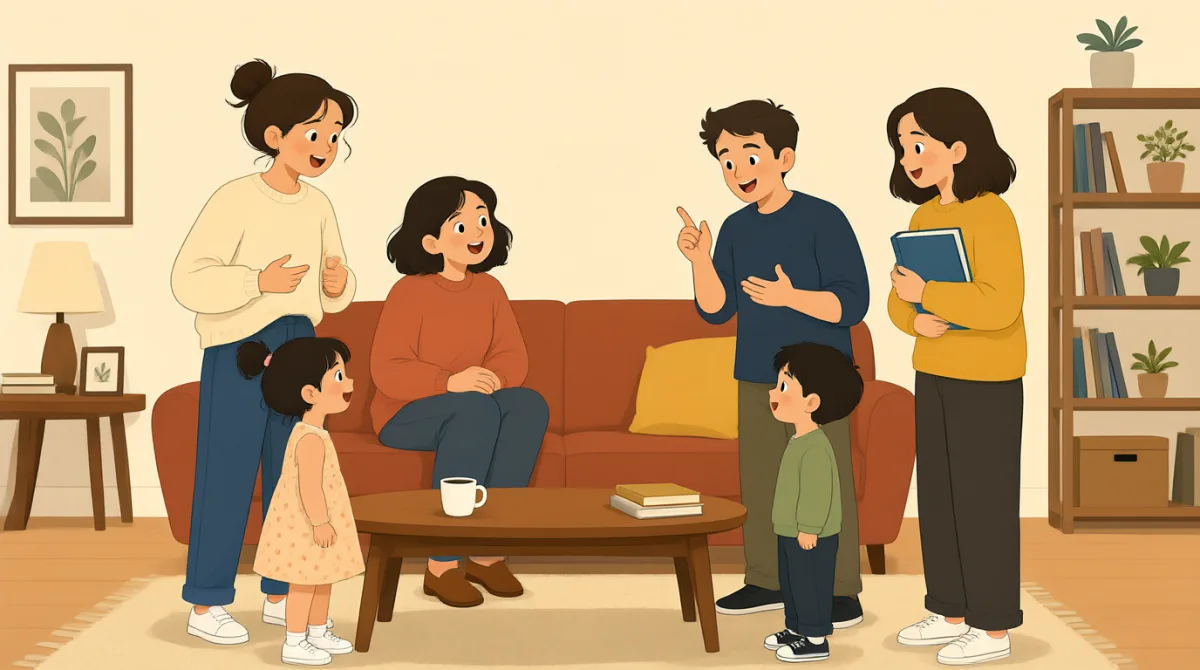

Hey Jack, I've been thinking a lot about how we instill certain values in our kids, like honesty and empathy. It feels like such a core part of parenting.
เฮ้ แจ็ก ช่วงนี้ฉันคิดเรื่องวิธีปลูกฝังค่านิยมบางอย่างให้ลูกบ่อยมากเลย อย่างความซื่อสัตย์กับความเห็นอกเห็นใจ รู้สึกว่าเรื่องนี้เป็นหัวใจสำคัญของการเลี้ยงลูกเลยนะ

Me too, Mia. Especially with all the external influences they encounter. I remember my parents always emphasized integrity, which was mainly through leading by example.
ฉันก็เหมือนกัน มีอา ยิ่งพวกเขาต้องเจอกับอิทธิพลจากรอบตัวมากมายด้วย ฉันจำได้ว่าพ่อแม่เน้นเรื่องความซื่อตรงเสมอ ซึ่งส่วนใหญ่ก็สอนด้วยการทำให้ดูเป็นตัวอย่าง
Right, modeling behavior is key. But what about when they're really young? How do you explicitly teach something like empathy beyond just saying, 'Be kind'?
ใช่ การทำตัวเป็นแบบอย่างสำคัญมาก แต่ถ้าพวกเขายังเล็กมากล่ะ เราจะสอนเรื่องอย่างความเห็นอกเห็นใจให้ชัดเจนได้ยังไง นอกจากแค่บอกว่า “ใจดีหน่อย”
That's the tricky part. For empathy, I try to encourage perspective-taking. Like, if a sibling is upset, we ask, 'How do you think they're feeling right now?' and talk about it.
นั่นแหละที่ยาก สำหรับเรื่องความเห็นอกเห็นใจ ฉันพยายามชวนให้ลูกลองมองจากมุมของคนอื่น อย่างถ้าพี่น้องคนหนึ่งกำลังเสียใจ เราก็ถามว่า “คิดว่าตอนนี้เขารู้สึกยังไง” แล้วคุยกันต่อ
Oh, that's a good one. My parents were very big on independence, which I'm grateful for, but sometimes I wonder if I should be more hands-on with teaching specific values.
อ๋อ ดีเลยนะ พ่อแม่ฉันให้ความสำคัญกับการพึ่งพาตัวเองมาก ซึ่งฉันก็ขอบคุณพวกเขานะ แต่บางทีก็สงสัยว่าฉันควรลงมือสอนค่านิยมบางอย่างให้ลูกมากกว่านี้ไหม
It's a tough balance. My dad believed in letting us figure things out, which fostered independence, but there were times I wished for more direct guidance on ethical dilemmas.
มันเป็นเรื่องที่ต้องหาจุดสมดุลยาก พ่อฉันเชื่อว่าควรปล่อยให้พวกเราหาทางแก้ปัญหาเอง ซึ่งช่วยให้เราพึ่งพาตัวเองได้ แต่บางครั้งฉันก็อยากให้มีคนแนะนำตรง ๆ มากกว่านี้เวลาต้องตัดสินใจเรื่องถูกผิด
Exactly! And how do we ensure they truly internalize these values, not just parrot them back to us? Especially with something like honesty, where the consequences can be immediate for them.
จริงเลย! แล้วเราจะมั่นใจได้ยังไงว่าพวกเขาซึมซับค่านิยมเหล่านี้จริง ๆ ไม่ใช่แค่พูดตามเรา โดยเฉพาะเรื่องความซื่อสัตย์ ที่พวกเขาอาจต้องรับผลที่ตามมาทันที
I think consistency is vital. And talking through scenarios, like what happens if you're not honest, and connecting it to how it impacts others. It's an ongoing conversation, really.
ฉันว่าความสม่ำเสมอสำคัญมาก แล้วก็ลองพูดคุยถึงสถานการณ์ต่าง ๆ เช่น ถ้าเราไม่ซื่อสัตย์จะเกิดอะไรขึ้น และมันส่งผลต่อคนอื่นยังไง จริง ๆ แล้วเรื่องนี้ต้องคุยกันไปเรื่อย ๆ
True. It's not a one-time lesson. Maybe it's less about strict teaching and more about creating a consistent environment where these values are seen, discussed, and lived.
จริงนะ มันไม่ใช่บทเรียนที่สอนครั้งเดียวจบ บางทีมันอาจไม่ใช่เรื่องการสอนแบบเข้มงวด แต่เป็นการสร้างสภาพแวดล้อมที่สม่ำเสมอ ให้ลูกได้เห็น พูดคุย และใช้ชีวิตตามค่านิยมเหล่านี้
Couldn't agree more. It's a continuous process of modeling, reflecting, and guiding. We're all just doing our best, trying to give them a solid foundation.
เห็นด้วยที่สุดเลย มันเป็นกระบวนการต่อเนื่อง ทั้งการทำตัวเป็นแบบอย่าง การทบทวน และการชี้แนะ พวกเราทุกคนก็แค่พยายามทำให้ดีที่สุด เพื่อให้ลูกมีพื้นฐานที่มั่นคง
คำศัพท์8
- instillปลูกฝัง
To gradually put an idea or value into someone's mind, especially in children. Use it when talking about teaching important life lessons, like 'Parents instill good habits in their kids.'
หมายถึงค่อย ๆ ทำให้ความคิดหรือค่านิยมซึมซับเข้าไปในใจใครสักคน โดยเฉพาะในเด็ก ใช้พูดถึงการสอนบทเรียนสำคัญในชีวิต เช่น 'Parents instill good habits in their kids.' (พ่อแม่ปลูกฝังนิสัยที่ดีให้ลูก)
- empathyความเห็นอกเห็นใจ
The ability to understand and share the feelings of others. It's a key value in parenting; say 'Teaching empathy helps children be kinder to friends.'
ความสามารถในการเข้าใจและรู้สึกร่วมไปกับความรู้สึกของคนอื่น เป็นค่านิยมสำคัญในการเลี้ยงลูก เช่น 'Teaching empathy helps children be kinder to friends.' (การสอนให้เห็นอกเห็นใจช่วยให้เด็กมีน้ำใจกับเพื่อนมากขึ้น)
- integrityความซื่อตรง
Honesty and strong moral principles. Often used in discussions about character; for example, 'She has great integrity because she always tells the truth.'
ความซื่อสัตย์และการยึดมั่นในหลักศีลธรรม มักใช้พูดถึงลักษณะนิสัย เช่น 'She has great integrity because she always tells the truth.' (เธอเป็นคนซื่อตรงมาก เพราะพูดความจริงเสมอ)
- modelingการทำตัวเป็นแบบอย่าง
Showing behavior for others to copy, especially parents with children. In parenting talks, 'Modeling good behavior is more effective than just telling kids what to do.'
การแสดงพฤติกรรมให้คนอื่นทำตาม โดยเฉพาะพ่อแม่ที่เป็นแบบอย่างให้ลูก ในบริบทการเลี้ยงลูก เช่น 'Modeling good behavior is more effective than just telling kids what to do.' (การทำตัวเป็นแบบอย่างที่ดีได้ผลกว่าการบอกลูกเฉย ๆ ว่าต้องทำอะไร)
- perspective-takingการลองมองจากมุมของคนอื่น
Trying to see things from another person's point of view. Useful for building empathy; 'Encourage perspective-taking by asking how others feel.'
การพยายามมองสถานการณ์จากมุมมองของคนอื่น มีประโยชน์ต่อการสร้างความเห็นอกเห็นใจ เช่น 'Encourage perspective-taking by asking how others feel.' (ชวนให้ลูกลองมองจากมุมของคนอื่นด้วยการถามว่าคนอื่นรู้สึกอย่างไร)
- internalizeซึมซับ
To make an idea or value part of your own beliefs, not just remember it. In education, 'Children need to internalize values like honesty to live by them.'
หมายถึงทำให้ความคิดหรือค่านิยมกลายเป็นส่วนหนึ่งของความเชื่อของตัวเอง ไม่ใช่แค่จดจำไว้ ในด้านการศึกษา เช่น 'Children need to internalize values like honesty to live by them.' (เด็กต้องซึมซับค่านิยมอย่างความซื่อสัตย์ จึงจะนำไปใช้ในชีวิตได้)
- consistencyความสม่ำเสมอ
Being steady and reliable in actions or rules. Important in parenting; 'Consistency in discipline helps kids feel secure.'
การกระทำหรือกฎเกณฑ์ที่คงเส้นคงวาและเชื่อถือได้ เป็นสิ่งสำคัญในการเลี้ยงลูก เช่น 'Consistency in discipline helps kids feel secure.' (การอบรมสั่งสอนอย่างสม่ำเสมอช่วยให้ลูกรู้สึกมั่นคง)
- vitalสำคัญอย่างยิ่ง
Extremely important or necessary. Use in serious discussions; 'Consistency is vital for teaching values effectively.'
หมายถึงสำคัญหรือจำเป็นอย่างยิ่ง ใช้ในการพูดคุยเรื่องจริงจัง เช่น 'Consistency is vital for teaching values effectively.' (ความสม่ำเสมอสำคัญอย่างยิ่งต่อการสอนค่านิยมให้ได้ผล)
ประโยคสำคัญ8
- 1
I've been thinking a lot about how we instill certain values in our kids.
ช่วงนี้ฉันคิดเรื่องวิธีปลูกฝังค่านิยมบางอย่างให้ลูกบ่อยมากเลย
This sentence uses present perfect continuous ('I've been thinking') to show ongoing thoughts. It's useful for starting conversations about personal reflections, especially in parenting or life topics. Practice it to express what you've been considering lately.
ประโยคนี้ใช้ present perfect continuous ('I've been thinking') เพื่อบอกว่าความคิดนั้นดำเนินต่อเนื่องมาจนถึงตอนนี้ ใช้เริ่มคุยเกี่ยวกับเรื่องที่ตัวเองกำลังทบทวน โดยเฉพาะเรื่องการเลี้ยงลูกหรือชีวิต ลองใช้เพื่อเล่าว่าช่วงนี้กำลังคิดเรื่องอะไรอยู่
- 2
Leading by example.
ทำให้ดูเป็นตัวอย่าง
A common phrase meaning to show behavior through actions rather than words. It's an idiom for parenting advice. Use it when discussing how to teach values, like 'Parents should lead by example to build trust.'
วลีที่ใช้กันทั่วไป หมายถึงแสดงให้เห็นด้วยการกระทำ ไม่ใช่แค่คำพูด เป็นสำนวนที่มักใช้พูดถึงคำแนะนำในการเลี้ยงลูก ใช้พูดถึงวิธีสอนค่านิยม เช่น 'Parents should lead by example to build trust.' (พ่อแม่ควรทำตัวเป็นแบบอย่างเพื่อสร้างความไว้วางใจ)
- 3
That's the tricky part.
นั่นแหละที่ยาก
This expresses that something is difficult or challenging. 'Tricky' is informal for complicated situations. Great for casual talks about problems; it shows agreement and adds to the discussion naturally.
ใช้บอกว่าบางอย่างยากหรือท้าทาย 'Tricky' เป็นคำไม่เป็นทางการที่ใช้พูดถึงสถานการณ์ซับซ้อน เหมาะกับการคุยกันสบาย ๆ เกี่ยวกับปัญหา โดยแสดงว่าเห็นด้วยและช่วยต่อบทสนทนาได้อย่างเป็นธรรมชาติ
- 4
How do you think they're feeling right now?
คิดว่าตอนนี้พวกเขารู้สึกยังไง
A question using 'how do you think' to encourage empathy and perspective-taking. The present continuous ('they're feeling') describes current emotions. Use this in conversations to help others understand feelings, especially with children.
คำถามนี้ใช้ 'how do you think' เพื่อชวนให้เห็นอกเห็นใจและลองมองจากมุมของคนอื่น ส่วน present continuous ('they're feeling') ใช้พูดถึงความรู้สึกในขณะนี้ ใช้ถามเพื่อช่วยให้คนอื่นเข้าใจความรู้สึก โดยเฉพาะเวลาคุยกับเด็ก
- 5
It's a tough balance.
มันเป็นเรื่องที่ต้องหาจุดสมดุลยาก
'Tough balance' is an idiom for finding the right middle ground between extremes. Useful in debates about choices, like work-life or parenting styles. It acknowledges difficulty while keeping the talk positive.
'Tough balance' เป็นสำนวนที่หมายถึงการหาจุดกึ่งกลางที่เหมาะสมระหว่างสองทางที่สุดโต่ง ใช้ได้ดีเวลาแลกเปลี่ยนความเห็นเกี่ยวกับทางเลือก เช่น การแบ่งเวลางานกับชีวิตหรือวิธีเลี้ยงลูก ประโยคนี้ยอมรับว่ามันยาก แต่ยังคงบรรยากาศการพูดคุยในแง่ดี
- 6
We need to ensure they truly internalize these values.
เราต้องมั่นใจว่าพวกเขาซึมซับค่านิยมเหล่านี้จริง ๆ
Uses 'ensure' (to make certain) and 'truly' for emphasis. The structure shows purpose with 'to' infinitive. Practical for discussing deep learning; say it when talking about making sure ideas stick, not just surface knowledge.
ประโยคนี้ใช้ 'ensure' (ทำให้มั่นใจ) และ 'truly' เพื่อเน้นความหมาย โครงสร้างนี้บอกจุดประสงค์ด้วย infinitive ที่มี 'to' ใช้พูดถึงการเรียนรู้ให้ลึกซึ้ง เช่น เมื่อต้องการให้แน่ใจว่าแนวคิดฝังแน่น ไม่ใช่แค่รู้เพียงผิวเผิน
- 7
Consistency is vital.
ความสม่ำเสมอสำคัญมาก
A simple subject-verb-complement sentence stating importance. 'Vital' means essential. Use this short form to emphasize key points in advice-giving, like in parenting or habit-building talks.
ประโยคสั้น ๆ ที่มีประธาน กริยา และส่วนเติมเต็ม เพื่อบอกถึงความสำคัญ 'Vital' หมายถึงจำเป็นอย่างยิ่ง ใช้รูปประโยคสั้น ๆ นี้เน้นประเด็นสำคัญในการให้คำแนะนำ เช่น เรื่องการเลี้ยงลูกหรือการสร้างนิสัย
- 8
Couldn't agree more.
เห็นด้วยที่สุดเลย
An idiomatic way to strongly agree with someone. It's informal and polite for conversations. Perfect for responding in discussions to show support, making dialogues smoother and friendlier.
สำนวนที่ใช้แสดงว่าเห็นด้วยกับอีกฝ่ายอย่างมาก เป็นภาษาพูดที่ไม่เป็นทางการแต่สุภาพ เหมาะสำหรับตอบรับในบทสนทนาเพื่อแสดงการสนับสนุน และช่วยให้การพูดคุยลื่นไหลเป็นกันเอง