Gentle Approach & Opening the Conversation
नरमी से बात शुरू करना
The person who noticed the change decides to gently approach the other, asking a non-confrontational question to open the conversation and create a safe space for discussion.
बदलाव महसूस करने वाला व्यक्ति दूसरे से प्यार से बात करने का फैसला करता है। वह बातचीत शुरू करने और खुलकर बात करने के लिए सहज माहौल बनाने हेतु बिना आरोप लगाए एक सवाल पूछता है।
संवाद10
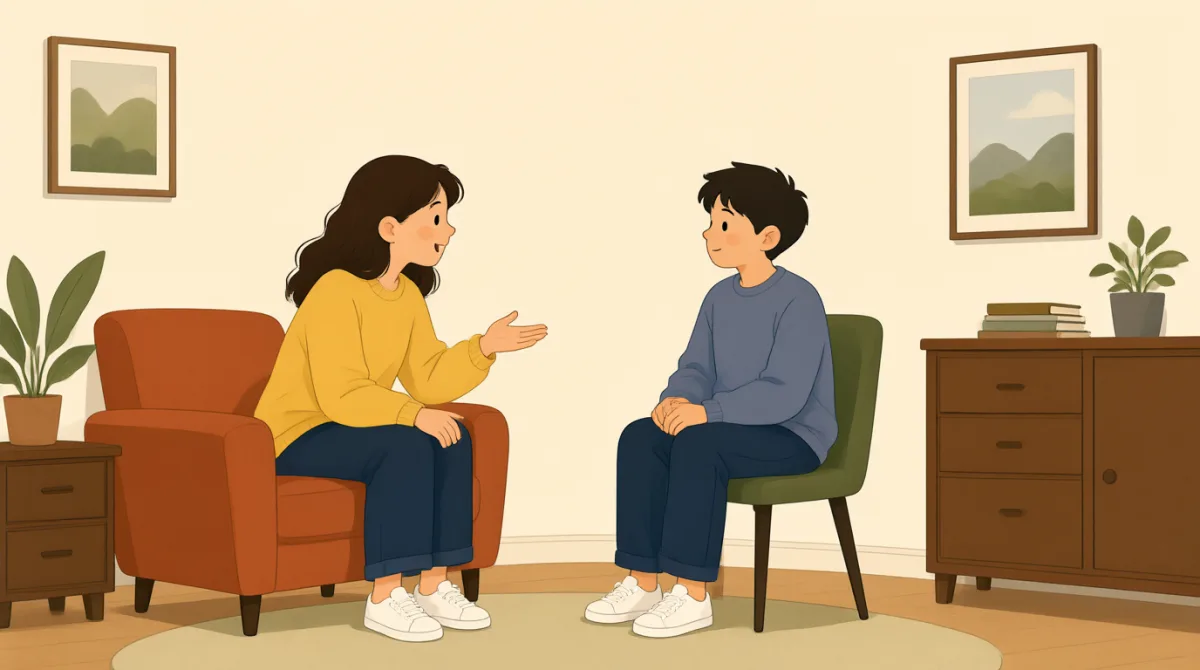

Hey Jack, do you have a moment? I just wanted to chat about something.
अरे जैक, क्या तुम्हारे पास थोड़ा समय है? मुझे बस एक बात पर तुमसे बात करनी थी।

Sure, Mia. What's up? Everything okay?
हाँ, मिया। क्या हुआ? सब ठीक है?
Yeah, mostly. I just felt like there's been a little bit of distance between us lately, and I was wondering if everything is alright on your end?
हाँ, ज़्यादातर तो ठीक है। बस मुझे लगा कि आजकल हमारे बीच थोड़ी दूरी आ गई है। मैं सोच रही थी कि तुम्हारी तरफ़ सब ठीक है?
Distance? Hmm, I wasn't really aware of it. Can you give me an example of what you mean?
दूरी? हूँ, मुझे तो इसका एहसास नहीं हुआ। तुम किस बात की ओर इशारा कर रही हो, कोई उदाहरण दे सकती हो?
Well, for instance, a couple of times this week, I felt like you were a bit quiet when we talked, and I wasn't sure if something I did might have upset you.
जैसे, इस हफ़्ते दो-एक बार जब हम बात कर रहे थे, तो मुझे लगा कि तुम कुछ चुप-चुप थे। मुझे समझ नहीं आया कि कहीं मेरी किसी बात से तुम्हें बुरा तो नहीं लगा।
Oh, I see. No, Mia, it's definitely not something you did. I'm sorry if I came across that way.
अच्छा, समझा। नहीं, मिया, तुम्हारी किसी बात की वजह से ऐसा बिल्कुल नहीं है। अगर मैंने ऐसा महसूस कराया हो तो माफ़ करना।
No worries! I just wanted to make sure everything was okay between us. Sometimes I overthink things, you know?
कोई बात नहीं! मैं बस यह पक्का करना चाहती थी कि हमारे बीच सब ठीक है। कभी-कभी मैं बातों को ज़रूरत से ज़्यादा सोचने लगती हूँ, पता है न?
I get that. To be honest, I've had a lot on my mind with work deadlines, and I probably haven't been as present as I usually am. My apologies.
मैं समझता हूँ। सच कहूँ तो काम की डेडलाइन के कारण मेरे दिमाग़ में बहुत कुछ चल रहा था, और शायद मैं पहले की तरह तुम्हारी बातों पर पूरा ध्यान नहीं दे पा रहा था। माफ़ करना।
That makes perfect sense! Thanks for explaining. I'm glad it's nothing personal, and I appreciate you clarifying.
हाँ, यह बात समझ में आती है! बताने के लिए शुक्रिया। अच्छा लगा कि यह कोई निजी बात नहीं थी, और बात साफ़ करने के लिए मैं तुम्हारी आभारी हूँ।
Anytime, Mia. Thanks for bringing it up in such a thoughtful way. I appreciate you checking in.
कभी भी, मिया। इतनी समझदारी से बात उठाने के लिए शुक्रिया। मेरा हाल पूछने के लिए अच्छा लगा।
शब्दावली8
- momentथोड़ा समय
A short period of time, often used to ask if someone is available now, like 'Do you have a moment?' to politely start a conversation.
थोड़ी देर के लिए। अक्सर यह पूछने के लिए इस्तेमाल होता है कि क्या कोई अभी बात करने के लिए उपलब्ध है, जैसे 'Do you have a moment?' (क्या तुम्हारे पास थोड़ा समय है?)—बात शुरू करने का यह एक विनम्र तरीका है।
- chatबातचीत करना
An informal talk or conversation, as in 'I wanted to chat about something' to suggest a casual discussion without pressure.
अनौपचारिक बातचीत करना। 'I wanted to chat about something' (मैं एक बात पर बातचीत करना चाहता था) कहने से बिना दबाव डाले, सहजता से किसी बात पर चर्चा करने का भाव आता है।
- distanceदूरी
Here, emotional or relational distance meaning feeling less close; useful in relationships to describe when things feel off, like 'a bit of distance between us.'
यहाँ इसका मतलब भावनात्मक या रिश्ते में आई दूरी है—जब पहले जैसी नज़दीकी महसूस न हो। रिश्ते में कुछ ठीक न लगने की बात कहने के लिए यह उपयोगी है, जैसे 'a bit of distance between us' (हमारे बीच थोड़ी दूरी)।
- wonderingसोच रही थी
Thinking curiously about something, often used to express mild concern, as in 'I was wondering if...' to ask gently without accusing.
किसी बात के बारे में उत्सुकता से सोचने के लिए। हल्की चिंता जताने के लिए भी इसका इस्तेमाल होता है। 'I was wondering if...' (मैं सोच रही थी कि क्या...) बिना आरोप लगाए, नरमी से सवाल पूछने का तरीका है।
- upsetबुरा लगना
To make someone feel unhappy or angry; in this context, 'upset you' means to have caused offense, common in apologies or checking feelings.
किसी को दुखी या नाराज़ कर देना। इस संदर्भ में 'upset you' का मतलब है किसी की भावनाओं को ठेस पहुँचाना। माफ़ी माँगते या किसी का हाल पूछते समय यह आम तौर पर इस्तेमाल होता है।
- overthinkज़रूरत से ज़्यादा सोचना
To think too much about something, often leading to worry; 'Sometimes I overthink things' is a relatable way to explain personal anxiety in conversations.
किसी बात के बारे में बहुत ज़्यादा सोचना, जिससे अक्सर चिंता होने लगती है। 'Sometimes I overthink things' (कभी-कभी मैं बातों को ज़रूरत से ज़्यादा सोचने लगती हूँ) बातचीत में अपनी चिंता बताने का सहज और अपनापन भरा तरीका है।
- presentपूरा ध्यान देना
Being fully attentive and engaged; 'haven't been as present' means not focusing fully, useful for explaining distractions in relationships.
पूरी तरह ध्यान देकर बातचीत में शामिल होना। 'haven't been as present' का मतलब है कि व्यक्ति पूरी तरह ध्यान नहीं दे पा रहा था। रिश्तों में किसी चीज़ से ध्यान भटकने की वजह बताने के लिए यह उपयोगी है।
- apologiesमाफ़ी
A formal way to say sorry; 'My apologies' is polite and sincere, often used in professional or close personal settings to express regret.
माफ़ी माँगने का एक औपचारिक तरीका। 'My apologies' (मुझे माफ़ करना) विनम्रता और सच्चे पछतावे के साथ कहा जाता है। इसका इस्तेमाल कामकाज या करीबी रिश्तों में किया जा सकता है।
मुख्य वाक्य8
- 1
Do you have a moment? I just wanted to chat about something.
क्या तुम्हारे पास थोड़ा समय है? मुझे बस एक बात पर तुमसे बात करनी थी।
This is a polite opener to start a sensitive talk; 'Do you have a moment?' checks availability gently, and 'I just wanted to' softens the request. Use it to avoid surprising someone in conversations about feelings.
यह किसी संवेदनशील बातचीत को शुरू करने का विनम्र तरीका है। 'Do you have a moment?' (क्या तुम्हारे पास थोड़ा समय है?) नरमी से पूछता है कि सामने वाला बात करने के लिए उपलब्ध है या नहीं। 'I just wanted to' (मैं बस... चाहता था/चाहती थी) अनुरोध को कम सीधा और नरम बनाता है। भावनाओं पर बात करते समय अचानक किसी को चौंकाने से बचने के लिए इसका इस्तेमाल करें।
- 2
What's up? Everything okay?
क्या हुआ? सब ठीक है?
A casual way to ask what's wrong; 'What's up?' is informal for 'What's happening?', and adding 'Everything okay?' shows concern. Great for responding when a friend wants to talk, using simple questions to invite sharing.
यह पूछने का अनौपचारिक तरीका है कि क्या बात है। 'What's up?' 'What's happening?' (क्या हो रहा है?) का अनौपचारिक रूप है, और 'Everything okay?' (सब ठीक है?) जोड़ने से चिंता ज़ाहिर होती है। जब कोई दोस्त बात करना चाहे, तो उसे अपनी बात बताने का सहज मौका देने के लिए ये छोटे सवाल अच्छे हैं।
- 3
I just felt like there's been a little bit of distance between us lately.
बस मुझे लगा कि आजकल हमारे बीच थोड़ी दूरी आ गई है।
Uses 'I' statement to express feelings without blame; 'felt like' shares perception softly, and 'a little bit of' minimizes the issue. Useful in resolving misunderstandings to keep things non-confrontational.
यह बिना दोष दिए अपनी भावना बताने के लिए 'I' वाला कथन इस्तेमाल करता है। 'felt like' (मुझे लगा कि) अपनी धारणा को नरमी से रखता है, और 'a little bit of' (थोड़ी-सी) समस्या को छोटा करके पेश करता है। गलतफ़हमी सुलझाते समय बात को आरोप-प्रत्यारोप से बचाने के लिए यह उपयोगी है।
- 4
Can you give me an example of what you mean?
तुम किस बात की ओर इशारा कर रही हो, कोई उदाहरण दे सकती हो?
This promotes active listening by asking for clarification; it's open-ended and neutral. Use it when unsure about someone's concern to understand better without defensiveness.
यह बात को और साफ़ करने के लिए पूछकर ध्यान से सुनने का तरीका दिखाता है। सवाल खुला और निष्पक्ष है। जब किसी की चिंता समझ न आए, तो बिना बचाव की मुद्रा अपनाए उसकी बात बेहतर समझने के लिए इसका इस्तेमाल करें।
- 5
I'm sorry if I came across that way.
अगर मैंने ऐसा महसूस कराया हो तो माफ़ करना।
An apology for unintended impression; 'came across' means how something seemed, and 'if' makes it conditional. Ideal for diffusing tension by acknowledging possible miscommunication.
यह उस गलतफ़हमी के लिए माफ़ी है जो अनजाने में पैदा हुई हो। 'came across' का मतलब है कि किसी की बात या व्यवहार दूसरों को कैसा लगा, और 'if' बात को एक संभावना के रूप में रखता है। गलतफ़हमी को स्वीकार करके तनाव कम करने के लिए यह वाक्य अच्छा है।
- 6
Sometimes I overthink things, you know?
कभी-कभी मैं बातों को ज़रूरत से ज़्यादा सोचने लगती हूँ, पता है न?
Admits personal tendency casually; 'you know?' builds rapport like shared understanding. Use this to lighten the mood and show vulnerability in emotional talks.
इसमें अपनी आदत को अनौपचारिक ढंग से स्वीकार किया गया है। 'you know?' (पता है न?) एक-दूसरे को समझने का एहसास देकर अपनापन बढ़ाता है। भावनाओं पर बातचीत में माहौल हल्का करने और अपनी कमज़ोरी खुलकर बताने के लिए इसका इस्तेमाल करें।
- 7
To be honest, I've had a lot on my mind with work deadlines.
सच कहूँ तो काम की डेडलाइन के कारण मेरे दिमाग़ में बहुत कुछ चल रहा था।
'To be honest' signals sincerity; explains behavior without excuses. This pattern is useful for sharing reasons behind actions, helping resolve issues by providing context.
'To be honest' (सच कहूँ तो) ईमानदारी का संकेत देता है। इसके बाद अपने व्यवहार की वजह बताई गई है, बिना बहाना बनाए। अपने कामों के पीछे का संदर्भ बताने के लिए यह ढाँचा उपयोगी है और इससे समस्या सुलझाने में मदद मिलती है।
- 8
Thanks for bringing it up in such a thoughtful way.
इतनी समझदारी से बात उठाने के लिए शुक्रिया।
Expresses gratitude for gentle approach; 'bringing it up' means raising the topic, and 'thoughtful' praises sensitivity. Use to end positively, reinforcing good communication.
यह बात को नरमी से उठाने के लिए आभार जताता है। 'bringing it up' का मतलब है किसी विषय की बात छेड़ना, और 'thoughtful' सामने वाले की संवेदनशीलता की तारीफ़ करता है। बातचीत को अच्छे अंदाज़ में खत्म करने और बेहतर संवाद को बढ़ावा देने के लिए इसका इस्तेमाल करें।