Food and Dining Experiences
खाने-पीने और भोजन के अनुभव
Individuals discuss typical dishes, dining habits, table manners, and the social significance of food in their respective cultures.
लोग अपनी-अपनी संस्कृतियों के पारंपरिक व्यंजनों, खाने-पीने की आदतों, मेज़ पर शिष्टाचार और भोजन के सामाजिक महत्व पर चर्चा करते हैं।
संवाद10
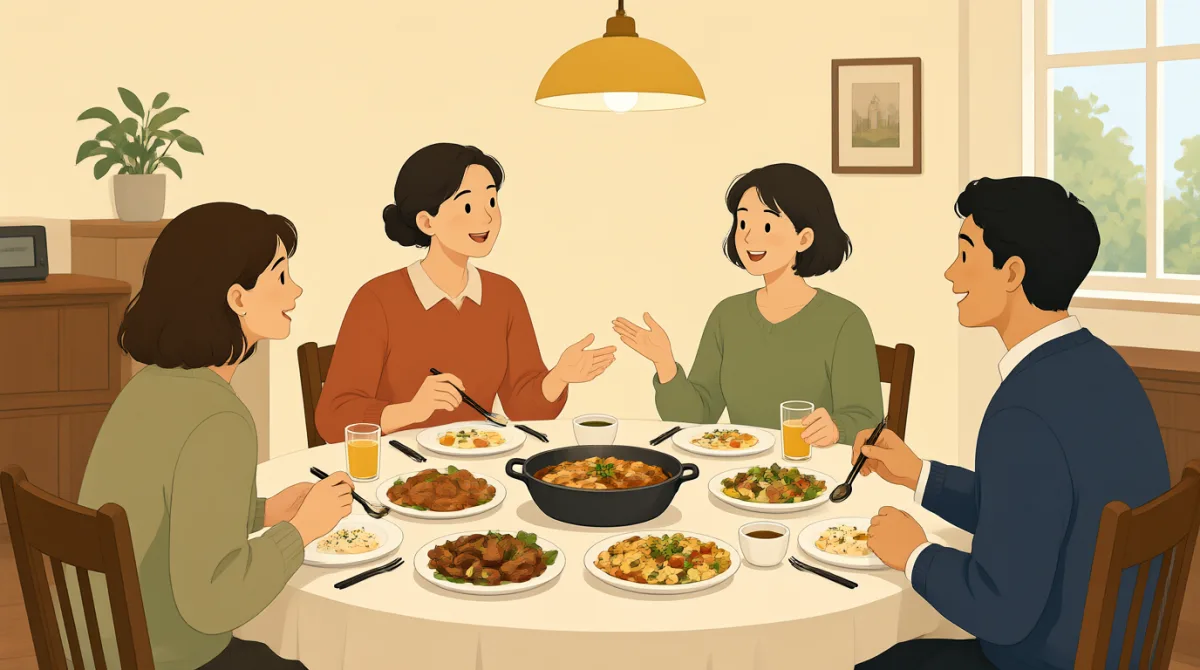

So, I'm really curious about dining in China. What are some typical dishes that really represent the culture?
चीन में खाने-पीने के तौर-तरीकों को लेकर मैं सचमुच बहुत उत्सुक हूँ। वहाँ के कौन-से पारंपरिक व्यंजन उस संस्कृति की खास पहचान हैं?

Oh, that's a great question! For typical dishes, Beijing Roast Duck definitely comes to mind for its historical significance and unique preparation. And if you're looking for something more communal, hot pot is a must-try. It's not just food; it's a social event.
ओह, बहुत अच्छा सवाल है! पारंपरिक व्यंजनों की बात करें, तो बीजिंग रोस्ट डक का नाम ज़रूर आता है—इसका ऐतिहासिक महत्व और इसे बनाने का अनोखा तरीका इसे खास बनाता है। और अगर तुम सबके साथ मिल-बाँटकर खाने के लिए कुछ ढूँढ़ रहे हो, तो हॉट पॉट ज़रूर चखना। यह सिर्फ़ खाना नहीं, बल्कि साथ मिलकर मनाया जाने वाला एक सामाजिक अनुभव है।
That's fascinating! So, hot pot sounds like it's all about sharing. How does that compare to dining habits in the US, where often everyone gets their own plate?
यह तो बहुत दिलचस्प है! तो हॉट पॉट में सब मिल-बाँटकर खाते हैं। यह अमेरिका में खाने के तौर-तरीकों से कितना अलग है, जहाँ अक्सर हर किसी की अपनी अलग प्लेट होती है?
Exactly! Sharing is a big part of Chinese dining. We often order multiple dishes and put them in the center of the table for everyone to share. It encourages interaction and conversation. In contrast, individual plates are more common in Western cultures, leading to a different dynamic.
बिल्कुल! चीनी खान-पान में मिल-बाँटकर खाना बहुत अहम है। हम अक्सर कई तरह के पकवान मँगाते हैं और सबके खाने के लिए उन्हें मेज़ के बीच में रख देते हैं। इससे बातचीत और आपसी मेल-जोल बढ़ता है। इसके उलट, पश्चिमी संस्कृतियों में हर व्यक्ति की अलग प्लेट होना ज़्यादा आम है, जिससे खाने का माहौल अलग हो जाता है।
I can see that. And what about table manners? Are there any unspoken rules or surprising etiquettes I should be aware of?
समझ सकता हूँ। और मेज़ पर शिष्टाचार के बारे में क्या? क्या कुछ ऐसे अलिखित नियम या शिष्टाचार हैं जिनके बारे में मुझे पता होना चाहिए?
Definitely. While chopsticks might be the most obvious difference, one key thing is not to stick your chopsticks upright in your rice bowl; it resembles incense at a funeral. Also, it's polite to offer food to elders or guests first, and it's common to tap the table lightly with two fingers as a thank you when someone pours tea for you.
बिल्कुल। चॉपस्टिक का इस्तेमाल शायद सबसे साफ़ दिखने वाला फ़र्क है, लेकिन एक ज़रूरी बात यह है कि चॉपस्टिक को चावल के कटोरे में सीधा खड़ा करके न रखें; यह अंतिम संस्कार में जलाई जाने वाली अगरबत्ती जैसा लगता है। बड़ों या मेहमानों को पहले खाना देना भी शिष्टाचार माना जाता है। और जब कोई तुम्हारे लिए चाय डालता है, तो शुक्रिया कहने के लिए मेज़ पर दो उँगलियों से हल्के से थपथपाना आम रिवाज़ है।
Wow, those are great tips! I would have never guessed. It really highlights how food isn't just about sustenance; it's deeply tied to social customs and respect, isn't it?
वाह, ये तो बहुत काम की बातें हैं! मैंने कभी सोचा भी नहीं था। इससे सचमुच पता चलता है कि खाना सिर्फ़ पेट भरने के लिए नहीं होता; उसका सामाजिक रीति-रिवाज़ों और सम्मान से गहरा रिश्ता होता है, है न?
Absolutely. In China, food is a significant part of celebrations, business dealings, and family gatherings. Sharing a meal is a way to show hospitality, build relationships, and express care. It's a cornerstone of our social fabric.
बिल्कुल। चीन में उत्सवों, कारोबारी मुलाक़ातों और पारिवारिक समारोहों में भोजन की अहम भूमिका होती है। साथ बैठकर खाना मेहमाननवाज़ी दिखाने, रिश्ते मज़बूत करने और अपनापन जताने का एक तरीका है। यह हमारे सामाजिक जीवन का एक बुनियादी हिस्सा है।
That's a really beautiful perspective. It makes me appreciate how much culture is embedded in every bite. Thanks for shedding light on these differences!
यह नज़रिया बहुत सुंदर है। इससे मुझे एहसास होता है कि संस्कृति हर निवाले में कितनी गहराई से रची-बसी होती है। इन फ़र्कों के बारे में बताने के लिए शुक्रिया!
You're very welcome! It's always interesting to compare and see how food connects us all, despite our cultural differences.
कोई बात नहीं! अलग-अलग संस्कृतियों के खान-पान की तुलना करना और यह देखना हमेशा दिलचस्प होता है कि भोजन हम सबको कैसे जोड़ता है।
शब्दावली8
- curiousजिज्ञासु
Means wanting to know or learn more about something. Use it when expressing interest, like 'I'm curious about your culture.'
इसका मतलब है किसी चीज़ के बारे में और जानने या सीखने की इच्छा होना। अपनी दिलचस्पी ज़ाहिर करने के लिए इसका इस्तेमाल करो, जैसे 'I'm curious about your culture.' (मैं तुम्हारी संस्कृति के बारे में और जानने को उत्सुक हूँ।)
- typicalपारंपरिक; आम
Means common or representative of a group or place. In food discussions, say 'typical dishes' to mean traditional foods from a culture.
इसका मतलब है किसी समूह या जगह में आम तौर पर पाया जाने वाला या उसकी पहचान बताने वाला। खाने की बात करते समय 'typical dishes' का मतलब किसी संस्कृति के पारंपरिक व्यंजन होते हैं।
- communalसाझा; सामूहिक
Refers to something shared by a group. In dining, 'communal meal' means eating together from shared dishes to build social bonds.
यह ऐसी चीज़ के लिए इस्तेमाल होता है जिसे कोई समूह मिलकर साझा करे। खाने के संदर्भ में 'communal meal' का मतलब है साझा पकवानों से साथ बैठकर खाना, जिससे आपसी रिश्ते मज़बूत होते हैं।
- sharingसाझा करना; मिल-बाँटकर खाना
The act of dividing food or items among people. In Chinese culture, it's a key part of meals to promote family or friendship.
इसका मतलब है भोजन या चीज़ों को लोगों के बीच बाँटना। चीनी संस्कृति में परिवार या दोस्तों के बीच अपनापन बढ़ाने के लिए भोजन मिल-बाँटकर खाना अहम होता है।
- table mannersमेज़ पर खाने का शिष्टाचार
Rules for polite behavior at the dinner table. Important in cultural talks to avoid mistakes, like how to use utensils.
ये खाने की मेज़ पर विनम्रता से व्यवहार करने के नियम हैं। सांस्कृतिक बातचीत में इन्हें जानना ज़रूरी है, ताकि कटलरी या खाने के बर्तनों का इस्तेमाल करते समय कोई भूल न हो।
- etiquetteशिष्टाचार
Proper or polite ways to behave in social situations. Use it for customs like 'dining etiquette' to show respect.
सामाजिक परिस्थितियों में सही और विनम्र ढंग से पेश आने के तरीकों को शिष्टाचार कहते हैं। सम्मान दिखाने के लिए 'dining etiquette' (खाने-पीने का शिष्टाचार) जैसे रिवाज़ों की बात करते समय इस शब्द का इस्तेमाल करो।
- hospitalityमेहमाननवाज़ी
Friendly and generous treatment of guests. In Chinese food culture, sharing meals shows hospitality and care for others.
मेहमानों के साथ दोस्ताना और उदारता से पेश आने को मेहमाननवाज़ी कहते हैं। चीनी खान-पान की संस्कृति में साथ बैठकर भोजन करना दूसरों के प्रति मेहमाननवाज़ी और परवाह दिखाता है।
- sustenanceजीविका के लिए भोजन; पेट भरने का भोजन
Basic food needed to stay alive. Contrast it with cultural views, like 'Food is more than sustenance; it's about tradition.'
जीवित रहने के लिए ज़रूरी बुनियादी भोजन को 'sustenance' कहते हैं। इसकी तुलना भोजन के सांस्कृतिक महत्व से की जा सकती है, जैसे 'Food is more than sustenance; it's about tradition.' (खाना सिर्फ़ पेट भरने के लिए नहीं है; यह परंपरा से भी जुड़ा है।)
मुख्य वाक्य8
- 1
I'm really curious about dining in China.
मैं चीन में खाने-पीने के तौर-तरीकों को लेकर सचमुच बहुत उत्सुक हूँ।
This expresses interest in a topic. Useful for starting conversations about cultures. 'Curious about' shows polite eagerness; use it to ask questions without being too direct.
यह वाक्य किसी विषय में दिलचस्पी ज़ाहिर करता है। अलग-अलग संस्कृतियों के बारे में बातचीत शुरू करने के लिए यह उपयोगी है। 'Curious about' दिलचस्पी के साथ जानने की विनम्र इच्छा दिखाता है; इसका इस्तेमाल बिना ज़्यादा सीधे हुए सवाल पूछने के लिए करो।
- 2
That's a great question!
यह बहुत अच्छा सवाल है!
A positive response to show appreciation. It's a common phrase in discussions to keep the talk flowing. Use it when someone asks something thoughtful.
यह किसी की बात की सराहना करने वाला सकारात्मक जवाब है। बातचीत को आगे बढ़ाने के लिए चर्चाओं में यह आम तौर पर कहा जाता है। जब कोई सोच-समझकर सवाल पूछे, तब इसका इस्तेमाल करो।
- 3
Sharing is a big part of Chinese dining.
चीनी खान-पान में मिल-बाँटकर खाना बहुत अहम है।
Highlights a cultural practice. 'A big part of' means very important in. Useful for comparing habits; the present tense describes general truths.
यह एक सांस्कृतिक रिवाज़ को उजागर करता है। 'A big part of' का मतलब है किसी चीज़ में बहुत अहम होना। आदतों की तुलना करते समय यह उपयोगी है; सामान्य तथ्यों के लिए वर्तमान काल का इस्तेमाल किया गया है।
- 4
It encourages interaction and conversation.
इससे बातचीत और आपसी मेल-जोल बढ़ता है।
Explains a benefit of an action. 'Encourages' means promotes or makes more likely. Great for describing social activities; use in talks about group behaviors.
यह बताता है कि किसी काम का क्या फ़ायदा होता है। 'Encourages' का मतलब है किसी चीज़ को बढ़ावा देना या उसके होने की संभावना बढ़ाना। सामाजिक गतिविधियों का वर्णन करने और समूह के व्यवहार पर बात करने में यह वाक्य उपयोगी है।
- 5
What about table manners?
और मेज़ पर शिष्टाचार के बारे में क्या?
A way to change or add to the topic. 'What about' introduces a related question. Useful in interviews or chats to explore more details smoothly.
यह बातचीत का विषय बदलने या उसमें एक और बात जोड़ने का तरीका है। 'What about' किसी संबंधित सवाल को शुरू करता है। इंटरव्यू या बातचीत में और जानकारी सहजता से जानने के लिए यह उपयोगी है।
- 6
It's polite to offer food to elders or guests first.
बड़ों या मेहमानों को पहले खाना देना शिष्टाचार माना जाता है।
Describes a rule of behavior. 'It's polite to' is a structure for giving advice on manners. Essential for cultural etiquette lessons; shows respect in sentences.
यह व्यवहार का एक नियम बताता है। 'It's polite to' शिष्टाचार के बारे में सलाह देने के लिए इस्तेमाल होने वाला ढाँचा है। सांस्कृतिक शिष्टाचार के पाठों में यह ज़रूरी है और वाक्य में सम्मान का भाव दिखाता है।
- 7
Food isn't just about sustenance; it's deeply tied to social customs.
खाना सिर्फ़ पेट भरने के लिए नहीं होता; उसका सामाजिक रीति-रिवाज़ों से गहरा रिश्ता होता है।
Contrasts ideas with a semicolon. 'Deeply tied to' means closely connected. Useful for deeper discussions; helps explain cultural significance beyond basics.
इसमें अर्धविराम के ज़रिए दो विचारों के बीच अंतर दिखाया गया है। 'Deeply tied to' का मतलब है किसी चीज़ से गहराई से जुड़ा होना। गहरी चर्चा में यह उपयोगी है और बुनियादी बातों से आगे जाकर किसी संस्कृति का महत्व समझाने में मदद करता है।
- 8
Thanks for shedding light on these differences!
इन फ़र्कों के बारे में बताने के लिए शुक्रिया!
Means thanking for explaining something clearly. 'Shedding light on' is an idiom for clarifying. Use it to end positive talks and show gratitude.
इसका मतलब है किसी बात को साफ़-साफ़ समझाने के लिए धन्यवाद देना। 'Shedding light on' एक मुहावरा है, जिसका मतलब है किसी बात को स्पष्ट करना। सकारात्मक बातचीत के अंत में आभार जताने के लिए इसका इस्तेमाल करो।