Initial Introductions and Icebreaking
पहली मुलाक़ात और बातचीत की शुरुआत
Participants from different cultural backgrounds meet for the first time, introducing themselves and finding common ground to start a conversation about their cultures.
अलग-अलग सांस्कृतिक पृष्ठभूमियों से आए लोग पहली बार मिलते हैं, अपना परिचय देते हैं और अपनी संस्कृतियों के बारे में बातचीत शुरू करने के लिए समान रुचियाँ खोजते हैं।
संवाद8
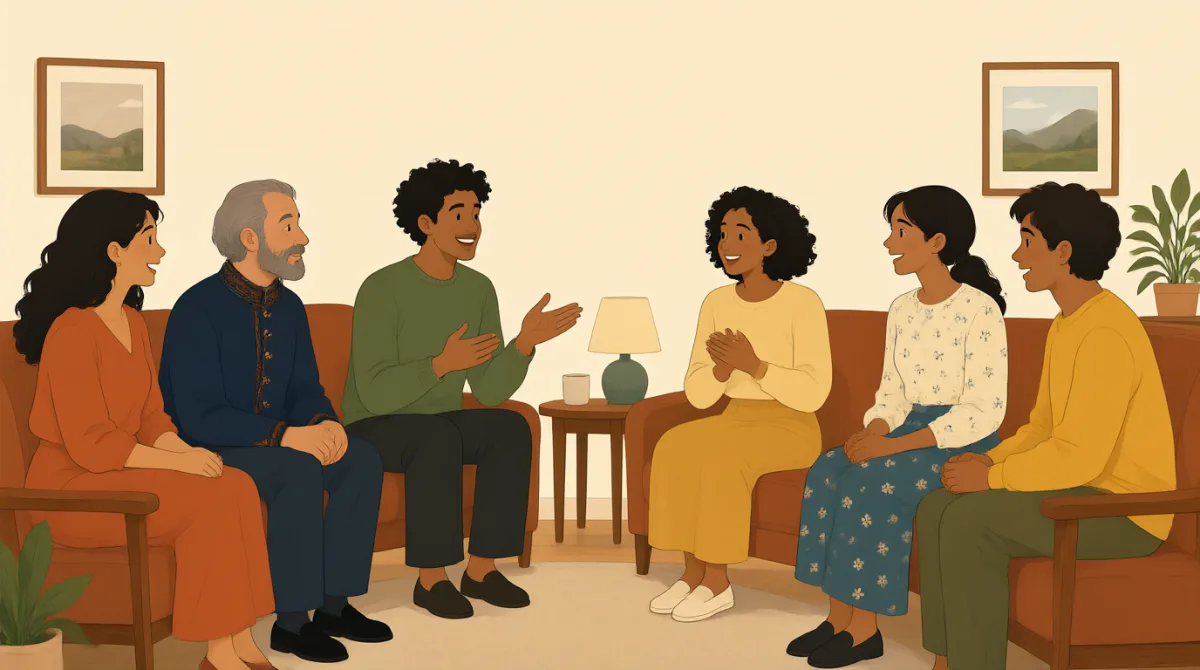

Hi everyone! So glad to finally meet you all. I'm Emma, from Beijing. It's my first time at a cultural exchange like this, and I'm really excited to learn about your cultures.
सभी को नमस्ते! आखिरकार आप सबसे मिलकर बहुत खुशी हो रही है। मैं एमा हूँ, बीजिंग से। इस तरह के सांस्कृतिक आदान-प्रदान में मैं पहली बार आई हूँ और आपकी संस्कृतियों के बारे में जानने के लिए बहुत उत्साहित हूँ।

Welcome, Emma! It's a pleasure to have you here. I'm David, and I'm one of the local hosts. We're thrilled you could make it. We have people from all over the world today.
स्वागत है, एमा! आपका यहाँ आना हमारे लिए खुशी की बात है। मैं डेविड हूँ और स्थानीय मेज़बानों में से एक हूँ। हमें बहुत खुशी है कि आप आ सकीं। आज यहाँ दुनिया भर से लोग आए हैं।

Hi Emma and David! My name is Mia, and I'm from Paris, France. It's fascinating to hear about everyone's backgrounds. Emma, I've always wanted to visit Beijing!
नमस्ते, एमा और डेविड! मेरा नाम मिया है और मैं फ़्रांस के पेरिस से हूँ। सबकी पृष्ठभूमियों के बारे में सुनना बहुत दिलचस्प है। एमा, मैं हमेशा से बीजिंग जाना चाहती थी!

And I'm Leo, from Tokyo, Japan. It's great to connect with fellow international participants. I'm curious, Emma, what was your first impression when you arrived here?
और मैं लियो हूँ, जापान के टोक्यो से। दूसरे देशों से आए प्रतिभागियों से मिलकर अच्छा लग रहा है। एमा, मैं जानना चाहता हूँ—यहाँ पहुँचने पर तुम्हारी पहली छाप कैसी थी?
That's a great question, Leo! My first impression was how green and open everything feels compared to Beijing. And the air quality, of course, is a pleasant surprise! What about you, Mia, have you noticed any significant differences that stood out?
बहुत अच्छा सवाल है, लियो! मेरी पहली छाप यह थी कि बीजिंग के मुकाबले यहाँ हर तरफ़ कितनी हरियाली और खुलापन है। और यहाँ की हवा—वह तो सुखद हैरानी थी! मिया, तुम्हें यहाँ कोई बड़ा अंतर नज़र आया, जो तुम्हें खास तौर पर याद रहा हो?
Oh, definitely! Coming from Paris, I find the pace of life here much more relaxed. People seem to take their time more. It's quite a contrast. David, do you think that's a common observation from visitors?
हाँ, बिल्कुल! पेरिस से आने के बाद मुझे यहाँ की ज़िंदगी की रफ़्तार काफ़ी धीमी लगती है। लगता है कि लोग हर काम आराम से करते हैं। यह काफ़ी अलग है। डेविड, क्या तुम्हें लगता है कि यहाँ आने वाले लोग अक्सर ऐसा ही कहते हैं?
Absolutely, Mia. Many people comment on that. We do have a more laid-back culture here, which I think is a charming aspect. It's interesting how perspectives differ based on where you come from.
बिल्कुल, मिया। बहुत से लोग इस बात का ज़िक्र करते हैं। यहाँ की संस्कृति सचमुच ज़्यादा बेफ़िक्र और आरामदेह है, और मुझे लगता है कि यही इसकी एक प्यारी ख़ासियत है। यह दिलचस्प है कि आप कहाँ से आते हैं, इस पर नज़रिया कैसे बदल जाता है।
I agree. In Tokyo, everything is incredibly efficient and fast-paced, so I can definitely relate to your observation, Mia. It's refreshing to experience a different rhythm.
मैं सहमत हूँ। टोक्यो में हर चीज़ बहुत व्यवस्थित और तेज़ रफ़्तार से होती है, इसलिए मिया, मैं तुम्हारी बात से पूरी तरह जुड़ सकता हूँ। एक अलग ही लय का अनुभव करना ताज़गी भरा है।
शब्दावली8
- gladखुश
Glad means happy or pleased about something. Use it to express positive feelings, like 'I'm glad to meet you' in introductions.
“Glad” का मतलब है किसी बात से खुश या प्रसन्न होना। किसी से मिलकर खुशी जताने के लिए इसका इस्तेमाल करें, जैसे परिचय देते समय “I'm glad to meet you” (आपसे मिलकर खुशी हुई)।
- thrilledबेहद उत्साहित
Thrilled means very excited and happy. It's stronger than 'glad' and used for special occasions, like welcoming someone to an event.
“Thrilled” का मतलब है बहुत ज़्यादा उत्साहित और खुश होना। यह “glad” से ज़्यादा प्रबल भाव जताता है और किसी खास मौके पर इस्तेमाल होता है, जैसे किसी का कार्यक्रम में स्वागत करते समय।
- fascinatingबेहद दिलचस्प
Fascinating means very interesting and attracting attention. Use it when talking about cultures or stories that capture your interest.
“Fascinating” का मतलब है बहुत दिलचस्प और ध्यान खींचने वाला। ऐसी संस्कृतियों या कहानियों के बारे में बात करते समय इसका इस्तेमाल करें जिनमें आपकी रुचि हो।
- curiousजिज्ञासु
Curious means wanting to know or learn more about something. It's useful in conversations to show interest, like asking about someone's experiences.
“Curious” का मतलब है किसी चीज़ के बारे में और जानने या सीखने की इच्छा होना। बातचीत में दिलचस्पी दिखाने के लिए यह उपयोगी है, जैसे किसी के अनुभवों के बारे में पूछना।
- impressionछाप
Impression means the first idea or feeling you get about something or someone. Common in discussions about new places, like 'first impression of a city.'
“Impression” का मतलब है किसी चीज़ या व्यक्ति के बारे में आपके मन में बनने वाला पहला विचार या एहसास। नई जगहों की चर्चा में यह आम है, जैसे “first impression of a city” (किसी शहर के बारे में पहली छाप)।
- paceरफ़्तार
Pace refers to the speed of something, like life or work. Use it to compare lifestyles, such as 'fast pace' or 'relaxed pace.'
“Pace” का मतलब किसी चीज़ की गति या रफ़्तार है, जैसे ज़िंदगी या काम की। जीवनशैली की तुलना करते समय इसका इस्तेमाल करें, जैसे “fast pace” (तेज़ रफ़्तार) या “relaxed pace” (आरामदेह रफ़्तार)।
- laid-backबेफ़िक्र और आरामदेह
Laid-back means relaxed and not stressed or hurried. It's informal and describes cultures or people who are easygoing.
“Laid-back” का मतलब है तनाव या जल्दबाज़ी से दूर, आरामदेह होना। यह अनौपचारिक शब्द है और ऐसी संस्कृतियों या लोगों का वर्णन करता है जो सहज और बेफ़िक्र होते हैं।
- refreshingताज़गी भरा
Refreshing means making you feel fresh or new, often positively surprising. Use it for experiences that are different and enjoyable.
“Refreshing” का मतलब है ऐसा जो आपको तरोताज़ा या नया महसूस कराए, अक्सर सुखद हैरानी के साथ। अलग और आनंददायक अनुभवों के लिए इसका इस्तेमाल करें।
मुख्य वाक्य8
- 1
So glad to finally meet you all.
आखिरकार आप सबसे मिलकर बहुत खुशी हो रही है।
This is a warm greeting to express happiness in meeting people. Use it at the start of social events. 'So glad' emphasizes strong feeling; 'finally' adds anticipation.
लोगों से मिलकर खुशी जताने के लिए यह एक गर्मजोशी भरा अभिवादन है। सामाजिक कार्यक्रमों की शुरुआत में इसका इस्तेमाल करें। “So glad” गहरी खुशी जताता है, जबकि “finally” लंबे इंतज़ार या उत्सुकता का भाव जोड़ता है।
- 2
It's fascinating to hear about everyone's backgrounds.
सबकी पृष्ठभूमियों के बारे में सुनना बहुत दिलचस्प है।
This shows interest in others' stories. Useful in group introductions. 'It is' contracts to 'It's' for natural speech; 'fascinating' highlights intrigue.
इससे दूसरों की कहानियों में आपकी दिलचस्पी ज़ाहिर होती है। समूह में परिचय के समय यह काम आता है। स्वाभाविक बोलचाल में “It is” का संक्षिप्त रूप “It's” होता है; “fascinating” किसी बात के बेहद दिलचस्प होने पर ज़ोर देता है।
- 3
I'm curious, what was your first impression when you arrived here?
मैं जानना चाहता हूँ—यहाँ पहुँचने पर तुम्हारी पहली छाप कैसी थी?
This asks about initial feelings politely. Great for icebreaking. 'I'm curious' softens the question; use past tense 'was' for completed actions.
यह विनम्रता से किसी के शुरुआती एहसास के बारे में पूछता है। बातचीत शुरू करने के लिए बढ़िया है। “I'm curious” सवाल को नरम बनाता है; पूरी हो चुकी घटना के लिए भूतकाल “was” का इस्तेमाल करें।
- 4
My first impression was how green and open everything feels compared to Beijing.
मेरी पहली छाप यह थी कि बीजिंग के मुकाबले यहाँ हर तरफ़ कितनी हरियाली और खुलापन है।
This shares personal observations with comparison. Useful for cultural talks. Use 'was' for past impressions; 'compared to' shows differences.
इस वाक्य में तुलना करते हुए अपना निजी अनुभव बताया गया है। सांस्कृतिक बातचीत में यह काम आता है। बीती हुई छाप के लिए “was” और अंतर दिखाने के लिए “compared to” का इस्तेमाल करें।
- 5
I find the pace of life here much more relaxed.
मुझे यहाँ की ज़िंदगी की रफ़्तार काफ़ी धीमी लगती है।
This expresses a personal view on differences. 'I find' introduces opinions; comparative 'much more relaxed' highlights contrast in lifestyles.
इससे आप अलग-अलग चीज़ों के बारे में अपनी राय बताते हैं। “I find” अपनी राय पेश करने का तरीका है; तुलना वाला “much more relaxed” जीवनशैलियों के अंतर को उभारता है।
- 6
Do you think that's a common observation from visitors?
क्या तुम्हें लगता है कि यहाँ आने वाले लोग अक्सर ऐसा ही कहते हैं?
This seeks agreement or general views. Useful to involve others. Question form with 'do you think' makes it polite and conversational.
इससे आप किसी की सहमति या आम राय जानना चाहते हैं। यह दूसरों को बातचीत में शामिल करने के लिए उपयोगी है। “do you think” वाला सवाल विनम्र और बातचीत जैसा लगता है।
- 7
It's interesting how perspectives differ based on where you come from.
यह दिलचस्प है कि आप कहाँ से आते हैं, इस पर नज़रिया कैसे बदल जाता है।
This comments on varying viewpoints. Good for cultural discussions. 'How' clause explains the reason; 'based on' shows cause.
यह अलग-अलग नज़रियों पर टिप्पणी करने का अच्छा तरीका है, खासकर सांस्कृतिक चर्चाओं में। “How” वाला उपवाक्य बताता है कि चीज़ किस तरह होती है; “based on” कारण या आधार दर्शाता है।
- 8
It's refreshing to experience a different rhythm.
एक अलग ही लय का अनुभव करना ताज़गी भरा है।
This describes a positive change. Use in talks about new cultures. 'It is' for general statements; 'refreshing' conveys enjoyment of variety.
यह किसी सकारात्मक बदलाव का वर्णन करता है। नई संस्कृतियों के बारे में बात करते समय इसका इस्तेमाल करें। आम बात कहने के लिए “It is” का उपयोग होता है; “refreshing” विविधता का आनंद लेने का भाव जताता है।