Food and Dining Experiences
ประสบการณ์ด้านอาหารและการรับประทานอาหาร
Individuals discuss typical dishes, dining habits, table manners, and the social significance of food in their respective cultures.
ผู้คนพูดคุยเกี่ยวกับอาหารจานเด่น นิสัยการรับประทานอาหาร มารยาทบนโต๊ะอาหาร และความสำคัญของอาหารต่อสังคมในวัฒนธรรมของตน
บทสนทนา10
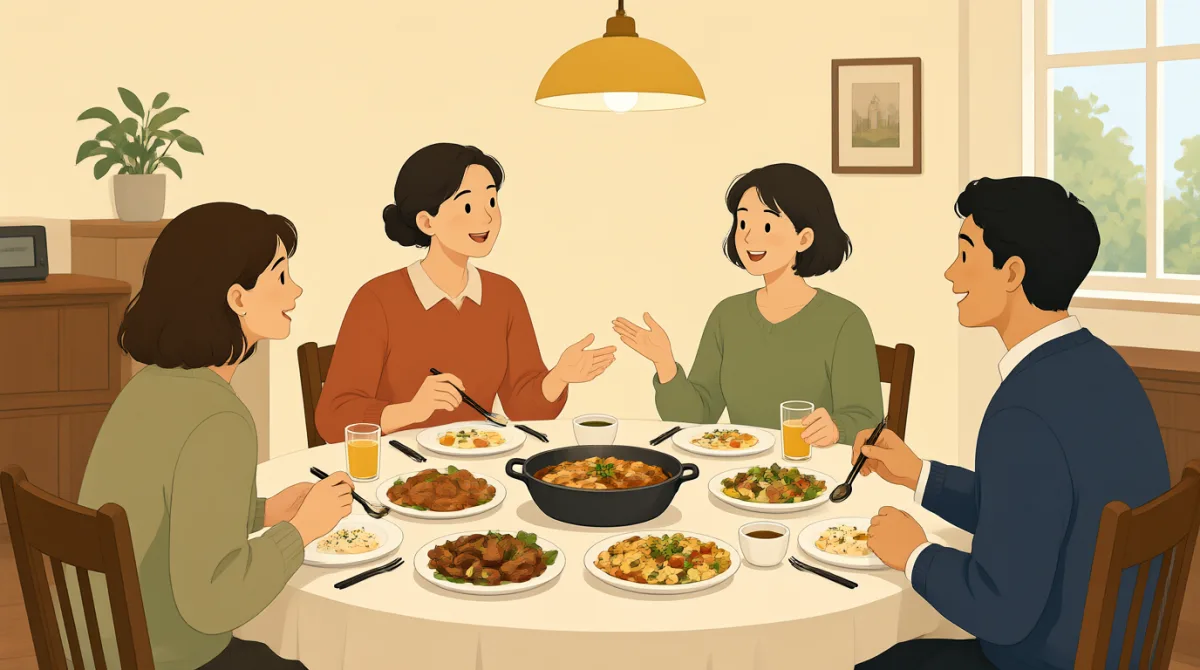

So, I'm really curious about dining in China. What are some typical dishes that really represent the culture?
เราสงสัยเรื่องการกินอาหารในจีนมากเลย อาหารจานเด่นอะไรบ้างที่สะท้อนวัฒนธรรมได้ชัดเจน?

Oh, that's a great question! For typical dishes, Beijing Roast Duck definitely comes to mind for its historical significance and unique preparation. And if you're looking for something more communal, hot pot is a must-try. It's not just food; it's a social event.
อ๋อ เป็นคำถามที่ดีมาก! ถ้าพูดถึงอาหารจานเด่น เป็ดปักกิ่งย่างต้องเป็นอย่างแรกที่นึกถึงเลย เพราะมีความสำคัญทางประวัติศาสตร์และวิธีทำก็ไม่เหมือนใคร ถ้าอยากกินอะไรที่เน้นการกินร่วมกัน หม้อไฟก็เป็นเมนูที่ต้องลองเลยนะ ไม่ใช่แค่อาหาร แต่เป็นกิจกรรมทางสังคมด้วย
That's fascinating! So, hot pot sounds like it's all about sharing. How does that compare to dining habits in the US, where often everyone gets their own plate?
น่าสนใจมาก! ฟังดูแล้วหม้อไฟเน้นการแบ่งปันกันสินะ แล้วต่างจากนิสัยการกินในสหรัฐฯ ยังไง ที่ส่วนใหญ่แต่ละคนมักมีจานของตัวเอง?
Exactly! Sharing is a big part of Chinese dining. We often order multiple dishes and put them in the center of the table for everyone to share. It encourages interaction and conversation. In contrast, individual plates are more common in Western cultures, leading to a different dynamic.
ใช่เลย! การแบ่งปันเป็นส่วนสำคัญของการกินอาหารแบบจีน เรามักสั่งอาหารหลายอย่างแล้ววางไว้กลางโต๊ะให้ทุกคนแบ่งกันกิน ทำให้ได้พูดคุยและมีปฏิสัมพันธ์กันมากขึ้น ในทางกลับกัน วัฒนธรรมตะวันตกมักนิยมเสิร์ฟอาหารเป็นจานส่วนตัวมากกว่า เลยทำให้บรรยากาศต่างกัน
I can see that. And what about table manners? Are there any unspoken rules or surprising etiquettes I should be aware of?
เข้าใจเลย แล้วเรื่องมารยาทบนโต๊ะอาหารล่ะ มีกฎที่ไม่ได้พูดกันตรง ๆ หรือมารยาทข้อไหนที่น่าแปลกใจที่ฉันควรรู้ไว้ไหม?
Definitely. While chopsticks might be the most obvious difference, one key thing is not to stick your chopsticks upright in your rice bowl; it resembles incense at a funeral. Also, it's polite to offer food to elders or guests first, and it's common to tap the table lightly with two fingers as a thank you when someone pours tea for you.
มีแน่นอน ถึงตะเกียบจะเป็นความแตกต่างที่เห็นได้ชัดที่สุด แต่เรื่องสำคัญอย่างหนึ่งคืออย่าปักตะเกียบตั้งตรงลงในชามข้าว เพราะดูคล้ายธูปที่ใช้ในงานศพ อีกอย่างคือควรตักอาหารให้ผู้สูงอายุหรือแขกก่อน และเวลามีคนรินชาให้ ปกติก็จะใช้นิ้วสองนิ้วเคาะโต๊ะเบา ๆ เพื่อขอบคุณ
Wow, those are great tips! I would have never guessed. It really highlights how food isn't just about sustenance; it's deeply tied to social customs and respect, isn't it?
ว้าว เป็นคำแนะนำที่ดีมาก! ฉันไม่เคยคิดเลยจริง ๆ เรื่องนี้แสดงให้เห็นชัดเลยว่าอาหารไม่ได้มีไว้แค่กินให้อิ่ม แต่ยังเกี่ยวพันอย่างลึกซึ้งกับธรรมเนียมทางสังคมและการให้เกียรติด้วย ใช่ไหม?
Absolutely. In China, food is a significant part of celebrations, business dealings, and family gatherings. Sharing a meal is a way to show hospitality, build relationships, and express care. It's a cornerstone of our social fabric.
ใช่เลย ในจีน อาหารเป็นส่วนสำคัญของงานฉลอง การติดต่อธุรกิจ และการรวมตัวของครอบครัว การกินข้าวร่วมกันเป็นวิธีแสดงน้ำใจ สร้างความสัมพันธ์ และแสดงความห่วงใย เป็นรากฐานสำคัญของความสัมพันธ์ในสังคมเราเลย
That's a really beautiful perspective. It makes me appreciate how much culture is embedded in every bite. Thanks for shedding light on these differences!
เป็นมุมมองที่งดงามมากเลย ทำให้ฉันเห็นคุณค่าของวัฒนธรรมที่แฝงอยู่ในอาหารทุกคำ ขอบคุณที่ช่วยอธิบายความแตกต่างเหล่านี้นะ!
You're very welcome! It's always interesting to compare and see how food connects us all, despite our cultural differences.
ยินดีมาก! การเปรียบเทียบกันและเห็นว่าอาหารเชื่อมโยงพวกเราทุกคนได้ยังไง ทั้งที่วัฒนธรรมต่างกัน เป็นเรื่องน่าสนใจเสมอ
คำศัพท์8
- curiousอยากรู้อยากเห็น
Means wanting to know or learn more about something. Use it when expressing interest, like 'I'm curious about your culture.'
หมายถึงอยากรู้หรืออยากเรียนรู้เกี่ยวกับบางสิ่งให้มากขึ้น ใช้เพื่อบอกว่าคุณสนใจ เช่น 'I'm curious about your culture.' (ฉันอยากรู้เกี่ยวกับวัฒนธรรมของคุณ)
- typicalที่เป็นแบบฉบับ
Means common or representative of a group or place. In food discussions, say 'typical dishes' to mean traditional foods from a culture.
หมายถึงสิ่งที่พบได้ทั่วไปหรือเป็นตัวแทนของกลุ่มคนหรือสถานที่ ในการพูดคุยเรื่องอาหาร ใช้ 'typical dishes' เพื่อหมายถึงอาหารดั้งเดิมของวัฒนธรรมหนึ่ง
- communalที่ทำร่วมกัน
Refers to something shared by a group. In dining, 'communal meal' means eating together from shared dishes to build social bonds.
หมายถึงสิ่งที่คนกลุ่มหนึ่งใช้หรือทำร่วมกัน ในบริบทการกิน 'communal meal' หมายถึงการกินอาหารร่วมกันโดยแบ่งปันอาหาร เพื่อสร้างความสัมพันธ์
- sharingการแบ่งปัน
The act of dividing food or items among people. In Chinese culture, it's a key part of meals to promote family or friendship.
การแบ่งอาหารหรือสิ่งของให้คนอื่น ในวัฒนธรรมจีน การแบ่งปันเป็นส่วนสำคัญของมื้ออาหาร เพราะช่วยส่งเสริมความสัมพันธ์ในครอบครัวหรือมิตรภาพ
- table mannersมารยาทบนโต๊ะอาหาร
Rules for polite behavior at the dinner table. Important in cultural talks to avoid mistakes, like how to use utensils.
กฎเกณฑ์ในการวางตัวอย่างสุภาพขณะรับประทานอาหาร การเรียนรู้เรื่องนี้สำคัญเมื่อพูดคุยเกี่ยวกับวัฒนธรรม เพราะช่วยให้หลีกเลี่ยงการทำผิดมารยาท เช่น การใช้ช้อนส้อมหรืออุปกรณ์ต่าง ๆ
- etiquetteมารยาท
Proper or polite ways to behave in social situations. Use it for customs like 'dining etiquette' to show respect.
วิธีวางตัวที่เหมาะสมหรือสุภาพในสถานการณ์ทางสังคม ใช้กับธรรมเนียมต่าง ๆ เช่น 'dining etiquette' (มารยาทในการรับประทานอาหาร) เพื่อแสดงความเคารพ
- hospitalityน้ำใจไมตรี
Friendly and generous treatment of guests. In Chinese food culture, sharing meals shows hospitality and care for others.
การต้อนรับและปฏิบัติต่อแขกด้วยความเป็นมิตรและเอื้อเฟื้อ ในวัฒนธรรมอาหารจีน การแบ่งปันมื้ออาหารแสดงถึงน้ำใจไมตรีและความใส่ใจผู้อื่น
- sustenanceอาหารที่ช่วยให้ดำรงชีวิต
Basic food needed to stay alive. Contrast it with cultural views, like 'Food is more than sustenance; it's about tradition.'
อาหารพื้นฐานที่จำเป็นต่อการมีชีวิตอยู่ ใช้เปรียบเทียบกับมุมมองทางวัฒนธรรมได้ เช่น 'Food is more than sustenance; it's about tradition.' (อาหารเป็นมากกว่าสิ่งที่ช่วยให้ดำรงชีวิต แต่ยังเกี่ยวกับประเพณีด้วย)
ประโยคสำคัญ8
- 1
I'm really curious about dining in China.
ฉันสงสัยเรื่องการกินอาหารในจีนมากเลย
This expresses interest in a topic. Useful for starting conversations about cultures. 'Curious about' shows polite eagerness; use it to ask questions without being too direct.
ประโยคนี้ใช้แสดงความสนใจในหัวข้อหนึ่ง เหมาะสำหรับเริ่มบทสนทนาเกี่ยวกับวัฒนธรรม 'Curious about' แสดงความอยากรู้อย่างสุภาพ ใช้ถามคำถามโดยไม่ตรงเกินไป
- 2
That's a great question!
เป็นคำถามที่ดีมาก!
A positive response to show appreciation. It's a common phrase in discussions to keep the talk flowing. Use it when someone asks something thoughtful.
เป็นคำตอบเชิงบวกที่ใช้แสดงความชื่นชม เป็นวลีที่พบได้บ่อยในการสนทนาและช่วยให้คุยกันต่อได้ ใช้เมื่อมีคนถามคำถามที่ชวนคิด
- 3
Sharing is a big part of Chinese dining.
การแบ่งปันเป็นส่วนสำคัญของการกินอาหารแบบจีน
Highlights a cultural practice. 'A big part of' means very important in. Useful for comparing habits; the present tense describes general truths.
ประโยคนี้เน้นย้ำธรรมเนียมทางวัฒนธรรม 'A big part of' หมายถึงสิ่งที่สำคัญมากในเรื่องใดเรื่องหนึ่ง เหมาะสำหรับเปรียบเทียบนิสัยหรือธรรมเนียม โดยใช้รูปปัจจุบันเพื่อบอกข้อเท็จจริงทั่วไป
- 4
It encourages interaction and conversation.
สิ่งนี้ช่วยให้เกิดปฏิสัมพันธ์และบทสนทนามากขึ้น
Explains a benefit of an action. 'Encourages' means promotes or makes more likely. Great for describing social activities; use in talks about group behaviors.
ประโยคนี้อธิบายประโยชน์ของการกระทำ 'Encourages' หมายถึงส่งเสริมหรือทำให้บางสิ่งมีแนวโน้มเกิดขึ้นมากขึ้น เหมาะสำหรับพูดถึงกิจกรรมทางสังคมหรือพฤติกรรมของกลุ่มคน
- 5
What about table manners?
แล้วเรื่องมารยาทบนโต๊ะอาหารล่ะ?
A way to change or add to the topic. 'What about' introduces a related question. Useful in interviews or chats to explore more details smoothly.
เป็นวิธีเปลี่ยนหรือเพิ่มหัวข้อสนทนา 'What about' ใช้เกริ่นคำถามที่เกี่ยวข้อง เหมาะกับการสัมภาษณ์หรือการพูดคุย เพื่อถามรายละเอียดเพิ่มเติมอย่างเป็นธรรมชาติ
- 6
It's polite to offer food to elders or guests first.
ควรตักอาหารให้ผู้สูงอายุหรือแขกก่อน
Describes a rule of behavior. 'It's polite to' is a structure for giving advice on manners. Essential for cultural etiquette lessons; shows respect in sentences.
ประโยคนี้บอกแนวทางการปฏิบัติตัว 'It's polite to' เป็นโครงสร้างที่ใช้แนะนำเรื่องมารยาท เหมาะสำหรับบทเรียนเกี่ยวกับธรรมเนียมทางวัฒนธรรม และช่วยแสดงความเคารพ
- 7
Food isn't just about sustenance; it's deeply tied to social customs.
อาหารไม่ได้มีไว้แค่กินให้อิ่ม แต่ยังเกี่ยวพันอย่างลึกซึ้งกับธรรมเนียมทางสังคม
Contrasts ideas with a semicolon. 'Deeply tied to' means closely connected. Useful for deeper discussions; helps explain cultural significance beyond basics.
ประโยคนี้ใช้เครื่องหมายอัฒภาคเพื่อเชื่อมและเปรียบต่างแนวคิด 'Deeply tied to' หมายถึงเชื่อมโยงอย่างใกล้ชิด เหมาะสำหรับพูดคุยเชิงลึกและอธิบายความสำคัญทางวัฒนธรรมที่มากกว่าเรื่องพื้นฐาน
- 8
Thanks for shedding light on these differences!
ขอบคุณที่ช่วยอธิบายความแตกต่างเหล่านี้นะ!
Means thanking for explaining something clearly. 'Shedding light on' is an idiom for clarifying. Use it to end positive talks and show gratitude.
ประโยคนี้ใช้ขอบคุณใครสักคนที่อธิบายเรื่องหนึ่งให้เข้าใจชัดเจน 'Shedding light on' เป็นสำนวนที่หมายถึงช่วยทำให้เรื่องกระจ่าง ใช้ปิดท้ายบทสนทนาดี ๆ และแสดงความขอบคุณ