Discussing Daily Life & Customs
रोज़मर्रा की ज़िंदगी और रीति-रिवाज़ों पर चर्चा
Participants share insights into their daily routines, common social customs, etiquette, and peculiar traditions, comparing and contrasting them.
प्रतिभागी अपनी दिनचर्या, आम सामाजिक रीति-रिवाज़ों, शिष्टाचार और अनोखी परंपराओं के बारे में बताते हैं और उनकी तुलना करते हैं।
संवाद9
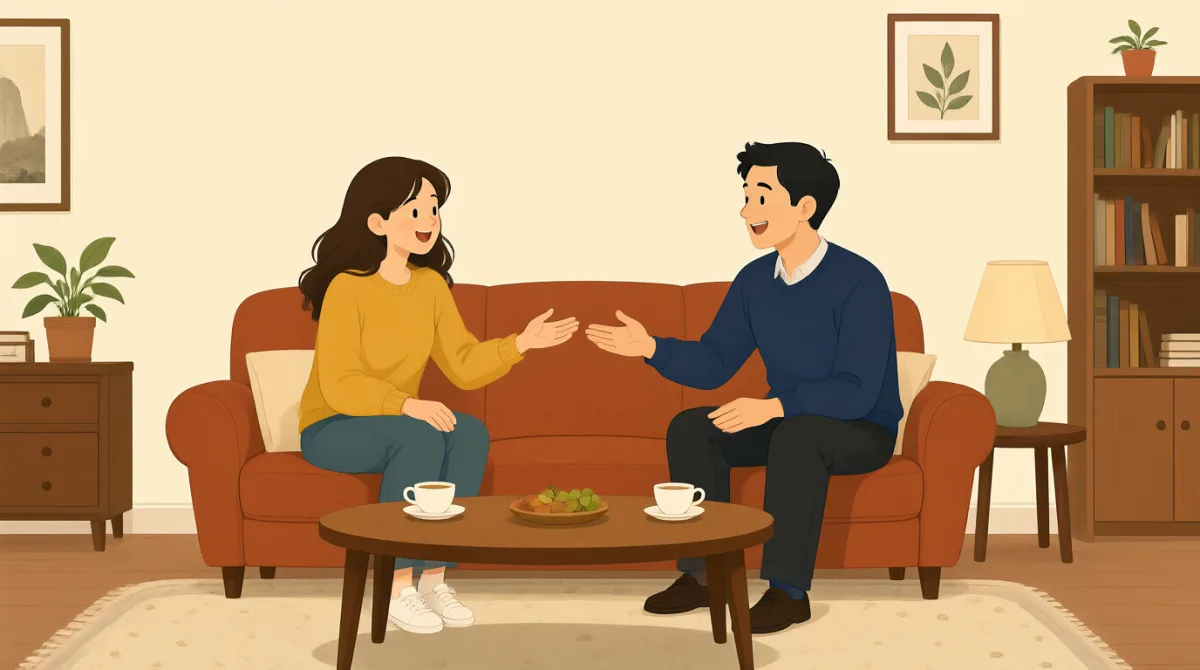

It's been so interesting discussing cultural differences. I'm curious, Jack, what's a daily custom in your country that might seem unusual to outsiders?
सांस्कृतिक अंतर पर बात करना बहुत दिलचस्प रहा। जैक, मैं जानना चाहती हूँ—तुम्हारे देश में रोज़मर्रा का ऐसा कौन-सा रिवाज़ है जो बाहर से आने वालों को अजीब लग सकता है?

That's a good question, Emma. I'd say taking off your shoes immediately when entering someone's home is a big one. It's considered quite rude not to, even if they say it's fine.
अच्छा सवाल है, एमा। मेरे हिसाब से, किसी के घर में घुसते ही जूते उतारना एक बड़ा रिवाज़ है। ऐसा न करना काफ़ी बदतमीज़ी माना जाता है, भले ही वे कहें कि कोई बात नहीं।
Ah, yes! We do that in some homes too, but it's not a universal rule. What about social etiquette around meals? For instance, do you typically share dishes or have individual plates?
हाँ, सही! हमारे यहाँ भी कुछ घरों में ऐसा करते हैं, लेकिन यह हर जगह का नियम नहीं है। खाने-पीने के शिष्टाचार के बारे में क्या? मसलन, क्या तुम लोग आम तौर पर खाना बाँटकर खाते हो या हर किसी की अपनी अलग प्लेट होती है?
Definitely sharing. It's very common to have multiple communal dishes in the center of the table, and everyone helps themselves. It's seen as a way to bond and enjoy the meal together.
बिल्कुल, हम खाना बाँटकर खाते हैं। मेज़ के बीचोंबीच कई साझे पकवान रखना बहुत आम है, और हर कोई अपनी मदद से खाना लेता है। इसे आपस में घुलने-मिलने और साथ बैठकर खाने का एक तरीका माना जाता है।
That sounds lovely and very communal. In my country, while we might share appetizers, main courses are usually individual. It highlights that difference in collective vs. individualistic cultures.
यह बहुत अच्छा और मिल-जुलकर खाने वाला तरीका लगता है। मेरे देश में स्टार्टर तो हम बाँटकर खा सकते हैं, लेकिन मुख्य खाना आम तौर पर हर किसी के लिए अलग होता है। इससे सामूहिक और व्यक्तिवादी संस्कृतियों का अंतर साफ़ दिखता है।
Exactly. And a peculiar tradition for us is 'siesta' in some regions, where shops close for a few hours in the afternoon for a break. It's perplexing to tourists but a part of life for locals.
बिल्कुल। और हमारे यहाँ एक अनोखी परंपरा कुछ इलाकों में ‘सिएस्ता’ लेने की है। दोपहर में आराम करने के लिए दुकानें कुछ घंटों के लिए बंद हो जाती हैं। पर्यटकों को यह अटपटा लगता है, लेकिन स्थानीय लोगों के लिए यह रोज़मर्रा की ज़िंदगी का हिस्सा है।
I've heard about siesta! It sounds like a great way to avoid the hottest part of the day and recharge. We tend to power through the entire workday, often with just a short lunch break.
मैंने सिएस्ता के बारे में सुना है! दिन के सबसे गर्म समय से बचने और फिर से तरोताज़ा होने का यह बढ़िया तरीका लगता है। हम तो अक्सर बस दोपहर के थोड़े-से खाने के विराम के साथ पूरा कामकाजी दिन लगातार काम करते रहते हैं।
Yes, it definitely helps. It's fascinating how these small daily differences really paint a picture of our broader cultural values, isn't it?
हाँ, इससे सचमुच मदद मिलती है। यह कितना दिलचस्प है कि रोज़मर्रा के ये छोटे-छोटे अंतर हमारी व्यापक सांस्कृतिक मान्यताओं की झलक दिखाते हैं, है न?
Absolutely. It makes you realize how much unspoken understanding shapes our daily interactions. Thanks for sharing, Jack!
बिल्कुल। इससे एहसास होता है कि हमारी रोज़मर्रा की बातचीत को बहुत हद तक वे बातें आकार देती हैं जिन्हें बिना कहे ही समझ लिया जाता है। बताने के लिए शुक्रिया, जैक!
शब्दावली12
- curiousजिज्ञासु
Feeling eager to know or learn something. Use it when you want to ask about new things, like 'I'm curious about your culture.'
किसी चीज़ के बारे में जानने या सीखने की उत्सुकता होना। नई चीज़ों के बारे में पूछते समय इसका इस्तेमाल करें, जैसे 'I'm curious about your culture.' (मैं तुम्हारी संस्कृति के बारे में जानने को उत्सुक हूँ।)
- unusualअसामान्य
Something that is not common or typical. It's useful for describing customs that seem strange to others, such as 'That's an unusual habit.'
जो आम या सामान्य न हो। दूसरों को अजीब लगने वाले रीति-रिवाज़ों के बारे में बताते समय यह काम आता है, जैसे 'That's an unusual habit.' (यह एक असामान्य आदत है।)
- rudeबदतमीज़ी भरा
Behavior that is impolite or disrespectful. In cultural talks, say 'It's rude not to do that' to explain social rules.
ऐसा व्यवहार जो अशिष्ट या अपमानजनक हो। सांस्कृतिक बातचीत में सामाजिक नियम समझाने के लिए कहें 'It's rude not to do that' (ऐसा न करना बदतमीज़ी है)।
- etiquetteशिष्टाचार
The rules for polite behavior in social situations. Use it when discussing manners, like 'What's the etiquette at dinner?'
सामाजिक स्थितियों में अच्छे व्यवहार के नियम। तौर-तरीकों की बात करते समय इसका इस्तेमाल करें, जैसे 'What's the etiquette at dinner?' (रात के खाने पर शिष्टाचार के नियम क्या हैं?)
- communalसाझा
Shared by a group of people. It's practical for describing shared activities, such as 'We have communal meals.'
जिसका इस्तेमाल लोगों का कोई समूह मिलकर करे। साथ की जाने वाली गतिविधियों के लिए यह उपयोगी है, जैसे 'We have communal meals.' (हम सब मिलकर खाना खाते हैं।)
- bondआपसी जुड़ाव
A close relationship or connection between people. Use it to talk about how activities bring people together, like 'Sharing food helps us bond.'
लोगों के बीच करीबी रिश्ता या जुड़ाव। यह बताने के लिए इसका इस्तेमाल करें कि गतिविधियाँ लोगों को कैसे करीब लाती हैं, जैसे 'Sharing food helps us bond.' (खाना बाँटकर खाने से हमारा आपसी जुड़ाव बढ़ता है।)
- peculiarअनोखा
Strange or unusual in an interesting way. Good for cultural discussions, e.g., 'That's a peculiar tradition in your country.'
ऐसा जो दिलचस्प ढंग से अजीब या असामान्य हो। सांस्कृतिक चर्चाओं में यह अच्छा शब्द है, जैसे 'That's a peculiar tradition in your country.' (तुम्हारे देश की यह एक अनोखी परंपरा है।)
- siestaदोपहर की झपकी
A short rest or nap in the early afternoon, common in some warm climates. Mention it when comparing daily routines, like 'Do you take a siesta?'
दोपहर की शुरुआत में थोड़ी देर आराम करना या झपकी लेना, जो कुछ गर्म इलाकों में आम है। दिनचर्या की तुलना करते समय इसका ज़िक्र करें, जैसे 'Do you take a siesta?' (क्या तुम दोपहर में झपकी लेते हो?)
- perplexingउलझन में डालने वाला
Confusing or hard to understand. Use it for things that puzzle outsiders, such as 'The custom is perplexing to tourists.'
जिसे समझना मुश्किल हो या जो भ्रमित करे। बाहरी लोगों को उलझन में डालने वाली चीज़ों के लिए इसका इस्तेमाल करें, जैसे 'The custom is perplexing to tourists.' (यह रिवाज़ पर्यटकों को उलझन में डालता है।)
- rechargeफिर से ऊर्जा पाना
To rest and regain energy. It's useful in talks about breaks, like 'A siesta helps you recharge.'
आराम करके दोबारा ऊर्जा हासिल करना। विरामों के बारे में बातचीत में यह उपयोगी है, जैसे 'A siesta helps you recharge.' (दोपहर की झपकी से आपको फिर से ऊर्जा मिलती है।)
- fascinatingबेहद दिलचस्प
Very interesting and attracting attention. Say it to show admiration, e.g., 'Cultural differences are fascinating.'
जो बहुत दिलचस्प हो और ध्यान खींचे। प्रशंसा जताने के लिए कहें, जैसे 'Cultural differences are fascinating.' (सांस्कृतिक अंतर बेहद दिलचस्प होते हैं।)
- unspokenबिना कहे समझा जाने वाला
Not said directly but understood. Use it for implied rules, like 'There are unspoken understandings in interactions.'
जो सीधे तौर पर कहा न गया हो, लेकिन समझ लिया जाए। बातचीत में अनकहे नियमों के लिए इसका इस्तेमाल करें, जैसे 'There are unspoken understandings in interactions.' (आपसी बातचीत में कुछ बातें बिना कहे ही समझ ली जाती हैं।)
मुख्य वाक्य9
- 1
It's been so interesting discussing cultural differences.
सांस्कृतिक अंतर पर बात करना बहुत दिलचस्प रहा है।
This is a present perfect continuous tense sentence ('It's been... discussing') to talk about an ongoing experience. It's useful to start a conversation positively and show enthusiasm about a topic.
यह present perfect continuous का वाक्य है ('It's been... discussing') और किसी जारी अनुभव के बारे में बताता है। बातचीत की शुरुआत सकारात्मक ढंग से करने और किसी विषय को लेकर उत्साह दिखाने के लिए यह उपयोगी है।
- 2
What's a daily custom in your country that might seem unusual to outsiders?
तुम्हारे देश में रोज़मर्रा का ऐसा कौन-सा रिवाज़ है जो बाहर से आने वालों को अजीब लग सकता है?
A question using 'what's' for asking about examples, with 'might seem' to suggest possibility. Great for inviting someone to share personal cultural insights in discussions.
यहाँ 'what's' का इस्तेमाल उदाहरण पूछने के लिए और 'might seem' का इस्तेमाल संभावना जताने के लिए हुआ है। चर्चा में किसी को अपने सांस्कृतिक अनुभव साझा करने के लिए आमंत्रित करने का यह बढ़िया तरीका है।
- 3
It's considered quite rude not to.
ऐसा न करना काफ़ी बदतमीज़ी माना जाता है।
Passive voice ('It's considered') to describe general opinions, with 'not to' for negation. Use this pattern to explain social norms without blaming individuals.
'It's considered' passive voice है, जिसका इस्तेमाल आम राय बताने के लिए होता है। नकार के लिए 'not to' जोड़ा गया है। किसी व्यक्ति को दोष दिए बिना सामाजिक नियम समझाने के लिए यह ढाँचा इस्तेमाल करें।
- 4
What about social etiquette around meals?
खाने-पीने के शिष्टाचार के बारे में क्या?
A casual question starting with 'What about' to change or add to the topic. It's practical for smoothly transitioning in conversations about customs.
'What about' से शुरू होने वाला यह अनौपचारिक सवाल बातचीत में नया विषय जोड़ने या विषय बदलने के लिए है। रीति-रिवाज़ों पर चर्चा करते समय बात को सहज ढंग से आगे बढ़ाने के लिए यह उपयोगी है।
- 5
It's seen as a way to bond and enjoy the meal together.
इसे आपस में घुलने-मिलने और साथ बैठकर खाना खाने का एक तरीका माना जाता है।
Passive structure ('It's seen as') for common views, with infinitives ('to bond and enjoy'). Useful for explaining the purpose of traditions in cultural exchanges.
'It's seen as' passive structure है, जिसका इस्तेमाल आम नज़रिए बताने के लिए होता है। इसके बाद 'to bond and enjoy' infinitive रूप में है। सांस्कृतिक आदान-प्रदान में परंपराओं का मकसद समझाने के लिए यह उपयोगी है।
- 6
It highlights that difference in collective vs. individualistic cultures.
इससे सामूहिक और व्यक्तिवादी संस्कृतियों का अंतर साफ़ दिखता है।
Simple present tense ('highlights') for general truths, using 'vs.' for comparison. This sentence is key for contrasting cultures and showing deeper insights.
सामान्य सच बताने के लिए यहाँ simple present tense में 'highlights' का इस्तेमाल हुआ है और तुलना के लिए 'vs.' आया है। संस्कृतियों के अंतर दिखाने और गहरी समझ ज़ाहिर करने के लिए यह वाक्य अहम है।
- 7
It's perplexing to tourists but a part of life for locals.
यह पर्यटकों को उलझन में डालता है, लेकिन स्थानीय लोगों के लिए ज़िंदगी का हिस्सा है।
Contrast with 'but' to show differences in perception, using 'to tourists' for groups. Ideal for describing how customs confuse outsiders in comparative talks.
यहाँ 'but' से नज़रिए का अंतर दिखाया गया है और 'to tourists' से लोगों के समूह का ज़िक्र किया गया है। तुलना की बातचीत में यह बताने के लिए अच्छा है कि रीति-रिवाज़ बाहरी लोगों को क्यों उलझन में डाल सकते हैं।
- 8
It's fascinating how these small daily differences really paint a picture of our broader cultural values.
यह कितना दिलचस्प है कि रोज़मर्रा के ये छोटे-छोटे अंतर हमारी व्यापक सांस्कृतिक मान्यताओं की झलक दिखाते हैं।
Noun clause ('how these...') after 'fascinating' to explain why something is interesting, with 'paint a picture' as an idiom for illustrating. Use it to conclude discussions thoughtfully.
'fascinating' के बाद 'how these...' वाला noun clause बताता है कि कोई बात दिलचस्प क्यों है। 'paint a picture' एक मुहावरा है, जिसका अर्थ है किसी बात की तस्वीर या झलक दिखाना। चर्चा का सार सोच-समझकर बताने के लिए इसका इस्तेमाल करें।
- 9
It makes you realize how much unspoken understanding shapes our daily interactions.
इससे एहसास होता है कि अनकही समझ हमारी रोज़मर्रा की बातचीत को कितना आकार देती है।
Causative structure ('makes you realize') with a noun clause ('how much...'), emphasizing impact. Helpful for reflecting on cultural influences in conversations.
'makes you realize' वाला causative structure और 'how much...' वाला noun clause किसी बात के असर पर ज़ोर देते हैं। बातचीत में सांस्कृतिक प्रभावों पर विचार करने के लिए यह उपयोगी है।