Food and Dining Experiences
খাবার ও ভোজনের অভিজ্ঞতা
Individuals discuss typical dishes, dining habits, table manners, and the social significance of food in their respective cultures.
ব্যক্তিরা নিজ নিজ সংস্কৃতির পরিচিত খাবার, খাওয়াদাওয়ার অভ্যাস, টেবিলের আদবকায়দা এবং খাবারের সামাজিক গুরুত্ব নিয়ে আলোচনা করেন।
সংলাপ10
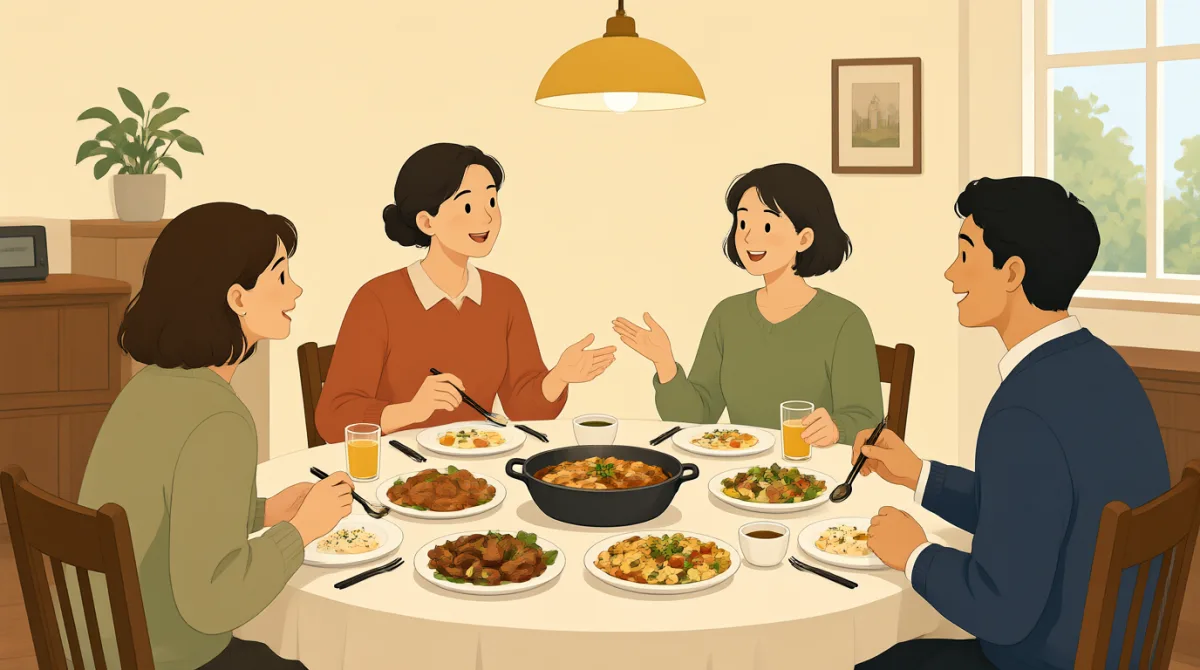

So, I'm really curious about dining in China. What are some typical dishes that really represent the culture?
আচ্ছা, চীনে খাওয়াদাওয়ার ব্যাপারে আমার সত্যিই খুব কৌতূহল। সংস্কৃতিকে তুলে ধরে—এমন পরিচিত কিছু খাবারের নাম বলবে?

Oh, that's a great question! For typical dishes, Beijing Roast Duck definitely comes to mind for its historical significance and unique preparation. And if you're looking for something more communal, hot pot is a must-try. It's not just food; it's a social event.
ওহ, দারুণ প্রশ্ন! পরিচিত খাবারের কথা বললে, ঐতিহাসিক গুরুত্ব আর বিশেষ রান্নার পদ্ধতির জন্য পিকিং রোস্ট ডাকের কথা সবার আগে মনে আসে। আর যদি সবাই মিলে খাওয়ার মতো কিছু খুঁজে থাকো, তাহলে হট পট অবশ্যই চেখে দেখার মতো। এটা শুধু খাবার নয়; একটা সামাজিক আয়োজনও।
That's fascinating! So, hot pot sounds like it's all about sharing. How does that compare to dining habits in the US, where often everyone gets their own plate?
বাহ, দারুণ তো! তাহলে হট পট শুনে মনে হচ্ছে, সবাই মিলে ভাগ করে খাওয়াটাই আসল। যুক্তরাষ্ট্রের খাওয়াদাওয়ার অভ্যাসের সঙ্গে এর পার্থক্য কী, যেখানে প্রায়ই প্রত্যেকে নিজের জন্য আলাদা প্লেট নেয়?
Exactly! Sharing is a big part of Chinese dining. We often order multiple dishes and put them in the center of the table for everyone to share. It encourages interaction and conversation. In contrast, individual plates are more common in Western cultures, leading to a different dynamic.
ঠিক তাই! চীনে একসঙ্গে ভাগ করে খাওয়াটা ভোজনের খুব গুরুত্বপূর্ণ একটা দিক। আমরা প্রায়ই কয়েক রকম পদ অর্ডার করে সেগুলো টেবিলের মাঝখানে রাখি, যাতে সবাই ভাগ করে খেতে পারে। এতে মেলামেশা আর কথাবার্তা বাড়ে। অন্যদিকে, পশ্চিমা সংস্কৃতিতে আলাদা প্লেটে খাবার পরিবেশন করাটাই বেশি প্রচলিত, ফলে খাওয়ার পরিবেশও অন্য রকম হয়।
I can see that. And what about table manners? Are there any unspoken rules or surprising etiquettes I should be aware of?
বুঝতে পারছি। টেবিলের আদবকায়দার ব্যাপারটা কেমন? এমন কোনো অলিখিত নিয়ম বা অপ্রত্যাশিত শিষ্টাচার আছে, যেগুলো আমার জানা উচিত?
Definitely. While chopsticks might be the most obvious difference, one key thing is not to stick your chopsticks upright in your rice bowl; it resembles incense at a funeral. Also, it's polite to offer food to elders or guests first, and it's common to tap the table lightly with two fingers as a thank you when someone pours tea for you.
অবশ্যই। চপস্টিক ব্যবহার করাটাই হয়তো সবচেয়ে চোখে পড়ার মতো পার্থক্য, তবে একটা জরুরি বিষয় হলো, ভাতের বাটিতে চপস্টিক খাড়া করে রেখো না—এটা অন্ত্যেষ্টিক্রিয়ায় ব্যবহৃত ধূপকাঠির মতো দেখায়। বড়দের বা অতিথিদের আগে খাবার দেওয়াও ভদ্রতা। আর কেউ তোমাকে চা ঢেলে দিলে ধন্যবাদ জানাতে দুই আঙুল দিয়ে টেবিলে আলতো করে টোকা দেওয়াও প্রচলিত।
Wow, those are great tips! I would have never guessed. It really highlights how food isn't just about sustenance; it's deeply tied to social customs and respect, isn't it?
বাহ, দারুণ সব পরামর্শ! আমি কখনোই এটা আন্দাজ করতে পারতাম না। এতে সত্যিই বোঝা যায়, খাবার শুধু বেঁচে থাকার জন্য নয়; এটা সামাজিক রীতিনীতি আর সম্মানের সঙ্গে গভীরভাবে জড়িত, তাই না?
Absolutely. In China, food is a significant part of celebrations, business dealings, and family gatherings. Sharing a meal is a way to show hospitality, build relationships, and express care. It's a cornerstone of our social fabric.
একদম। চীনে উৎসব, ব্যবসায়িক লেনদেন আর পারিবারিক জমায়েতে খাবারের বিশেষ গুরুত্ব আছে। একসঙ্গে খাবার খাওয়া আতিথেয়তা দেখানোর, সম্পর্ক গড়ে তোলার আর যত্ন প্রকাশের একটা উপায়। এটা আমাদের সামাজিক জীবনের ভিত্তির মতো।
That's a really beautiful perspective. It makes me appreciate how much culture is embedded in every bite. Thanks for shedding light on these differences!
ভাবনাটা সত্যিই সুন্দর। প্রতিটি লোকমায় কতটা সংস্কৃতি মিশে আছে, সেটা বুঝতে পারছি। এই পার্থক্যগুলো বুঝিয়ে বলার জন্য ধন্যবাদ!
You're very welcome! It's always interesting to compare and see how food connects us all, despite our cultural differences.
স্বাগতম! সংস্কৃতির পার্থক্য থাকা সত্ত্বেও খাবার কীভাবে আমাদের সবাইকে একসূত্রে বাঁধে, তা নিয়ে কথা বলা সব সময়ই মজার।
শব্দভান্ডার8
- curiousকৌতূহলী
Means wanting to know or learn more about something. Use it when expressing interest, like 'I'm curious about your culture.'
কোনো বিষয়ে আরও জানতে বা শিখতে চাওয়া বোঝায়। আগ্রহ প্রকাশ করতে এটি ব্যবহার করো, যেমন 'I'm curious about your culture.' (তোমার সংস্কৃতি সম্পর্কে আমার কৌতূহল আছে।)
- typicalপরিচিত; প্রচলিত
Means common or representative of a group or place. In food discussions, say 'typical dishes' to mean traditional foods from a culture.
কোনো দল বা জায়গার সাধারণ বা প্রতিনিধিত্বমূলক কিছু বোঝায়। খাবার নিয়ে কথা বলার সময় 'typical dishes' বলতে কোনো সংস্কৃতির ঐতিহ্যবাহী খাবার বোঝায়।
- communalসবার সঙ্গে ভাগ করে নেওয়া
Refers to something shared by a group. In dining, 'communal meal' means eating together from shared dishes to build social bonds.
কোনো কিছু একটি দলের সবাই মিলে ভাগ করে নেওয়াকে বোঝায়। খাওয়াদাওয়ার ক্ষেত্রে 'communal meal' বলতে সামাজিক বন্ধন গড়ে তুলতে সবাই মিলে একই খাবার ভাগ করে খাওয়াকে বোঝায়।
- sharingভাগ করে খাওয়া
The act of dividing food or items among people. In Chinese culture, it's a key part of meals to promote family or friendship.
মানুষের মধ্যে খাবার বা জিনিস ভাগ করে নেওয়ার কাজ। চীনা সংস্কৃতিতে পরিবার বা বন্ধুত্বের বন্ধন দৃঢ় করতে একসঙ্গে খাবার ভাগ করে খাওয়া ভোজনের একটি গুরুত্বপূর্ণ অংশ।
- table mannersটেবিলের আদবকায়দা
Rules for polite behavior at the dinner table. Important in cultural talks to avoid mistakes, like how to use utensils.
খাবার টেবিলে ভদ্রভাবে আচরণ করার নিয়ম। সংস্কৃতি নিয়ে আলোচনায় ভুল এড়াতে, যেমন খাওয়ার সরঞ্জাম কীভাবে ব্যবহার করতে হয় তা জানতে, এগুলো গুরুত্বপূর্ণ।
- etiquetteশিষ্টাচার
Proper or polite ways to behave in social situations. Use it for customs like 'dining etiquette' to show respect.
সামাজিক পরিস্থিতিতে আচরণের উপযুক্ত ও ভদ্র নিয়ম। সম্মান দেখাতে 'dining etiquette' (খাওয়াদাওয়ার শিষ্টাচার)-এর মতো রীতিনীতির ক্ষেত্রে এই শব্দটি ব্যবহার করো।
- hospitalityআতিথেয়তা
Friendly and generous treatment of guests. In Chinese food culture, sharing meals shows hospitality and care for others.
অতিথিদের সঙ্গে বন্ধুত্বপূর্ণ ও উদার আচরণ। চীনা খাদ্যসংস্কৃতিতে একসঙ্গে খাবার ভাগ করে নেওয়া আতিথেয়তা ও অন্যের প্রতি যত্ন দেখায়।
- sustenanceবেঁচে থাকার জন্য প্রয়োজনীয় খাবার
Basic food needed to stay alive. Contrast it with cultural views, like 'Food is more than sustenance; it's about tradition.'
বেঁচে থাকার জন্য প্রয়োজনীয় মৌলিক খাবার। একে সাংস্কৃতিক দৃষ্টিভঙ্গির সঙ্গে তুলনা করতে পারো, যেমন 'Food is more than sustenance; it's about tradition.' (খাবার শুধু বেঁচে থাকার উপকরণ নয়; এটা ঐতিহ্যেরও অংশ।)
গুরুত্বপূর্ণ বাক্য8
- 1
I'm really curious about dining in China.
চীনে খাওয়াদাওয়ার ব্যাপারে আমার সত্যিই খুব কৌতূহল।
This expresses interest in a topic. Useful for starting conversations about cultures. 'Curious about' shows polite eagerness; use it to ask questions without being too direct.
কোনো বিষয়ে আগ্রহ প্রকাশ করতে এই বাক্যটি ব্যবহার করা হয়। সংস্কৃতি নিয়ে কথোপকথন শুরু করতে এটি কাজে লাগে। 'Curious about' আগ্রহের সঙ্গে জানতে চাওয়া বোঝায়; খুব সরাসরি না হয়ে প্রশ্ন করতে এটি ব্যবহার করো।
- 2
That's a great question!
দারুণ প্রশ্ন!
A positive response to show appreciation. It's a common phrase in discussions to keep the talk flowing. Use it when someone asks something thoughtful.
কোনো প্রশ্নের প্রশংসা করে ইতিবাচকভাবে উত্তর দিতে এই বাক্যটি বলা হয়। আলোচনা এগিয়ে নিতে এটি প্রচলিত একটি অভিব্যক্তি। কেউ ভেবেচিন্তে কোনো প্রশ্ন করলে এটি ব্যবহার করো।
- 3
Sharing is a big part of Chinese dining.
চীনে একসঙ্গে ভাগ করে খাওয়াটা ভোজনের খুব গুরুত্বপূর্ণ একটা দিক।
Highlights a cultural practice. 'A big part of' means very important in. Useful for comparing habits; the present tense describes general truths.
এই বাক্যটি একটি সাংস্কৃতিক রীতির গুরুত্ব তুলে ধরে। 'A big part of' মানে কোনো কিছুর খুব গুরুত্বপূর্ণ অংশ। অভ্যাসের তুলনা করতে এটি কাজে লাগে; সাধারণ সত্য বোঝাতে বর্তমান কাল ব্যবহার করা হয়েছে।
- 4
It encourages interaction and conversation.
এতে মেলামেশা আর কথাবার্তা বাড়ে।
Explains a benefit of an action. 'Encourages' means promotes or makes more likely. Great for describing social activities; use in talks about group behaviors.
কোনো কাজের উপকারিতা বোঝাতে এই বাক্যটি বলা হয়। 'Encourages' মানে উৎসাহিত করে বা কোনো কিছু ঘটার সম্ভাবনা বাড়ায়। সামাজিক কর্মকাণ্ডের বর্ণনায় এবং দলগত আচরণ নিয়ে আলোচনায় এটি বেশ কাজে লাগে।
- 5
What about table manners?
টেবিলের আদবকায়দার ব্যাপারটা কেমন?
A way to change or add to the topic. 'What about' introduces a related question. Useful in interviews or chats to explore more details smoothly.
আলোচনার বিষয় বদলাতে বা নতুন কিছু যোগ করতে এই বাক্যটি ব্যবহার করা হয়। 'What about' দিয়ে সম্পর্কিত আরেকটি প্রশ্ন তোলা যায়। আরও বিস্তারিত জানতে কথোপকথন বা সাক্ষাৎকারে স্বাভাবিকভাবে এটি ব্যবহার করো।
- 6
It's polite to offer food to elders or guests first.
বড়দের বা অতিথিদের আগে খাবার দেওয়াটা ভদ্রতা।
Describes a rule of behavior. 'It's polite to' is a structure for giving advice on manners. Essential for cultural etiquette lessons; shows respect in sentences.
আচরণের একটি নিয়ম বোঝাতে এই বাক্যটি ব্যবহার করা হয়। আদবকায়দা সম্পর্কে পরামর্শ দিতে 'It's polite to' কাঠামোটি কাজে লাগে। সাংস্কৃতিক শিষ্টাচার শেখার সময় এটি জরুরি, কারণ এর মাধ্যমে বাক্যে সম্মান প্রকাশ করা যায়।
- 7
Food isn't just about sustenance; it's deeply tied to social customs.
খাবার শুধু বেঁচে থাকার জন্য নয়; এটা সামাজিক রীতিনীতির সঙ্গে গভীরভাবে জড়িত।
Contrasts ideas with a semicolon. 'Deeply tied to' means closely connected. Useful for deeper discussions; helps explain cultural significance beyond basics.
এই বাক্যটি সেমিকোলন দিয়ে দুটি ভাবের মধ্যে বৈপরীত্য দেখায়। 'Deeply tied to' মানে কোনো কিছুর সঙ্গে গভীরভাবে সম্পর্কিত। সাধারণ বিষয়ের বাইরে সংস্কৃতির গুরুত্ব বোঝাতে গভীর আলোচনায় এটি ব্যবহার করো।
- 8
Thanks for shedding light on these differences!
এই পার্থক্যগুলো বুঝিয়ে বলার জন্য ধন্যবাদ!
Means thanking for explaining something clearly. 'Shedding light on' is an idiom for clarifying. Use it to end positive talks and show gratitude.
কোনো বিষয় স্পষ্টভাবে বুঝিয়ে দেওয়ার জন্য ধন্যবাদ জানাতে এই বাক্যটি বলা হয়। 'Shedding light on' হলো কোনো বিষয় পরিষ্কার করে বোঝানো অর্থের একটি বাগ্ধারা। ইতিবাচক কথোপকথন শেষ করতে এবং কৃতজ্ঞতা জানাতে এটি ব্যবহার করো।