Food and Dining Experiences
تجارب الطعام وتناوله
Individuals discuss typical dishes, dining habits, table manners, and the social significance of food in their respective cultures.
يتحدث أفراد عن الأطباق المعتادة، وعادات تناول الطعام، وآداب المائدة، والأهمية الاجتماعية للطعام في ثقافاتهم.
حوار10
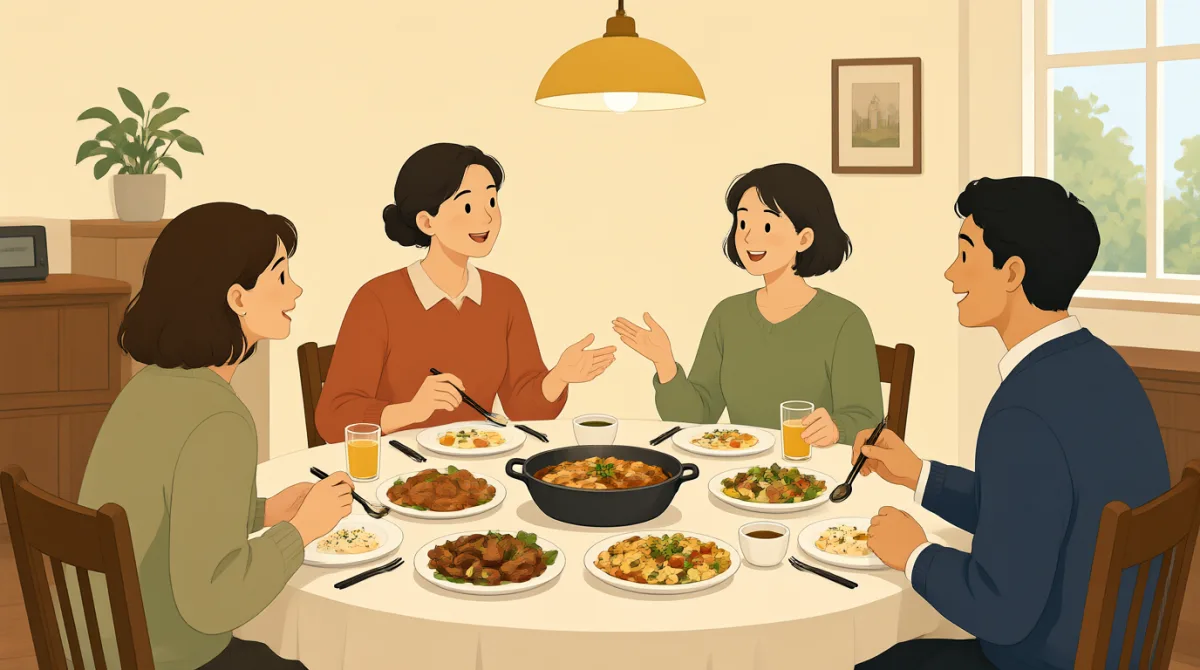

So, I'm really curious about dining in China. What are some typical dishes that really represent the culture?
حسنًا، يثير تناول الطعام في الصين فضولي حقًا. ما بعض الأطباق المعتادة التي تجسد الثقافة هناك؟

Oh, that's a great question! For typical dishes, Beijing Roast Duck definitely comes to mind for its historical significance and unique preparation. And if you're looking for something more communal, hot pot is a must-try. It's not just food; it's a social event.
أوه، هذا سؤال رائع! عندما نتحدث عن الأطباق المعتادة، يخطر ببالي بالتأكيد بط بكين المشوي لما له من أهمية تاريخية وطريقة تحضيره المميزة. وإذا كنت تبحث عن تجربة أكثر جماعية، فعليك أن تجرب الهوت بوت. فالأمر لا يقتصر على الطعام؛ بل هو مناسبة اجتماعية.
That's fascinating! So, hot pot sounds like it's all about sharing. How does that compare to dining habits in the US, where often everyone gets their own plate?
هذا مدهش! إذن يبدو أن الهوت بوت يتمحور حول المشاركة. كيف يختلف ذلك عن عادات تناول الطعام في الولايات المتحدة، حيث يحصل كل شخص غالبًا على طبقه الخاص؟
Exactly! Sharing is a big part of Chinese dining. We often order multiple dishes and put them in the center of the table for everyone to share. It encourages interaction and conversation. In contrast, individual plates are more common in Western cultures, leading to a different dynamic.
بالضبط! المشاركة جزء مهم من تناول الطعام في الصين. غالبًا ما نطلب أطباقًا متعددة ونضعها في وسط المائدة ليتشاركها الجميع. وهذا يشجع على التفاعل والحوار. أما في الثقافات الغربية، فالأطباق الفردية أكثر شيوعًا، ما يخلق أجواء مختلفة.
I can see that. And what about table manners? Are there any unspoken rules or surprising etiquettes I should be aware of?
أفهم ذلك. وماذا عن آداب المائدة؟ هل هناك قواعد غير معلنة أو آداب قد تفاجئني وينبغي أن أعرفها؟
Definitely. While chopsticks might be the most obvious difference, one key thing is not to stick your chopsticks upright in your rice bowl; it resembles incense at a funeral. Also, it's polite to offer food to elders or guests first, and it's common to tap the table lightly with two fingers as a thank you when someone pours tea for you.
بالتأكيد. قد تكون عيدان الأكل أبرز اختلاف، لكن من أهم الأمور ألا تغرس عيدانك منتصبة في وعاء الأرز؛ فهذا يشبه أعواد البخور في الجنازات. ومن اللائق أيضًا أن تقدم الطعام أولًا لكبار السن أو للضيوف، ومن الشائع أن تنقر بخفة على المائدة بإصبعين شكرًا عندما يصب لك أحدهم الشاي.
Wow, those are great tips! I would have never guessed. It really highlights how food isn't just about sustenance; it's deeply tied to social customs and respect, isn't it?
واو، هذه نصائح رائعة! لم أكن لأخمن ذلك أبدًا. إنها تبرز حقًا أن الطعام ليس مجرد وسيلة للبقاء؛ بل يرتبط ارتباطًا وثيقًا بالعادات الاجتماعية والاحترام، أليس كذلك؟
Absolutely. In China, food is a significant part of celebrations, business dealings, and family gatherings. Sharing a meal is a way to show hospitality, build relationships, and express care. It's a cornerstone of our social fabric.
بالتأكيد. في الصين، يشكل الطعام جزءًا مهمًا من الاحتفالات والمعاملات التجارية والتجمعات العائلية. ومشاركة وجبة طريقة لإظهار حسن الضيافة، وبناء العلاقات، والتعبير عن الاهتمام. إنها ركيزة أساسية في نسيج مجتمعنا.
That's a really beautiful perspective. It makes me appreciate how much culture is embedded in every bite. Thanks for shedding light on these differences!
إنها نظرة جميلة حقًا. تجعلني أقدّر مقدار ما تحمله كل لقمة من ثقافة. شكرًا لك على توضيح هذه الاختلافات!
You're very welcome! It's always interesting to compare and see how food connects us all, despite our cultural differences.
العفو! من الممتع دائمًا أن نقارن ونرى كيف يوحدنا الطعام جميعًا، رغم اختلاف ثقافاتنا.
المفردات8
- curiousفضولي
Means wanting to know or learn more about something. Use it when expressing interest, like 'I'm curious about your culture.'
تعني الرغبة في معرفة المزيد عن شيء ما أو تعلمه. استخدمها للتعبير عن اهتمامك، مثل 'I'm curious about your culture.' (أشعر بالفضول حيال ثقافتك).
- typicalمعتاد
Means common or representative of a group or place. In food discussions, say 'typical dishes' to mean traditional foods from a culture.
تعني شائعًا أو ممثلًا لمجموعة أو مكان. عند الحديث عن الطعام، تعني عبارة 'typical dishes' أطباقًا تقليدية من ثقافة ما.
- communalجماعي
Refers to something shared by a group. In dining, 'communal meal' means eating together from shared dishes to build social bonds.
تصف شيئًا يتشاركه أفراد المجموعة. وفي سياق تناول الطعام، تعني 'communal meal' تناول الطعام معًا من أطباق مشتركة لتعزيز الروابط الاجتماعية.
- sharingالمشاركة
The act of dividing food or items among people. In Chinese culture, it's a key part of meals to promote family or friendship.
هي اقتسام الطعام أو الأشياء بين الناس. وفي الثقافة الصينية، تعد المشاركة جزءًا أساسيًا من الوجبات، إذ تعزز الروابط الأسرية وروابط الصداقة.
- table mannersآداب المائدة
Rules for polite behavior at the dinner table. Important in cultural talks to avoid mistakes, like how to use utensils.
قواعد السلوك المهذب على مائدة الطعام. وهي مهمة في الحديث عن الثقافات لتجنب الأخطاء، مثل طريقة استخدام أدوات الطعام.
- etiquetteالآداب
Proper or polite ways to behave in social situations. Use it for customs like 'dining etiquette' to show respect.
طرق التصرف اللائقة أو المهذبة في المواقف الاجتماعية. استخدمها للحديث عن عادات مثل 'dining etiquette' (آداب تناول الطعام) لإظهار الاحترام.
- hospitalityحسن الضيافة
Friendly and generous treatment of guests. In Chinese food culture, sharing meals shows hospitality and care for others.
معاملة الضيوف بترحاب وكرم. وفي ثقافة الطعام الصينية، يُظهر تشارك الوجبات حسن الضيافة والاهتمام بالآخرين.
- sustenanceالقوت
Basic food needed to stay alive. Contrast it with cultural views, like 'Food is more than sustenance; it's about tradition.'
الطعام الأساسي اللازم للبقاء على قيد الحياة. يمكن مقارنته بالنظرة الثقافية إلى الطعام، كما في 'Food is more than sustenance; it's about tradition.' (الطعام أكثر من مجرد قوت؛ فهو مرتبط بالتقاليد).
الجمل الأساسية8
- 1
I'm really curious about dining in China.
يُثير تناول الطعام في الصين فضولي حقًا.
This expresses interest in a topic. Useful for starting conversations about cultures. 'Curious about' shows polite eagerness; use it to ask questions without being too direct.
تعبر هذه العبارة عن الاهتمام بموضوع ما، وهي مفيدة لبدء حوار عن الثقافات. وتُظهر 'Curious about' (أشعر بالفضول حيال) اهتمامًا مهذبًا؛ استخدمها لطرح الأسئلة من دون أن تبدو مباشرًا أكثر من اللازم.
- 2
That's a great question!
هذا سؤال رائع!
A positive response to show appreciation. It's a common phrase in discussions to keep the talk flowing. Use it when someone asks something thoughtful.
رد إيجابي يُظهر التقدير. وهي عبارة شائعة في النقاشات تساعد على استمرار الحوار. استخدمها عندما يطرح أحدهم سؤالًا ينم عن تفكير.
- 3
Sharing is a big part of Chinese dining.
المشاركة جزء مهم من تناول الطعام في الصين.
Highlights a cultural practice. 'A big part of' means very important in. Useful for comparing habits; the present tense describes general truths.
تسلط هذه العبارة الضوء على ممارسة ثقافية. تعني 'A big part of' (جزء مهم من) أن الشيء مهم جدًا في مجال ما. وهي مفيدة لمقارنة العادات، كما أن زمن المضارع يُستخدم للتعبير عن الحقائق العامة.
- 4
It encourages interaction and conversation.
إنه يشجع على التفاعل والحوار.
Explains a benefit of an action. 'Encourages' means promotes or makes more likely. Great for describing social activities; use in talks about group behaviors.
تشرح هذه العبارة فائدة أحد الأفعال. وتعني 'Encourages' (يشجع) أنه يعزز أمرًا أو يزيد احتمال حدوثه. وهي مفيدة لوصف الأنشطة الاجتماعية والسلوكيات الجماعية.
- 5
What about table manners?
وماذا عن آداب المائدة؟
A way to change or add to the topic. 'What about' introduces a related question. Useful in interviews or chats to explore more details smoothly.
طريقة للانتقال إلى موضوع مرتبط أو إضافة نقطة إليه. تقدم 'What about' سؤالًا ذا صلة، وهي مفيدة في المقابلات أو الأحاديث لاستكشاف مزيد من التفاصيل بسلاسة.
- 6
It's polite to offer food to elders or guests first.
من اللائق أن تقدم الطعام أولًا لكبار السن أو للضيوف.
Describes a rule of behavior. 'It's polite to' is a structure for giving advice on manners. Essential for cultural etiquette lessons; shows respect in sentences.
تصف هذه العبارة قاعدة سلوكية. تُستخدم 'It's polite to' للتعبير عن نصيحة تتعلق بالآداب، وهي أساسية في دروس الآداب الثقافية لأنها تبين الاحترام.
- 7
Food isn't just about sustenance; it's deeply tied to social customs.
الطعام ليس مجرد قوت؛ فهو يرتبط ارتباطًا وثيقًا بالعادات الاجتماعية.
Contrasts ideas with a semicolon. 'Deeply tied to' means closely connected. Useful for deeper discussions; helps explain cultural significance beyond basics.
تقابل العبارة بين فكرتين باستخدام الفاصلة المنقوطة. وتعني 'Deeply tied to' (مرتبط ارتباطًا وثيقًا بـ). وهي مفيدة في النقاشات المعمقة لشرح الأهمية الثقافية التي تتجاوز الأساسيات.
- 8
Thanks for shedding light on these differences!
شكرًا لك على توضيح هذه الاختلافات!
Means thanking for explaining something clearly. 'Shedding light on' is an idiom for clarifying. Use it to end positive talks and show gratitude.
تعني تقديم الشكر على شرح شيء بوضوح. وعبارة 'Shedding light on' تعبير اصطلاحي يعني توضيح أمر ما. استخدمها لإنهاء حوار بإيجابية والتعبير عن الامتنان.