Food and Dining Experiences
飲食文化體驗
Individuals discuss typical dishes, dining habits, table manners, and the social significance of food in their respective cultures.
個人討論各自文化中的典型菜餚、飲食習慣、餐桌禮儀以及食物的社會意義。
對話10
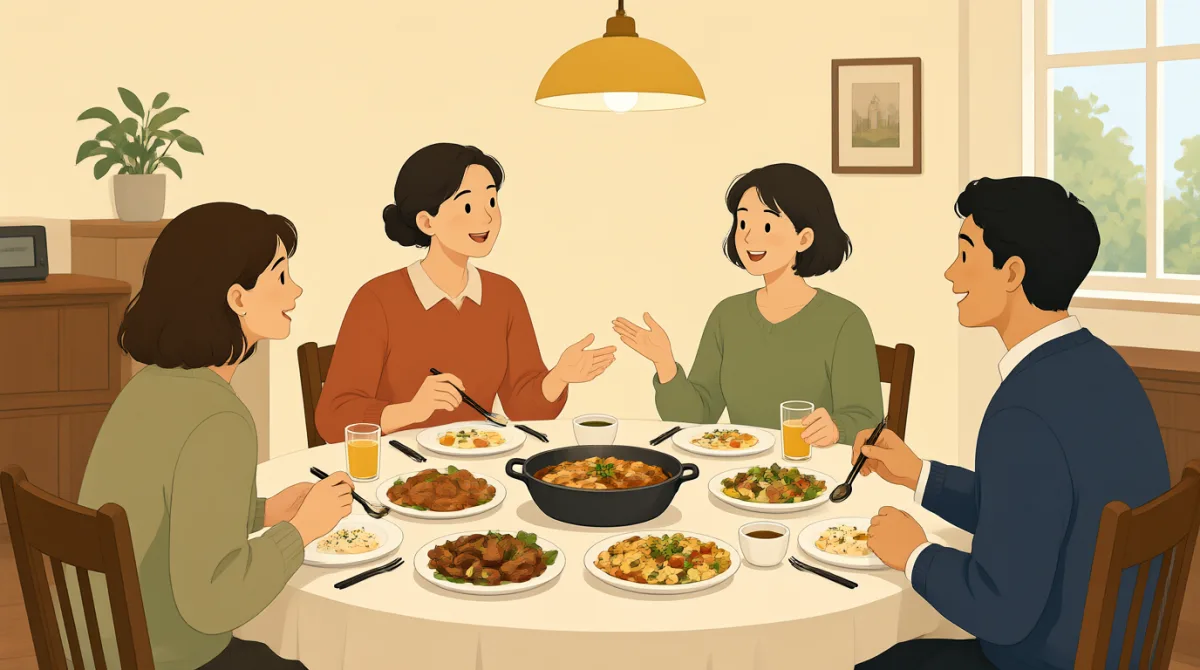

So, I'm really curious about dining in China. What are some typical dishes that really represent the culture?
我對中國的餐飲文化非常好奇。有哪些典型的菜餚能夠真正代表中華文化?

Oh, that's a great question! For typical dishes, Beijing Roast Duck definitely comes to mind for its historical significance and unique preparation. And if you're looking for something more communal, hot pot is a must-try. It's not just food; it's a social event.
哦,這個問題很好!說到典型菜餚,北京烤鴨絕對是首選,因為它有歷史意義和獨特的烹飪方式。如果你想嘗試一些更具團聚感的食物,火鍋是必嘗的。它不僅僅是食物,更是一種社交活動。
That's fascinating! So, hot pot sounds like it's all about sharing. How does that compare to dining habits in the US, where often everyone gets their own plate?
太棒了!所以,火鍋聽起來就是關於分享的。這和美國人的用餐習慣有什麼不同?在美國通常每個人都有自己的盤子。
Exactly! Sharing is a big part of Chinese dining. We often order multiple dishes and put them in the center of the table for everyone to share. It encourages interaction and conversation. In contrast, individual plates are more common in Western cultures, leading to a different dynamic.
沒錯!分享是中國餐飲的一個重要組成部分。我們通常會點好幾道菜,放在餐桌中央,大家一起分享。這鼓勵了互動和交流。相比之下,西方文化中個人盤子更常見,導致了不同的用餐方式。
I can see that. And what about table manners? Are there any unspoken rules or surprising etiquettes I should be aware of?
我明白了。那餐桌禮儀呢?我有什麼需要注意的約定俗成的規矩或令人驚訝的禮儀嗎?
Definitely. While chopsticks might be the most obvious difference, one key thing is not to stick your chopsticks upright in your rice bowl; it resembles incense at a funeral. Also, it's polite to offer food to elders or guests first, and it's common to tap the table lightly with two fingers as a thank you when someone pours tea for you.
當然有。雖然筷子可能是最明顯的區別,但一個重要的點是不要把筷子直立插在飯碗裡;這類似於葬禮上的香。此外,先給長輩或客人夾菜是禮貌的,而且當有人為你倒茶時,輕輕敲擊桌面兩下表示感謝是很常見的。
Wow, those are great tips! I would have never guessed. It really highlights how food isn't just about sustenance; it's deeply tied to social customs and respect, isn't it?
哇,這些都是很棒的建議!我真想不到。這真的突顯了食物不僅僅是維持生命,它還與社會習俗和尊重息息相關,不是嗎?
Absolutely. In China, food is a significant part of celebrations, business dealings, and family gatherings. Sharing a meal is a way to show hospitality, build relationships, and express care. It's a cornerstone of our social fabric.
正是。在中國,食物是慶祝活動、商務往來和家庭聚會的重要組成部分。分享一頓飯是表達熱情好客、建立關係和表達關愛的方式。它是我們社會結構中的基石。
That's a really beautiful perspective. It makes me appreciate how much culture is embedded in every bite. Thanks for shedding light on these differences!
這是一個非常美好的視角。它讓我意識到文化是如何深深地融入到每一口食物中。感謝你闡明瞭這些差異!
You're very welcome! It's always interesting to compare and see how food connects us all, despite our cultural differences.
不客氣!比較並看看食物如何連線我們所有人,儘管我們存在文化差異,這總是很有趣的。
詞彙8
- curious好奇的
Means wanting to know or learn more about something. Use it when expressing interest, like 'I'm curious about your culture.'
表示想進一步瞭解或學習某件事。表達興趣時可以用它,比如 “I'm curious about your culture.”(我對你的文化很好奇。)
- typical典型的
Means common or representative of a group or place. In food discussions, say 'typical dishes' to mean traditional foods from a culture.
表示某個群體或地方常見的、具有代表性的。在談論食物時,說 “typical dishes” 指的是某種文化中的傳統菜餚。
- communal共享的
Refers to something shared by a group. In dining, 'communal meal' means eating together from shared dishes to build social bonds.
指由一群人共同分享的東西。在用餐場景中,“communal meal” 指大家一起享用共享的菜餚,以增進彼此的聯絡。
- sharing分享
The act of dividing food or items among people. In Chinese culture, it's a key part of meals to promote family or friendship.
指把食物或物品分給大家。在中國文化中,分享是用餐的重要部分,有助於增進家人或朋友之間的感情。
- table manners餐桌禮儀
Rules for polite behavior at the dinner table. Important in cultural talks to avoid mistakes, like how to use utensils.
指在餐桌上舉止得體的規矩。討論文化時,瞭解餐桌禮儀很重要,可以避免失禮,比如注意餐具的使用方式。
- etiquette禮儀
Proper or polite ways to behave in social situations. Use it for customs like 'dining etiquette' to show respect.
指在社交場合中恰當、得體的行為方式。可以用它來談論 “dining etiquette”(用餐禮儀),表達對他人的尊重。
- hospitality熱情好客
Friendly and generous treatment of guests. In Chinese food culture, sharing meals shows hospitality and care for others.
指友善、大方地招待客人。在中國飲食文化中,共享飯菜能體現待客的熱情和對他人的關心。
- sustenance維持生命所需的食物
Basic food needed to stay alive. Contrast it with cultural views, like 'Food is more than sustenance; it's about tradition.'
指維持生命所必需的基本食物。可以用它來對比文化觀念,比如 “Food is more than sustenance; it's about tradition.”(食物不只是維持生命所需,也關乎傳統。)
關鍵句8
- 1
I'm really curious about dining in China.
我真的很好奇中國的飲食文化。
This expresses interest in a topic. Useful for starting conversations about cultures. 'Curious about' shows polite eagerness; use it to ask questions without being too direct.
這句話表達了對某個話題的興趣,很適合用來開啟有關不同文化的對話。“Curious about” 表示禮貌而熱切地想了解,可以用它提問,又不會顯得太直接。
- 2
That's a great question!
這個問題問得真好!
A positive response to show appreciation. It's a common phrase in discussions to keep the talk flowing. Use it when someone asks something thoughtful.
這是一種積極的回應,可以表達讚賞。在討論中很常見,能讓對話順暢地繼續下去。有人提出了值得思考的問題時,可以用這句話回應。
- 3
Sharing is a big part of Chinese dining.
分享是中國飲食文化的重要組成部分。
Highlights a cultural practice. 'A big part of' means very important in. Useful for comparing habits; the present tense describes general truths.
這句話強調了一種文化習慣。“A big part of” 表示“……中非常重要的一部分”。比較飲食習慣時很實用;一般現在時則用來描述普遍事實。
- 4
It encourages interaction and conversation.
這能促進互動和交流。
Explains a benefit of an action. 'Encourages' means promotes or makes more likely. Great for describing social activities; use in talks about group behaviors.
這句話說明了某種做法帶來的好處。“Encourages” 表示“促進”或“使某事更有可能發生”。描述社交活動或群體行為時很實用。
- 5
What about table manners?
那餐桌禮儀呢?
A way to change or add to the topic. 'What about' introduces a related question. Useful in interviews or chats to explore more details smoothly.
這是一種轉換話題或補充相關問題的說法。“What about” 用來引出相關問題。在訪談或聊天中,可以用它自然地進一步瞭解細節。
- 6
It's polite to offer food to elders or guests first.
先給長輩或客人夾菜是有禮貌的。
Describes a rule of behavior. 'It's polite to' is a structure for giving advice on manners. Essential for cultural etiquette lessons; shows respect in sentences.
這句話介紹了一條行為禮儀。“It's polite to” 是提供禮儀建議時常用的句型。在介紹文化禮儀時很實用,也能表達尊重。
- 7
Food isn't just about sustenance; it's deeply tied to social customs.
食物不只是維持生命所需,也與社會習俗息息相關。
Contrasts ideas with a semicolon. 'Deeply tied to' means closely connected. Useful for deeper discussions; helps explain cultural significance beyond basics.
這句話用分號連線並對比兩種觀點。“Deeply tied to” 表示“與……有著密切聯絡”。深入討論文化時可以用它,說明文化意義不止於表面。
- 8
Thanks for shedding light on these differences!
謝謝你幫我更好地瞭解這些差異!
Means thanking for explaining something clearly. 'Shedding light on' is an idiom for clarifying. Use it to end positive talks and show gratitude.
這句話是在感謝對方把事情解釋清楚。“Shedding light on” 是一個習語,表示“闡明”或“讓人更清楚地瞭解”。結束愉快的交流時,可以用它表達感謝。