Sharing Traditional Holiday Experiences
تجربههای جشنهای سنتی را با هم در میان گذاشتن
Participants are talking about their favorite traditional holidays, explaining the customs, foods, and family activities associated with them in their home countries.
شرکتکنندگان دربارهٔ جشنهای سنتی محبوبشان صحبت میکنند و آدابورسوم، خوراکیها و فعالیتهای خانوادگی مرتبط با آنها را در کشورهای خود توضیح میدهند.
گفتوگو8
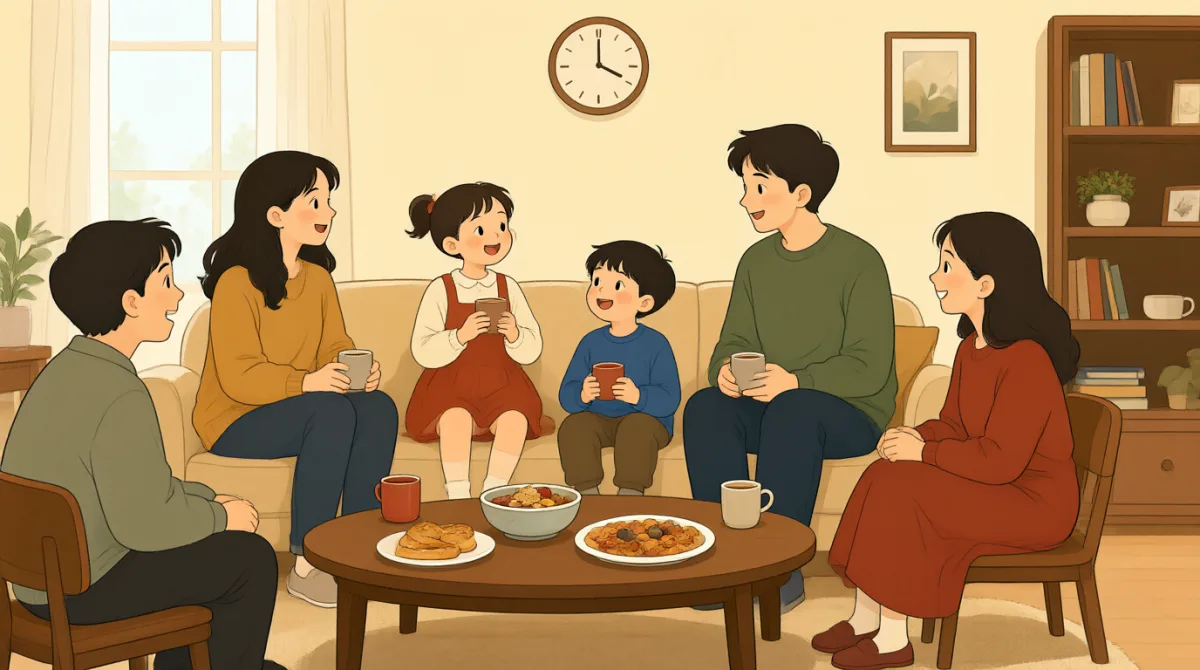

It's so interesting how different cultures celebrate holidays. What's your favorite traditional holiday from your home country, Jack?
جالبه که فرهنگهای مختلف چطور جشنها رو برگزار میکنن. جک، جشن سنتی محبوبت از کشور خودت چیه؟

That's a great question, Emma! I'd have to say Christmas. It's a huge family gathering, and we have so many traditions.
سؤال خیلی خوبیه، اِما! باید بگم کریسمس. یه دورهمی بزرگ خانوادگیه و کلی رسمورسوم داریم.

Oh, Christmas is lovely! What kind of traditions do you have? Over here, for Chinese New Year, we always have a huge reunion dinner with dumplings and fish.
وای، کریسمس خیلی قشنگه! چه رسمورسومهایی دارین؟ اینجا ما برای سال نوی چینی همیشه یه شام دورهمی بزرگ داریم که توش دامپلینگ و ماهی میخوریم.
For Christmas, we usually open presents in the morning, then have a big roast turkey dinner with all the trimmings. My aunt always bakes a special fruitcake too. It's a lot about family and togetherness.
برای کریسمس، معمولاً صبح هدیهها رو باز میکنیم و بعد یه شام مفصل با بوقلمون بریان و همهٔ مخلفاتش میخوریم. عمهم هم همیشه یه کیک میوهای مخصوص میپزه. این جشن بیشتر دربارهٔ خانواده و کنار هم بودنه.
That sounds delicious and heartwarming! In my country, the Day of the Dead is very significant. We build altars for loved ones, decorate them with marigolds, and offer their favorite foods.
چه خوشمزه و دلگرمکننده! توی کشور من، روز مردگان اهمیت زیادی داره. برای عزیزان ازدسترفته محرابهایی درست میکنیم، با گل همیشهبهار تزئینشون میکنیم و غذاهای موردعلاقهشون رو براشون میذاریم.
That's fascinating, Emma! Is it a sad holiday, or more of a celebration of life?
چقدر جالبه، اِما! جشن غمانگیزیه یا بیشتر جشن زندگیه؟
It's definitely a celebration! We believe their spirits return to visit, so it's a joyful time to remember them, share stories, and play music. It's not somber at all.
قطعاً جشنی برای زندگیه! باور داریم روحشون برمیگرده تا به دیدنمون بیاد، برای همین زمان شادیه تا یادشون کنیم، خاطره تعریف کنیم و موسیقی بنوازیم. اصلاً غمانگیز نیست.
Wow, that's a beautiful way to honor the past. It sounds very different from Christmas, but the emphasis on family and sharing seems to be a common thread across all our holidays.
وای، چه راه زیبایی برای گرامیداشت گذشته. به نظر میاد با کریسمس خیلی فرق داره، اما تأکید بر خانواده و با هم شریک شدن انگار وجه مشترک همهٔ جشنهای ماست.
واژگان7
- traditionsرسمورسومها
Customs or practices that are passed down through generations, often during holidays or family events. For example, opening presents on Christmas is a tradition.
به آداب و کارهایی گفته میشود که نسلبهنسل منتقل میشوند و اغلب در جشنها یا گردهماییهای خانوادگی انجام میگیرند. مثلاً باز کردن هدیهها در کریسمس یک رسم است.
- celebrateجشن گرفتن
To mark a special event with activities, food, or gatherings. You can say, 'We celebrate holidays with family dinners.'
یعنی با فعالیت، غذا یا دورهمی، رویدادی ویژه را گرامی داشتن. میتوانی بگویی: «ما تعطیلات را با شام خانوادگی جشن میگیریم.»
- reunionدیدار دوباره
A gathering of family or friends who have been apart. It's common in holidays like Chinese New Year, as in 'a huge reunion dinner.'
گردهمایی خانواده یا دوستانی که مدتی از هم دور بودهاند. چنین دورهمیهایی در جشنهایی مثل سال نوی چینی رایج است؛ مثلاً در عبارت 'a huge reunion dinner' (یک شام دورهمی بزرگ).
- togethernessباهمبودن
The feeling of closeness and unity among people, especially family. Use it to describe holidays: 'Christmas is about family togetherness.'
احساس نزدیکی و همبستگی میان آدمها، بهویژه اعضای خانواده. برای توصیف جشنها به کار میرود: 'Christmas is about family togetherness.' (کریسمس دربارهٔ باهمبودن خانواده است.)
- altarsمحرابها
Special tables or structures set up for honoring people or spirits, often decorated with flowers or food, like in Day of the Dead celebrations.
میزها یا سازههای ویژهای که برای گرامیداشت افراد یا ارواح برپا میشوند و اغلب با گل یا خوراکی تزئین میشوند؛ مانند محرابهای جشن روز مردگان.
- honorگرامى داشتن
To show respect or remembrance for someone or something important. For example, 'We honor our loved ones by sharing stories.'
یعنی نشان دادن احترام یا زنده نگه داشتن یادِ شخص یا چیزی مهم. مثلاً: 'We honor our loved ones by sharing stories.' (با تعریف خاطرهها، یاد عزیزانمان را گرامی میداریم.)
- common threadوجه مشترک
A shared idea or theme that connects different things. In conversations, say 'Family is the common thread in all our holidays.'
فکر یا موضوع مشترکی که چیزهای مختلف را به هم پیوند میدهد. در گفتگو میتوان گفت: 'Family is the common thread in all our holidays.' (خانواده وجه مشترک همهٔ جشنهای ماست.)
جملات کلیدی6
- 1
What's your favorite traditional holiday from your home country?
جشن سنتی محبوبت از کشور خودت چیه؟
This is a polite question to ask about someone's personal preferences in cultural discussions. It uses 'what's your favorite' for opinions and 'from your home country' to specify origin. Great for starting conversations about traditions.
این سؤال دوستانهای است برای پرسیدن دربارهٔ علاقهٔ شخصی کسی در گفتگوهای فرهنگی. عبارت 'what's your favorite' برای پرسیدن نظر و 'from your home country' برای مشخص کردن کشور مبدأ به کار میرود. برای شروع گفتگو دربارهٔ رسمورسومها خیلی مناسب است.
- 2
That's a great question!
سؤال خیلی خوبیه!
A friendly way to respond positively to a question, showing appreciation. It's useful in dialogues to keep the conversation flowing smoothly without directly answering right away.
پاسخی دوستانه برای نشان دادن استقبال از یک سؤال است. در گفتگو کمک میکند صحبت روان پیش برود، حتی اگر نخواهی همان لحظه مستقیم جواب بدهی.
- 3
What kind of traditions do you have?
چه رسمورسومهایی دارین؟
This asks for details about customs using 'what kind of' to specify types. It's practical for learning more about someone's culture and encourages sharing examples.
این سؤال با استفاده از 'what kind of' دربارهٔ جزئیات آدابورسوم میپرسد. برای آشنایی بیشتر با فرهنگ کسی و تشویق او به گفتن مثالها کاربردی است.
- 4
That sounds delicious and heartwarming!
چه خوشمزه و دلگرمکننده!
An expression of positive reaction to a description, combining 'sounds' for imagined experience with adjectives like 'delicious' for food and 'heartwarming' for emotional warmth. Use it to show interest in others' stories.
واکنشی مثبت به توصیف چیزی است. 'sounds' برای بیان برداشتی به کار میرود که از شنیدن توصیف پیدا میکنی؛ صفتهایی مثل 'delicious' برای غذا و 'heartwarming' برای احساس گرمی و صمیمیت هستند. با این عبارت میتوانی به داستان دیگران علاقه نشان بدهی.
- 5
It's definitely a celebration!
قطعاً جشنی برای زندگیه!
This emphasizes a point strongly with 'definitely' (meaning certainly) and clarifies the nature of an event. Helpful for correcting misconceptions or highlighting positive aspects in cultural talks.
در این جمله با 'definitely' (یعنی قطعاً) بر نکتهای تأکید میشود و ماهیت یک رویداد روشن میشود. برای اصلاح برداشت نادرست یا برجسته کردن جنبههای مثبت در گفتگوهای فرهنگی مفید است.
- 6
It sounds very different from Christmas, but the emphasis on family and sharing seems to be a common thread across all our holidays.
به نظر میاد با کریسمس خیلی فرق داره، اما تأکید بر خانواده و با هم شریک شدن انگار وجه مشترک همهٔ جشنهای ماست.
This sentence compares cultures using 'different from' and 'but' to find similarities with 'common thread' (shared element). The structure shows contrast and connection, ideal for cross-cultural discussions.
این جمله با 'different from' فرهنگها را با هم مقایسه میکند و با 'but' شباهتی را نشان میدهد؛ 'common thread' یعنی عنصر مشترک. این ساختار هم تفاوت را نشان میدهد و هم پیوند میان چیزها را، پس برای گفتگوهای میانفرهنگی مناسب است.