Sharing Traditional Holiday Experiences
ঐতিহ্যবাহী ছুটির দিনের অভিজ্ঞতা ভাগ করে নেওয়া
Participants are talking about their favorite traditional holidays, explaining the customs, foods, and family activities associated with them in their home countries.
অংশগ্রহণকারীরা নিজেদের দেশের প্রিয় ঐতিহ্যবাহী ছুটির দিন নিয়ে কথা বলছেন এবং এসব দিনের সঙ্গে জড়িত রীতিনীতি, খাবার ও পারিবারিক কার্যকলাপের বর্ণনা দিচ্ছেন।
সংলাপ8
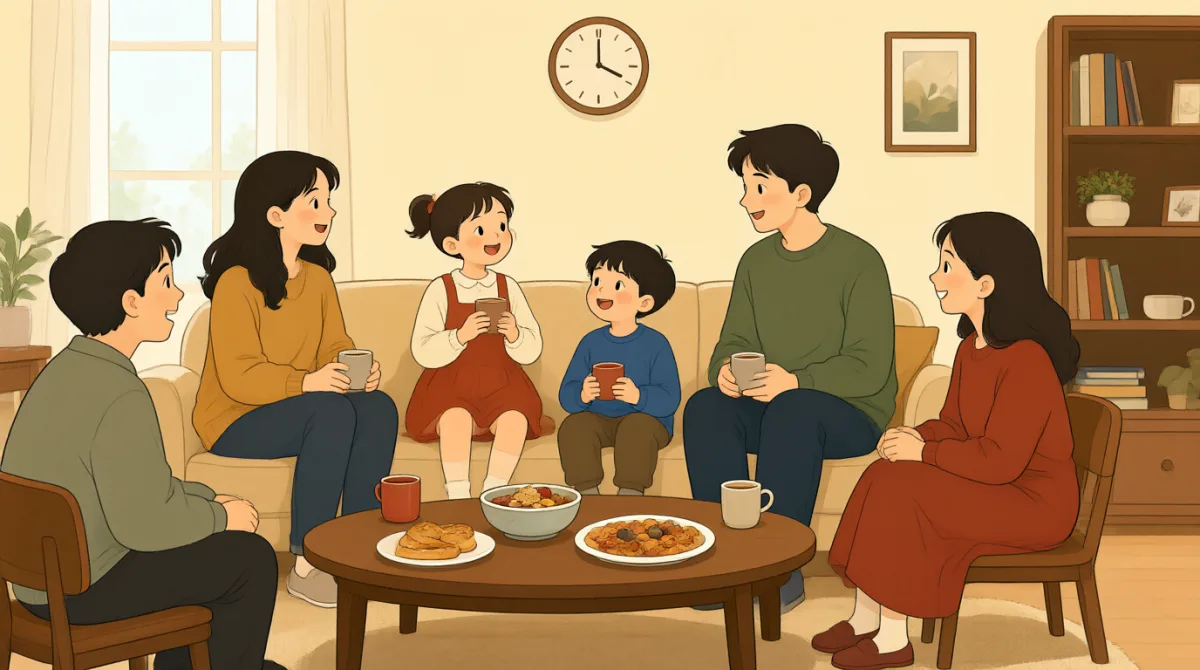

It's so interesting how different cultures celebrate holidays. What's your favorite traditional holiday from your home country, Jack?
বিভিন্ন সংস্কৃতিতে ছুটির দিনগুলো কীভাবে উদ্যাপন করা হয়, সেটা সত্যিই দারুণ লাগে। জ্যাক, তোমার দেশের সবচেয়ে প্রিয় ঐতিহ্যবাহী ছুটির দিন কোনটি?

That's a great question, Emma! I'd have to say Christmas. It's a huge family gathering, and we have so many traditions.
দারুণ প্রশ্ন, এমা! বলতে গেলে, বড়দিনই আমার প্রিয়। এ সময় পুরো পরিবার একসঙ্গে হয়, আর আমাদের কত রকমের ঐতিহ্য আছে!

Oh, Christmas is lovely! What kind of traditions do you have? Over here, for Chinese New Year, we always have a huge reunion dinner with dumplings and fish.
আহা, বড়দিন খুব সুন্দর! তোমাদের কী কী রীতি আছে? আমাদের এখানে চীনা নববর্ষে সব সময় পরিবারের সবাই মিলে বড় করে পুনর্মিলনী ভোজ হয়, যেখানে ডাম্পলিং আর মাছ থাকে।
For Christmas, we usually open presents in the morning, then have a big roast turkey dinner with all the trimmings. My aunt always bakes a special fruitcake too. It's a lot about family and togetherness.
বড়দিনে আমরা সাধারণত সকালে উপহার খুলি, তারপর সব আয়োজনসহ বড় করে রোস্ট টার্কির ভোজ করি। আমার খালা সব সময় বিশেষ ফলের কেকও বানান। দিনটা মূলত পরিবার আর একসঙ্গে থাকার আনন্দ নিয়ে।
That sounds delicious and heartwarming! In my country, the Day of the Dead is very significant. We build altars for loved ones, decorate them with marigolds, and offer their favorite foods.
শুনে দারুণ সুস্বাদু আর মন ছুঁয়ে যাওয়ার মতো লাগছে! আমার দেশে মৃতদের স্মরণ দিবস খুবই গুরুত্বপূর্ণ। আমরা প্রিয়জনদের জন্য বেদি সাজাই, গাঁদা ফুল দিয়ে সেগুলো সাজাই এবং তাঁদের প্রিয় খাবার নিবেদন করি।
That's fascinating, Emma! Is it a sad holiday, or more of a celebration of life?
কী চমৎকার, এমা! এটা কি শোকের ছুটির দিন, নাকি জীবনের উদ্যাপন?
It's definitely a celebration! We believe their spirits return to visit, so it's a joyful time to remember them, share stories, and play music. It's not somber at all.
এটা নিঃসন্দেহে উদ্যাপনের দিন! আমরা বিশ্বাস করি, তাঁদের আত্মা আমাদের সঙ্গে দেখা করতে ফিরে আসে। তাই তাঁদের স্মরণ করা, গল্প ভাগ করে নেওয়া আর গানবাজনার আনন্দময় সময় এটা। দিনটা মোটেও বিষণ্ণ নয়।
Wow, that's a beautiful way to honor the past. It sounds very different from Christmas, but the emphasis on family and sharing seems to be a common thread across all our holidays.
বাহ, অতীতকে সম্মান জানানোর কী সুন্দর উপায়! বড়দিনের চেয়ে এটা বেশ আলাদা মনে হচ্ছে, তবে পরিবার আর ভাগাভাগি করে নেওয়ার ওপর গুরুত্ব দেওয়াটা আমাদের সব ছুটির দিনেরই যেন একটা মিলের সূত্র।
শব্দভান্ডার7
- traditionsঐতিহ্য
Customs or practices that are passed down through generations, often during holidays or family events. For example, opening presents on Christmas is a tradition.
প্রজন্মের পর প্রজন্ম ধরে চলে আসা রীতিনীতি বা অভ্যাসকে এভাবে বলা হয়। ছুটির দিন বা পারিবারিক অনুষ্ঠানে এগুলো প্রায়ই দেখা যায়। যেমন, বড়দিনে উপহার খোলা একটি ঐতিহ্য।
- celebrateউদ্যাপন করা
To mark a special event with activities, food, or gatherings. You can say, 'We celebrate holidays with family dinners.'
কোনো বিশেষ ঘটনা উপলক্ষে নানা আয়োজন, খাবার বা জমায়েতের মাধ্যমে আনন্দ প্রকাশ করাকে বোঝায়। বলতে পারো, 'We celebrate holidays with family dinners.' (আমরা পরিবারের সঙ্গে রাতের খাবার খেয়ে ছুটির দিন উদ্যাপন করি।)
- reunionপুনর্মিলনী
A gathering of family or friends who have been apart. It's common in holidays like Chinese New Year, as in 'a huge reunion dinner.'
অনেক দিন আলাদা থাকার পর পরিবার বা বন্ধুদের একত্র হওয়াকে বোঝায়। চীনা নববর্ষের মতো ছুটির দিনে এটি বেশ প্রচলিত, যেমন 'a huge reunion dinner.' (বড়সড় পুনর্মিলনী ভোজ)।
- togethernessএকসঙ্গে থাকার আনন্দ
The feeling of closeness and unity among people, especially family. Use it to describe holidays: 'Christmas is about family togetherness.'
মানুষের, বিশেষ করে পরিবারের সদস্যদের, ঘনিষ্ঠতা ও ঐক্যের অনুভূতিকে বোঝায়। ছুটির দিনের কথা বলতে এটি ব্যবহার করতে পারো: 'Christmas is about family togetherness.' (বড়দিন মানে পরিবারের সঙ্গে একসঙ্গে থাকার আনন্দ।)
- altarsবেদি
Special tables or structures set up for honoring people or spirits, often decorated with flowers or food, like in Day of the Dead celebrations.
মানুষ বা আত্মাকে সম্মান জানানোর জন্য তৈরি বিশেষ টেবিল বা কাঠামোকে বোঝায়। এগুলোতে প্রায়ই ফুল বা খাবার দিয়ে সাজানো হয়, যেমন মৃতদের স্মরণ দিবসে।
- honorসম্মান জানানো
To show respect or remembrance for someone or something important. For example, 'We honor our loved ones by sharing stories.'
কোনো গুরুত্বপূর্ণ ব্যক্তি বা বিষয়ের প্রতি শ্রদ্ধা প্রকাশ করা বা তাঁকে স্মরণ করাকে বোঝায়। যেমন, 'We honor our loved ones by sharing stories.' (গল্প ভাগ করে নিয়ে আমরা আমাদের প্রিয়জনদের স্মরণ করি।)
- common threadমিলের সূত্র
A shared idea or theme that connects different things. In conversations, say 'Family is the common thread in all our holidays.'
বিভিন্ন বিষয়কে যুক্ত করে এমন একটি অভিন্ন ধারণা বা ভাবকে বোঝায়। কথোপকথনে বলতে পারো, 'Family is the common thread in all our holidays.' (আমাদের সব ছুটির দিনের মিলের সূত্র হলো পরিবার।)
গুরুত্বপূর্ণ বাক্য6
- 1
What's your favorite traditional holiday from your home country?
তোমার দেশের সবচেয়ে প্রিয় ঐতিহ্যবাহী ছুটির দিন কোনটি?
This is a polite question to ask about someone's personal preferences in cultural discussions. It uses 'what's your favorite' for opinions and 'from your home country' to specify origin. Great for starting conversations about traditions.
সাংস্কৃতিক আলোচনা করার সময় কারও ব্যক্তিগত পছন্দ জানতে এটি ভদ্রভাবে করা একটি প্রশ্ন। মতামত জানতে 'what's your favorite' এবং উৎস নির্দিষ্ট করতে 'from your home country' ব্যবহার করা হয়েছে। ঐতিহ্য নিয়ে কথোপকথন শুরু করতে এটি বেশ কাজে লাগে।
- 2
That's a great question!
দারুণ প্রশ্ন!
A friendly way to respond positively to a question, showing appreciation. It's useful in dialogues to keep the conversation flowing smoothly without directly answering right away.
কোনো প্রশ্নের ইতিবাচক প্রতিক্রিয়া জানিয়ে কৃতজ্ঞতা প্রকাশের বন্ধুত্বপূর্ণ উপায় এটি। সঙ্গে সঙ্গে উত্তর না দিয়েও কথোপকথন স্বচ্ছন্দে এগিয়ে নিতে এই বাক্য কাজে লাগে।
- 3
What kind of traditions do you have?
তোমাদের কী কী রীতি আছে?
This asks for details about customs using 'what kind of' to specify types. It's practical for learning more about someone's culture and encourages sharing examples.
'what kind of' ব্যবহার করে বিভিন্ন ধরনের রীতি সম্পর্কে বিস্তারিত জানতে এই প্রশ্নটি করা হয়। কারও সংস্কৃতি সম্পর্কে আরও জানার এবং উদাহরণ শেয়ার করতে উৎসাহ দেওয়ার জন্য এটি কাজে লাগে।
- 4
That sounds delicious and heartwarming!
শুনে দারুণ সুস্বাদু আর মন ছুঁয়ে যাওয়ার মতো লাগছে!
An expression of positive reaction to a description, combining 'sounds' for imagined experience with adjectives like 'delicious' for food and 'heartwarming' for emotional warmth. Use it to show interest in others' stories.
কোনো বর্ণনার প্রতি ইতিবাচক প্রতিক্রিয়া জানাতে এই বাক্যটি বলা হয়। কল্পনায় অভিজ্ঞতাটি বোঝাতে 'sounds' ব্যবহার করা হয়েছে; খাবারের জন্য 'delicious' আর আবেগের উষ্ণতার জন্য 'heartwarming' বলা হয়েছে। অন্যের গল্পে আগ্রহ দেখাতে এটি ব্যবহার করো।
- 5
It's definitely a celebration!
এটা নিঃসন্দেহে উদ্যাপনের দিন!
This emphasizes a point strongly with 'definitely' (meaning certainly) and clarifies the nature of an event. Helpful for correcting misconceptions or highlighting positive aspects in cultural talks.
'definitely' (নিশ্চিতভাবেই) দিয়ে কোনো কথা জোর দিয়ে বলা হয় এবং কোনো ঘটনার ধরন স্পষ্ট করা হয়। ভুল ধারণা শুধরে দিতে বা সাংস্কৃতিক আলোচনা ইতিবাচক দিক তুলে ধরতে এটি কাজে লাগে।
- 6
It sounds very different from Christmas, but the emphasis on family and sharing seems to be a common thread across all our holidays.
বড়দিনের চেয়ে এটা বেশ আলাদা মনে হচ্ছে, তবে পরিবার আর ভাগাভাগি করে নেওয়ার ওপর গুরুত্ব দেওয়াটা আমাদের সব ছুটির দিনেরই যেন একটা মিলের সূত্র।
This sentence compares cultures using 'different from' and 'but' to find similarities with 'common thread' (shared element). The structure shows contrast and connection, ideal for cross-cultural discussions.
এই বাক্যে 'different from' দিয়ে সংস্কৃতির মধ্যে পার্থক্য দেখানো হয়েছে এবং 'but' দিয়ে 'common thread' (অভিন্ন যোগসূত্র) ব্যবহার করে মিল খোঁজা হয়েছে। এই গঠনটি পার্থক্য ও যোগসূত্র—দুটিই তুলে ধরে, তাই আন্তঃসাংস্কৃতিক আলোচনায় বেশ উপযোগী।