Sharing Traditional Holiday Experiences
แบ่งปันประสบการณ์เกี่ยวกับเทศกาลประเพณี
Participants are talking about their favorite traditional holidays, explaining the customs, foods, and family activities associated with them in their home countries.
ผู้เข้าร่วมพูดคุยเกี่ยวกับเทศกาลประเพณีที่ชื่นชอบ พร้อมเล่าถึงธรรมเนียม อาหาร และกิจกรรมที่ทำร่วมกับครอบครัวในประเทศบ้านเกิด
บทสนทนา8
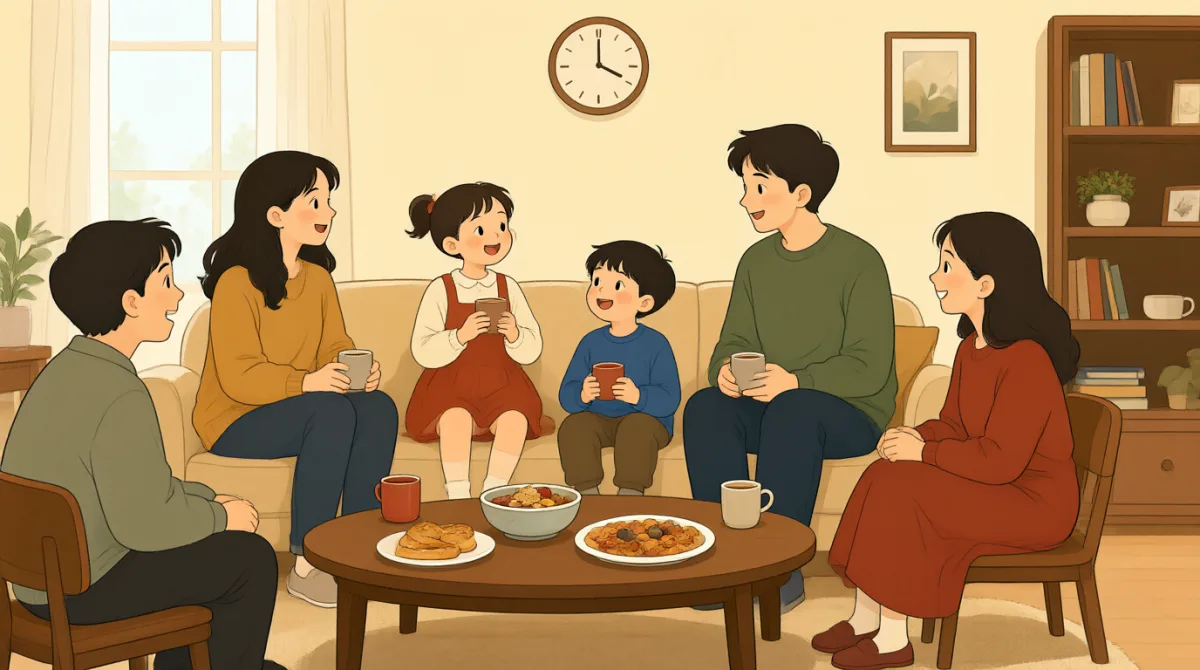

It's so interesting how different cultures celebrate holidays. What's your favorite traditional holiday from your home country, Jack?
วัฒนธรรมแต่ละแห่งฉลองเทศกาลต่างกัน น่าสนใจมากเลย เทศกาลประเพณีที่เธอชอบที่สุดในประเทศบ้านเกิดคือเทศกาลอะไร แจ็ก

That's a great question, Emma! I'd have to say Christmas. It's a huge family gathering, and we have so many traditions.
ถามได้ดีมากเลย เอ็มมา! ถ้าให้เลือกก็คงเป็นคริสต์มาส ที่บ้านเราจะรวมตัวกันทั้งครอบครัว แล้วก็มีธรรมเนียมมากมายเลย

Oh, Christmas is lovely! What kind of traditions do you have? Over here, for Chinese New Year, we always have a huge reunion dinner with dumplings and fish.
อ๋อ คริสต์มาสน่าสนุกจัง! พวกเธอมีธรรมเนียมอะไรกันบ้างเหรอ ทางบ้านฉันจะกินมื้อค่ำพร้อมหน้ากันครั้งใหญ่ในวันตรุษจีน มีเกี๊ยวกับปลาเสมอ
For Christmas, we usually open presents in the morning, then have a big roast turkey dinner with all the trimmings. My aunt always bakes a special fruitcake too. It's a lot about family and togetherness.
ปกติวันคริสต์มาสเราจะเปิดของขวัญกันตอนเช้า แล้วก็กินมื้อใหญ่ที่มีไก่งวงอบกับเครื่องเคียงครบชุด ป้าของฉันทำฟรุตเค้กสูตรพิเศษให้กินทุกปีด้วย เทศกาลนี้เน้นเรื่องครอบครัวและการได้อยู่พร้อมหน้ากัน
That sounds delicious and heartwarming! In my country, the Day of the Dead is very significant. We build altars for loved ones, decorate them with marigolds, and offer their favorite foods.
ฟังดูทั้งน่าอร่อยและอบอุ่นหัวใจเลย! ในประเทศของฉัน วันแห่งผู้ล่วงลับมีความสำคัญมาก เราจะทำแท่นบูชาให้คนที่เรารัก ตกแต่งด้วยดอกดาวเรือง แล้วก็วางอาหารจานโปรดของพวกเขาไว้
That's fascinating, Emma! Is it a sad holiday, or more of a celebration of life?
น่าสนใจมากเลย เอ็มมา! เป็นเทศกาลที่เศร้าไหม หรือเป็นการฉลองชีวิตมากกว่า
It's definitely a celebration! We believe their spirits return to visit, so it's a joyful time to remember them, share stories, and play music. It's not somber at all.
เป็นการฉลองแน่นอน! เราเชื่อว่าวิญญาณของพวกเขาจะกลับมาเยี่ยม เทศกาลนี้เลยเป็นช่วงเวลาแห่งความสุขที่ได้รำลึกถึงพวกเขา เล่าเรื่องราว และเล่นดนตรี ไม่ได้เศร้าหมองเลย
Wow, that's a beautiful way to honor the past. It sounds very different from Christmas, but the emphasis on family and sharing seems to be a common thread across all our holidays.
ว้าว เป็นวิธีรำลึกถึงอดีตที่งดงามมาก ฟังดูต่างจากคริสต์มาสมากเลย แต่การให้ความสำคัญกับครอบครัวและการแบ่งปันดูเหมือนจะเป็นสิ่งที่เชื่อมโยงเทศกาลทั้งหมดของเราเข้าด้วยกัน
คำศัพท์7
- traditionsธรรมเนียม
Customs or practices that are passed down through generations, often during holidays or family events. For example, opening presents on Christmas is a tradition.
ธรรมเนียมหรือแนวปฏิบัติที่สืบทอดกันมาจากรุ่นสู่รุ่น มักเกี่ยวข้องกับเทศกาลหรือกิจกรรมในครอบครัว เช่น การเปิดของขวัญในวันคริสต์มาสก็เป็นธรรมเนียมอย่างหนึ่ง
- celebrateฉลอง
To mark a special event with activities, food, or gatherings. You can say, 'We celebrate holidays with family dinners.'
จัดกิจกรรม กินอาหาร หรือรวมตัวกันเพื่อฉลองโอกาสพิเศษ เช่น พูดว่า 'We celebrate holidays with family dinners.' (เราฉลองเทศกาลด้วยการกินมื้อค่ำกับครอบครัว)
- reunionการพบปะสังสรรค์
A gathering of family or friends who have been apart. It's common in holidays like Chinese New Year, as in 'a huge reunion dinner.'
การรวมตัวของครอบครัวหรือเพื่อนที่ไม่ได้พบกันมาระยะหนึ่ง เป็นสิ่งที่พบได้บ่อยในเทศกาลอย่างตรุษจีน เช่น 'a huge reunion dinner' (มื้อค่ำรวมญาติครั้งใหญ่)
- togethernessความพร้อมหน้าพร้อมตา
The feeling of closeness and unity among people, especially family. Use it to describe holidays: 'Christmas is about family togetherness.'
ความรู้สึกใกล้ชิดและเป็นหนึ่งเดียวกัน โดยเฉพาะในครอบครัว ใช้บรรยายบรรยากาศในเทศกาลได้ เช่น 'Christmas is about family togetherness.' (คริสต์มาสคือเทศกาลแห่งความพร้อมหน้าพร้อมตาของครอบครัว)
- altarsแท่นบูชา
Special tables or structures set up for honoring people or spirits, often decorated with flowers or food, like in Day of the Dead celebrations.
โต๊ะหรือสิ่งก่อสร้างพิเศษที่จัดขึ้นเพื่อแสดงความเคารพต่อบุคคลหรือดวงวิญญาณ มักประดับด้วยดอกไม้หรืออาหาร เช่น แท่นบูชาในเทศกาลวันแห่งผู้ล่วงลับ
- honorรำลึกถึง
To show respect or remembrance for someone or something important. For example, 'We honor our loved ones by sharing stories.'
แสดงความเคารพหรือระลึกถึงบุคคลหรือสิ่งสำคัญ เช่น 'We honor our loved ones by sharing stories.' (เรารำลึกถึงคนที่เรารักด้วยการเล่าเรื่องราวเกี่ยวกับพวกเขา)
- common threadสิ่งที่เชื่อมโยงกัน
A shared idea or theme that connects different things. In conversations, say 'Family is the common thread in all our holidays.'
แนวคิดหรือประเด็นร่วมที่เชื่อมโยงสิ่งต่าง ๆ เข้าด้วยกัน ในบทสนทนาอาจพูดว่า 'Family is the common thread in all our holidays.' (ครอบครัวคือสิ่งที่เชื่อมโยงเทศกาลทั้งหมดของเราเข้าด้วยกัน)
ประโยคสำคัญ6
- 1
What's your favorite traditional holiday from your home country?
เทศกาลประเพณีที่เธอชอบที่สุดในประเทศบ้านเกิดคือเทศกาลอะไร
This is a polite question to ask about someone's personal preferences in cultural discussions. It uses 'what's your favorite' for opinions and 'from your home country' to specify origin. Great for starting conversations about traditions.
ประโยคนี้เป็นคำถามสุภาพที่ใช้ถามความชอบส่วนตัวในบทสนทนาเกี่ยวกับวัฒนธรรม ใช้ 'what's your favorite' เพื่อถามความคิดเห็น และใช้ 'from your home country' เพื่อระบุประเทศต้นกำเนิด เหมาะสำหรับเริ่มคุยเรื่องธรรมเนียมต่าง ๆ
- 2
That's a great question!
ถามได้ดีมากเลย!
A friendly way to respond positively to a question, showing appreciation. It's useful in dialogues to keep the conversation flowing smoothly without directly answering right away.
เป็นวิธีตอบรับคำถามอย่างเป็นมิตรและแสดงความชื่นชม ใช้ช่วยให้บทสนทนาดำเนินต่อไปอย่างราบรื่น แม้ยังไม่ได้ตอบคำถามโดยตรงในทันที
- 3
What kind of traditions do you have?
พวกเธอมีธรรมเนียมอะไรกันบ้างเหรอ
This asks for details about customs using 'what kind of' to specify types. It's practical for learning more about someone's culture and encourages sharing examples.
ประโยคนี้ใช้ถามรายละเอียดเกี่ยวกับธรรมเนียม โดยใช้ 'what kind of' เพื่อถามถึงประเภทต่าง ๆ เหมาะสำหรับเรียนรู้วัฒนธรรมของคนอื่นและชวนให้ยกตัวอย่าง
- 4
That sounds delicious and heartwarming!
ฟังดูทั้งน่าอร่อยและอบอุ่นหัวใจเลย!
An expression of positive reaction to a description, combining 'sounds' for imagined experience with adjectives like 'delicious' for food and 'heartwarming' for emotional warmth. Use it to show interest in others' stories.
ใช้แสดงความรู้สึกเชิงบวกต่อเรื่องที่อีกฝ่ายเล่า โดยใช้ 'sounds' เพื่อบอกว่าลองนึกภาพตามแล้วรู้สึกอย่างไร และใช้คำอย่าง 'delicious' สำหรับอาหาร กับ 'heartwarming' สำหรับความรู้สึกอบอุ่นใจ เหมาะสำหรับแสดงความสนใจในเรื่องราวของคนอื่น
- 5
It's definitely a celebration!
เป็นการฉลองแน่นอน!
This emphasizes a point strongly with 'definitely' (meaning certainly) and clarifies the nature of an event. Helpful for correcting misconceptions or highlighting positive aspects in cultural talks.
ประโยคนี้เน้นย้ำความเห็นด้วยคำว่า 'definitely' (อย่างแน่นอน) และอธิบายให้ชัดว่าเหตุการณ์นั้นเป็นแบบใด มีประโยชน์เมื่ออยากแก้ความเข้าใจผิดหรือเน้นแง่มุมเชิงบวกในการพูดคุยเรื่องวัฒนธรรม
- 6
It sounds very different from Christmas, but the emphasis on family and sharing seems to be a common thread across all our holidays.
ฟังดูต่างจากคริสต์มาสมากเลย แต่การให้ความสำคัญกับครอบครัวและการแบ่งปันดูเหมือนจะเป็นสิ่งที่เชื่อมโยงเทศกาลทั้งหมดของเราเข้าด้วยกัน
This sentence compares cultures using 'different from' and 'but' to find similarities with 'common thread' (shared element). The structure shows contrast and connection, ideal for cross-cultural discussions.
ประโยคนี้เปรียบเทียบวัฒนธรรมโดยใช้ 'different from' และใช้ 'but' เพื่อเชื่อมไปสู่สิ่งที่คล้ายกันอย่าง 'common thread' (สิ่งที่มีร่วมกัน) โครงสร้างนี้แสดงทั้งความแตกต่างและความเชื่อมโยง เหมาะสำหรับการพูดคุยแลกเปลี่ยนวัฒนธรรม